
Indian street food is a sensory event. The heat of a good samosa, the sour punch of chaat, the richness of a pakora fresh from the fryer — each dish arrives with layers of spice, texture, and acidity that genuinely reward thoughtful pairing. Yet most people grab whatever drink is closest and call it done. Good street food pairing ideas are really about the art of flavour pairing, a well-established culinary discipline that asks what a drink or side should do for a dish: cool the heat, reset the palate, or echo the flavours already there. This guide covers all of that, with specific pairings for the Indian street food you actually eat.
Table of Contents
- Key takeaways
- The principles behind great street food pairing ideas
- 1. Lassi with samosas and pakoras
- 2. Chaas for chaat and lighter fried snacks
- 3. Jaljeera spritzer for chaat dishes
- 4. Masala soda and nimbu soda with fried, salty snacks
- 5. Iced tea or cold coffee for heavy or sweet street foods
- 6. Wine for chaat and tandoori dishes
- 7. Pickled vegetables and vinegar slaws as accompaniments
- 8. Yogurt-based chutneys as a pairing side
- 9. Quick reference: matching dishes to drinks and sides
- 10. Building a group pairing menu
- My take on Indian street food pairings
- Try these pairings at Desigallibcn in Barcelona
- FAQ
Key takeaways
| Point | Details |
|---|---|
| Spice-first logic guides choices | Match drinks to the heat level of the dish before worrying about flavour echo. |
| Dairy drinks cool without dulling | Lassi soothes richly spiced dishes; chaas refreshes without masking the spices. |
| Carbonation is a secret weapon | Fizzy drinks lift fried flavours and clear the palate between bites. |
| Sides should contrast, not repeat | Add crunch, acid, or freshness to balance oily or heavy street food. |
| Four anchors cover a group table | One cooling, one citrusy, one fermented, and one tea-based drink handles most dishes. |
The principles behind great street food pairing ideas
Before reaching for a drink or ordering a side, it helps to understand what you are actually trying to achieve. The best pairing performs a clear function. It either cools the heat, resets the palate between bites, or echoes and amplifies the dish’s existing flavours. When a drink does none of those things, it simply occupies space in your glass.
Indian street food operates on a spice-first logic. That means your pairing choice should address the heat level before anything else. A fiery pani puri demands something that soothes or cuts. A milder aloo tikki can handle a more flavour-forward pairing because it is not fighting your taste buds from the first bite.
Beyond spice, texture matters enormously for sides. The classic pairing principles work like this:
- Crunch and acid cut through oil in fried snacks like pakoras and samosas
- Cooling, creamy elements like yogurt-based chutneys soothe chilli heat
- Fresh herbs and brightness lift heavier dishes and add complexity
- Carbonation refreshes the palate after fried, salty bites better than still water
Popular drink styles worth knowing before you start: lassi (thick, dairy, sweet or salted), chaas (thin, savoury, spiced buttermilk), masala soda (spiced sparkling water), jaljeera (cumin-tamarind fizz), iced tea, and nimbu soda (spiced lemon fizz).
Pro Tip: Pour your masala soda or nimbu soda gently over a spoon to keep the carbonation intact. Pouring too hard kills the fizz within seconds, which removes the whole point of the pairing.
1. Lassi with samosas and pakoras
Lassi is the richest and sweetest of the Indian dairy drinks, which is precisely why it works so well alongside heavily spiced, fried snacks. The natural fat in the yogurt coats the palate and intercepts capsaicin, the compound responsible for chilli heat. A mango lassi alongside a plate of crispy vegetable samosas creates a genuinely complementary contrast: the flaky, savoury pastry against the cool, fruity sweetness of the drink.
Sweet lassi is the obvious choice for very spicy pakoras. Salted lassi, sometimes finished with a pinch of cumin, works better alongside samosas that already carry sweet chutney on the side, because you avoid doubling up on sweetness.
- Mango lassi: best with very spicy pakoras and heavily seasoned potato fillings
- Salted lassi: better alongside mint and tamarind chutney combinations
- Rose lassi: a surprising match for paneer-stuffed samosas
2. Chaas for chaat and lighter fried snacks
Lassi and chaas are not interchangeable, and confusing them is one of the most common pairing mistakes. Chaas is thinner, lighter, and savoury. It does not dull the spices the way lassi can; it simply cools and refreshes, leaving the flavour layers of the dish fully intact.
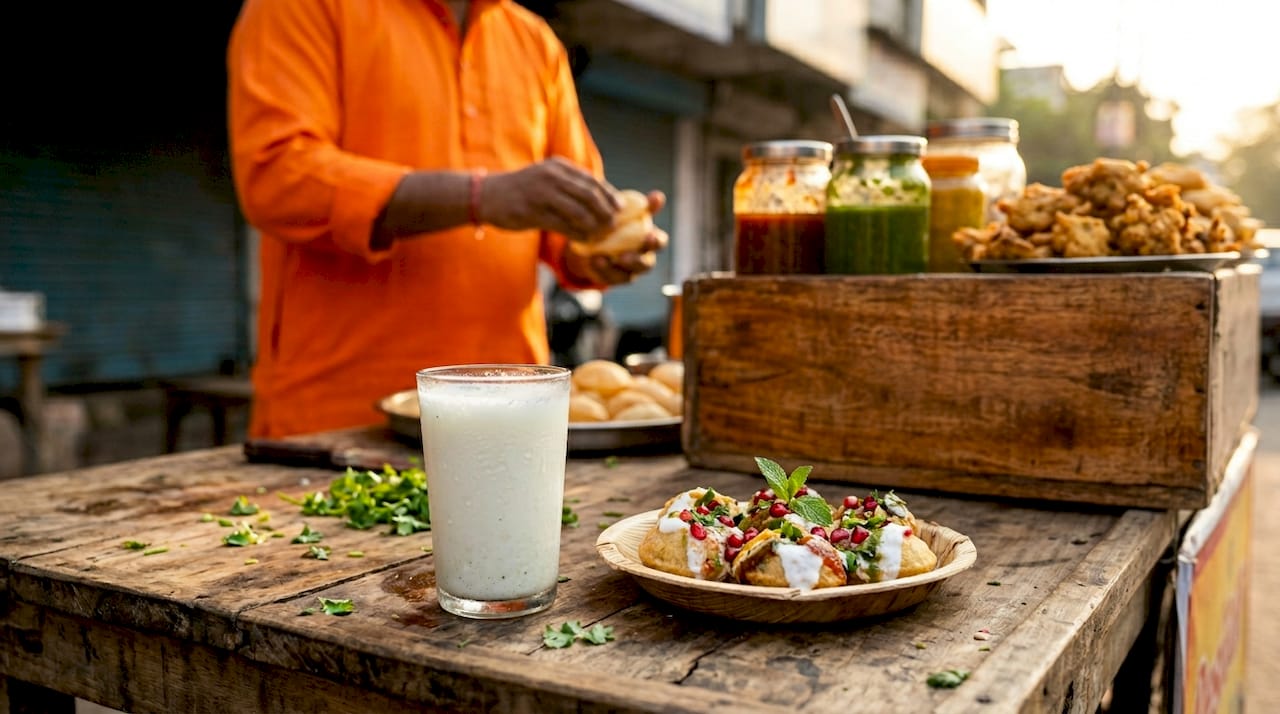
This makes chaas the far better choice with chaat dishes like bhel puri, papdi chaat, or sev puri, where the complexity of multiple flavours, tamarind, mint chutney, yogurt, and crispy elements, is the whole point. A heavy lassi would overwhelm all of that. Chaas cleans the mouth between bites and keeps you tasting the dish properly.
Pro Tip: Ask for chaas with dried mint and a pinch of black salt stirred in. This version, sometimes called pudina chaas, has a sharper, more herbal profile that cuts beautifully through the acidity of tamarind-heavy chaats.
3. Jaljeera spritzer for chaat dishes
Jaljeera is a cumin and tamarind-based drink that has been served alongside street food in India for centuries. The modern spritzer version, made by topping the cumin-masala base with soda water, adds a fizz that enhances the eating experience when sipped alongside spicy bites. The carbonation creates a tingling contrast that actually heightens your sensitivity to the sweet and sour notes in chaat.
The important thing to know is that the fizz peaks immediately. Pour the soda into the glass at the table, not in the kitchen, and sip it while it is still lively. A flat jaljeera spritzer loses most of its functional pairing value.
4. Masala soda and nimbu soda with fried, salty snacks
Both of these work on the same principle: carbonation plus acidity attacks the oiliness of fried street food and resets your sense of saltiness between bites. Masala soda, made with spiced sparkling water, takes about three minutes to prepare at home and costs almost nothing. Nimbu soda, the lemon version, is equally quick to make and adds a citrus sharpness that pairs particularly well with onion bhaji and aloo tikki.
The practical pairing rule here is simple: the more oily or salty the snack, the more carbonation you want in your glass. These are not drinks that compete with the food. They act as a palate service, making each bite feel like the first.
5. Iced tea or cold coffee for heavy or sweet street foods
Not every Indian street food is fiery. Gulab jamun, jalebi, and kulfi are sweet, rich, and heavy. Pairing these with another sweet or dairy drink creates flavour fatigue quickly. Iced tea cuts through richness without overpowering the sweetness, leaving you ready for another bite rather than feeling overloaded.
Cold coffee works on the same logic. The mild bitterness of coffee against the syrupy sweetness of jalebi is a genuinely surprising combination. The bitterness acts as a reset, the way a squeeze of lemon cuts through fatty fish. Try it before dismissing it.
6. Wine for chaat and tandoori dishes
This sits at the more adventurous end of the street food ingredient pairings guide, but it is worth knowing. Sparkling wine such as prosecco cuts through the spice and richness of Indian starters and chaat in much the same way carbonated soft drinks do, but with more complexity. The fine bubbles and slight acidity act as a palate cleanser between the layers of tamarind, chutney, and fried texture.
For smokier dishes, a medium-bodied red suits the charred notes in tandoori items. Off-dry whites pair with creamy curries. The matching logic is always texture and richness first, then flavour echo.
7. Pickled vegetables and vinegar slaws as accompaniments
Drinks handle half the pairing equation. Sides handle the other. Pickled vegetables, quick-pickled onions, sliced green chillies in vinegar, or a sharp carrot slaw, are among the most effective top street food accompaniments for oily or fried dishes. The acidity interrupts the fat on your palate and adds crunch that contrasts with soft fillings.
The best street food combinations you will find at good chaat counters always include something sharp and crunchy alongside something soft and spiced. Recreating this at home is straightforward: slice red onion thinly, toss with white wine vinegar, salt, and a pinch of sugar, and leave for 20 minutes. That is all the pickle you need alongside samosas or pakoras.
- Pickled onions: best with samosas, chaat, and aloo tikki
- Vinegar slaw: best alongside bhajis and fried snacks
- Sliced green chillies in vinegar: for those who want to increase heat while adding acid
Pro Tip: Chill your pickled vegetables before serving. Cold acid on warm fried food creates a temperature contrast that genuinely sharpens every flavour in the dish.
8. Yogurt-based chutneys as a pairing side
Mint chutney and tamarind chutney are not just condiments. When understood as part of a street food and beverage pairing strategy, they function as textural and flavour counterweights. Mint yogurt chutney soothes capsaicin heat and introduces herbal freshness. Tamarind chutney adds sourness and sweetness that deepens the experience of plain fried items like pakoras or aloo tikki.
The pairing logic for chutneys follows the same principle as drinks. Ask what the dish lacks. If it is rich and oily, add acid. If it is aggressively spiced, add cooling dairy. If it tastes flat, add brightness through fresh herbs.
9. Quick reference: matching dishes to drinks and sides
This table covers the most popular street food matches and what works with each:
| Dish | Flavour profile | Best drink | Best side |
|---|---|---|---|
| Samosa | Spiced, fried, rich | Salted lassi, masala soda | Mint chutney, pickled onion |
| Chaat (bhel puri, papdi) | Sour, sweet, crunchy | Chaas, jaljeera spritzer | Sev, fresh coriander |
| Pakora | Oily, spicy, crispy | Nimbu soda, mango lassi | Vinegar slaw, yogurt dip |
| Aloo tikki | Soft, savoury, mild | Iced tea, masala soda | Tamarind chutney, pickled chilli |
| Tandoori items | Smoky, charred, spiced | Medium red wine, cold coffee | Sliced onion, lime wedge |
| Jalebi or gulab jamun | Sweet, rich, syrupy | Iced tea, cold coffee | Plain yogurt |
10. Building a group pairing menu
When you are ordering for several people across multiple dishes, the challenge shifts from single pairings to building a table that covers all the bases. The most practical approach is the four-anchor method: one cooling dairy drink, one citrusy fizzy option, one fermented or tangy drink, and one tea-based option. That combination handles virtually every Indian street food dish at the table.
A simple four-drink set-up for a mixed group would look like this:
- Mango lassi for cooling and sweetness alongside the spiciest dishes
- Nimbu soda for citrus and carbonation paired with fried snacks
- Jaljeera for the chaat dishes and anything sour or tangy
- Iced masala chai for richer dishes or as a finishing drink after the meal
Vary your sides in the same way: always have something crunchy, something acidic, and something cooling on the table. This approach means everyone finds what they need regardless of their spice tolerance or flavour preference.
Pro Tip: Make your drinks in small batches throughout the meal rather than all at once. Consumer preferences consistently favour drinks that refresh and cleanse, and a fresh glass of chaas or nimbu soda always beats one that has been sitting out for 30 minutes.
My take on Indian street food pairings
I have spent years eating at street stalls and watching people order. The most common mistake is treating the drink as an afterthought, something to wash the food down rather than something that is genuinely part of the meal. When I first tried chaas alongside a plate of papdi chaat instead of my usual mango lassi, the difference was immediate. The chaat tasted more layered, more alive. The chaas was not competing; it was simply keeping the palate ready for the next bite.
The other thing most people overlook is acid. A small dish of pickled onions or a wedge of lime costs almost nothing, but it transforms fried food from something heavy into something you can eat a plate of without feeling weighed down. That is the real secret of good Indian food pairing: it is not about perfection. It is about balance, and balance is something you can always adjust mid-meal.
Experiment without fear. Start with the pairings in this guide, then swap one element and see what changes. That curiosity is exactly what street food culture has always been built on.
— YellowRock
Try these pairings at Desigallibcn in Barcelona
If reading this has made you hungry, the best next step is tasting it in person. Desigallibcn is an authentic Indian street food restaurant in the heart of Barcelona, serving samosas, chaats, pakoras, and much more alongside a thoughtfully curated drinks selection. The team has developed cocktail pairings crafted by expert barmen specifically to complement the bold spices and textures of Indian street food. You can also explore the flavours and cultural rituals behind every dish before you arrive. Whether you are visiting as a couple, a group, or a solo adventurer, Desigallibcn is where these pairing principles come to life on a plate.
FAQ
What drinks pair best with spicy Indian street food?
Milk-based drinks like lassi and chaas are the most effective for cooling heat, while masala soda and nimbu soda use carbonation to reset the palate between bites.
Is lassi or chaas better with chaat?
Chaas is the better choice for chaat because it refreshes without dulling the complex spice and chutney layers that make chaat worth eating.
What sides work best with fried Indian street food?
Pickled vegetables, vinegar slaws, and yogurt-based chutneys are the top street food accompaniments for fried dishes, adding the crunch and acid needed to balance oiliness.
Can wine work as a street food pairing?
Yes. Sparkling wine such as prosecco pairs well with chaat and spicy Indian starters, while medium reds suit smoky tandoori items.
How do I build a drink menu for a group eating Indian street food?
Use a four-anchor approach covering one cooling dairy drink, one citrusy fizz, one tangy option like jaljeera, and one tea-based drink to cover every dish at the table.
Recommended
- Indian food pairing tips for your Barcelona street food – Desi Galli
- Tasty Indian Street Foods For You – Desi Galli
- Top Indian spices to try for bold street food flavour – Desi Galli