

Barcelona has no shortage of exciting food, yet finding the deep, layered heat of a truly authentic Indian street snack can feel surprisingly elusive. The problem is rarely the dish itself. It is almost always the spices. Choose the wrong ones, buy them stale, or use them at the wrong moment, and the whole thing falls flat. This guide cuts through the confusion by walking you through the essential Indian spices that define street food flavour, why each one matters, and the simple techniques that transform them from dusty jars into something genuinely extraordinary.
Table of Contents
- How to choose the right Indian spices for bold flavour
- The must-try Indian spices: Top picks for Barcelona food lovers
- Mastering Indian street food technique: The art of tempering and finishing
- Comparing essential Indian spices: Aroma, heat, and versatility
- Why freshness and fearless tasting matter more than perfection
- Where to taste and buy the best Indian spices in Barcelona
- Frequently asked questions
Key Takeaways
| Point | Details |
|---|---|
| Focus on core spices | Start with a compact set of essential Indian spices for the widest range of street food flavours. |
| Freshness changes everything | Whole seeds toasted or ground just before use deliver vastly better results than pre-ground blends. |
| Technique unlocks flavour | Learning how to temper and finish with spices amplifies the real impact in Indian street food. |
| Comparisons aid discovery | Compare aroma, heat, and versatility to find which spices best match your taste adventures. |
How to choose the right Indian spices for bold flavour
With the challenge set, let us explore a framework to simplify your spice selection.
The single biggest mistake enthusiastic cooks make is buying every spice they see and ending up with a crowded shelf of half-used tins that lose their potency within weeks. A sharper approach is to separate core spices from niche ones. Core spices are the workhorses that appear across dozens of recipes. Niche spices add depth or regional character but are not required every time you cook.
Indian cooking commonly centres on cumin, coriander, turmeric, garam masala, cardamom, chilli powder, black pepper, mustard seeds, fenugreek, and cloves or cinnamon as its foundation. If you start with those ten, you can make a remarkable range of street food dishes, from tangy chaat to crispy samosa fillings, without ever feeling lost.
When choosing between whole and ground spices, whole wins every time for freshness. A cumin seed you toast yourself in a dry pan releases oils that pre-ground powder simply cannot match. Freshness is not just about aroma either. It directly affects the colour and the heat level of the finished dish.
The key questions to ask when selecting spices are:
- Does it serve a structural role? Turmeric, for example, colours and earthies the base of almost every savoury dish.
- Does it add top-note aroma? Cardamom and cinnamon do this beautifully as finishing touches.
- Does it drive heat? Chilli powder and black pepper sit here.
- Does it create a textural event? Mustard seeds pop in hot oil, adding crunch and a nutty bitterness.
Before you explore Indian food pairing tips, get these fundamentals right, because pairing only works when the base flavours are already singing.
Pro Tip: Buy cumin, coriander, and mustard seeds in whole form first, then grind or toast them as needed. This one habit will upgrade your street food flavours more than any expensive spice blend ever could.
If you are still at the stage of enjoying Indian street food primarily through restaurants, pay close attention to the aromas when dishes arrive at the table. Those scent cues are your best guide to which spices to prioritise at home.
The must-try Indian spices: Top picks for Barcelona food lovers
Now that you know how to choose, here are the actual spices every street food adventurer in Barcelona should try.
Each spice below plays a distinct role. Understanding those roles is what separates someone who follows a recipe blindly from someone who can improvise and adapt the way street food vendors in Mumbai or Delhi do every single day.
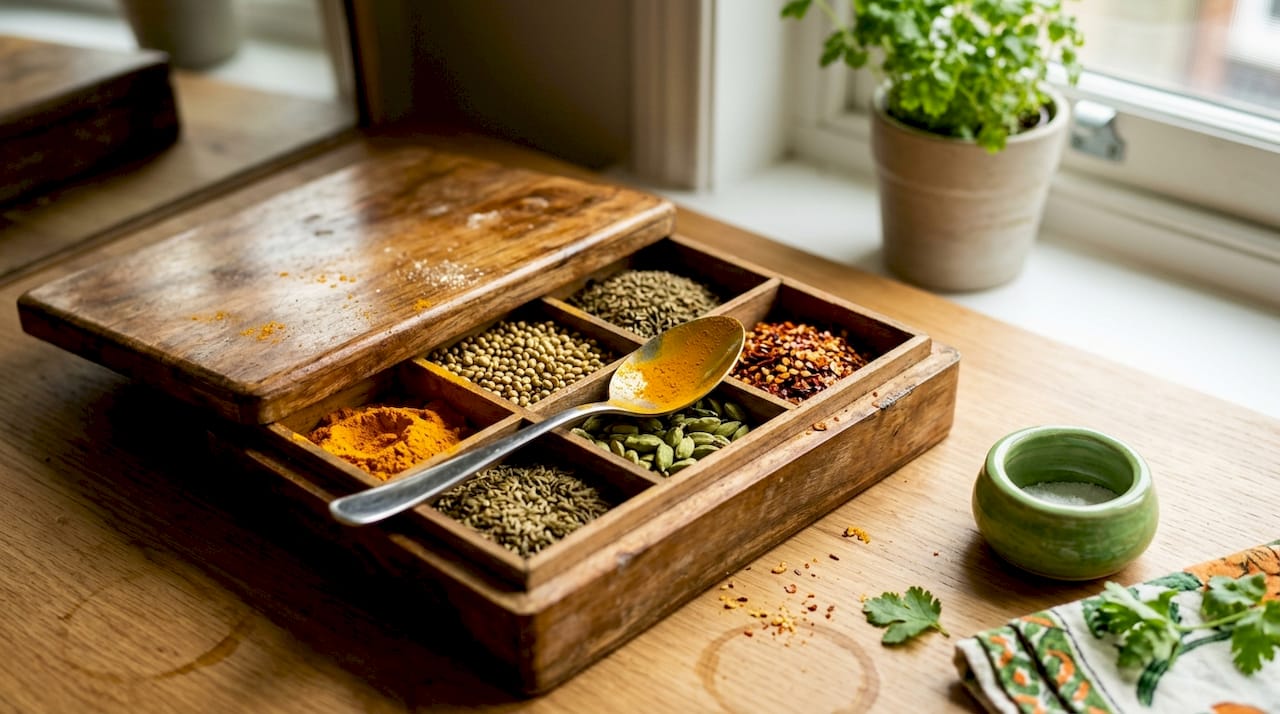
| Spice | Flavour profile | Primary street food use |
|---|---|---|
| Cumin | Earthy, warm, slightly smoky | Chaat, samosa filling, dal |
| Coriander | Citrusy, floral, mild | Base curry pastes, chole |
| Turmeric | Earthy, bitter, deeply savoury | Colour and base for most dishes |
| Mustard seeds | Nutty, sharp, pungent | Tempering for chutneys, dosas |
| Chilli powder | Hot, sharp, vivid red colour | Marinades, tikkas, chaat |
| Black pepper | Sharp, piney heat | Finishing spice, rasam |
| Fenugreek | Slightly bitter, maple-like | Aloo methi, paratha fillings |
| Cardamom | Sweet, floral, aromatic | Chai, kheer, biryani |
| Cloves | Intense, almost medicinal | Biryanis, garam masala |
| Cinnamon | Sweet, woody, warm | Pulao, biryani, masala chai |
| Garam masala | Complex, warming, aromatic | Finishing blend for most dishes |
| Chaat masala | Tangy, salty, funky, sour | Sprinkled on snacks and salads |
Chaat masala is a particularly distinctive spice blend combining salty, funky, spicy, and sour notes that you simply cannot replicate with individual spices alone. Its secret ingredient is amchur (dried mango powder), which delivers a sharp, fruity acidity that makes your mouth water immediately. This is the blend that goes on samosas at the end, that gets dusted over fruit chaat, and that transforms a humble bowl of puffed rice into bhel puri.
Some spices deserve extra attention:
- Fenugreek is often overlooked because its raw bitterness puts people off. Cook it properly in oil or ghee, however, and it develops a rich, almost caramel quality that adds serious depth to vegetarian dishes.
- Black pepper was India’s original heat source long before chillies arrived from the Americas in the 16th century. Using it alongside chilli powder gives a more complex, layered heat rather than one-dimensional burn.
- Cardamom comes in two forms: green and black. Green cardamom is the sweet, floral variety used in chai and desserts. Black cardamom is smoky and almost camphor-like, reserved for meat dishes and biryanis.
Exploring the full range of Indian street food flavours is enormously helped by understanding which spice carries which sensation. Once you can identify cumin’s earthiness or chaat masala’s zing in a bite, you begin tasting food the way a street food cook intends.
Pro Tip: When you try chaat masala for the first time, sprinkle a small pinch directly onto a slice of cucumber or a boiled potato before committing it to a full dish. That single experiment will immediately show you why this blend is so addictive.
Mastering Indian street food technique: The art of tempering and finishing
Knowing the spices is one thing, but bringing out their best flavour depends entirely on how you use them.
Tempering, known in Hindi as tadka or chaunk, is arguably the single most important technique in Indian cooking. It is simple in execution but transformative in effect. Whole seeds and spices are heated in oil until they sizzle, puff, or begin to darken, releasing their volatile oils into the fat. That infused oil then carries the flavour into every corner of the dish.
Here is how to temper spices correctly:
- Heat your fat first. Use a neutral oil or ghee in a small pan over medium heat. The fat needs to be genuinely hot before the spices go in, otherwise they stew rather than bloom.
- Add whole seeds first. Mustard seeds go in first because they take the longest to pop. Cumin seeds follow within seconds. Listen for the popping and sizzling.
- Watch for visual cues. Mustard seeds should jump and pop. Cumin seeds should darken slightly and smell intensely nutty. Neither should burn, which happens fast if the heat is too high.
- Add aromatics next. Sliced garlic, ginger, or curry leaves go in after the seeds. These need slightly longer to cook through.
- Introduce your dry spices last. Turmeric, chilli powder, and coriander go in now, stirred quickly for no more than 30 seconds before liquid or vegetables join the pan.
- Pour over finished dishes. A tadka can also be made separately and spooned directly over a finished dal or raita for a flavour hit at the table.
“The difference between a flat curry and a deeply aromatic one almost always comes down to how confidently the cook handles the first 60 seconds in the pan.”
Garam masala is best treated as a finishing blend rather than an early cooking ingredient. Adding it at the start burns off the delicate top notes that make it special. Stir it in during the final two minutes of cooking or sprinkle it over the finished dish. The warmth it adds at that stage is completely different from the flat, slightly acrid result of cooking it too long.
Understanding the popularity of Indian street food in cities like Barcelona is partly about appreciating that these dishes are built on speed and technique. Street vendors do not have hours to simmer things gently. They rely on correct tempering and bold spice choices to deliver maximum flavour in minutes.
Comparing essential Indian spices: Aroma, heat, and versatility
With all the must-try spices introduced, see how they compare when you are deciding which ones to prioritise.
| Spice | Aroma intensity | Heat level | Versatility | Best matched street food |
|---|---|---|---|---|
| Cumin | High | Low | Very high | Chaat, samosas, dals |
| Turmeric | Medium | None | Very high | All savoury dishes |
| Garam masala | Very high | Low to medium | High | Finishing most dishes |
| Chaat masala | High | Medium | Medium | Snacks, fruit, salads |
| Mustard seeds | High (when tempered) | Low | High | Chutneys, tempering |
| Chilli powder | Medium | High | High | Marinades, gravies |
| Cardamom | Very high | None | Medium | Chai, desserts, biryani |
| Fenugreek | Medium | None | Medium | Breads, vegetable dishes |
| Coriander | Medium | None | Very high | Pastes, base layers |
| Black pepper | High | Medium | High | Finishing, rasam |
A few comparisons worth noting:
- Garam masala vs chaat masala: Garam masala warms from the inside with earthy, aromatic depth. Chaat masala attacks from the outside with sharp, tangy brightness. They are rarely interchangeable and serve completely different moments in a meal.
- Cumin vs coriander: These two are often used together, but they are not redundant. Cumin brings warmth and earthiness while coriander brings a lighter, citrusy lift. Using both creates a rounded, complete base flavour.
- Chilli powder vs black pepper: Chilli gives forward, vivid heat that you feel instantly. Black pepper provides a slower-building, piney heat that lingers. Together, they create a heat profile that is far more interesting than either alone.
It is also worth noting that garam masala recipes can differ substantially by region and household. A garam masala from Punjab will taste very different from one made in Kerala or Bengal. This is not a problem. It is actually one of the most exciting things about Indian cuisine. There is no single definitive version, which means there is always something new to discover.
If you want a structured approach to sampling and comparing, the checklist for Indian gastronomy in Barcelona is a genuinely useful starting point for mapping your tasting journey.
Why freshness and fearless tasting matter more than perfection
Here is the uncomfortable truth that most spice guides skip entirely: the majority of people who buy a full set of Indian spices use them three times and then let them fade for months on a shelf. The spices lose potency. The next dish tastes weak. The cook blames themselves or the recipe, when in fact the problem was always the age of the spices.
The most confident cooks we see at Desi Galli, people who come in and can articulate exactly what they love about a particular dish, are not the ones who own 40 spices. They are the ones who know six spices really well, buy them in small quantities, and taste constantly.
Buying whole versions of core seeds is a far bigger flavour upgrade than accumulating dozens of pre-ground powders. A freshly toasted and ground cumin seed has a fragrance and depth that commercial ground cumin simply cannot match. This one practical shift changes everything.
The spirit of Indian street food has never been about precision or perfection. A chaat vendor in Colaba does not weigh their spices. They taste, adjust, add a little more tamarind, a pinch more chaat masala, and serve. The benefits of Indian street food go well beyond nutrition. They include the freedom that comes from cooking and eating boldly without anxiety.
Buy fresh. Toast whole seeds. Taste everything. That is the only philosophy you need.
Where to taste and buy the best Indian spices in Barcelona
Ready to put your new spice knowledge to use? Here is where flavour adventure begins in Barcelona.
The most direct way to understand what these spices can do is to taste them at their best in a dish that has been built around them properly. At Desi Galli, every dish on our menu is a masterclass in layered spice. The flavours and rituals of Indian street food are woven into every plate, from the chaat masala dusted over our samosas to the garam masala that finishes our curries.
Whether you are a curious local or a visitor wanting to experience authentic Indian flavours before heading to a spice shop, Desi Galli is the right starting point. Taste first, then shop with confidence. Visit us in the heart of Barcelona or reserve your table online to begin your spice journey properly.
Frequently asked questions
What are the most essential Indian spices for recreating street food at home?
Start with cumin, coriander, turmeric, mustard seeds, chilli powder, black pepper, cardamom, garam masala, and chaat masala. These nine cover the vast majority of authentic street food recipes.
Why is whole spice tempering important in Indian dishes?
Tempering releases the spices’ volatile oils into hot fat, unlocking an intensity of aroma and depth that cold mixing simply cannot achieve. Whole seeds heated in oil sizzle and bloom, infusing the entire dish from the very first moment.
What is chaat masala and which street foods use it?
Chaat masala is a tangy, salty-spicy blend with a sour, funky character that comes from amchur and black salt. It is sprinkled over samosas, bhel puri, fruit chaat, and aloo tikki for that signature addictive zing.
Can I substitute curry powder for garam masala?
No, because garam masala is a finishing blend added at the end of cooking to preserve its aromatic top notes, while curry powder is used much earlier. Their flavour profiles and functions are fundamentally different.
How do I get the freshest flavour from Indian spices?
Buy whole seeds and toast or grind them in small batches as needed. Freshly processed whole spices deliver dramatically more aroma and flavour than pre-ground powders that have sat in packaging for months.
Recommended
- Essential Indian food tips for beginners: master authentic flavours – Desi Galli
- Indian flavours: Authentic tastes and culinary secrets – Desi Galli
- Tasty Indian Street Foods For You – Desi Galli
- Indian food pairing tips for your Barcelona street food – Desi Galli



Comment(01)