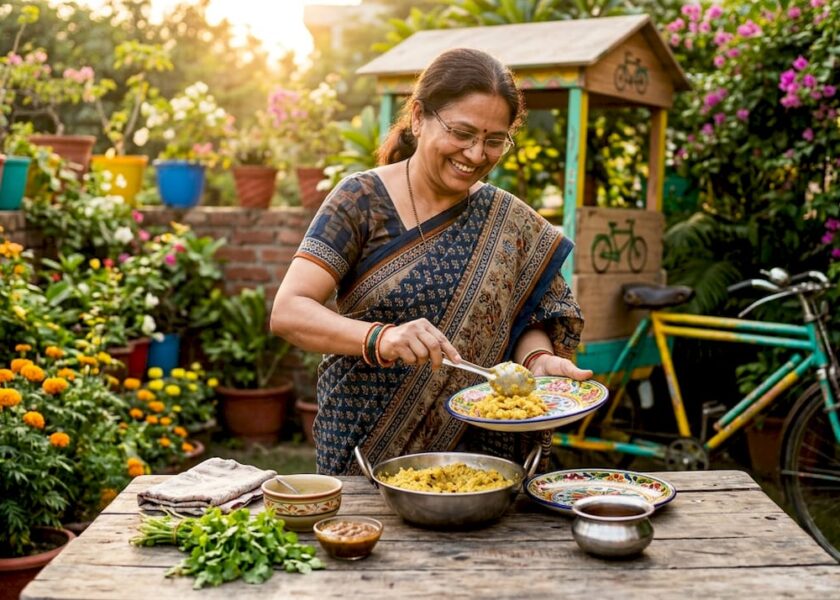

Every time you dine out, your choices ripple further than the plate in front of you. Globally, food waste costs the world around $1 trillion every year, and food service accounts for 28% of consumer-level waste. This guide to sustainable Indian dining shows you how to turn that around, because Indian cuisine, with its deep roots in seasonal, plant-forward, and waste-conscious cooking, is one of the most naturally sustainable food traditions on the planet. Whether you dine out regularly or cook at home, the choices you make matter.
Table of Contents
- Key takeaways
- Understanding sustainability in Indian dining
- How to identify sustainable Indian restaurants
- Ordering habits that reduce your footprint
- Bringing sustainability into your home kitchen
- My take on sustainability and Indian food culture
- Taste sustainability at Desi Galli in Barcelona
- FAQ
Key takeaways
| Point | Details |
|---|---|
| Indian cuisine is sustainability-ready | Traditional practices like sattvik cooking and seasonal sourcing align closely with modern environmental values. |
| Menu labels guide better choices | Restaurants that show ingredient origins and seasonal notes make it easier to eat with intention. |
| Plant-based dishes reduce emissions | Food waste and meat together drive a large share of food-related greenhouse gases; choosing vegetarian Indian meals helps. |
| Waste audits signal genuine commitment | Restaurants that track and categorise waste are more likely to act on it. |
| Your ordering habits have real impact | Portion control and responsible ordering reduce plate waste and support the restaurants making the right moves. |
Understanding sustainability in Indian dining
The term “sustainable dining” is the recognised industry phrase for food service practices that reduce environmental harm through sourcing, operations, and consumption choices. Within Indian cuisine specifically, the concept of what is indian food sustainability goes further than recycling bins and LED lights. It connects to centuries of culinary philosophy.
Sattvik cooking, rooted in Ayurvedic tradition, prioritises fresh, seasonal, and minimally processed ingredients. It avoids waste by design. Regional Indian cuisines, from Gujarati thali to Kerala sadya, have always been built around whatever grows locally and what is in season. This is not a modern sustainability trend. It is how Indian food has worked for generations.
From an operational standpoint, the National Restaurant Association of India advised restaurants in 2026 to adopt LED lighting, smart refrigeration, rooftop solar energy, and local ingredient sourcing as core sustainability measures. These are not small gestures. They represent a shift in how Indian restaurants approach their environmental footprint at every level of the business.
For you as a diner, the role of sustainability in Indian dining comes down to three things: where ingredients come from, how much reaches the bin, and whether your portion is sized to your actual appetite. Consumer behaviour shapes restaurant decisions far more than most people realise.
- Local and seasonal sourcing reduces food miles and supports nearby producers
- Plant-based menus draw on Indian cuisine’s rich vegetarian heritage
- Energy-efficient kitchens cut carbon output without changing the food on your plate
- Portion control on both sides of the pass reduces plate waste significantly
- Waste audits in kitchens identify where food disappears before it ever reaches a table
Pro Tip: Ask your server which dishes use ingredients sourced locally or in season. Good sustainable restaurants will know the answer without hesitation.
How to identify sustainable Indian restaurants
Not every restaurant that calls itself eco-conscious actually walks the talk. Sustainability claims are strongest when a restaurant links procurement, kitchen workflow, and efficiency into a single operational approach rather than relying on vague branding. Here is what to look for when choosing where to eat.
What the menu tells you
A well-designed menu is one of your best tools. Menus with visible ingredient origins, seasonal notes, and plant-based highlights genuinely shift consumer choices toward more sustainable options. If a menu simply lists dish names and prices without any context, that tells you something too.
Look specifically for: dishes labelled as seasonal, notes on where produce or proteins are sourced, default plant-based options presented prominently, and clear portion guidance. Research from Nature Food confirms that making sustainable options default increases the number of diners who choose them.
Questions worth asking
You do not need to interrogate your server, but a couple of well-placed questions tell you a great deal. Ask whether the kitchen tracks food waste. Ask if the menu changes with the seasons. Ask whether any ingredients come from local suppliers. Genuine sustainable restaurants welcome these questions. Others deflect.
Chef Himanshu Saini, one of the most respected voices in contemporary Indian dining, has argued that hyper-local sourcing creates genuine restaurant identity rather than generic eco-branding. The best sustainable Indian restaurants do not just say they care about origins. They build their menu around them. For guidance on what authentic Indian restaurant practices look like, the real guide to authenticity from Desigallibcn is a solid starting point.
Comparing sustainability features
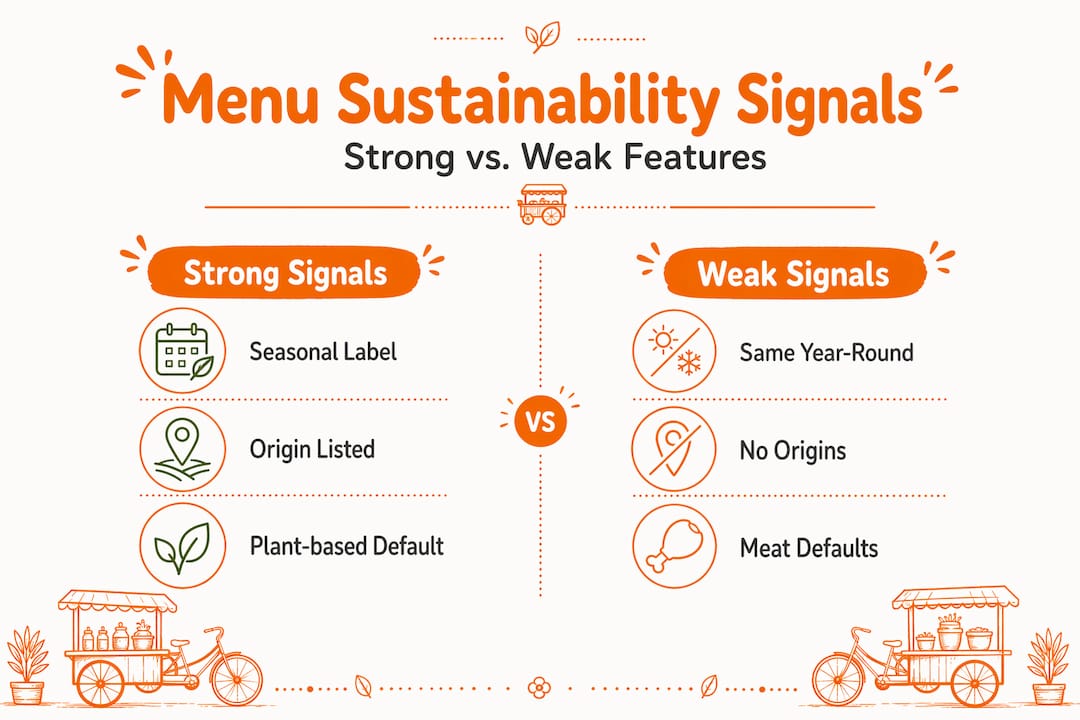
| Feature | Strong sustainability signal | Weak or absent signal |
|---|---|---|
| Menu labelling | Seasonal and origin notes visible | No ingredient context given |
| Portion options | Guidance or flexible sizes offered | Single large portions only |
| Waste management | Audits carried out; waste categorised | No mention of waste practices |
| Sourcing | Local and regional suppliers named | Generic supply chain, no detail |
| Plant-based options | Prominent and varied vegetarian dishes | Meat-heavy menu, minimal alternatives |
Pro Tip: Check whether the menu changes across seasons. A restaurant serving the same dishes in January and July is almost certainly not prioritising seasonal sourcing.
Ordering habits that reduce your footprint
Small changes in how you order add up quickly. Food loss and waste contribute roughly 19% of global greenhouse gas emissions, with meat consumption and surplus production as the main drivers. What you order, and how much, is a direct part of that equation.
Here are practical steps to order more sustainably at any Indian restaurant:
- Order to your appetite, not the menu. Indian restaurant portions are often generous. If you are unsure of the size, ask before ordering. Plate waste is the most avoidable form of food waste there is.
- Lead with vegetarian dishes. Indian cuisine’s vegetarian tradition is extraordinary, from dal makhani to aloo gobi to paneer tikka. Choosing plant-based options most of the time meaningfully reduces your meal’s environmental footprint.
- Share dishes thoughtfully. Indian dining is built around communal eating. Ordering fewer dishes to share, rather than individual plates across the table, reduces over-ordering naturally.
- Take leftovers seriously. If food remains, take it with you. Ask the restaurant for a container. Leftover curry, dal, and rice reheat beautifully and are often better the next day.
- Look for menu defaults. When a restaurant offers a set menu or suggests a tasting format, these are often designed with portion control and reduced waste in mind. Go with them when you can.
- Ask about bread quantities. Naan and roti are frequently ordered excessively and left uneaten. Order one or two rounds and add more only if you need them.
The cultural practice of finishing your plate is deeply embedded in Indian hospitality and has genuine sustainability value. When you visit a restaurant that serves food with that spirit, honour it by ordering only what you will eat.
Bringing sustainability into your home kitchen
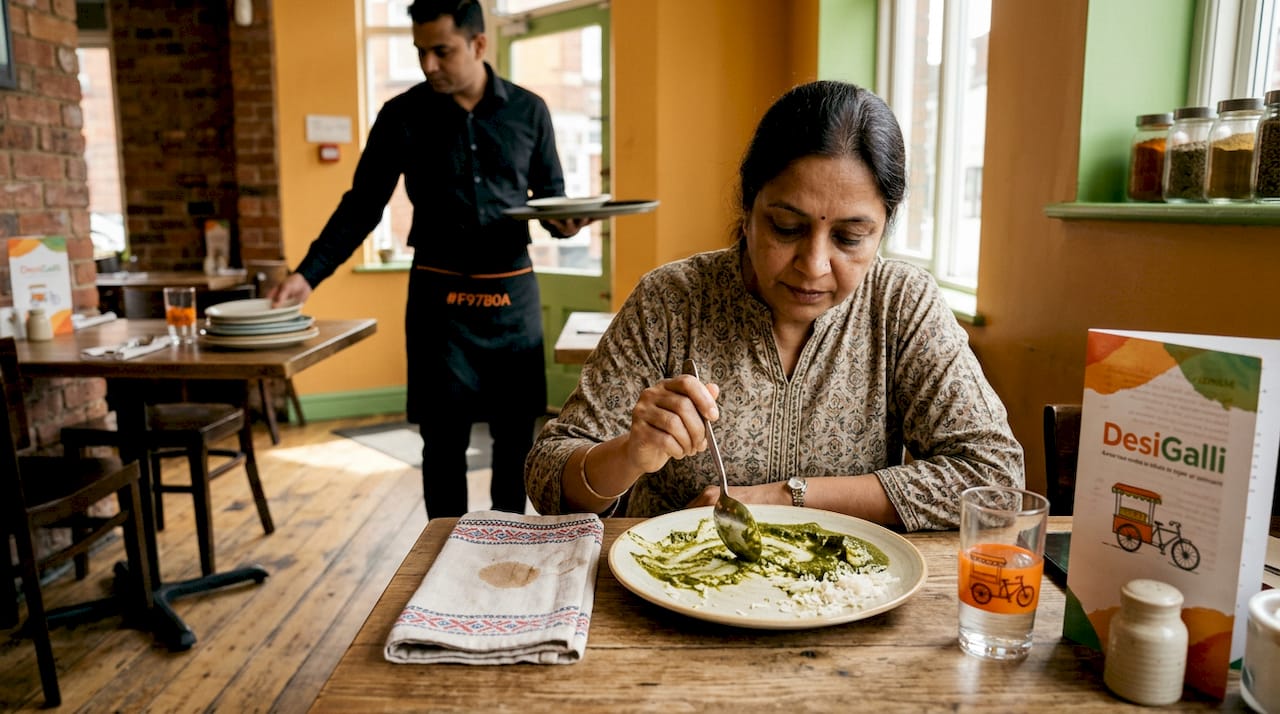
Eating sustainably does not stop when you leave the restaurant. For anyone who cooks Indian food at home, the principles of eco-friendly Indian recipes are straightforward to apply and often align with the most traditional approaches to the cuisine.
Start with fresh, seasonal ingredients. Indian cooking is highly adaptable. Most curry bases, dals, and vegetable preparations work beautifully with whatever is in season locally. Using a winter root vegetable instead of an imported summer one does not compromise the dish. It connects it to where and when you are.
- Plan meals before shopping. Overbuying is one of the biggest sources of home food waste. Write a list based on what you will actually cook, not what you might cook.
- Use whole spices bought in small quantities. Ground spices lose their potency quickly. Buying whole spices in smaller amounts reduces waste and improves flavour at the same time.
- Cook with the whole ingredient. Indian recipes make excellent use of stalks, peels, and leaves. Cauliflower stalks work in sabzi, coriander stems add depth to chutneys, and onion skins can enrich a stock base.
- Batch cook dals and grains. Lentils and rice store well, refrigerate for several days, and form the backbone of multiple meals. Cooking in larger quantities reduces energy use and saves time.
- Freeze rather than discard. Leftover curry paste, coconut milk, and cooked pulses freeze well. A small habit of freezing before discarding cuts home food waste significantly.
Understanding the cultural depth of Indian flavours also helps at home. When you understand why a dish uses certain spices or techniques, you waste less because you work with the logic of the cuisine rather than against it.
My take on sustainability and Indian food culture
I have spent years thinking about how food culture and environmental responsibility intersect, and Indian cuisine presents a genuinely fascinating case. Most sustainability conversations in food treat plant-based eating and local sourcing as modern interventions. In Indian cooking, they are simply how things have always worked in large parts of the country.
What I find most striking is how sustainability becomes hollow the moment it is treated as a marketing angle rather than an operational commitment. I have seen restaurants put “farm to table” on their menus while sourcing ingredients from the same industrial distributors as everyone else. The restaurants that actually make a difference are the ones running structured waste audits, adjusting portion sizes based on what comes back on plates, and changing menus when local supply dictates it.
For diners, I think the most underestimated part of the whole conversation is this: your choices drive restaurant behaviour. When enough people ask where ingredients come from and choose the vegetarian option regularly, restaurants notice. The power is genuinely on your side of the table. What you pay for tells the kitchen what matters.
— YellowRock
Taste sustainability at Desi Galli in Barcelona
Sustainability in Indian food is most vivid when you experience it through a meal prepared with genuine care for ingredients and tradition.
At Desigallibcn, the approach to Indian street food in Barcelona is rooted in exactly the kind of authenticity that makes sustainable dining tangible. The menu draws on traditional flavours, fresh preparation, and the vibrant spirit of Indian street markets, giving you dishes where the quality of ingredients does the talking. From samosas and chaat to rich, spiced curries, every plate reflects a commitment to cooking that respects both culture and craft. Explore the full range of Indian street food flavours or browse the street food pairings crafted by the team to complement each dish. Book your table online and experience for yourself what thoughtful, flavour-forward Indian dining looks like in the heart of Barcelona.
FAQ
What is sustainable dining in Indian cuisine?
Sustainable dining in Indian cuisine refers to food service and eating practices that minimise environmental harm through local sourcing, plant-based menus, portion control, and kitchen waste reduction. Indian culinary traditions like sattvik cooking naturally support these principles through seasonal, fresh, and minimally processed ingredients.
How do I spot a genuinely sustainable Indian restaurant?
Look for menus that list seasonal dishes and ingredient origins, restaurants that offer portion guidance, and kitchens that track food waste through regular audits. Generic eco-claims without operational detail are a weak signal. Specific sourcing information and changing seasonal menus are strong ones.
Why are plant-based Indian dishes the more sustainable choice?
Meat consumption and surplus food production together drive a significant share of food-related greenhouse gas emissions. Indian cuisine offers an extraordinarily rich vegetarian tradition, so choosing plant-based dishes is one of the most direct ways to reduce your meal’s environmental footprint without sacrificing flavour or satisfaction.
Can I apply sustainable Indian dining principles at home?
Absolutely. Start by buying seasonal, local produce, planning meals to avoid overbuying, and using whole ingredients including stalks and peels that many recipes traditionally incorporate. Batch cooking dals and grains also cuts energy use and reduces waste across multiple meals.
Does portion size really make a difference to sustainability?
Yes, and more than most diners realise. Plate waste is one of the most preventable forms of food waste in restaurants. Ordering to your actual appetite, sharing dishes, and taking leftovers home are straightforward habits that reduce waste and support restaurants working hard to operate responsibly.
Recommended
- Defining authentic Indian restaurants: the real guide – Desi Galli
- Tips for choosing Indian restaurants in Barcelona – Desi Galli
- Menú Vegetariano en India: Tradición y Modernidad – Desi Galli