

Most people assume Indian food is a one-note experience built entirely around heat. That assumption stops many food lovers in Barcelona from exploring one of the world’s most intricate culinary traditions. The truth is that Indian cuisine operates on a far more sophisticated level, weaving together sweet, sour, salty, bitter, and aromatic notes into every single bite. Understanding these principles will completely change how you taste, choose, and appreciate Indian street food, whether you are visiting a market stall in Mumbai or sitting down at a vibrant restaurant right here in the heart of Barcelona.
Table of Contents
- The five pillars of Indian flavour
- Regional roots: How geography shapes Indian taste
- The mechanics of layering: Spices, techniques, and harmony
- Myth-busting: Is Indian food always spicy?
- What most guides miss about Indian street food in Barcelona
- Experience real Indian flavours in Barcelona
- Frequently asked questions
Key Takeaways
| Point | Details |
|---|---|
| Five-taste balance | True Indian flavour is about mastering sweet, sour, salty, bitter, and umami/spicy. |
| Regional diversity | Every region in India shapes dishes with unique ingredients and cooking methods. |
| Layered techniques | Layering spices using methods like tadka and masala bases create complex, harmonious street food. |
| Spice is not heat | Indian food’s legendary ‘spice’ means aromatic complexity, not just chilli heat. |
| Authenticity in Barcelona | You can experience truly authentic Indian flavours in Barcelona by seeking dishes using classic techniques and quality ingredients. |
The five pillars of Indian flavour
Now that we have set aside old assumptions, let us explore the foundational elements that shape Indian cuisine’s unmistakable identity.
Indian cooking is not simply about adding chilli and calling it done. Indian flavours balance five tastes: sweet, sour, salty, bitter, and umami or spicy, achieved through the strategic use of spices, fresh ingredients, and layering techniques. This is what separates a truly authentic dish from a pale imitation.
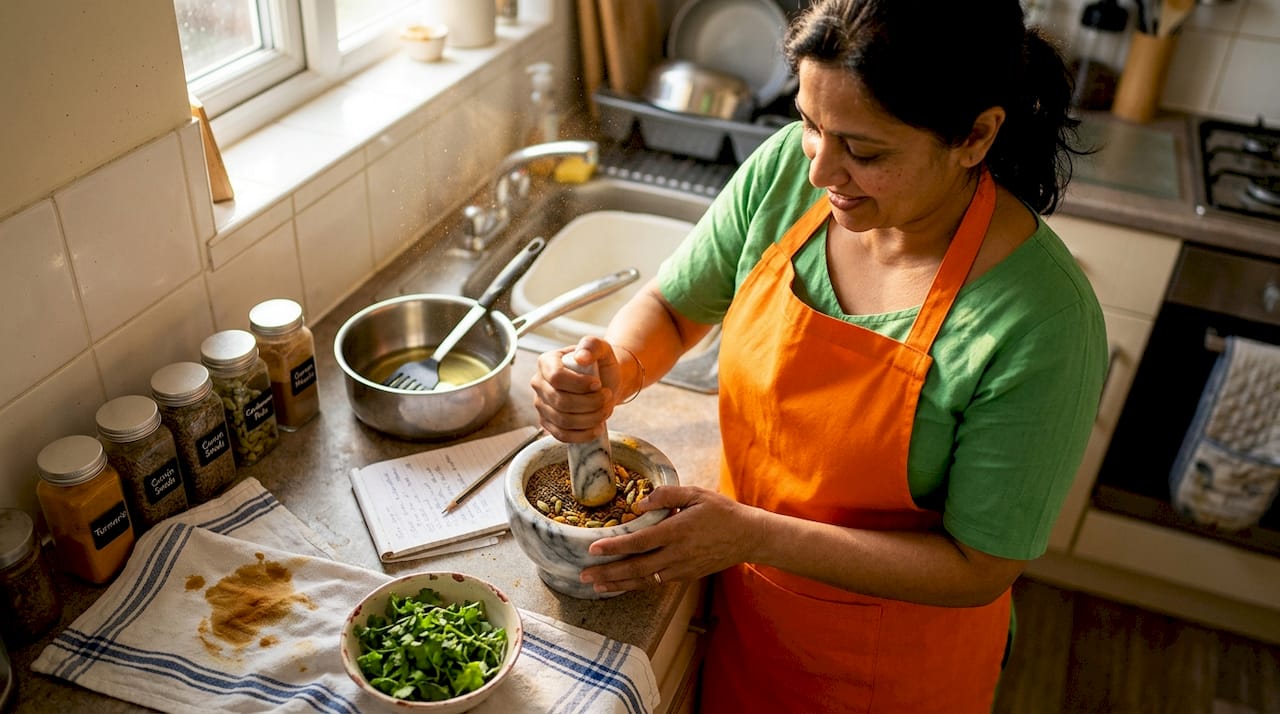
The technique known as tadka (also called tempering) is central to this balance. It involves heating oil or ghee until very hot, then adding whole spices such as mustard seeds, cumin, dried chillies, or curry leaves. The spices bloom in seconds, releasing fat-soluble aromatic compounds that would otherwise remain locked inside the seed. This flavoured oil is then poured over a dish or used as the base for building the rest of the recipe.
Here is a quick breakdown of how each taste pillar appears in Indian cooking:
| Taste | Common sources | Example dishes |
|---|---|---|
| Sweet | Jaggery, caramelised onions, coconut | Halwa, sweet chaat |
| Sour | Tamarind, dried mango (amchur), yoghurt | Pani puri, dahi bhalla |
| Salty | Rock salt, black salt (kala namak) | Bhel puri, samosas |
| Bitter | Fenugreek, bitter gourd, mustard seeds | Dal, methi paratha |
| Umami/Spicy | Asafoetida (hing), garam masala, chilli | Curries, tikka masala |
A few key principles to remember when tasting Indian street food:
- Fresh spices matter enormously. Whole spices toasted just before use release far more flavour than pre-ground powders sitting in a jar.
- Layering is intentional. Each stage of cooking adds a different dimension. The base, the middle, and the finishing touch all serve distinct purposes.
- Aroma is half the flavour. Much of what you perceive as taste is actually smell, and Indian cooking is designed to maximise aromatic impact.
- Heat is adjustable. Chilli is just one spice among dozens, and a skilled cook controls it precisely.
“The real genius of Indian cooking is not the heat. It is the architecture of flavour built through patience, technique, and an extraordinary spice vocabulary.”
Pro Tip: When you sit down to eat Indian street food, take a moment before your first bite to breathe in the aroma. Try to identify individual notes: earthy cumin, sharp tamarind, sweet cinnamon. Engaging all your senses first will help you appreciate the full depth of what the cook has built. Explore more with these Indian cooking tips to sharpen your palate before your next visit.
Regional roots: How geography shapes Indian taste
With an understanding of flavour foundations, let us see how these principles play out in real Indian food from different regions.
India is a subcontinent, not a country with one cuisine. Its regional food cultures are as distinct as French cooking is from Spanish. Regional Indian food differences include the dairy-rich, tandoori traditions of the North, the fermented rice and lentil dishes of the South, the mustard-forward cooking of the East, and the coconut and seafood combinations of the West. Each region reflects its local climate, agriculture, and cultural history.
Understanding this geography helps you make far better choices when exploring north vs south Indian food and spotting which tradition a Barcelona restaurant is drawing from.
A quick regional cheat sheet:
- North India: Rich, creamy sauces using dairy. Tandoor-cooked breads and meats. Garam masala as a finishing spice. Think butter chicken, samosas, and tikka.
- South India: Fermented batters for dosa and idli. Coconut milk and tamarind as base flavours. Curry leaves and mustard seeds in nearly every tadka.
- East India: Mustard oil as the dominant cooking fat. Panch phoron (a five-spice blend) used whole. Fish and rice as staples. Tangy, lighter flavours.
- West India: Seafood-forward coastal dishes. A distinctive balance of savoury and natural sweetness. Coconut in both wet and dry preparations.
Here is a comparison to help you identify regional signatures at a glance:
| Region | Key fats and bases | Signature spices | Typical street food |
|---|---|---|---|
| North | Ghee, cream, yoghurt | Garam masala, cumin | Samosa, chaat, tikka |
| South | Coconut oil, tamarind | Curry leaves, mustard | Dosa, idli, vada |
| East | Mustard oil | Panch phoron, turmeric | Jhalmuri, fish fry |
| West | Coconut oil, kokum | Coriander, dried chilli | Vada pav, pav bhaji |
When you are exploring Indian street food in Barcelona, use this table as a reference. Ask which region a dish comes from. A good restaurant will know the answer immediately, and that knowledge tells you a great deal about the kitchen’s commitment to authenticity. Pair your choices wisely with guidance on food pairing with Indian street food to get the most from every plate.
The mechanics of layering: Spices, techniques, and harmony
Recognising regional signatures is important, but authentic Indian taste also comes from how ingredients and spices come together in each dish.
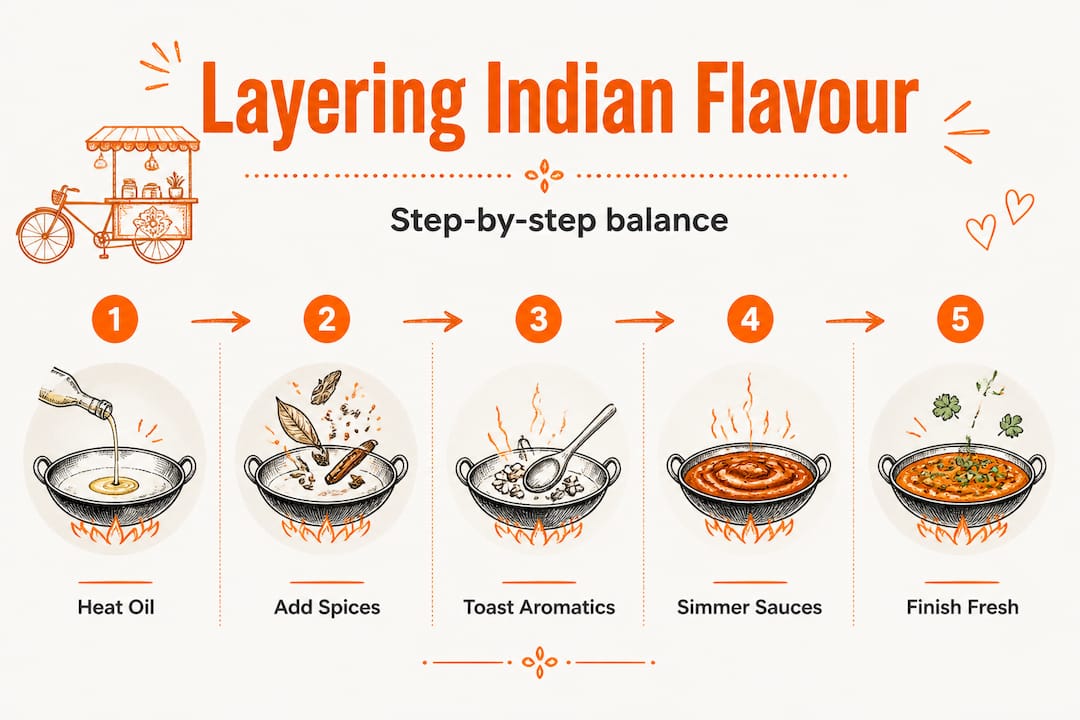
Think of a great Indian dish as a piece of music. There is a bass line, a melody, and a finishing flourish. Remove any one layer and the whole composition falls flat. Flavour layering in Indian cooking follows a clear structure: a base tadka, a mid-layer of ground spices and onion-tomato masala, and a finishing touch of garam masala. Slow simmering melds everything together, while freshly ground or toasted spices maximise potency at each stage.
Here is how the layering process typically works in a classic street-style curry or chaat base:
- Base tadka. Hot oil or ghee receives whole spices first: cumin seeds, bay leaves, cardamom, or dried chillies. They sizzle for 30 to 60 seconds. This infuses the cooking fat with deep, rounded flavour.
- Aromatics. Finely chopped onions are added and cooked slowly until golden brown. This step alone can take 15 to 20 minutes and builds a sweet, caramelised foundation.
- Masala paste. Ginger, garlic, and tomatoes are added along with ground spices such as coriander, cumin, turmeric, and chilli powder. The mixture is cooked until the oil begins to separate from the paste. This is called “bhunoing” and it is a critical step for removing rawness from the spices.
- Main ingredient. Vegetables, paneer, lentils, or meat are added and coated thoroughly in the masala base.
- Slow simmer. The dish simmers gently, allowing flavours to meld and deepen. This is where the magic happens.
- Finishing garam masala. A pinch of freshly ground garam masala is added right at the end, along with fresh coriander or a squeeze of lemon. This lifts the entire dish with brightness and warmth.
This process explains why shortcuts produce noticeably inferior results. A dish rushed through steps two and three will taste raw and flat, no matter how many spices were added. You can deepen your understanding of these techniques through mastering Indian flavours and apply that knowledge every time you order.
Pro Tip: When choosing between dishes at an Indian street food restaurant in Barcelona, opt for dishes where the menu describes slow-cooked or house-made masala bases. These are the clearest signals that the kitchen respects the layering process. Samosas with a homemade filling and freshly fried pastry are another excellent indicator of quality and care.
Myth-busting: Is Indian food always spicy?
Once you grasp how flavours are built, let us tackle the biggest myth about Indian food head-on.
The idea that Indian food is always aggressively hot is one of the most persistent misconceptions in global food culture. Global perceptions of Indian food often focus on heat, but the reality is far more nuanced. Most Indian dishes are designed around aromatic complexity, and heat is simply one adjustable variable within that system.
Consider these facts:
- Many beloved Indian dishes are mild by nature. Dahi bhalla (lentil dumplings in yoghurt), malai kofta (paneer balls in cream sauce), and most South Indian rice dishes are gentle, aromatic, and deeply satisfying without any significant heat.
- Chilli arrived in India relatively recently. Portuguese traders introduced chillies in the 16th century. Before that, Indian cooking relied on black pepper, long pepper, and ginger for warmth. The spice tradition is ancient; the chilli dominance is comparatively modern.
- Heat is a preference, not a requirement. Any skilled Indian cook can adjust chilli levels without compromising the integrity of a dish. The aromatic architecture remains intact regardless of heat level.
- Barcelona’s Indian food scene reflects this flexibility. The Indian fusion in Barcelona movement has embraced the adaptable nature of Indian cooking, creating dishes that honour traditional techniques while welcoming a wider audience.
“Authentic Indian flavours are dominating global menus not because of heat, but because of depth, aroma, and the ability to satisfy multiple taste dimensions simultaneously.”
Understanding why Indian cuisine is spicy in its reputation helps you move past the stereotype and order with genuine curiosity. Ask your server about the spice profile of a dish, not just the heat level. You will discover a far richer conversation and a far more rewarding meal.
What most guides miss about Indian street food in Barcelona
Most food guides approach Indian cuisine in Barcelona through a checklist lens: does it have butter chicken, is the naan soft, is the curry sauce thick enough? These are reasonable questions, but they miss the deeper point entirely.
Authenticity in Indian street food is not a fixed target. It is a living, evolving conversation between a culinary tradition and its new environment. The best Indian kitchens in Barcelona are not trying to freeze a recipe in amber and transport it unchanged across continents. They are doing something far more interesting. They are using the principles of Indian flavour, the five tastes, the layering techniques, the regional identities, and applying them with locally sourced ingredients and a genuine understanding of the local palate.
This is actually how Indian street food has always worked. A Mumbai vada pav is different from a Delhi aloo tikki because the cooks adapted to what was available and what their customers loved. The principle of adaptation is built into the DNA of Indian street food culture.
What this means for you as a food lover in Barcelona is that the most authentic experience is not necessarily the one that tastes identical to something you had in Jaipur. It is the one where you can taste the intention, the technique, and the respect for flavour balance. It is the dish where the tadka was done properly, where the spices were toasted fresh, and where someone thought carefully about combining Indian plates to create a coherent and exciting meal.
The real magic happens when you stop asking “is this exactly like India?” and start asking “is this honest, skilled, and delicious?” Those are the questions that lead to genuinely memorable meals.
Experience real Indian flavours in Barcelona
Having explored what defines true Indian flavours, here is how you can bring these insights to life right here in Barcelona.
At Desi Galli, every dish is built on the principles you have just read about: proper tadka, freshly balanced spices, and a genuine respect for regional Indian traditions. Whether you are new to Indian street food or a seasoned enthusiast, the menu offers a brilliant way to taste the difference that technique and quality ingredients make.
Start your exploration with Indian street food in Barcelona and discover how chaat, samosas, and curries come alive when made with care. Dive deeper into the story of authentic Indian flavours and learn what sets a truly great dish apart. You can also explore how fresh ingredients for Indian gastronomy shape every plate at Desi Galli. Come hungry, come curious, and come ready to taste something genuinely extraordinary.
Frequently asked questions
What makes Indian street food so distinct from other cuisines?
Indian street food stands out by blending five core tastes using layered spices and regional ingredients, creating complex, memorable bites that engage the entire palate simultaneously.
How can I tell if a dish is truly authentic Indian in Barcelona?
Look for dishes featuring freshly toasted spices, proper tadka tempering, and a harmonious balance of flavours. Fresh spice preparation and a slow-cooked masala base are the clearest signs of a kitchen that knows what it is doing.
Why do so many believe Indian food is always spicy-hot?
Indian food carries a reputation for heat largely because chilli-heavy dishes travel well internationally, but many traditional recipes focus on aromatic balance rather than fire, and heat is always adjustable.
Which region of India offers the best street food for beginners?
Northern India is ideal for beginners, offering milder, dairy-rich snacks like samosas and butter chicken that introduce the flavour complexity of Indian cooking without overwhelming heat.
Can Indian street food in Barcelona match the authenticity of Indian cities?
With carefully sourced ingredients and classic layering techniques, Barcelona’s best Indian kitchens deliver street food that honours the original traditions with impressive faithfulness.
Recommended
- Essential Indian food tips for beginners: master authentic flavours – Desi Galli
- Descubre la autenticidad de la cocina india: sabores reales – Desi Galli
- Qué Hace Única la Gastronomía India: Secretos y Tradición – Desi Galli
- Indian street food: Flavours, rituals and where to try in Barcelona – Desi Galli
- Plats Typiques Italiens : Saveurs Authentiques à Partager



Comments(03)