
Indian cuisine is defined not as a single style but as a collection of distinct regional culinary traditions shaped by climate, agriculture, and centuries of cultural exchange. Your guide to exploring Indian flavours in 2026 starts with one foundational truth: there is no single “Indian taste.” There are four primary regional flavour profiles, each with its own spice logic, cooking fat, and signature dishes. The Godrej Food Trends Report 2026, compiled from insights gathered from over 200 chefs, nutritionists, and food writers, confirms that narrative dining and hyper-regional authenticity are now the dominant forces shaping how people eat and order.
What are the four primary regional flavour profiles of Indian cuisine?
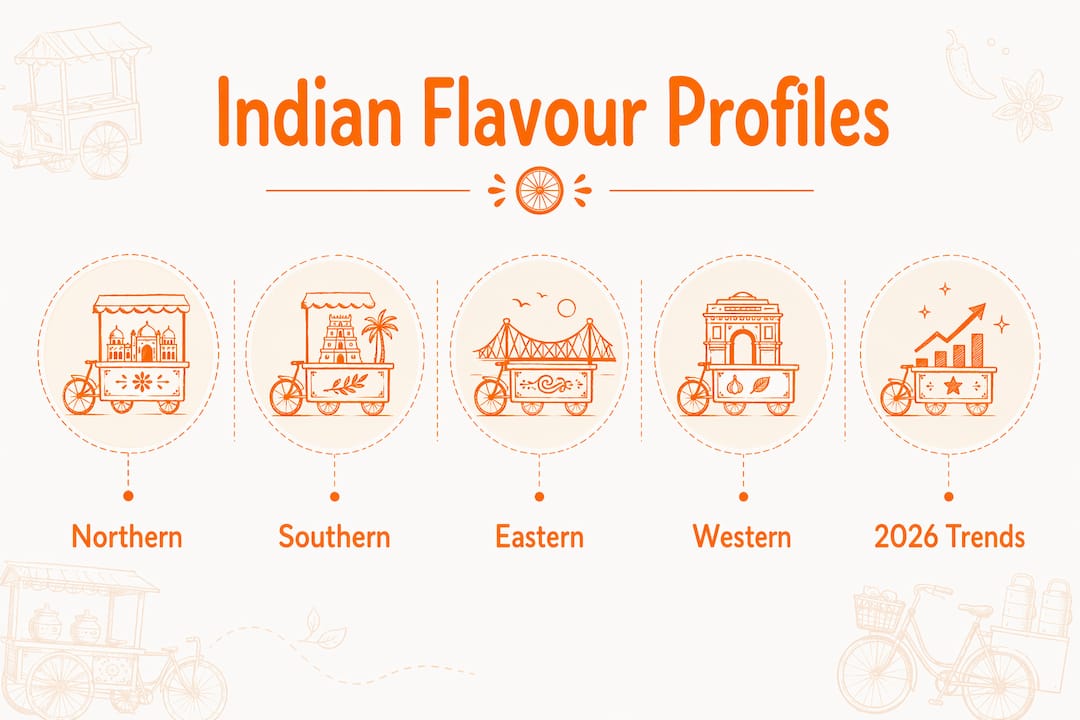
India’s regional cuisines cluster into four primary flavour profiles, each shaped by geography and local agriculture. Understanding these profiles gives you a practical framework for ordering with confidence and appreciating what you are tasting.
Northern India: wheat, dairy, and Mughlai depth
Northern cuisine is built on wheat-based breads, rich dairy gravies, and the layered spice heritage of Mughlai cooking. Dishes like butter chicken, rogan josh, and dal makhani rely on cream, ghee, and slow-cooked tomato bases. The cold winters of Punjab and Kashmir drive the preference for warming, fat-rich preparations. Garam masala, a blend of cinnamon, cardamom, cloves, and black pepper, is the defining spice mix of this region.
Southern India: rice, coconut, and tamarind
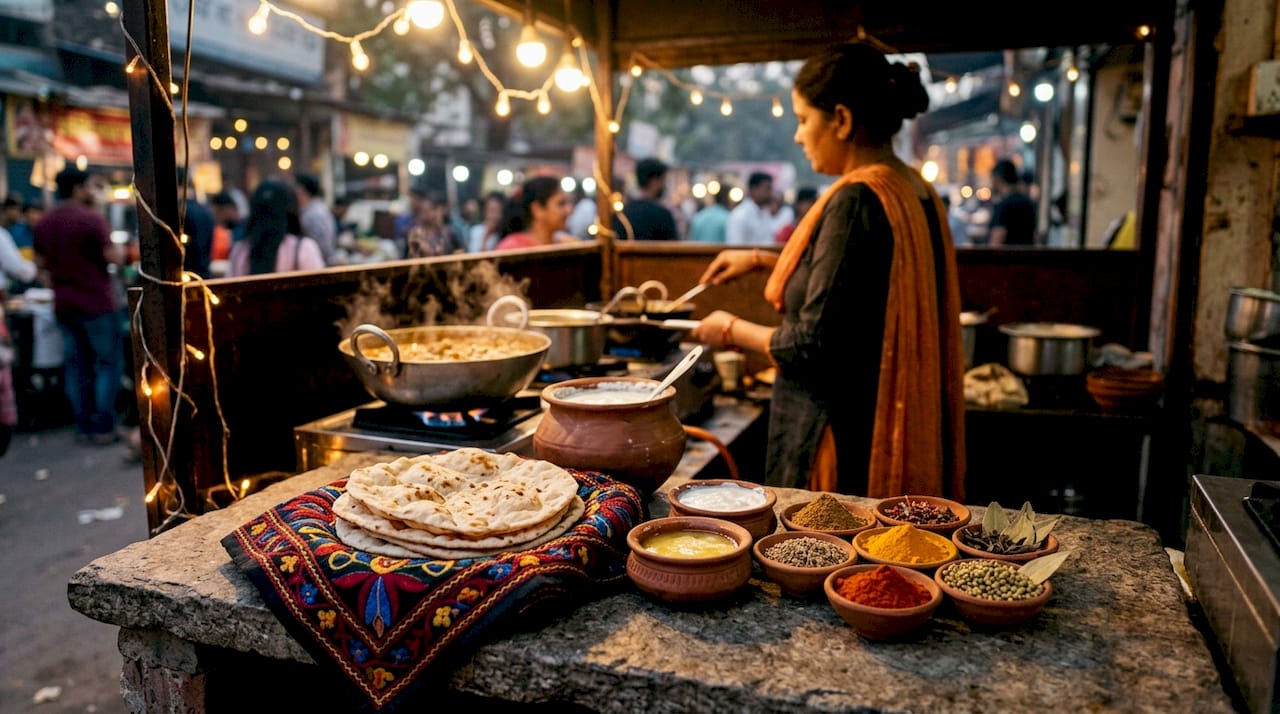
Southern cuisine pivots entirely on rice, coconut milk, tamarind, and mustard seeds. Fermented staples like idli and dosa are daily foods, not restaurant novelties. Curry leaves and dried red chillies fried in coconut oil create the region’s unmistakable base aroma. Dishes like sambar, rasam, and Chettinad chicken carry a sharpness and sourness that Northern cuisine rarely matches.
Eastern India: mustard, fish, and subtle sweetness
Eastern cuisine, particularly from Bengal and Odisha, leans on mustard oil, mustard seeds, and freshwater fish. The flavour profile is lighter than the North but more pungent than the South. A subtle sweetness runs through many Bengali dishes, including the famous macher jhol (fish curry) and mishti doi (sweet yoghurt). Panch phoron, a five-spice blend unique to the East, defines the region’s cooking.
Western India: pulses, dried fruits, and arid spice
Western cuisine spans the heat of Rajasthan and the coastal freshness of Goa. Rajasthani food relies on pulses, dried fruits, and bold spicing because the arid climate limits fresh produce. Goan cuisine, by contrast, uses coconut vinegar and Portuguese-influenced techniques to produce dishes like vindaloo and xacuti. The contrast within this single region alone illustrates why Indian food diversity cannot be reduced to a single menu.
| Region | Key Ingredients | Signature Dishes |
|---|---|---|
| North | Wheat, ghee, cream, garam masala | Butter chicken, rogan josh, dal makhani |
| South | Rice, coconut, tamarind, mustard seeds | Idli, dosa, sambar, Chettinad chicken |
| East | Mustard oil, fish, panch phoron | Macher jhol, mishti doi, shorshe ilish |
| West | Pulses, dried fruits, coconut vinegar | Dal baati churma, vindaloo, xacuti |
How do 2026 Indian food trends influence flavour exploration?
2026 is the year of “realness” in Indian cuisine. Diners are moving away from theatrical presentations and novelty towards hyper-regional, emotionally authentic cooking. This shift changes how you should approach a menu, a restaurant, and even a street food stall.
The most visible trend is the rise of chatpata maximalism. Chatpata describes a layered flavour experience combining spicy, tangy, salty, and savoury notes simultaneously. Restaurant menu mentions of “spicy” increased by 72.9% year-on-year in june 2026, reflecting a clear consumer appetite for bold, complex flavours. This is not heat for its own sake. It is the full sensory experience of Indian street food brought into formal dining.
Several specific formats are driving this trend forward:
- Idli grew 60.1% in consumer interest in 2026, signalling a renewed appetite for fermented, regional staples over generic dishes.
- Butter chicken entered an emerging lifecycle stage, meaning it is being reinterpreted with regional provenance rather than served as a generic crowd-pleaser.
- Momo (Himalayan dumplings) and chaat are appearing on contemporary menus as vehicles for layered, narrative-driven flavour.
- Savoury protein snacks with namkeen (salty, spiced) profiles are replacing sweet snacks in the Indian food-to-go category.
“Narrative dining, focusing on provenance and cultural stories behind food, is the next growth driver in India’s culinary scene in 2026.” — Godrej Food Trends Report 2026
The rise of women-led agricultural ecosystems is reshaping how restaurants source ingredients. Traceability and cultural story are now part of the dining experience. When a menu tells you where the turmeric was grown or who harvested the rice, that is a strong signal of authenticity.
How to navigate Indian spices, ingredients, and cooking fats
Understanding Indian “spice logics” is the single most useful skill for identifying authentic regional dishes. Generic curry powder is a Western invention. Authentic Indian kitchens use region-specific spice combinations, and they roast and grind them separately for each dish.
The key spices to recognise by region are:
- Garam masala: warm, aromatic, and dominant in Northern cooking. Used as a finishing spice, not a base.
- Mustard seeds: the starting point for most Southern and Eastern dishes. They are tempered in hot oil until they pop, releasing a nutty, sharp flavour.
- Curry leaves: fresh, not dried. They define the aroma of Southern cooking and lose most of their character when dried.
- Tamarind: the souring agent of the South and West. It adds a deep, fruity acidity that vinegar cannot replicate.
- Panch phoron: the Eastern five-spice blend of fenugreek, nigella, cumin, black mustard, and fennel seeds.
Cooking fats carry as much flavour information as spices. Ghee signals Northern or festive cooking and adds a rich, nutty finish. Mustard oil, used raw or heated to its smoking point, gives Eastern and Northern dishes a pungent, almost wasabi-like edge. Coconut oil defines the coastal South and West, adding sweetness and a tropical character.
Pro Tip: When you visit an Indian restaurant, ask whether spices are roasted and ground in-house. Authentic kitchens do this as a matter of course. Pre-mixed curry powder is the clearest sign of a generic kitchen.
Authentic culinary techniques like separate spice roasting and regional fat selection are the markers that separate a genuine regional experience from a generic one. Chaat, the street food category combining crispy bases, chutneys, yoghurt, and spiced chickpeas, is the best single dish for experiencing this layered spice logic in one bite.
What practical steps can travellers take to explore Indian flavours?
Authentic Indian cuisine exploration requires a focused approach. Generic “Indian restaurants” that serve dishes from every region simultaneously are rarely the best starting point. Focused regional menus, for example a restaurant dedicated to Rampur or Himachali cooking, are a key indicator of authenticity in 2026.
- Research before you arrive. Look for menus that name specific states or sub-regions. A menu listing “Chettinad chicken” or “Malvani fish curry” signals regional specificity. A menu listing only “chicken curry” does not.
- Use the Bharat Taste Atlas. The AI-powered Bharat Taste Atlas, launching in july 2026, maps Indian regional cuisines state by state. It is built to overcome stereotypes and support hyper-local food discovery.
- Order a thali. A regional thali gives you five to eight dishes simultaneously, covering the full flavour range of a single cuisine. It is the most efficient way to understand a region’s taste logic in one sitting.
- Start with street food. Eating street food chaat embodies the true culinary soul of India. Street food often represents local flavour more accurately than fine dining because it is made for local palates, not tourist expectations.
- Respect eating customs. Eating with the right hand is standard practice across much of India. Engaging tactile senses is part of the experience, not an optional extra. Approaching food this way changes how you perceive texture and temperature.
Pro Tip: When you find a restaurant with a short, focused menu, that is a good sign. Authentic regional kitchens do not try to serve every Indian dish. They do a few things exceptionally well.
Local cuisine plays a central role in travel experiences, and Indian food rewards travellers who invest time in understanding regional context before they eat.
How to incorporate 2026 Indian flavour trends into your own culinary experience
Bringing these trends into your own eating and cooking does not require specialist knowledge. It requires curiosity and a willingness to move beyond familiar dishes.
- Experiment with chatpata combinations. Mix tamarind chutney, green chilli paste, and yoghurt over roasted chickpeas at home. This replicates the layered flavour logic of chaat without complex technique.
- Use quality pre-prepared bases. Home cooking is evolving into a smarter hybrid approach, with high-quality pre-prepared spice bases allowing quicker authentic meals. Look for bases that list specific regional spices rather than generic “curry” blends.
- Seek provenance stories. When dining out, choose restaurants that explain where their ingredients come from. This is the narrative dining trend in practice, and it consistently signals better food.
- Explore mithai and savoury snack pairings. Modern Indian dining in 2026 pairs traditional sweets like gulab jamun or jalebi with savoury, spiced accompaniments. This sweet-savoury balance is a defining characteristic of Indian flavour culture.
- Finish dishes with ghee. A small spoonful of ghee stirred into dal or rice at the table is a traditional finishing technique. It adds richness and rounds out sharp spice notes in a way no other fat does.
Gastronomy trends in 2026 show that bold, region-specific flavours are gaining ground across global dining. Indian cuisine sits at the centre of this shift, offering the most complex and varied flavour vocabulary of any single national tradition.
Key takeaways
Authentic Indian cuisine exploration in 2026 requires understanding four distinct regional flavour profiles, recognising spice logics and cooking fats, and choosing focused regional menus over generic curry restaurants.
| Point | Details |
|---|---|
| Four regional profiles | North, South, East, and West each have distinct spice logics, fats, and signature dishes. |
| 2026 trend: realness | Diners favour hyper-regional, emotionally authentic cooking over theatrical novelty. |
| Spice logic over curry powder | Authentic kitchens roast and grind spices separately; generic curry powder signals a non-regional kitchen. |
| Street food as entry point | Chaat and regional street snacks represent local flavour more accurately than most restaurant menus. |
| Focused menus signal quality | Restaurants dedicated to one region or sub-region consistently deliver more authentic experiences. |
Why 2026 is the right moment to go deeper into Indian food
I have spent years watching food enthusiasts treat Indian cuisine as a single category, ordering the same three dishes and concluding they understand it. That approach misses almost everything. The real experience starts when you stop asking “what is Indian food?” and start asking “which India?”
What strikes me most about 2026 is that the industry itself is finally catching up with what serious food travellers have known for years. The shift towards hyper-regional, chef-driven concepts is not a trend. It is a correction. Indian cuisine has been flattened by decades of generic restaurant culture, and the current moment is a genuine reversal of that.
My practical advice is this: when you walk into any Indian restaurant, look at the menu length before you look at the dishes. A menu with forty dishes is almost certainly not cooking any of them with regional integrity. A menu with twelve focused dishes, each with a named origin, is worth your time and money.
The bold, layered flavours emerging in 2026, the chatpata maximalism, the namkeen protein snacks, the fermented staples like idli gaining mainstream attention, are not novelties. They are the everyday food of a billion people finally getting the recognition they deserve. Approach them with openness, eat with your hands when the occasion calls for it, and ask your server where the spices come from. You will eat better for it.
— YellowRock
Authentic Indian street food at Desigallibcn in Barcelona
Desigallibcn brings the energy and flavour depth of Indian street markets to the centre of Barcelona. The restaurant specialises in the dishes that define Indian street food culture: samosas, chaat, curries, and a full range of vegetarian and vegan options built on authentic regional spice logics.
If you want to experience the flavours, rituals, and culture of Indian street food without travelling to India, Desigallibcn is the place to start. The menu reflects the bold, layered tastes that define 2026 Indian food trends, from chatpata chaat to richly spiced curries. You can also explore the full range of Indian street food classics on the Desigallibcn menu, or browse the street desserts guide to understand the sweet side of Indian flavour culture before you visit.
FAQ
What are the four regional flavour profiles of Indian cuisine?
Indian cuisine divides into four primary profiles: Northern (wheat, dairy, garam masala), Southern (rice, coconut, tamarind), Eastern (mustard oil, fish, panch phoron), and Western (pulses, dried fruits, coconut vinegar). Each profile is shaped by local climate and agriculture.
What does “chatpata” mean in Indian food?
Chatpata describes a layered flavour combining spicy, tangy, salty, and savoury notes simultaneously. It is the defining taste logic of Indian street food and one of the dominant 2026 Indian food trends.
How do I identify an authentic Indian restaurant?
Look for a focused menu that names specific regions or states, uses regional spice names rather than generic “curry,” and can explain its cooking fats and spice sourcing. Restaurants dedicated to one regional cuisine consistently deliver more authentic experiences.
What is the Bharat Taste Atlas?
The Bharat Taste Atlas is an AI-powered food map of India developed by a team at IIIT Hyderabad, launching in july 2026. It maps regional cuisines state by state to help food lovers navigate Indian food diversity beyond common stereotypes.
What is the best dish for a first-time Indian food tasting experience?
Chaat is the best entry point. It combines multiple flavour layers, textures, and regional ingredients in a single dish, making it the most efficient introduction to Indian spice logic and street food culture.
Recommended
- Why embrace indian street flavours: a cultural guide – Desi Galli
- Indian flavours: Authentic tastes and culinary secrets – Desi Galli
- Defining indian food diversity: a regional guide – Desi Galli
- Indian spices list 2026: a home cook’s guide – Desi Galli