

Indian food has a reputation for being complex, spice-heavy, and best left to the experts. But that reputation is largely undeserved. The truth is, with a well-stocked spice cupboard, a grasp of two or three core techniques, and a willingness to experiment, you can produce genuinely satisfying Indian dishes at home. This guide cuts through the confusion and gives you practical, honest advice on where to start, what to buy, and how to cook with confidence from your very first attempt.
Table of Contents
- Stock up on essential Indian pantry staples
- Learn the secrets of perfect tadka (tempering)
- Build your curry foundations with the base masala
- Try beginner-friendly Indian recipes and street food at home
- What beginner cooks get wrong about Indian food (and how to fix it)
- Discover more flavours at Desi Galli
- Frequently asked questions
Key Takeaways
| Point | Details |
|---|---|
| Essential pantry list | Stock on classic Indian spices and aromatics for flavourful home cooking. |
| Master tadka technique | Tempering spices in the right order adds aroma and depth to every dish. |
| Build a solid curry base | Onion-tomato masala is the foundation for countless Indian dishes. |
| Easy recipes for beginners | Start with simple curries and street food snacks to build your skills and confidence. |
| Focus on balance, not complexity | Great Indian food is about layering flavours and textures, not hard-to-master rules. |
Stock up on essential Indian pantry staples
With your curiosity sparked, let’s start at the source: your spice cupboard.
Before you attempt a single recipe, you need to understand what goes into Indian cooking at its most fundamental level. Indian cuisine is not just about adding a lot of spice. It is about using the right spices, in the right order, at the right moment. The good news is that a surprisingly small collection of ingredients covers an enormous range of dishes.
The essential pantry staples for Indian cooking include:
- Turmeric (haldi): Earthy, slightly bitter, and responsible for that golden colour in curries and rice dishes.
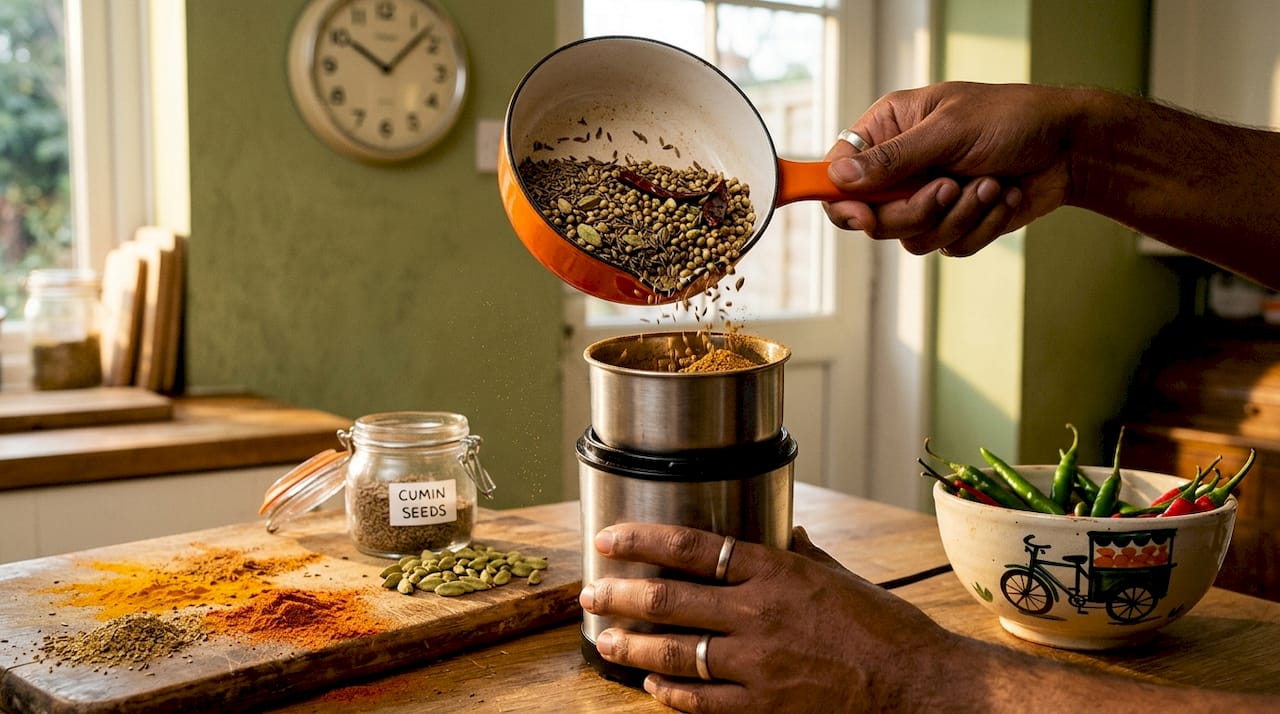
- Cumin (both seeds and ground powder): Seeds are used in tadka for a warm, nutty aroma; powder goes into masalas and marinades.
- Coriander powder: Mild and citrusy, it forms the backbone of most curry blends.
- Red chilli powder: Adjustable to your heat preference. Kashmiri chilli powder gives colour without too much heat, which is ideal for beginners.
- Garam masala: A warming blend of spices including cardamom, cloves, cinnamon, and black pepper. It is added at the end of cooking to preserve its aroma.
- Fresh onions, tomatoes, ginger, and garlic: These four ingredients form the base of most Indian curries and are non-negotiable.
Freshness matters enormously with spices. Ground spices lose their potency within six to twelve months, and stale cumin powder smells flat rather than fragrant. If your spices have been sitting in the cupboard for two years, replace them. You will notice the difference immediately.
Shopping tip: large supermarkets carry the basics, but Asian grocery shops and Indian food stores stock a far wider range at better prices. You will also find whole spices, dried curry leaves, and regional varieties that supermarkets simply do not stock. Look for shops in areas with established South Asian communities in your city.
When it comes to authentic Indian ingredients, sourcing quality produce makes a real difference to the final dish, whether you are cooking at home or eating out.
Pro Tip: Buy whole spices in small quantities and grind them yourself using a spice grinder or a small blender. Freshly ground cumin and coriander have a depth of flavour that pre-ground versions simply cannot match.
Learn the secrets of perfect tadka (tempering)
Once your pantry is stocked, the real magic begins with technique. Enter the transformative power of tadka.
Tadka, also called tempering or chaunk, is the process of frying whole spices in hot oil or ghee to release their essential oils and aromas. It is arguably the single most important technique in Indian cooking. Master it, and every dish you make will have that characteristic depth and fragrance that makes Indian food so distinctive.
Mastering tadka does not just improve one dish. It transforms every dal, curry, and vegetable you cook, adding layers of aroma and flavour that cannot be achieved any other way.
Here is a step-by-step method for beginners:
- Heat your fat: Place a small pan or ladle over medium-high heat. Add ghee or a neutral oil with a high smoke point. Wait until it shimmers. This is your signal that the temperature is right.
- Add whole spices first: Add whole spices such as mustard seeds or cumin seeds. In South Indian cooking, mustard seeds go in first. In North Indian cooking, cumin seeds are more common. Listen for the sizzle and pop.
- Add aromatics: Once the seeds have popped (usually within 15 to 20 seconds), add dried red chillies, curry leaves, or sliced garlic if your recipe calls for them. These will fry quickly.
- Add ground spices last: Ground spices go in at the very end of the tadka process, for no more than 10 to 15 seconds. They burn easily and turn bitter if left too long.
- Pour immediately: Pour the tadka over your dal, curry, or vegetable dish straight away, or use it as the starting base for building your curry.
The entire process takes 30 to 60 seconds. The most common mistake beginners make is walking away from the pan. Tadka waits for no one. Another frequent error is adding spices to oil that is not hot enough, which means they stew rather than fry, producing a flat, greasy result.
Regional differences matter here. In South India and Gujarat, mustard seeds and curry leaves are the foundation of tadka. In North India, cumin seeds dominate. Neither is wrong. They simply produce different flavour profiles. As you grow more confident, whole spices bloom better in high-smoke fats like ghee or refined oil, giving far more depth than ground spices alone.
Pro Tip: Always add garam masala at the very end of cooking, not during the tadka. Adding it too early destroys the delicate aromatic compounds that make it special.
Build your curry foundations with the base masala
With tadka under your belt, it is time to tackle the heart of Indian cuisine: the curry base.
Almost every Indian curry, regardless of region or ingredient, begins with the same fundamental base: onions, ginger, garlic, and tomatoes cooked down into a thick, deeply flavoured paste. This is called the base masala, and once you understand how to make it properly, you can adapt it to create dozens of different dishes.
Here is the standard method:
- Cook the onions: Finely chop your onions and cook them in oil over medium heat for 8 to 10 minutes until they turn a deep golden brown. Do not rush this step. Pale, undercooked onions produce a raw, sharp flavour.
- Add ginger-garlic paste: Stir in equal parts ginger and garlic, either freshly grated or blended into a paste. Cook until the raw smell disappears, roughly 2 to 3 minutes.
- Add tomatoes: Add chopped tomatoes or blended tomato puree. Cook until the mixture thickens and oil begins to separate around the edges of the pan.
- Add your ground spices: Once the oil separates, add turmeric, coriander powder, cumin powder, and chilli powder. Stir well and cook for another minute or two.
- Add your main ingredient and water: Add your protein, vegetable, or legume, then pour in measured water to reach your desired consistency. Simmer until cooked through.
| Stage | Timing | Visual cue |
|---|---|---|
| Onions | 8 to 10 minutes | Deep golden brown |
| Ginger-garlic paste | 2 to 3 minutes | Raw smell gone |
| Tomatoes | 5 to 7 minutes | Oil separates at edges |
| Ground spices | 1 to 2 minutes | Colour deepens, fragrant |
The oil separation moment is crucial and often misunderstood. When you see oil pooling around the edges of your masala, it means the water content of the tomatoes has cooked off and the spices have properly fried in the fat. This is when your base masala is ready. Skipping this step is one of the most common reasons beginners end up with curries that taste raw or one-dimensional.
Pro Tip: Make a large batch of base masala, portion it into an ice cube tray, and freeze it. Each cube gives you an instant curry base on busy weeknights, cutting your cooking time in half.
Try beginner-friendly Indian recipes and street food at home
Now you know the basics. It is time to put them into delicious action with recipes tailored for beginners.
The best way to build confidence is to start with dishes that are forgiving, quick, and deeply satisfying. Here are some excellent starting points:
- Tomato dal: Lentils simmered with tomatoes, turmeric, and finished with a cumin tadka. Ready in under 30 minutes and endlessly adaptable.
- Palak paneer: Spinach puree with cubes of fresh cheese. Creamy, mild, and a crowd-pleaser even for those new to Indian food.
- Butter chicken: Rich, mildly spiced tomato and cream sauce with tender chicken. Universally loved and surprisingly straightforward.
- Roti: Flatbread made with wholemeal flour, water, and a pinch of salt. The perfect vehicle for any curry or dal.
- Egg kati rolls: Scrambled or fried egg wrapped in a roti with chutney and sliced onion. A brilliant beginner street food recipe that comes together in minutes.
- Masala corn: Boiled or roasted corn tossed with butter, chilli, lime, and chaat masala. No cooking skill required, just bold seasoning.
| Recipe | Prep and cook time | Effort level | Best for |
|---|---|---|---|
| Tomato dal | 30 minutes | Easy | Weeknight dinners |
| Masala corn | 10 minutes | Very easy | Quick snacks |
| Palak paneer | 40 minutes | Moderate | Impressing guests |
| Egg kati roll | 15 minutes | Easy | Lunch or street snack |
| Butter chicken | 45 minutes | Moderate | Weekend cooking |
Indian street food is a slightly different world from restaurant curries. Dishes like pani puri (hollow fried shells filled with spiced potato and chickpea, then dipped in flavoured water) and masala corn are all about fresh assembly and bold combinations. The spicy, tangy, sweet, and crunchy elements need to hit at the same time. This balance is what makes street food so exciting.
If you are curious about enjoying Indian street food for the first time, understanding the Indian street food workflow helps you appreciate why each element is served the way it is. There are also real Indian street food benefits beyond just taste, including the use of fresh, whole ingredients and bold, natural flavours.
Pro Tip: Prepare your chutneys and fillings the night before. Green coriander chutney and tamarind chutney both keep well in the fridge for up to a week, and having them ready makes assembling street snacks genuinely effortless.
What beginner cooks get wrong about Indian food (and how to fix it)
Here is the honest truth that most beginner guides skip over: the biggest obstacle to cooking good Indian food is not skill. It is mindset.
Many beginners approach Indian cooking as if it were a chemistry exam. They obsess over getting every measurement exactly right, worry about whether they have the correct regional spice blend, and give up if a dish does not look like the photograph. This is entirely the wrong way to think about it. Indian home cooking has always been intuitive, regional, and deeply personal. There is no single correct version of dal or curry.
The layered flavour approach of tadka, base masala, and slow simmering is a framework, not a rigid rulebook. Once you understand why each step exists, you can start to adapt it confidently. Undercooked onions taste sharp? Cook them longer. Curry too thick? Add a splash of water. Too mild? Add a pinch more chilli. These are not failures. They are the process.
Another common mistake is treating spices as decoration rather than as the structural foundation of the dish. Freshness matters enormously. A curry made with fresh whole spices that you have ground yourself will taste dramatically different from the same recipe made with two-year-old pre-ground powder from the back of the cupboard. This single change, buying fresh spices in small quantities, will improve your cooking more than any technique tip.
Street food is where beginners often feel most intimidated, but it should be the opposite. Pani puri and kati rolls do not require long cooking times or complex techniques. They require fresh ingredients, good seasoning, and the confidence to taste and adjust as you go. The balance of spicy, tangy, sweet, and crunchy is something you develop by eating and experimenting, not by following a recipe to the letter.
Discover more flavours at Desi Galli
Armed with fresh confidence and skills, many home cooks crave new tastes and real-life inspiration. Here is where you can find it beyond your own kitchen.
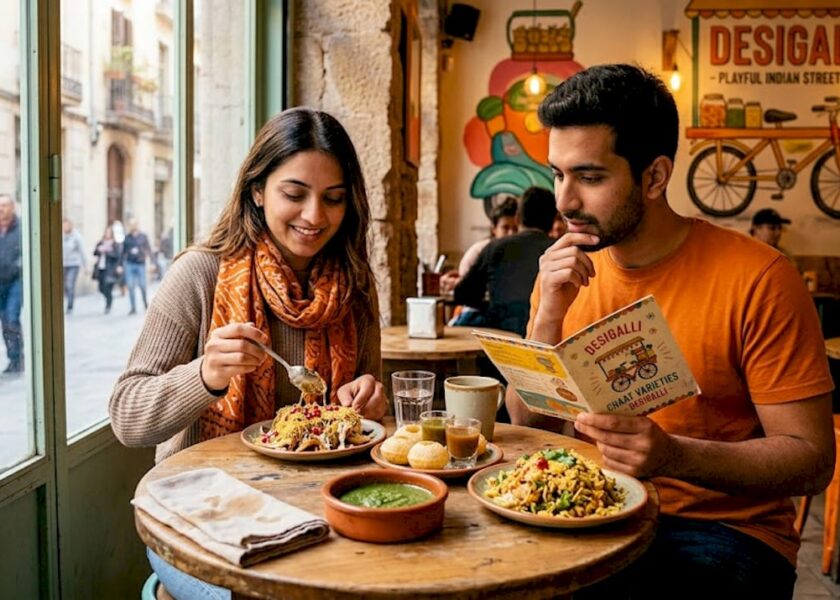
If you want to experience what authentic Indian street food truly tastes like before or alongside your home cooking journey, Desi Galli in Barcelona brings the energy, colour, and bold flavours of Indian street markets right to the heart of the city. Tasting the real thing is one of the best ways to calibrate your own cooking and understand what you are aiming for.
From samosas and chaat to rich curries and vibrant vegetarian dishes, the menu at Desi Galli is a brilliant reference point for any beginner cook. Explore Indian street food dishes that showcase the very combinations of spice, texture, and freshness you are learning to recreate at home. Whether you visit in person or browse the menu for inspiration, it is a genuinely useful next step in your Indian food journey.
Frequently asked questions
What are the basic spices needed for Indian cooking?
Turmeric, cumin, coriander powder, red chilli powder, and garam masala form the core spice set, alongside fresh onion, tomato, ginger, and garlic as your base ingredients.
What does tadka mean and why is it important?
Tadka, or tempering, is the process of frying whole spices in hot fat to release their essential oils. Whole spices fried in ghee create layers of aroma and depth that ground spices added directly to a pot simply cannot replicate.
How do I avoid my curries turning watery?
Use measured water and always wait for the oil to separate from your masala before adding liquid. Simmering uncovered for the last few minutes also helps thicken the sauce naturally.
What are good beginner dishes to practise Indian cooking?
Tomato dal, palak paneer, butter chicken, roti, egg kati rolls, and masala corn are all excellent starting points, each using the core techniques covered in this guide.
Can I make Indian street food at home without special equipment?
Yes. Most Indian street food recipes require nothing more than a standard frying pan, a saucepan, and a sharp knife. Good seasoning and fresh ingredients matter far more than specialist equipment.
Recommended
- Guía para probar comida india: vive una experiencia auténtica – Desi Galli
- Descubre la autenticidad de la cocina india: sabores reales – Desi Galli
- Ingredientes frescos en India: clave auténtica 2026 – Desi Galli
- Guía para combinar platos indios y crear experiencias únicas – Desi Galli
- Définition de la cuisine italienne : l’authenticité à table



Comments(02)