
If your spice drawer feels more like a source of confusion than inspiration, you are not alone. The indian spices list 2026 covers dozens of whole spices, ground powders, and aromatic blends, each playing a specific role in authentic Indian cooking. Knowing which spices to prioritise, how to use them correctly, and what quality standards matter right now can genuinely transform the food you cook at home. This guide cuts through the complexity with a practical, curated breakdown of the top Indian spices 2026 every serious home cook needs.
Table of Contents
- Key takeaways
- 1. Cumin seeds (jeera)
- 2. Mustard seeds (rai)
- 3. Coriander seeds and powder (dhania)
- 4. Turmeric (haldi)
- 5. Green cardamom (elaichi)
- 6. Red chilli powder (lal mirch)
- 7. Garam masala
- 8. Fenugreek seeds and leaves (methi)
- 9. Whole spices for the expanded pantry
- 10. Masala blends beyond garam masala
- 11. Quality, safety, and buying in 2026
- 12. Quick comparison guide for home cooks
- My honest take on mastering Indian spices
- Taste the spices at Desigallibcn in Barcelona
- FAQ
Key takeaways
| Point | Details |
|---|---|
| Whole spices first | Add whole spices at the start of cooking during tempering to release their essential oils without burning. |
| Ground spices go in later | Powdered spices burn quickly and turn bitter, so add them after the initial tempering stage. |
| Masalas finish dishes | Blends like garam masala work best stirred in near the end of cooking as aromatic finishers. |
| Quality matters in 2026 | New EU food safety limits are tightening MOSH/MOAH contamination controls, so choose trusted spice sources. |
| Build your pantry in stages | Start with a core set of ten to twelve spices, then expand as your cooking style develops. |
1. Cumin seeds (jeera)
Cumin is probably the single most used spice in Indian cooking. The seeds go into hot oil or ghee at the very start of a dish, releasing a warm, nutty, slightly smoky aroma that forms the flavour base of curries, dals, rice dishes, and chutneys.
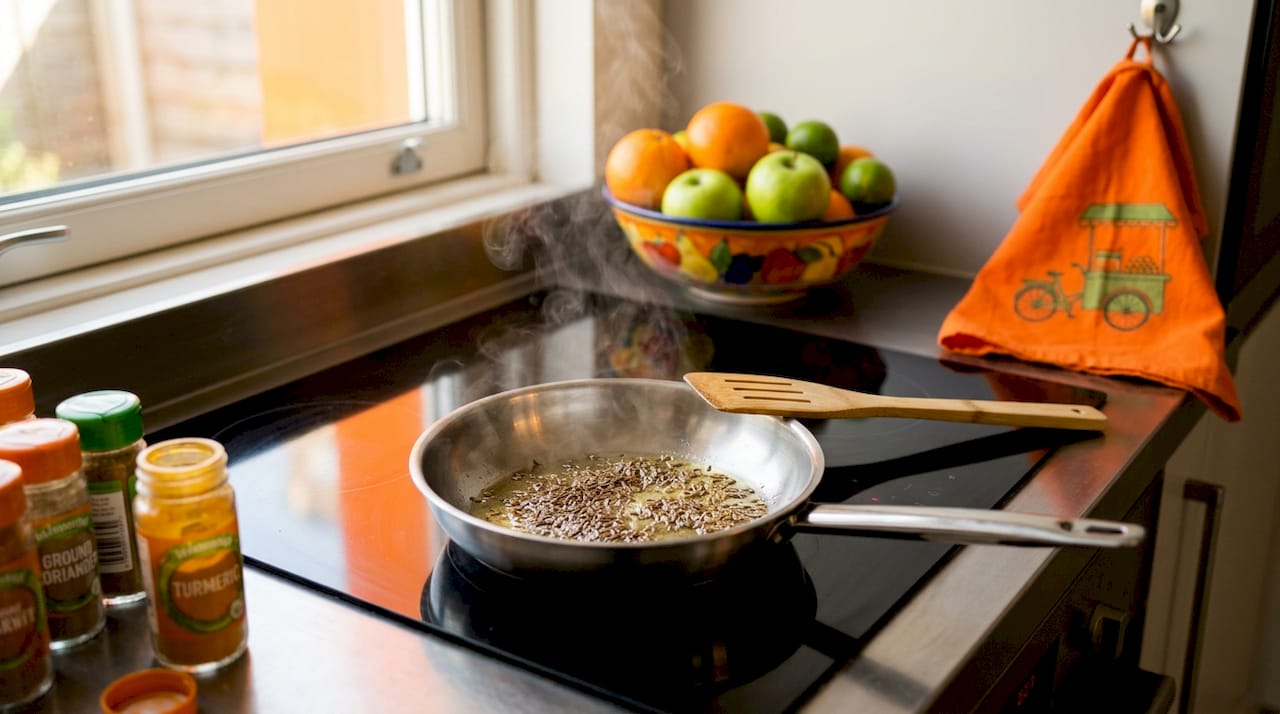
What surprises many home cooks is how quickly cumin seeds go from golden and aromatic to burnt and acrid. They need about thirty seconds in hot oil. Watch them closely and move on to the next stage the moment you see them begin to darken.
Ground cumin, sold as jeera powder, gets added later in the cooking process and contributes a different character: deeper, earthier, slightly less bright than the whole seed. Both forms deserve a permanent place on your shelf.
2. Mustard seeds (rai)
Mustard seeds are the first spice into the pan in many South Indian and Maharashtrian recipes. They pop and crackle in hot oil to signal that the fat is ready for the next ingredient. Their flavour before popping is sharp and pungent. After they pop, they mellow into something nutty and mild.
Use black or brown mustard seeds for Indian cooking, not the yellow variety associated with European condiments. Yellow mustard seeds have a noticeably different flavour profile.
3. Coriander seeds and powder (dhania)
Coriander works in both whole and ground forms. The whole seeds add a gentle, citrusy warmth during tempering. Ground coriander powder is one of the most frequently used powdered spices in Indian cooking, appearing in virtually every curry, vegetable dish, and marinade.
Coriander and cumin are used together so often in Indian cooking that many cooks store them as a pre-mixed powder called dhania jeera. If you only buy one pre-blended powder beyond garam masala, make it this one.
4. Turmeric (haldi)
Turmeric is non-negotiable in most Indian recipes. It adds its unmistakable golden colour to rice, dal, and curries, along with a mild, earthy, slightly bitter background note. The colour is intense enough to stain clothes permanently, so handle with care.
Turmeric adds colour and earthiness to a dish and works almost exclusively in ground powder form in everyday Indian cooking. Add it after your initial tempering stage, usually alongside the onions, and always cook it in the oil for at least a minute before adding liquid. Raw turmeric tastes unpleasantly chalky.
5. Green cardamom (elaichi)
Green cardamom is one of those spices that signals quality and care. The whole pods go into rice dishes, biryanis, and masala chai. Crushed or ground, the seeds add a floral, sweet, slightly menthol flavour to desserts and masala blends.
Cardamom and cloves contribute aroma especially in biryani and garam masala. Lightly crush the pods before adding them whole to oil so the seeds inside have contact with the fat. Ground cardamom loses potency quickly, so buy it in small quantities.
6. Red chilli powder (lal mirch)
Red chilli powder in Indian cooking is not a single product. Kashmiri chilli powder is bright red and mild, valued primarily for colour. Regular red chilli powder carries the heat. Many authentic recipes use a combination of both to get vibrant colour and controlled spice level.
Pro Tip: Never add chilli powder directly to very hot, dry oil. It scorches in seconds. Add it with a splash of water or stir it through softened onions to cook it without burning.
7. Garam masala
Garam masala is perhaps the most misunderstood spice blend in Indian cooking. Many home cooks add it early in the process along with other powders. The correct approach is to stir it in at the end. Garam masala works as a finishing spice, adding warmth and aromatic complexity to a dish that is already cooked.
The blend typically includes cinnamon, cardamom, cloves, cumin, and black pepper in proportions that vary significantly by region and brand. Northern Indian garam masala tends to be warmer and richer. Southern versions may include dried red chillies or curry leaves.
8. Fenugreek seeds and leaves (methi)
Fenugreek has a distinctive bitter, slightly maple-like flavour that is polarising but central to several key dishes. The seeds go into tempering for certain dals and vegetable dishes. Dried fenugreek leaves, known as kasuri methi, are crumbled over finished dishes to add a savoury, slightly herbaceous note.
Kasuri methi is the secret ingredient in restaurant-style butter chicken and paneer tikka masala. If a restaurant dish has that characteristic depth you cannot quite replicate at home, it is often because you forgot the kasuri methi at the end.
9. Whole spices for the expanded pantry
Once you are comfortable with the basics, these additional whole spices open up new layers of flavour:
- Carom seeds (ajwain): Sharp, thyme-like flavour used in breads, fritters, and digestive recipes
- Fennel seeds (saunf): Sweet, anise-scented; used in Kashmiri cooking and as an after-dinner digestive
- Nigella seeds (kalonji): Onion-like, slightly bitter; essential on naan bread and in Bengali five-spice blends
- Poppy seeds (khus khus): Nutty and subtle; ground into pastes for thickening gravies in Mughal-style dishes
- Bay leaves (tej patta): Add a subtle eucalyptus-like warmth to rice and slow-cooked curries
Pro Tip: Whole spices used in tempering do not always need to be eaten. When large pieces like cinnamon sticks, bay leaves, and cloves appear in a dish, they are flavour vehicles. Warn guests to push them aside rather than bite into them.
10. Masala blends beyond garam masala
Pre-made masala blends save time and, when made by a trusted producer, deliver consistent results. The key is knowing when to use them.
- Biryani masala: A bolder, more complex blend than standard garam masala, often including star anise, mace, and kewra essence. Stir it into the rice cooking water or the meat marinade.
- Tandoori masala: Used in marinades for grilled and oven-baked dishes. Contains smoked paprika or Kashmiri chilli for that characteristic red colour alongside coriander, cumin, and ginger.
- Chaat masala: A sour, salty, deeply savoury blend of dried mango powder (amchur), black salt, and cumin. Sprinkled cold over snacks and salads, never cooked.
- Sambar powder: Essential for South Indian cooking. Contains dried red chillies, coriander, cumin, and a blend of dried lentils toasted into the mix.
The freshness of any blend matters more than the brand on the tin. Buy in small quantities and replace every six months.
11. Quality, safety, and buying in 2026
The spice market in 2026 is operating under increased scrutiny. MOSH/MOAH contamination in spices is a genuine concern, and proposed EU limits are tightening further over the next few years. These are mineral oil hydrocarbons that can enter the supply chain through packaging, processing equipment, or jute bags used during transport.
“The Indian Spices Board issued guidelines covering every step from farm to packaging, reflecting how seriously the industry is treating contamination risks in 2026.” Spices Board India
For home cooks, the practical response is straightforward. Buy from brands that sell in sealed, opaque packaging with clear batch and origin labelling. Avoid loose spices from uncovered bins in humid conditions. Store whole spices in airtight glass jars away from direct sunlight. Ground spices should be replaced every six to twelve months regardless of how they smell, because the volatile compounds that carry flavour degrade before any obvious change in odour.
12. Quick comparison guide for home cooks
| Spice | Form | Flavour note | When to add | Priority |
|---|---|---|---|---|
| Cumin seeds | Whole | Warm, nutty | Start (tempering) | Essential |
| Turmeric | Ground | Earthy, slightly bitter | With onions | Essential |
| Coriander powder | Ground | Citrusy, mild | With onions | Essential |
| Garam masala | Blend | Warm, aromatic | End of cooking | Essential |
| Green cardamom | Whole | Floral, sweet | Start or marinade | High priority |
| Mustard seeds | Whole | Nutty after popping | Start (tempering) | High priority |
| Kasuri methi | Dried leaf | Savoury, herbaceous | End of cooking | High priority |
| Nigella seeds | Whole | Onion-like, bitter | Start (tempering) | Expand later |
| Chaat masala | Blend | Sour, salty | Cold, as garnish | Expand later |
| Fennel seeds | Whole | Sweet, anise | Start or marinade | Expand later |
The “Essential” tier covers perhaps ninety per cent of authentic Indian home cooking. Start there, get comfortable with each spice, then build outward.
My honest take on mastering Indian spices
I’ve cooked with Indian spices long enough to know that the biggest mistake isn’t using the wrong spice. It’s the wrong timing. The moment tempering technique clicked for me, that distinction between whole spices going in first and ground spices coming in later, the flavour of everything I cooked changed.
What I’ve also learnt is that buying cheap, unbranded spices costs more in the long run. Flat-tasting cumin and grey-looking turmeric are almost certainly old or contaminated. The MOSH/MOAH safety standards being tightened in 2026 aren’t bureaucratic noise. They reflect real quality issues that affect flavour directly.
My final piece of advice: treat the Indian spices guide as a living document rather than a fixed list. Spices you dismiss now, like ajwain or kalonji, become indispensable once you try the dishes they belong to. Stay curious, buy fresh, and time your spices correctly.
— YellowRock
Taste the spices at Desigallibcn in Barcelona
Understanding a spice on paper is one thing. Tasting it in a dish made by people who have cooked with these ingredients their whole lives is something else entirely. Desigallibcn in Barcelona brings the full energy of Indian street food cooking to the city, with every dish built around authentic spice combinations, correct technique, and fresh ingredients.

From samosas loaded with cumin and ajwain to chaat topped with tangy chaat masala, the menu at Desigallibcn is a practical masterclass in what these spices actually do in context. If you want to understand Indian street food flavours firsthand before recreating them at home, this is the place in Barcelona to start. Book a table, eat well, and bring your spice questions with you.
FAQ
What whole spices are most important for Indian cooking?
Cumin, mustard seeds, coriander seeds, and green cardamom form the most essential group. These four cover the majority of tempering requirements across North and South Indian recipes.
When should you add ground spices in Indian cooking?
Powdered spices burn easily and turn bitter, so add them after the initial tempering stage, usually alongside softened onions or with a splash of water to prevent scorching.
What is the correct way to use garam masala?
Garam masala is an aromatic finishing blend and should be stirred into a dish in the final minute of cooking, not at the start. Adding it early destroys its delicate volatile aromas.
How do 2026 food safety standards affect buying Indian spices?
Proposed EU MOAH limits in spices drop to 10 mg/kg by 2027. Buy from brands with sealed, labelled packaging to stay on the right side of current quality standards.
How long do Indian spices stay fresh?
Whole spices retain flavour for up to two years in airtight containers. Ground spices should be replaced every six to twelve months, as their volatile compounds degrade well before any visible or obvious change in smell occurs.
Recommended
- Essential Indian food tips for beginners: master authentic flavours – Desi Galli
- Top Indian spices to try for bold street food flavour – Desi Galli
- Indian flavours: Authentic tastes and culinary secrets – Desi Galli