Street food etiquette is defined as the set of behavioural and cultural practices that allow diners to eat respectfully, smoothly, and without causing offence at street food stalls, hawker centres, and outdoor food markets worldwide. Whether you are working through a plate of chaat at an Indian street market or ordering takoyaki in Osaka, these unwritten rules shape every interaction. Knowing the right street food etiquette tips before you travel is the difference between blending in with locals and accidentally disrupting the rhythm of a busy food stall. This guide covers queuing, seating, eating manners, tipping, and cultural specifics from India, Singapore, and Japan so you can eat with confidence wherever you go.
1. Queue and order with purpose
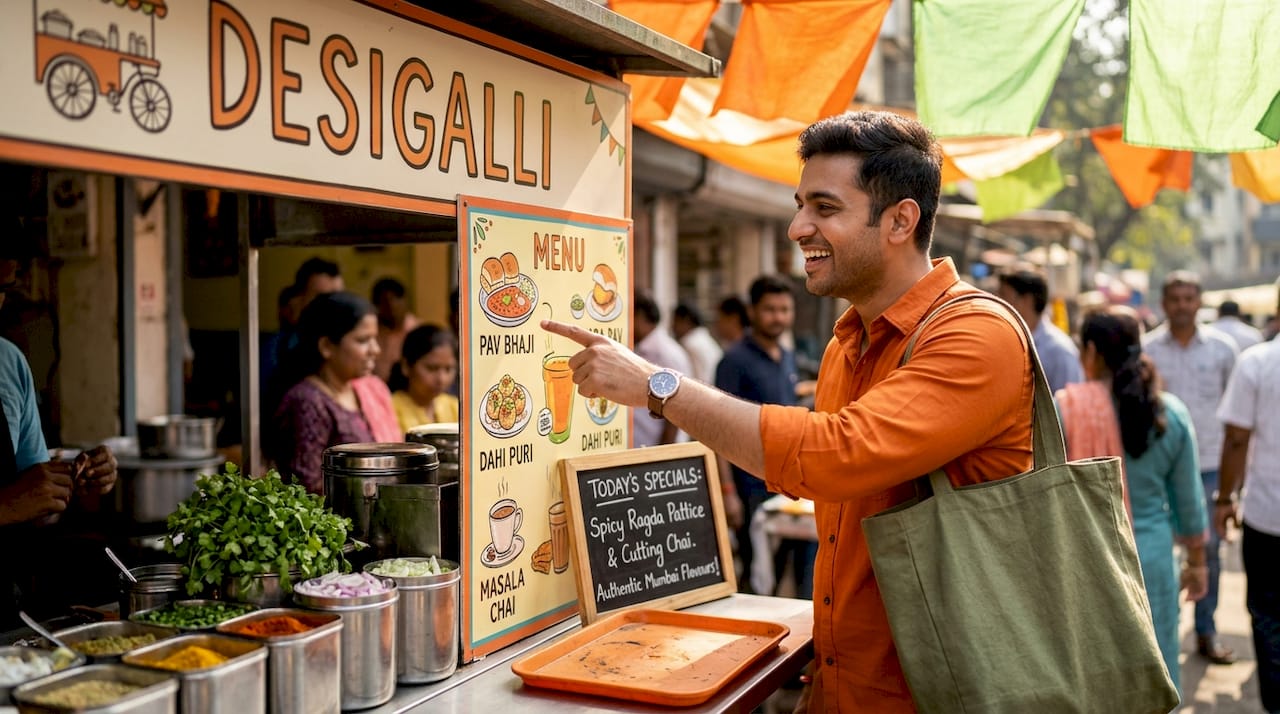
Proper queue discipline is the foundation of respectful street food dining. Mirroring local ordering systems is the single most effective way to avoid disrupting vendor workflow and drawing unwanted attention. Watch how locals queue, whether they form a single line, call out orders, or collect a ticket, and copy that behaviour exactly.
- Prepare your order before you reach the front. Hesitating while a vendor waits costs everyone time.
- Ask “How do I order here?” when the system is unclear. Vendors appreciate the question far more than a confused pause.
- Avoid cutting in line, even accidentally. In Singapore hawker centres, the queue order is taken seriously and jumping it causes real friction.
- Keep your payment ready. Many stalls combine kitchen, cashier, and serving into one person, so fumbling for change slows the entire operation.
Pro Tip: Scan the stall menu board while you wait in the queue so you arrive at the front with a clear, confident order. This single habit marks you as a considerate diner in any country.
Street food stalls in cities like Singapore, Bangkok, and Mumbai run on tight margins and high turnover. Ordering decisively is not just polite. It is a practical act of respect for the vendor’s livelihood.
2. Seating and sharing tables at busy venues
At crowded food courts and hawker centres, seating etiquette is its own discipline. The most important concept to understand is chope-ing, the Singaporean practice of reserving a seat by placing a personal item such as a tissue packet, umbrella, or key ring on the table. An empty table with a personal item on it is considered taken. Moving those items causes genuine conflict.
- If you see a marked seat, treat it as unavailable and look elsewhere.
- To share a table with strangers, make brief eye contact and ask politely. A simple “May I sit here?” is universally understood and appreciated.
- Do not hover over occupied tables waiting for diners to leave. It creates pressure and is considered rude in most street food cultures.
- Keep your belongings compact. Spreading bags and coats across shared bench seating is inconsiderate in tight spaces.
The logic behind these norms is practical. Seat markers prevent chaos in high-turnover environments where dozens of people are searching for a spot simultaneously. Respecting the system keeps the whole venue running smoothly for everyone, including you.
3. Eating manners that show genuine respect
How you eat matters as much as what you eat. Chopstick etiquette alone carries significant cultural weight across East Asia. Never stick chopsticks upright in rice, as this gesture directly mirrors a funeral rite and signals death to those around you. Equally, passing food baton-style between two pairs of chopsticks is associated with cremation rituals and causes real offence.
“Chopstick etiquette reflects deeper cultural respect signalling. Avoiding funeral-associated gestures prevents unintended offence that no amount of apology can fully undo.”
Additional eating manners worth knowing:
- Do not rub disposable chopsticks together. This gesture implies the chopsticks are cheap and can insult the vendor.
- Avoid tapping bowls or utensils on the table. In formal East Asian dining, this is associated with begging.
- Keep noise levels reasonable. Slurping noodles is acceptable in Japan as a sign of enjoyment, but loud talking or shouting across a shared table is not welcome anywhere.
- Clean up any spills immediately and leave your immediate eating area tidy.
Pro Tip: Rest chopsticks on the provided chopstick holder or across the rim of your bowl when not in use. This small detail signals cultural awareness and is noticed by locals.
Eating manners are not about rigid formality. They are about signalling that you understand and respect the culture you are visiting. That signal opens doors, starts conversations, and earns you better service.
4. Walking while eating: know the local rules
Eating while walking, known in Japan as tabearuki, is considered messy and disrespectful in several countries. Some historical districts in Japan impose fines to enforce this cultural norm, particularly in areas like Kyoto’s Gion district and the streets of Kamakura. The expectation is that you eat stationary, near the vendor’s stall, and dispose of your packaging before moving on.
This rule surprises many Western tourists who associate street food with eating on the move. The reasoning is straightforward: eating while walking increases litter, creates hygiene concerns in narrow streets, and is seen as disrespectful to the food itself. Japan’s street food culture treats each dish as worth pausing for, not rushing past.
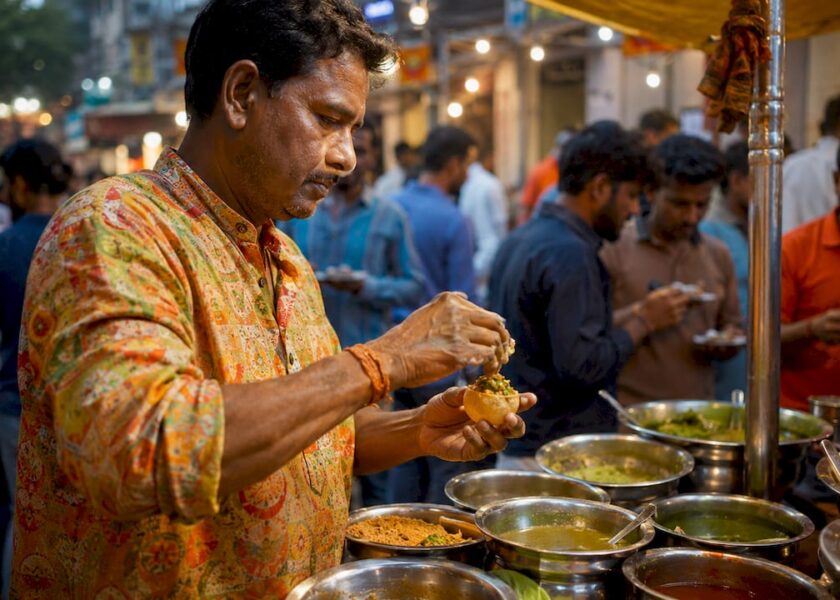
In India, the opposite norm often applies. Eating while standing at a stall, known as khadi khana, is entirely normal and even preferred at busy chaat counters. The advantages of street food experience vary dramatically by country, and understanding local movement norms is part of reading the room correctly.
5. Tipping and payment at street food stalls
Tipping norms at street food stalls vary more than almost any other aspect of dining etiquette. Tipping on takeout is not required but small tips are appreciated when service involves extra effort such as packaging, curbside delivery, or a particularly warm interaction. For sit-down street food meals with table service, tipping 18 to 20 per cent is standard practice in the United States, while in many Asian countries tipping is not expected at all and can occasionally cause confusion.
| Setting | Tipping expectation |
|---|---|
| Walk-up counter, no table service | Optional. Small change is a kind gesture. |
| Sit-down street food with table service | 15 to 20 per cent is appropriate. |
| Hawker centre in Singapore | Not expected. Tipping is uncommon. |
| Street stall in India | Small rounding up of the bill is appreciated. |
| Street vendor in Japan | Tipping is not practised and can cause awkwardness. |
The safest approach is to observe local custom before reaching for your wallet. If locals are not tipping, follow their lead. If you want to express gratitude, a genuine smile and a verbal thank you carry more weight in many cultures than a coin left on the counter.
6. Cultural specifics: India, Singapore, and Japan
Understanding must-know Indian dining etiquette, Singaporean hawker culture, and Japanese street food customs gives you a practical framework for three of the world’s most distinct street food traditions.
| Country | Key etiquette practice | Why it matters |
|---|---|---|
| India | Eat with your right hand; group ordering is communal and dishes are shared | Left hand is considered unclean in traditional practice |
| Singapore | Return trays and crockery to designated stations after eating | Mandatory by law since 2021; reduces cleaner workload |
| Japan | Eat stationary near the vendor; dispose of packaging at the stall | Tabearuki is disrespectful and fined in some districts |
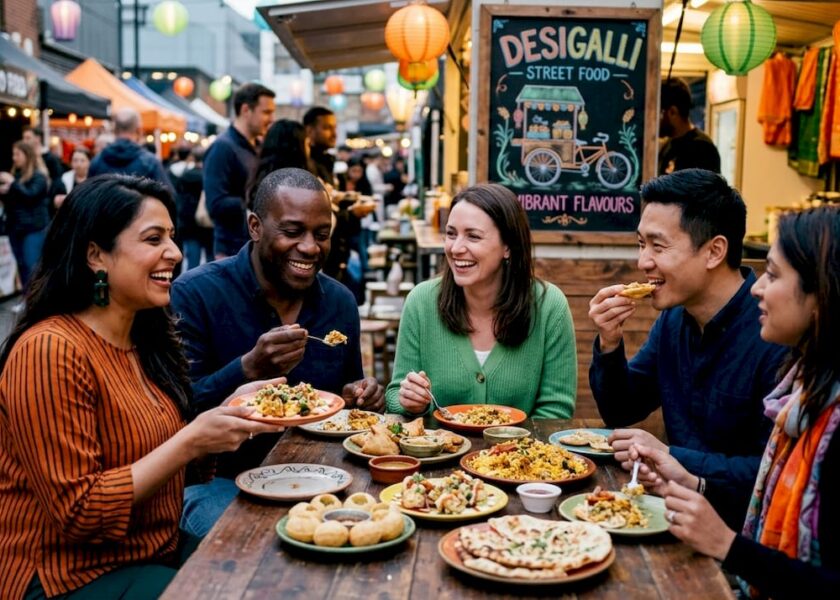
Indian group dining etiquette deserves particular attention. Ordering in India is rarely an individual act. At street food stalls, it is common for one person to order on behalf of the group, dishes arrive to share, and the bill is settled collectively. Attempting to split every item individually can slow service and read as socially awkward. Embrace the communal spirit and you will find the experience far richer. For a deeper look at Indian dining rituals, the cultural context behind the food is as important as the food itself.
Singapore’s tray-return law, in force since 2021, promotes operational efficiency and community respect by reducing cleanup burden and improving table turnover. Ignoring it is not just bad manners. It is a legal offence. Japan’s approach to litter and packaging is equally strict: vendors provide bins specifically for their packaging, and using them is expected, not optional.
Key takeaways
Respectful street food dining requires cultural observation, decisive ordering, and a willingness to follow local norms rather than imposing your own habits.
| Point | Details |
|---|---|
| Observe before you act | Watch how locals queue, order, and pay before making your first move at any stall. |
| Respect seating customs | In Singapore hawker centres, never move chope markers. Always ask before sharing a table. |
| Mind your chopstick use | Never stand chopsticks upright in rice or pass food between chopsticks. Both gestures cause genuine offence. |
| Match tipping to context | Tipping is not universal. Observe local practice and offer small change only where it is welcomed. |
| Adapt to movement norms | In Japan, eat stationary near the stall. In India, standing at the counter is perfectly normal. |
What I have learned from eating street food on four continents
The most common mistake I see tourists make is treating street food etiquette as a list of rules to memorise rather than a set of signals to read. Rules are static. Street food culture is alive, and it shifts from city to city, stall to stall, and even hour to hour depending on how busy a venue is.
The single habit that has served me best is arriving early and watching for ten minutes before ordering. You learn the queue system, the payment method, whether people share tables, and whether the vendor prefers cash or card. All of that information is visible if you slow down long enough to look. Asking a local “Is this how it works here?” has never once been received badly. People are almost always delighted that you asked.
I will also say this plainly: the etiquette enriches the food. Eating a samosa the way a local eats it, standing at the counter, paying the right amount, saying thank you in the right way, makes the flavour better. That sounds like a cliché until you experience it. The food tastes different when you are genuinely part of the scene rather than observing it from the outside.
For anyone travelling to Barcelona and wanting to practise authentic Indian street food etiquette before heading to India, start with a meal that puts you in the right frame of mind. The customs are learnable. The rewards are real.
— YellowRock
Experience Indian street food culture at Desigallibcn in Barcelona
Desigallibcn brings the energy of Indian street markets to the heart of Barcelona, with samosas, chaat, curries, and vibrant vegetarian dishes served in a casual atmosphere that mirrors the warmth of a Mumbai food stall. It is the ideal place to practise the etiquette covered in this guide before your next trip to India, or simply to enjoy one of the city’s most authentic culinary experiences.
Whether you are a first-time visitor to Indian cuisine or a seasoned food traveller, Desigallibcn offers the context and the flavours to make the experience meaningful. Explore the full range of Indian street food flavours and rituals and discover what makes this cuisine so distinct. Book your table and arrive ready to eat well, eat respectfully, and eat like a local.
FAQ
What are the most important street food etiquette tips?
The most important street food etiquette tips are to observe locals before ordering, respect queue systems, follow seating customs, and adapt your tipping behaviour to the country you are in. Cultural observation is more reliable than any fixed rule.
What is chope-ing in Singapore hawker centres?
Chope-ing is the Singaporean practice of reserving a seat by placing a personal item such as a tissue packet or umbrella on the table. Moving these markers is considered disrespectful and causes conflict in busy hawker centres.
Is tipping expected at street food stalls?
Tipping at street food stalls is not universally expected. In Japan and Singapore it is uncommon, while in the United States a small tip is appreciated for counter service. Observing what locals do is the safest guide.
What is tabearuki and why does it matter?
Tabearuki is the Japanese term for eating while walking, and it is considered disrespectful in Japan. Some historical districts impose fines for the practice, so visitors should eat stationary near the vendor’s stall.
How does Indian group dining etiquette work at street food stalls?
Indian street food ordering is communal by nature. One person typically orders for the group, dishes are shared, and the bill is settled collectively. Attempting to divide every item individually slows service and goes against the social spirit of the meal.
Recommended
- Advantages of street food experience: a global guide – Desi Galli
- Indian food pairing tips for your Barcelona street food – Desi Galli
- Street Food Experience: Sabores Indios en Barcelona – Desi Galli
- Steps to enjoy authentic Indian street food in Barcelona – Desi Galli