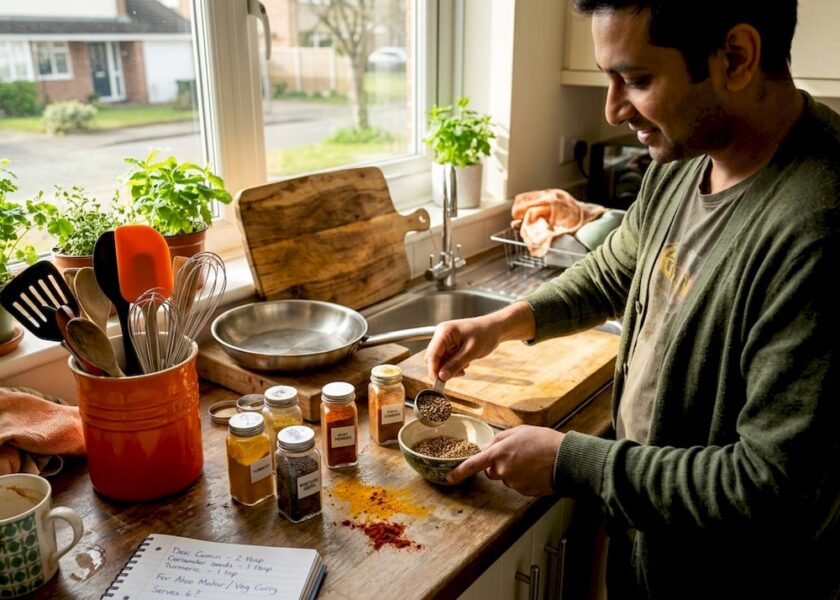

Curry is one of the most misunderstood words in the culinary world. Most people think they know what is curry: a single yellow spice, perhaps, or a generic term for spicy Indian food. Neither is quite right. The word actually traces back to the Tamil word kaṟi, meaning sauce or relish, and the rich, sprawling category of dishes it describes spans continents, centuries, and hundreds of distinct regional traditions. This guide unpacks the real curry definition, explores the most important types of curry, explains what goes in curry and how to make it authentically, and looks at why this dish matters far beyond the plate.
Table of Contents
- Key takeaways
- What is curry, really?
- The main types of curry
- Curry ingredients and how to cook it
- Curry beyond India: global adaptations
- Making and appreciating curry at home
- My perspective on curry’s meaning
- Experience real curry in Barcelona
- FAQ
Key takeaways
| Point | Details |
|---|---|
| Curry is not a single dish | The term covers hundreds of distinct regional dishes across India and the wider world. |
| Curry powder is a British invention | Authentic Indian cooking uses freshly toasted whole spices, not pre-blended powder. |
| Sauce base defines the style | Tomato, coconut milk, cream, and roux bases each create fundamentally different curry dishes. |
| Tempering unlocks true flavour | Blooming whole spices in hot oil or ghee is the cornerstone of authentic curry preparation. |
| Cultural identity shapes every curry | From South Indian coconut curries to Japanese naval stew, local ingredients define each version. |
What is curry, really?
The confusion starts with the word itself. Curry derives from Tamil kaṟi, a word meaning sauce or relish for rice, and was adopted and reshaped by British colonial administrators in the 18th and 19th centuries into a catch-all label for the spiced dishes they encountered across the Indian subcontinent.
Inside India, however, the word works very differently. Most regional dishes have their own specific names: rogan josh, dopiaza, saag, kosha mangsho. Many curries are named after ingredients and cooking style, reflecting a rich culinary identity that the generic English label tends to erase. Calling all of these dishes simply “curry” is a bit like calling every European dish “stew.”
There is also an important distinction between curry and masala. In Indian cooking, masala refers to the spice blend, while curry refers to the finished saucy dish. So a dish might be made with a particular masala, but the dish itself, once it has a sauce and is served, becomes what outsiders call a curry. Understanding this separation helps you appreciate why curry is not a single spice blend but a whole category of cooking.
- Curry = the finished saucy dish
- Masala = the spice blend used within it
- Curry powder = a Western simplification that blends multiple spices into one jar
- Tadka/Tempering = the method of blooming spices in oil to build flavour
Pro Tip: If you want to understand Indian curry cuisine more deeply, stop thinking of curry as a flavour and start thinking of it as a cooking format, much like “stew” or “braise.” The spices change. The sauce changes. The format stays.
The main types of curry
One of the best ways to get a handle on types of curry is to look at what forms the sauce. The sauce base is the single biggest factor in how a curry tastes, feels, and pairs with other foods.
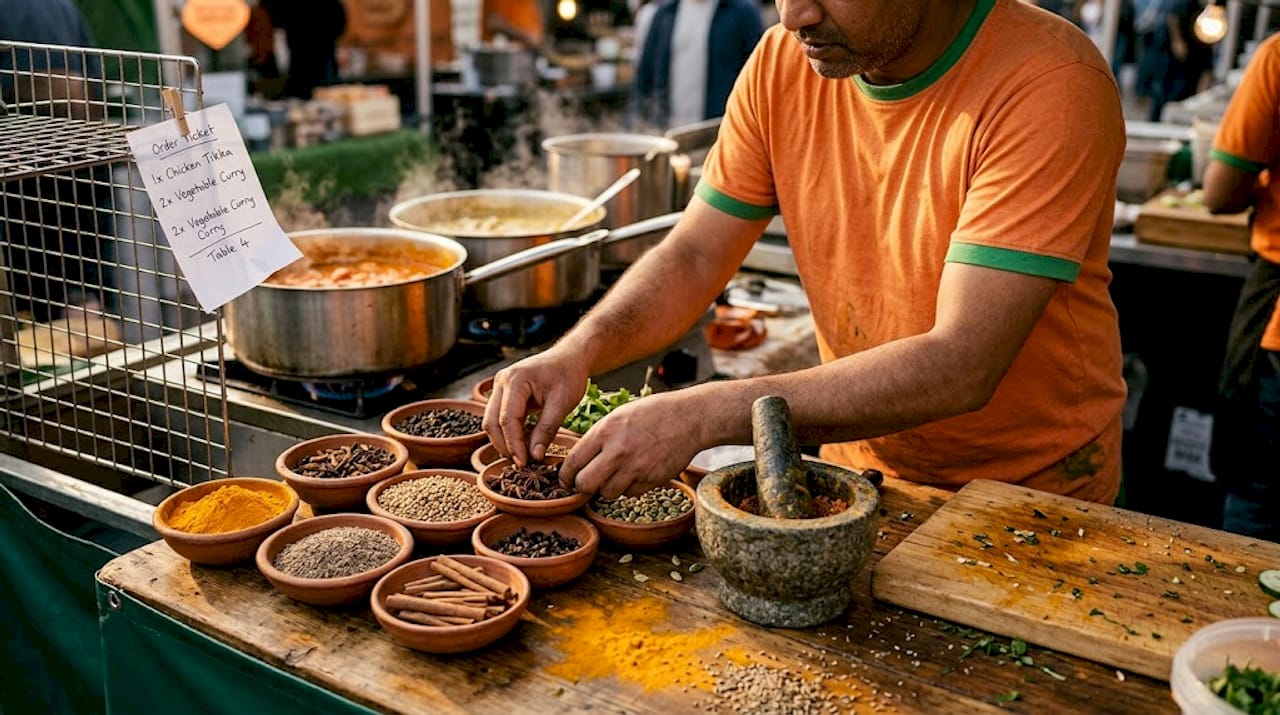
| Curry type | Sauce base | Key example | Flavour profile |
|---|---|---|---|
| North Indian tomato-based | Tomato and onion | Tikka masala, butter chicken | Rich, slightly tangy, warming |
| Cream or yogurt-based | Dairy cream or strained yogurt | Korma, shahi paneer | Mild, smooth, subtly fragrant |
| South Indian coconut-based | Coconut milk or grated coconut | Kerala fish curry, Goan prawn | Light, aromatic, often tangy |
| Roux-based (Japanese) | Flour and fat thickened | Japanese karē raisu | Thick, savoury, mildly sweet |
| Southeast Asian paste-based | Spice paste with coconut milk | Thai green curry, rendang | Bold, herbal, intensely fragrant |
Beyond sauce bases, curry dishes also differ by spice paste versus powder, by which aromatics are used, and by regional geography. Regional geography directly influences curry style: coastal South India leans on coconut, tamarind, and curry leaves, while landlocked North India builds flavour from ghee, tomato, cream, and dried spices. Neither is more authentic. Both are genuinely Indian.
Southeast Asian variations like Thai green and red curries use fresh spice pastes ground from galangal, lemongrass, and chillies. These paste-based curries share the broad “curry” label but bear very little resemblance to a North Indian korma, which shows both the word’s flexibility and its limitations.
Curry ingredients and how to cook it
Understanding what goes in curry requires separating the structural ingredients from the variable ones. Every curry has a scaffold, and once you understand that scaffold, you can approach hundreds of different curry recipes with confidence.
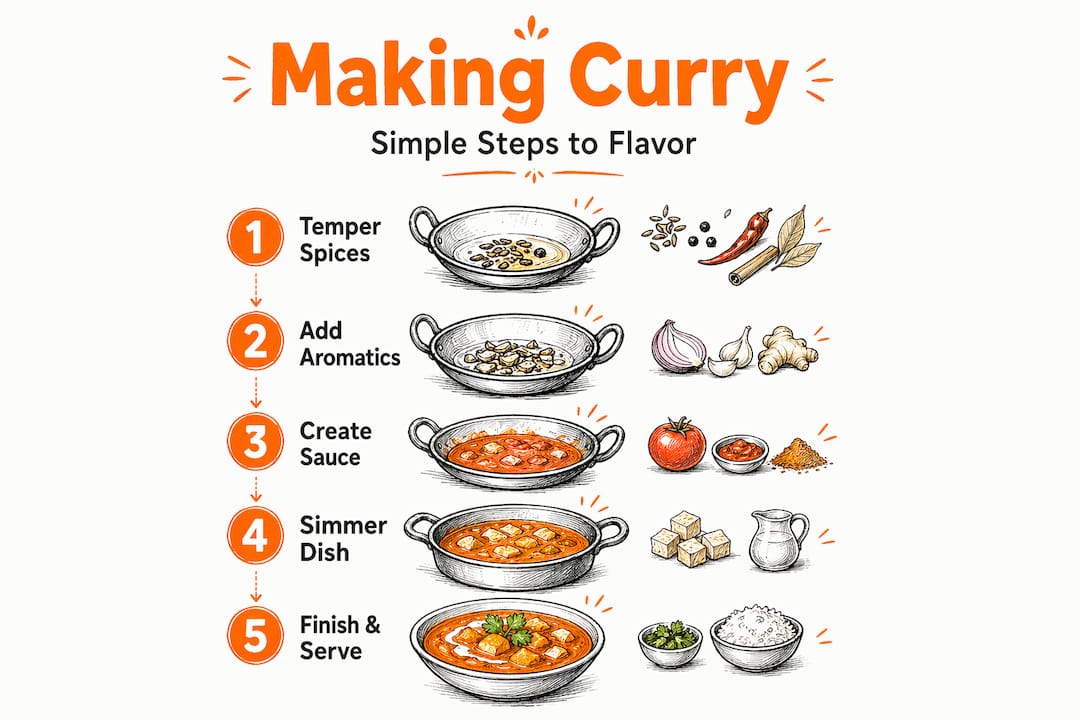
The foundational curry ingredients in most Indian dishes include:
- A fat base. Ghee for richness, neutral oil for everyday cooking. This is where flavour extraction begins.
- Aromatics. Onion, garlic, and ginger form the base of most North Indian curries. South Indian versions often skip onion in favour of shallots or coconut.
- Whole spices for tempering. Cumin seeds, mustard seeds, cardamom, cloves, or cinnamon are dropped into hot fat first to release their essential oils.
- Ground spice masala. Turmeric, coriander, cumin, chilli, and sometimes garam masala are added after the base is built.
- The sauce. Tomatoes, coconut milk, yogurt, or stock form the liquid body of the dish.
- The protein or vegetable. Added once the sauce has been cooked through and balanced.
- Fresh finishing elements. Curry leaves, fresh coriander, a squeeze of lime, or a spoonful of cream to finish.
The most important step, and the one home cooks most often skip, is the tempering of whole spices in hot fat before anything else goes in the pan. This process, called tadka, takes just 30 to 60 seconds but releases the essential oils from whole spices in a way that ground powders simply cannot replicate.
Curry powder is a British invention, created in the late 18th century to simulate Indian flavours for a European market. Indian cooks historically toasted and ground spices fresh for each dish, creating distinct masalas tailored to the specific recipe. Using a pre-made curry powder is a shortcut, not a tradition. It produces recognisable results, but it flattens the complexity that makes authentic Indian flavours so extraordinary.
Pro Tip: Layer your flavours sequentially: start with tempering whole spices, add aromatics and cook them down fully, then build your masala before introducing liquid. Rushing any of these stages compresses the flavour rather than developing it.
Curry beyond India: global adaptations
Curry’s reach extends well past the Indian subcontinent, and the ways different cultures have made it their own reveal something genuinely fascinating about food and identity.
Japan is the clearest example. Japanese navy curry dates to 1908, introduced to naval personnel as a nutritious, standardised meal. The dish became a national comfort food, thickened with a roux of flour and butter rather than ground spices, and served over rice as a thick stew. Japanese curry consumes approximately 45 tonnes annually by maritime personnel alone, a figure that speaks to how deeply the dish has embedded itself in national culture. It is sweeter, milder, and structurally nothing like its Indian counterpart, yet it carries the same cultural weight: warmth, nourishment, a sense of home.
Curry’s adaptability allows it to reflect local tastes worldwide, and that adaptability is not a corruption. It is the dish doing what food has always done, absorbing local ingredients, preferences, and meanings. Thai curries use lemongrass and kaffir lime leaves. Malaysian rendang cooks the liquid almost entirely away for a thick, intensely spiced coating. Caribbean curries are built on scotch bonnets and allspice. Each represents a real culinary tradition shaped by geography and history.
| Region | Curry style | Distinctive feature |
|---|---|---|
| North India | Tomato and cream sauces | Ghee, garam masala, dried spices |
| South India | Coconut and tamarind | Curry leaves, mustard seeds, fresh coconut |
| Japan | Roux-thickened stew | Mild, sweet, served with pickled vegetables |
| Thailand | Fresh spice paste with coconut | Lemongrass, galangal, kaffir lime |
| Caribbean | Scotch bonnet and allspice | Bold heat, turmeric-heavy base |
Making and appreciating curry at home
You do not need a restaurant kitchen or a spice merchant to make a genuinely good curry. What you need is patience, fresh ingredients, and a willingness to cook the base properly before moving on.
A few principles to keep in mind:
- Buy whole spices where possible. Pre-ground spices lose their volatility quickly. Whole cumin seeds, coriander seeds, and cardamom pods retain far more flavour when you grind them fresh.
- Cook your onions fully. Undercooked onions produce a sharp, raw taste that never quite leaves the dish. Cook them low and slow until they are golden and soft before adding anything else.
- Do not skip the tempering. The tadka process is non-negotiable for authentic flavour. Thirty seconds in hot ghee transforms a cumin seed from a grain into a complex aromatic layer.
- Taste as you build. Curry recipes are guidelines, not formulas. Adjust salt, acid, and heat at each stage.
- Pair correctly. North Indian curries work beautifully with roti or naan. South Indian curries shine alongside steamed rice or appam. The bread or grain is not a side dish; it is part of the meal’s architecture.
Moving beyond curry powder towards fresh whole spices is the single most impactful change a home cook can make. You can find good guidance on Indian food tips for beginners to help you build confidence with spices and flavour layering from the ground up.
Pro Tip: A simple masala of freshly toasted and ground cumin, coriander, and turmeric will outperform most shop-bought curry powders. Toast in a dry pan for 90 seconds, cool, then grind. The difference is immediate.
My perspective on curry’s meaning
People often ask me what my favourite curry is, expecting a single answer. I find the question a little like asking someone their favourite sentence. It depends entirely on the context, the season, what you are drinking, and who made it.
What I have come to believe, having explored Indian cuisine seriously, is that the Western idea of “curry” does real damage to our understanding of one of the world’s great cooking traditions. When everything gets filed under one label, we stop noticing what makes each dish remarkable. We miss the tamarind sharpness of a Tamil rasam, the smoky depth of a Lucknowi korma, the coconut brightness of a Kerala fish curry.
The moment I tasted a properly tempered South Indian curry, made with fresh curry leaves and coconut scraped that morning, I understood why the pre-made powder route was such a poor substitute. It was not even close. Not because the powder version tasted bad, but because the gap between the two was the gap between something real and a copy.
Curry is also, I think, one of the most honest examples of how food travels. Japanese karē is not Indian. It is Japanese, shaped by Japanese naval history, Japanese preferences, and Japanese ingredients. That is not a failure of authenticity. That is culture in motion. The original dish gave permission for something new to exist.
My recommendation: approach every new curry dish as if it were a different genre of music. Related, perhaps, but requiring its own attention.
— Desigallibcn
Experience real curry in Barcelona
If reading about curry has made you want to taste the genuine article, the next step is straightforward.
At Desigallibcn, the menu is built around authentic Indian street food, bringing the real diversity of curry cuisine to Barcelona. From richly spiced North Indian preparations to lighter, coconut-forward dishes, you will find curry dishes that reflect actual regional traditions rather than a single blended version of “Indian flavour.” The kitchen works with fresh spices, traditional techniques, and recipes grounded in the kind of culinary knowledge this article has explored. Whether you are curious about Indian street food in Barcelona or looking for vegan and vegetarian options with real depth, Desigallibcn is worth a visit. The experience is a practical extension of everything covered here.
FAQ
What does the word curry actually mean?
The word curry comes from Tamil kaṟi, meaning sauce or relish for rice. It was adopted by British colonists as a broad term for spiced Indian dishes, though in India most dishes have their own specific regional names.
What are the main types of curry?
The four primary curry bases are tomato-based, cream or yogurt-based, coconut milk-based, and roux-based. Examples include tikka masala, korma, South Indian coconut curries, and Japanese curry stew.
Is curry powder used in authentic Indian cooking?
No. Curry powder is a British invention from the 18th century, created for European consumers. Authentic Indian cooking uses freshly toasted and ground whole spices to create specific masalas suited to each dish.
What is the difference between curry and masala?
In Indian cooking, masala refers to the spice blend, while curry refers to the finished saucy dish. The masala goes into the curry, not the other way around.
How do I start cooking curry at home?
Begin by sourcing whole spices and learning the tempering process. Cook your onion base fully before adding spices, build your masala layer by layer, and taste regularly throughout. Avoiding curry powder in favour of fresh whole spices will immediately improve your results.
Recommended
- Defining authentic Indian restaurants: the real guide – Desi Galli
- Essential Indian food tips for beginners: master authentic flavours – Desi Galli
- What is Mumbai street food: a cultural guide – Desi Galli
- Tikka masala: mito y realidad en la cultura india – Desi Galli