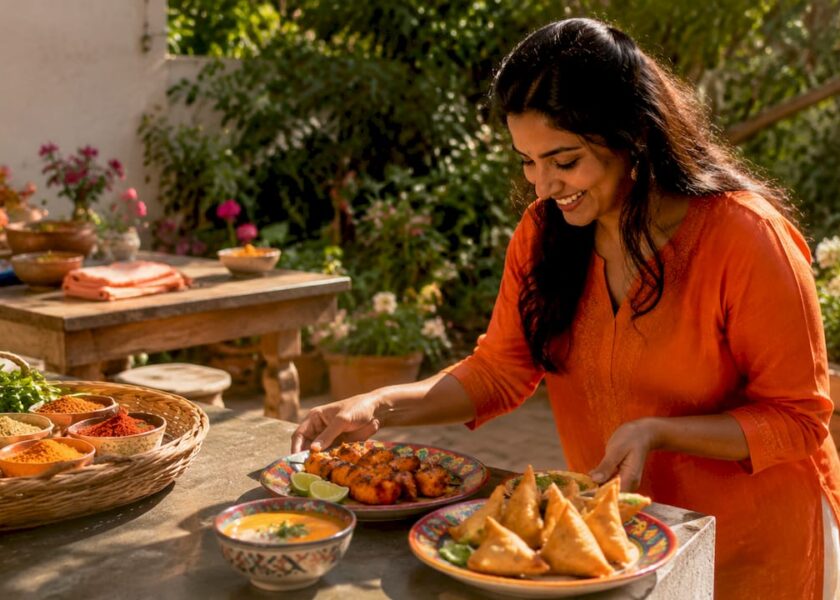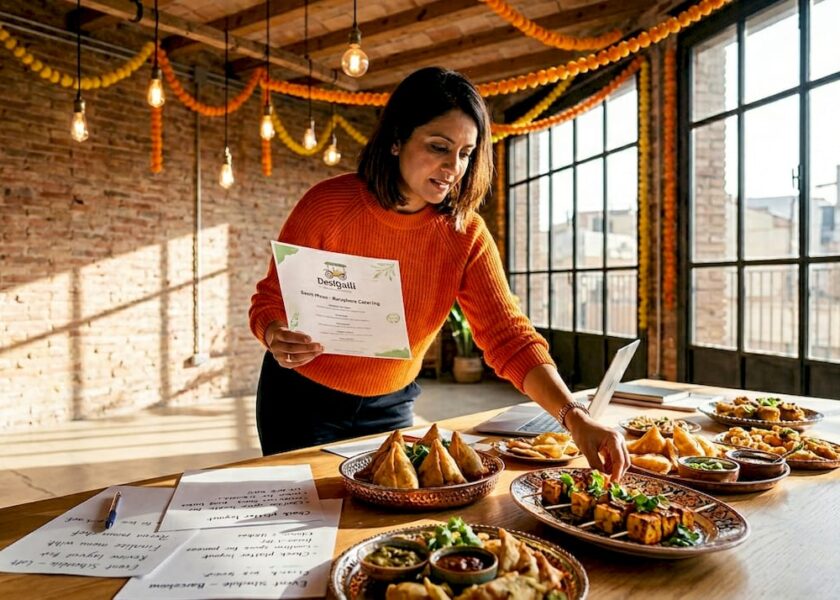
Planning a standout event in Barcelona means breaking away from predictable catering menus. While paella and tapas remain popular, a growing wave of event organisers is turning to Indian street food for something that genuinely surprises and delights guests. Indian restaurants in Barcelona are earning remarkable satisfaction scores, with venues like Rasoi Ghar rated 4.8 out of 5, pointing to the kind of quality and consistency that event catering demands. This article walks you through exactly why Indian cuisine works so well for Barcelona gatherings, how to set up interactive stations, and what practical steps ensure a smooth, memorable experience from start to finish.
Table of Contents
- Why Indian cuisine stands out for events in Barcelona
- The vibrant impact of interactive Indian street food stations
- Menu adaptability and guest inclusivity
- Practical tips for seamless Indian food event catering
- What most event organisers miss when choosing Indian cuisine
- Discover exceptional Indian catering options for Barcelona events
- Frequently asked questions
Key Takeaways
| Point | Details |
|---|---|
| Guest satisfaction | Indian cuisine consistently delivers high ratings among event guests in Barcelona. |
| Atmosphere enhancement | Interactive Indian street food stations energise and engage attendees at any venue. |
| Menu flexibility | Indian catering options easily accommodate dietary needs and event sizes. |
| Scalable success | Empirical evidence shows Indian menus handle large buffet-style gatherings with ease. |
| Expert planning | Simple pro tips and step-by-step guidance lead to flawless catering outcomes. |
Why Indian cuisine stands out for events in Barcelona
Building on the widespread guest approval, let us understand what sets Indian cuisine apart from conventional event options.
Most event organisers default to what feels safe. A Mediterranean buffet, some canapés, perhaps a paella station. These are perfectly fine options, but they rarely generate excitement. Indian cuisine, by contrast, brings a sensory experience that guests actually talk about.
The Indian street food popularity in Barcelona is not accidental. It reflects a broader shift in how people think about food at social events. According to culinary tourism trends for 2026, guests increasingly seek authentic, immersive food experiences rather than generic buffet spreads. Indian cuisine sits perfectly at the intersection of bold flavour, visual theatre, and genuine cultural richness.
Here is why event organisers are choosing Indian food:
- Distinctive flavours that stand out from any other catering option available in Barcelona
- Enormous variety spanning mild kormas, tangy chaats, smoky tandoori dishes, and sweet kulfi desserts
- Adaptability to casual garden parties, formal corporate events, and large outdoor festivals
- Exceptional vegetarian and vegan options that cater to modern dietary preferences without compromise
- Visual appeal through vibrant colours, garnishes, and fragrant aromas that create an immediate impression
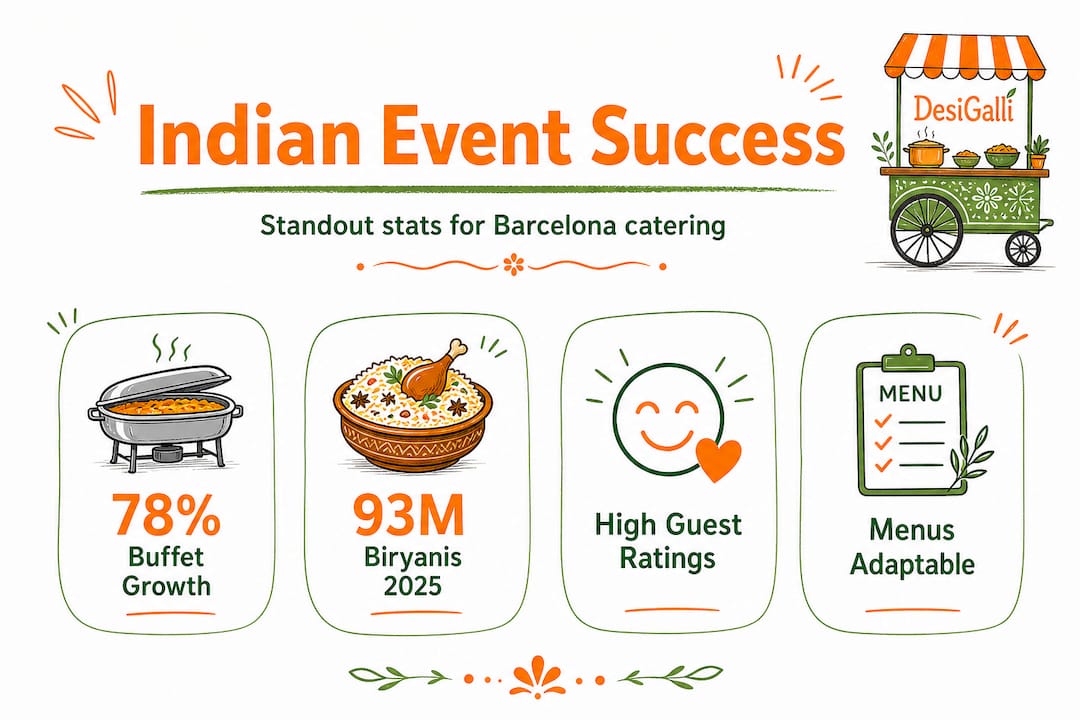
The numbers back this up. Buffet bookings up 78% in India demonstrates exactly how scalable Indian food has become in event settings, a trend now mirrored in cities like Barcelona with growing Indian restaurant scenes.
| Restaurant | Rating | Event suitability | Notable dishes |
|---|---|---|---|
| Rasoi Ghar | 4.8/5 | High | Biryani, curry, street food |
| Sitara | 4.6/5 | High | Chaat, tandoori, vegetarian |
| Desi Galli | 4.5/5 | Excellent | Samosas, chaat, vegan options |
High satisfaction ratings for Indian restaurants across Barcelona confirm that the cuisine meets and often exceeds the quality bar required for professional event catering.
The vibrant impact of interactive Indian street food stations
Now that you know the appeal, let us explore how interactive stations create unforgettable experiences and drive genuine guest engagement.
The real magic of Indian street food at events is not just in the food itself. It is in the experience of receiving it. A standard buffet table invites guests to serve themselves and move on. An Indian street food station invites them to stay, ask questions, watch their dish being finished to order, and linger in conversation.
Authentic Indian flavours dominating global menus capture exactly this phenomenon: interactive Indian street food stations mimic Delhi markets, adding powerful cultural and sensory appeal to any event. The sizzle of a tawa, the fragrance of freshly ground spices, the sight of a chef assembling a perfectly layered chaat — these are moments that create lasting impressions.
“The energy of Indian street food is unlike anything else. It brings the colour, the noise, and the warmth of a Delhi market to a masia in the Penedès or a rooftop in Eixample. That is what guests remember long after the evening ends.”
| Feature | Interactive Indian station | Standard buffet |
|---|---|---|
| Guest engagement | High — live cooking, dialogue with chefs | Low — self-serve, minimal interaction |
| Atmosphere | Vibrant, sensory, memorable | Functional, predictable |
| Customisation | Built into the serving process | Limited |
| Visual appeal | Dramatic presentation, garnishes, aromas | Static trays |
| Storytelling | Cultural context shared through food | None |
Explore the street food experience Barcelona to understand just how transformative a well-run station can be for guest satisfaction.
Beyond atmosphere, interactive stations naturally encourage mingling. Guests gather around the chaat counter, compare their plates, and bond over shared discovery. That social glue is something a conventional buffet simply cannot provide. The benefits of Indian street food extend well beyond taste into the realm of social dynamics at events.
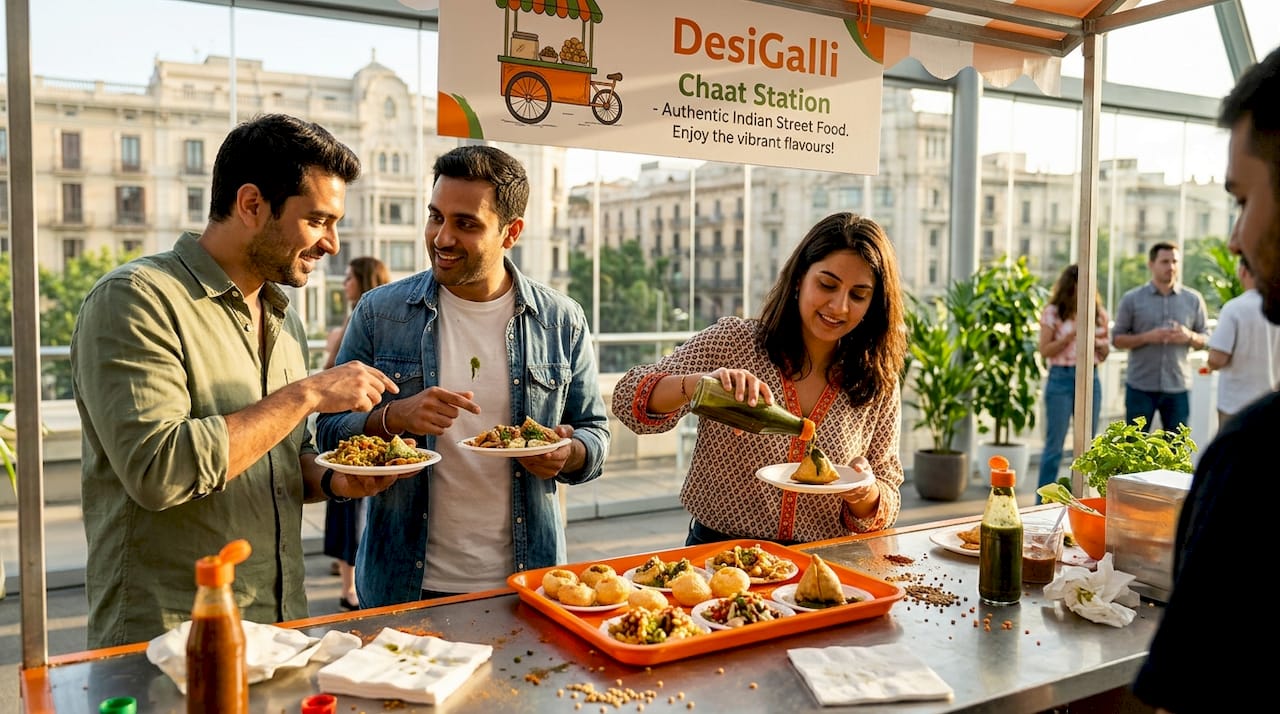
Understanding authentic cultural experiences through food confirms that shared culinary discovery creates stronger social connections than passive consumption. Your event becomes the conversation topic, not just the occasion.
Pro Tip: Brief your catering team to batch-prepare sauces, chutneys, and base ingredients before service begins. This dramatically reduces wait times at peak moments and keeps the station feeling energetic rather than chaotic. Aim to have at least 70% of prep completed before guests arrive.
Learn more about the steps to enjoy authentic Indian street food to structure your station effectively from arrival through to dessert.
Menu adaptability and guest inclusivity
Beyond atmosphere, Indian menus also excel in flexibility. Let us see how they meet diverse guest needs and the practical demands of events at any scale.
One of the most underappreciated strengths of Indian cuisine in an event setting is how naturally it accommodates the full spectrum of modern dietary requirements. Unlike many cuisines where vegetarian or vegan options feel like afterthoughts, Indian food treats plant-based cooking as a central pillar. Some of the most celebrated Indian dishes — dal makhani, aloo tikki chaat, palak paneer, pani puri — contain no meat whatsoever.
For Barcelona events, where it is increasingly common to have guests who are vegetarian, vegan, gluten-intolerant, or dairy-free, this inclusivity is genuinely valuable. You are not scrambling to add a separate table for restricted diets. The Indian menu is the inclusive menu.
Consider the range available:
- Vegan options: Vegetable samosas, chana masala, aloo gobi, fruit chaat, mango lassi with plant-based milk
- Vegetarian options: Paneer tikka, dal tadka, palak paneer, masala dosa
- Gluten-free options: Rice-based dishes, lentil curries, tandoori preparations
- Nut-free options: Easily prepared by adjusting korma and curry bases
- Mild options: Coconut-based curries and raitas for guests sensitive to spice
The Indian food comparison in Barcelona shows how Indian menus consistently outperform other catering options in terms of dietary range without sacrificing flavour quality.
Scalability is equally important. 93 million biryanis ordered in India in 2025 alone, that is 194 every single minute, alongside a 78% rise in buffet bookings, demonstrating that Indian food systems are built to handle volume. Whether you are hosting 40 guests at a private terrace dinner or 400 at a corporate celebration, Indian catering scales without losing quality.
Understanding curated culinary experiences confirms that locally sourced ingredients combined with authentic recipes consistently deliver the highest guest satisfaction ratings in event settings.
Pro Tip: Ask your Indian catering partner to adapt the menu to what is seasonal in Barcelona at the time of your event. Incorporating local vegetables like escalivada into a spiced bhaji, or pairing Barcelona-grown tomatoes with a tangy masala base, creates a fusion moment that feels both authentic and locally rooted. Guests love that thoughtfulness. Explore the flavours and rituals of Indian street food for inspiration on how traditional recipes translate beautifully to local contexts.
Practical tips for seamless Indian food event catering
Once you appreciate the versatility, let us move to practical recommendations for flawless Indian catering at your event.
Good catering does not happen by chance. It requires clear planning, the right vendor, and smart logistics. Here is a step-by-step guide to getting it right.
-
Select a vendor with genuine expertise. Look for caterers who specialise in Indian street food rather than generic Asian cuisine. Ask to see sample menus, request references from previous events, and ideally taste the food before committing. Authenticity matters more than price at this stage.
-
Design the menu around your guests. Start with a dietary audit — how many vegetarian, vegan, or gluten-free guests do you expect? Use that information to shape the ratio of dishes rather than treating plant-based options as secondary. A thoughtful menu design means every guest feels equally considered.
-
Plan your station layout before the day. Indian food stations work best when there is a clear flow: guests arrive, receive a base (rice, bread, chaat base), then move along to choose proteins, sauces, and garnishes. Mapping this out in advance prevents bottlenecks. The event workflow for Indian street food offers a clear blueprint for structuring this flow efficiently.
-
Confirm logistics at least two weeks out. Discuss heating equipment, chafing dishes, serving utensils, and power requirements with your caterer. Indian food relies on sustained heat to maintain quality. A well-prepared caterer will have all of this covered, but you want it confirmed in writing.
-
Build in a buffer for timing. Events rarely run to the exact minute. Discuss with your caterer how food will be held and refreshed if service starts late. Batch-cooking techniques mean quality dishes can be held at temperature without degrading.
-
Create a tasting journey. Rather than one large station, consider multiple smaller stations representing different Indian regions — a street food chaat corner, a tandoori station, a curry table, and a dessert section. This encourages guests to circulate and explore. The degustation of authentic Indian street food is a brilliant model for structuring this journey.
Indian food’s global popularity and its proven scalability in buffet settings make it a genuinely practical choice for Barcelona events, not just an exciting one.
Pro Tip: Set up a small “build your own” station alongside the main spread. Give guests the chance to assemble their own chaat, choosing from a selection of chutneys, toppings, and bases. This interactive moment costs very little to set up but generates enormous engagement and extends the time guests spend at the food station.
What most event organisers miss when choosing Indian cuisine
Having covered practical planning, here is an expert perspective on the subtler details that separate a good Indian catering experience from a genuinely exceptional one.
The most common mistake is treating Indian food as just another buffet format. You choose the dishes, the caterer delivers them, guests eat. Done. But that approach misses the single most powerful element Indian cuisine brings to events: storytelling through food.
Every dish at a well-run Indian street food station has a story. The samosa traces its roots through Central Asia and Persian trade routes. Chaat was historically sold at the roadside stalls of Uttar Pradesh. Pani puri has distinct regional variations across India. When your catering team shares even a sentence or two of this context, the food transforms from a meal into an experience. Guests remember experiences far longer than they remember meals.
The second missed opportunity is station placement. Many organisers treat the food station as a practical necessity rather than an architectural element of the event. Placing your Indian street food station at the edge of the room limits its social function. Position it centrally, or in a location that naturally draws foot traffic, and it becomes the gravitational centre of the event. Guests cluster, conversations start, and your catering choice becomes a talking point.
Batch cooking and local providers mitigate potential service delays in high-volume events, ensuring that food quality remains consistent even as guest numbers peak. This is not merely a logistical tip — it is the difference between a station that hums smoothly and one that creates queue anxiety.
Choosing a caterer with genuine roots in Indian street food popularity in Barcelona also matters for authenticity. A provider who sources the right spices, uses authentic recipes, and trains their team in the cultural context of each dish will deliver something qualitatively different from a caterer who simply adds curry to their standard menu. The benefits of Indian street food in Barcelona are only fully realised when the provider genuinely understands and honours the cuisine.
Indian cuisine’s vibrancy comes not just from flavours, but from the market-inspired energy it creates around itself. That energy is something you can deliberately design into your event.
Discover exceptional Indian catering options for Barcelona events
If this article has convinced you that Indian street food belongs at your next Barcelona gathering, the natural next step is connecting with a provider who lives and breathes this cuisine.
At Desi Galli, we bring the authentic energy of Indian street food to events across Barcelona. From vibrant chaat stations to fragrant curry spreads, every element of our Indian street food experience is designed around bold flavours, inclusive menus, and the kind of guest engagement that makes an event genuinely memorable. Our team can help you design a catering programme that pairs beautifully with signature cocktails and seasonal drinks for a complete sensory experience. Browse our Indian street food menu examples and get in touch to start planning your event today.
Frequently asked questions
Is Indian cuisine suitable for large-scale events in Barcelona?
Yes, Indian food is exceptionally scalable, with 93 million biryanis ordered in India in 2025 and buffet bookings rising 78%, demonstrating its proven capacity for high-volume event settings globally and locally.
What types of Indian dishes are most popular with Barcelona guests?
Biryanis, chaat, samosas, and pani puri consistently top the list, supported by high guest satisfaction scores at Barcelona Indian restaurants where ratings regularly exceed 4.5 out of 5.
How does Indian cuisine enhance the atmosphere of an event?
Interactive stations that replicate the energy of street markets, combined with bold aromas and vibrant colours, create a sensory and social experience that drives guest engagement. Authentic Indian flavours have been shown to add distinctive cultural energy that standard catering formats cannot replicate.
Are there options for guests with dietary restrictions?
Absolutely. Indian cuisine offers one of the broadest ranges of vegetarian, vegan, and gluten-free dishes of any culinary tradition, making it naturally inclusive without requiring a separate restricted menu.
How can potential service delays be managed during Indian food events?
Batch cooking techniques combined with experienced local providers allow caterers to hold high-quality food at temperature and serve consistently throughout peak periods, effectively eliminating the queue bottlenecks common at large events.
Recommended
- Why Indian street food is popular in Barcelona – Desi Galli
- Indian street food: Flavours, rituals and where to try in Barcelona – Desi Galli
- Benefits of Indian street food in Barcelona – Desi Galli
- Steps to enjoy authentic Indian street food in Barcelona – Desi Galli