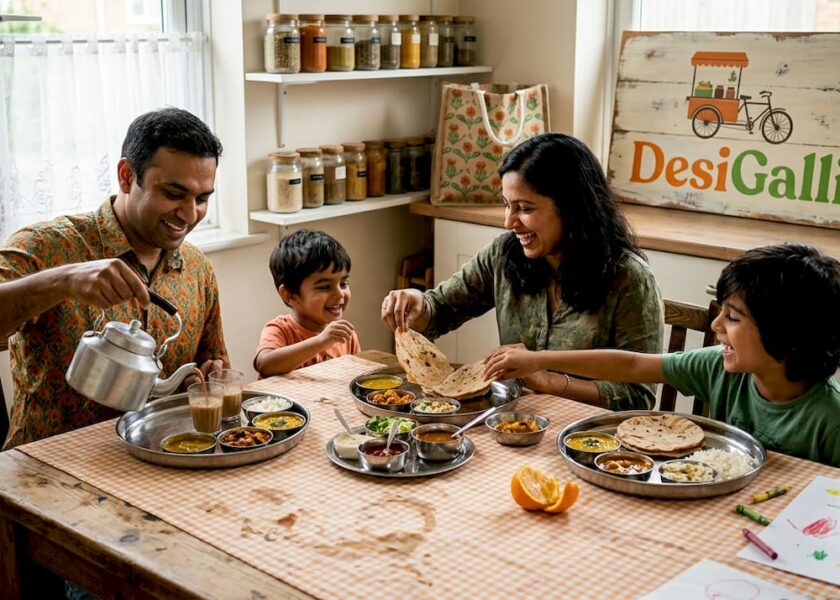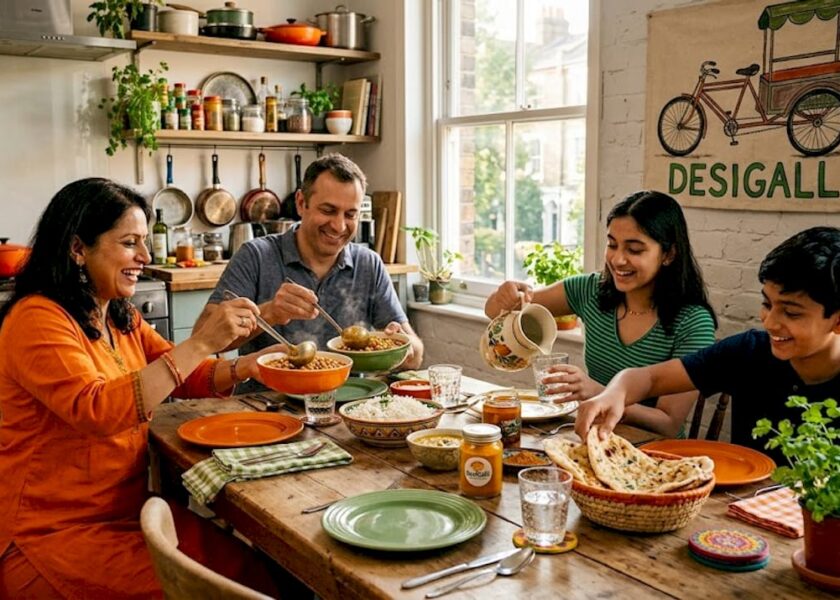

Street food has long carried an unfair reputation as the quick, cheap option you grab when nothing else is open. Defining modern street food means dismantling that idea entirely. Today’s contemporary street cuisine sits at the crossroads of culinary tradition, cultural storytelling, and genuine gastronomic ambition. It draws Michelin inspectors to hawker stalls in Singapore, sends food enthusiasts chasing tacos from a bicycle in Mexico City, and fills Barcelona’s streets with the scent of chaat and samosas. If you think you already know what street food is, this article will make you think again.
Table of Contents
- Key takeaways
- Defining modern street food: the core characteristics
- How innovation is reshaping street cuisine
- When street food meets Michelin prestige
- Popular street food trends shaping 2026
- A framework for understanding what counts
- My take on street food’s identity
- Experience modern street food at Desigallibcn in Barcelona
- FAQ
Key takeaways
| Point | Details |
|---|---|
| Street format is the foundation | Physical setting, vendor format, and speed of service define the baseline of any street food experience. |
| Street logic separates it from fast food | Immediacy, casual consumption, and honest simplicity distinguish street food from commercial quick service. |
| Prestige and pavement can coexist | Michelin recognition of street vendors proves that culinary excellence is not tied to a formal dining room. |
| Modernity adds three distinct layers | Gourmet ingredients, cultural fusion, and technology expand street food without erasing its roots. |
| Authenticity requires specificity | Vague “fusion” claims weaken street food identity; named dishes and regional context keep it grounded. |
Defining modern street food: the core characteristics
Before exploring how street food has evolved, it helps to understand what makes it street food in the first place. Street food is defined by readiness, vendor format, lower cost, and shorter waiting times, typically sold in public or open-air settings. That is the operational blueprint: food prepared to order or served immediately, from a cart, stall, truck, or stand, consumed on the go or perched on a kerb.
The vendor format matters enormously here. A food cart selling bánh mì in Hanoi, a taco stand open from midnight until 3am in Mexico City, a chaat wallah operating from a tray on a busy corner in Mumbai. None of these require a reservation, a dress code, or a lengthy menu. That accessibility is not a limitation. It is the entire point.
Consider Mexico City’s tacos de canasta as a textbook illustration. A 65-peso plate of four tacos, prepared using traditional methods, sold immediately from a basket by a vendor who moves through the city on a bicycle. Limited menu, transparent pricing, high daily volume. That is street food logic in its purest form.
What separates this from fast food chains or casual restaurants is not just the setting but the philosophy:
- Ready to eat immediately after purchase, with minimal wait
- Sold in public spaces such as markets, fairs, roadside stalls, or festival grounds
- Vendor operated from compact, mobile, or semi-permanent formats
- Priced accessibly, reflecting local economic realities rather than overheads from fixed premises
- Consumed casually, often standing, walking, or at shared outdoor seating
Pro Tip: When travelling for street food, look for vendors with high turnover and local regulars rather than colourful signage aimed at tourists. Turnover signals freshness; regulars signal trust.
How innovation is reshaping street cuisine
Understanding the roots of street food is one thing. Understanding how contemporary street cuisine has transformed those roots into something richer is where things get genuinely interesting.
Modern street food vendors are not just selling snacks. They are curating experiences. Social media accelerates discovery and sharing, enabling street food experiences to blend tradition with modern innovation at a pace that would have been unimaginable twenty years ago. A Korean-Mexican taco that goes viral on a Tuesday can have queues around the block by the weekend.
The ingredients themselves have changed too. Vendors are sourcing artisan dairy, heritage grains, and small-batch condiments that were once the preserve of tasting-menu restaurants. Modern cooking techniques, from sous vide proteins to cold-pressed sauces, are being adapted for compact kitchen formats without losing the speed that defines street food service.
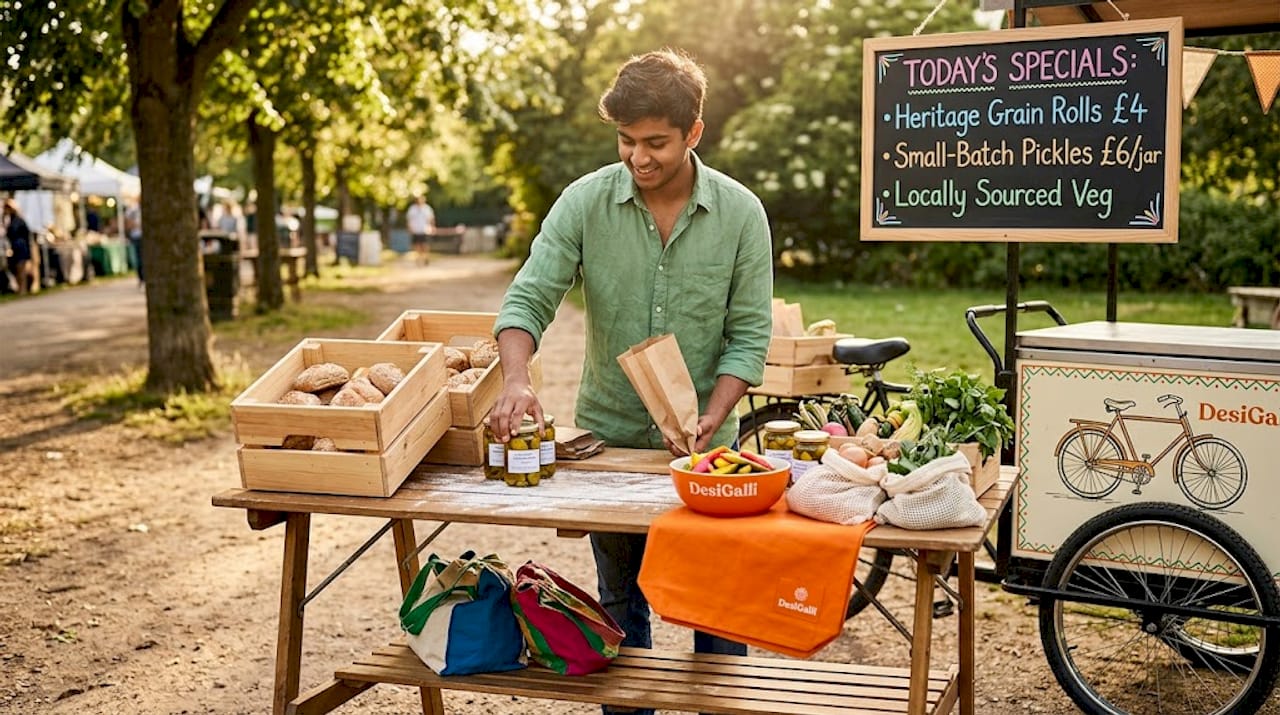
Cultural fusion is another defining force, but it deserves careful handling. The best examples respect origin stories rather than flattening them. A dish that blends Japanese yuzu with Peruvian ceviche works because both culinary traditions share a reverence for freshness and acid balance. Fusion that ignores context tends to produce novelty without depth.
Here is how gourmet street food innovation tends to show up in practice:
- Elevated ingredients: free-range meats, organic produce, small-batch sauces, and artisan cheeses appearing in handheld formats
- Technique adaptation: slow-cooked fillings, fermented bases, and smoked proteins served from compact vendor setups
- Cultural fusion with context: dishes that reference specific regional traditions rather than generic “world flavours”
- Experience design: thoughtful presentation, branded packaging, and curated playlist atmospheres that make eating from a paper tray feel intentional
- Digital integration: QR menus, pre-ordering apps, and social media-first presentation that turns every meal into shareable content
Pro Tip: The best fusion street food tells you what it is fusing and why. If a vendor cannot explain the cultural logic behind a dish, that is a sign the dish was designed for Instagram, not for eating.
When street food meets Michelin prestige
Perhaps nothing illustrates the evolution of street food more sharply than its relationship with the Michelin Guide. For decades, Michelin stars were synonymous with white tablecloths, sommeliers, and tasting menus running to twelve courses. Then Singapore happened.
Singapore now lists 148 Michelin-recognised street food stalls, a figure that fundamentally reframes what culinary prestige means. Thailand and Mexico have followed, with inspectors awarding recognition to vendors who have been perfecting single dishes for decades. The quality distinction, as Michelin itself frames it, now focuses on circumstance rather than food quality. The food was always excellent. The recognition simply caught up.
This matters for how you think about what is modern street food, because it separates two things that were never really linked: setting and quality. A hawker stall in a humid Singapore food court can achieve levels of technical precision and flavour depth that rival any Michelin-starred restaurant. The stall owner just does not have a maître d’ to explain it to you.
The Michelin Guide also describes street food as “an honest meal”, free from pretence, that retains its spirit even when served indoors. That framing is important. It means a restaurant that captures the informality, generosity, and directness of street food can carry street food energy without being on a pavement.
| Setting | Quality potential | Price point | Street food energy |
|---|---|---|---|
| Open-air stall | Very high | Low to moderate | Always present |
| Food truck | High | Moderate | Usually present |
| Casual indoor restaurant | High | Moderate to high | Present if designed well |
| Fine dining with street influence | Very high | High | Varies significantly |
Popular street food trends shaping 2026
The operational and cultural trends now defining urban snack culture in 2026 are concrete, trackable, and genuinely useful to know if you want to understand where contemporary street cuisine is heading.
- Snackable, multi-bite formats: Portion sizes are shrinking deliberately. Vendors offer two or three bite dishes so customers can sample more broadly, which suits food market formats and tasting events perfectly.
- Build-your-own experiences: From bao buns to rice bowls, interactive customisation puts the diner in control and reduces food waste by limiting default components.
- Tech-driven ordering and GPS tracking: Modern food trucks now use digital ordering platforms, real-time GPS location sharing, and pre-order windows that eliminate queuing friction entirely.
- Sustainability and plant-based options: Eco-friendly packaging, compostable containers, and plant-forward menus are no longer niche. They are increasingly the baseline expectation among younger street food audiences.
- Pop-up collaborations: A chef from a bricks-and-mortar restaurant partners with a food truck operator for a weekend residency. The results are often more exciting than either venue produces independently.
Regional fusion is also driving menu creativity in specific and traceable ways. West African spices are appearing in British pie formats. South Indian fermented batters are being used as bases for European street snacks. These are not random collisions. They reflect migration patterns, diaspora communities, and chefs who grew up eating both traditions.
Pro Tip: Follow street food market organisers in your city rather than individual vendors. Markets curate the most interesting new formats before they graduate to permanent locations, so you see street food innovation at its freshest.
A framework for understanding what counts
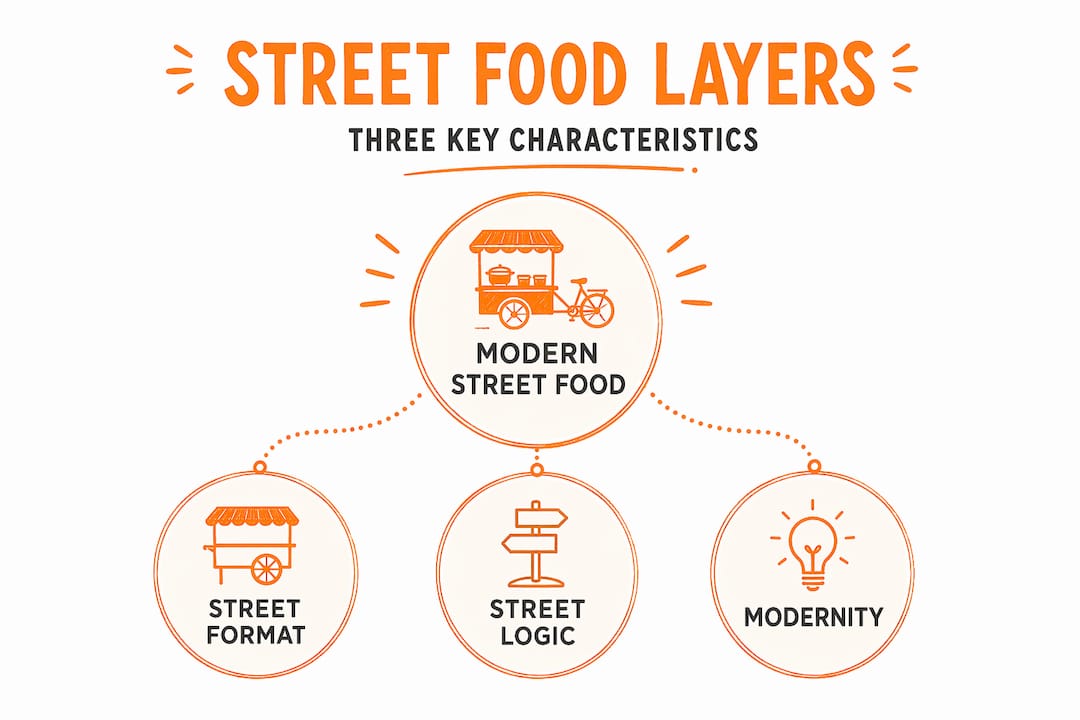
Defining modern street food with real precision requires separating three overlapping but distinct layers. Without this framework, it is easy to call almost anything street food, which helps no one.
Accurate definition requires distinguishing street format, street logic, and street-mediated modernity to avoid circularity and brand overreach. Here is how those layers break down:
| Layer | What it covers | Example |
|---|---|---|
| Street format | Physical setting, vendor type, speed of service | Taco cart, food truck, market stall |
| Street logic | Preparation style, immediacy, casual consumption | Ready-to-eat, minimal wait, on-the-go |
| Street-mediated modernity | Branding, tech integration, social sharing | GPS tracking, viral dishes, digital menus |
A dish can tick all three boxes, or just one or two. A traditional samosa from a street vendor in Delhi sits firmly in layers one and two. A gourmet samosa from a modern food truck in Barcelona, with a QR code menu and an Instagram-optimised presentation, sits across all three. Neither is more authentic. They are simply operating in different layers.
This framework also helps food enthusiasts communicate more specifically. Saying “I love street food” is vague. Saying “I love street-format food that operates on street logic, with modern technique applied” tells someone exactly what you are after. It also helps you spot when a restaurant is using “street food” as a marketing label without actually delivering the informality, speed, or accessibility that the term implies.
The regional specificity of real street food is what keeps it honest. Pani puri from Maharashtra. Jerk chicken from Kingston. Pad kra pao from Bangkok. Named dishes, specific regions, traceable traditions. When street food innovation starts from that specificity, it stays grounded even as it evolves.
My take on street food’s identity
I’ve watched the conversation around street food shift considerably over the past several years, and what strikes me most is how often people conflate novelty with modernity. A truffle-laden taco is not modern street food because it uses expensive ingredients. It is modern street food only if it preserves the operational honesty, the accessibility, and the cultural rootedness that define the category. Remove those, and you have a canapé on a paper plate.
What I find genuinely exciting is the tension between institutional recognition and street identity. Michelin validation has opened doors for vendors who were always producing exceptional food without anyone in a suit noticing. But I think the risk is that recognition changes behaviour. A vendor who earns a Michelin Bib Gourmand and then raises prices by forty percent and starts taking reservations has technically stopped being street food. The setting stayed the same. The logic changed.
The most compelling street food experiences I have encountered share one quality: they feel like the vendor has nothing to prove. The dish exists because it is delicious, because it feeds people efficiently, and because it carries a cultural story worth telling. That is the soul of what urban food culture actually means at its best: community, directness, and flavour without apology.
— Desigallibcn
Experience modern street food at Desigallibcn in Barcelona
If the ideas in this article resonate with you, Desigallibcn puts them into daily practice. At Desi Galli in Barcelona, the menu is built around authentic Indian street food classics, including samosas, chaat, and richly spiced curries, served with the casual energy and honest simplicity that defines great street cuisine worldwide.
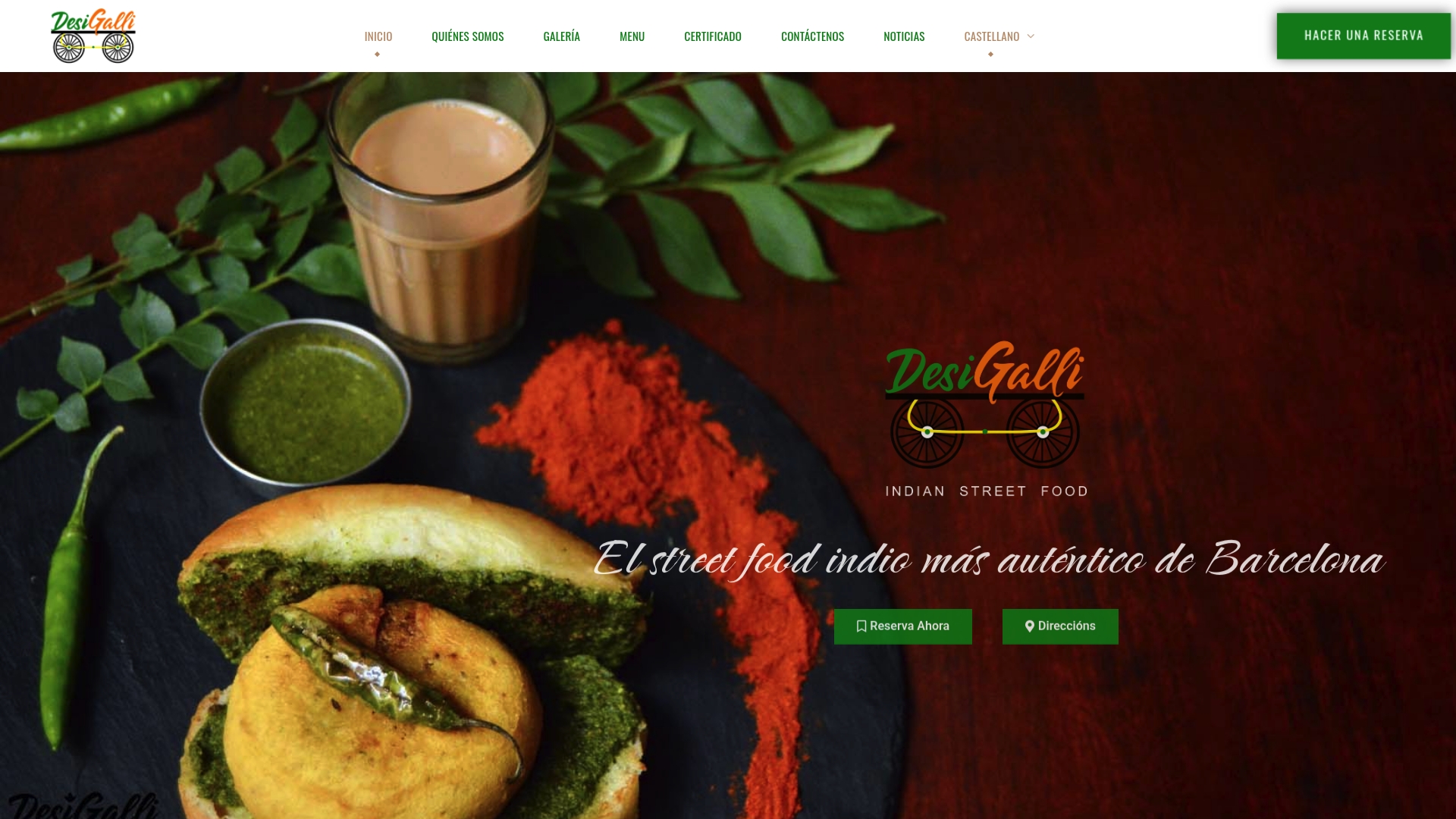
Every dish at Desigallibcn carries a story rooted in the street markets and food stalls of India, adapted thoughtfully for Barcelona’s food scene without losing the flavours that make Indian street food so beloved globally. Whether you are a local food enthusiast or a traveller looking for something genuinely different, explore the full Indian street food menu and discover what contemporary street cuisine looks like when authenticity and hospitality share the same table. You can also explore Indian street food in Barcelona to understand the full cultural context behind each dish on the menu.
FAQ
What is modern street food, exactly?
Modern street food combines traditional vendor formats and immediacy of service with gourmet ingredients, cultural fusion, and technology-driven experiences. It preserves street food’s core logic while expanding its culinary ambition.
How does Michelin recognition affect street food authenticity?
Michelin recognition validates quality without changing the vendor’s setting or approach. As seen with Singapore’s 148 listed stalls, prestige shifts focus to circumstance rather than diminishing the food’s street identity.
What separates street food from fast food?
Street food operates on cultural specificity, vendor craft, and immediate preparation. Fast food chains standardise across locations; street food reflects the personality, tradition, and skill of individual vendors.
What are the biggest street food trends in 2026?
The leading trends include snackable multi-bite formats, build-your-own bowls, plant-based options, sustainable packaging, and pop-up vendor collaborations, all supported by digital ordering platforms and social media discovery.
Can a restaurant deliver a genuine street food experience?
Yes. The Michelin Guide describes street food energy as transferable to indoor settings when the informality, honesty, and directness of the food remain intact. Setting is not the only defining factor.
Recommended
- Advantages of street food experience: a global guide – Desi Galli
- Qué Significa Street Food: Cultura, Variedad y Estilo – Desi Galli
- Street Food en Barcelona: Sabores, Opciones y Tendencias – Desi Galli
- What is Mumbai street food: a cultural guide – Desi Galli