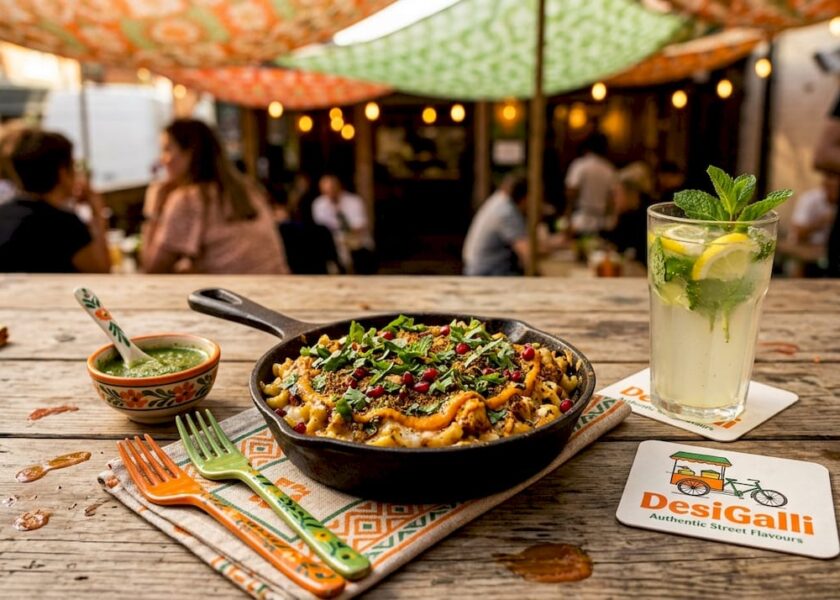

Indian food diversity is defined as a mosaic of over 30 distinct regional cuisines, each shaped by geography, climate, religion, and centuries of cultural exchange. This is not a single cuisine with minor variations. It is a collection of living culinary traditions, from the wheat fields of Punjab to the coconut groves of Kerala, each with its own ingredients, techniques, and philosophical roots. Defining Indian food diversity properly means moving well beyond the familiar North-South binary and recognising the extraordinary depth that exists at every regional and micro-regional level.
What defines indian food diversity at its core?
Indian culinary richness is built on a foundation of staple ingredients that shift dramatically as you move across the subcontinent. Lentils, rice, and millets have been cultivated in India since 6200 BCE. That 8,000-year history means every region has had millennia to develop its own relationship with the land and what it produces.
The primary staples divide broadly by region:
- North and Central India: Wheat dominates. Breads like roti, paratha, and naan are daily staples, supported by dairy products such as ghee, paneer, and yoghurt.
- South India: Rice is central. Dishes like dosa, idli, and rice-based curries form the backbone of everyday meals.
- Eastern India: Rice and mustard oil define the cooking. The spice blend panch phoron (five-spice) is unique to Bengal and neighbouring states.
- Western India: Millets such as bajra and jowar are traditional staples in Rajasthan and Gujarat, reflecting the arid terrain.
Cooking techniques are equally varied. Tandoor grilling is synonymous with the North, producing the charred, smoky breads and meats that most Western diners associate with Indian food. Fermentation is a cornerstone of South Indian cooking, giving dosa and idli their characteristic tang. Tempering, known as tadka, involves blooming whole spices in hot oil or ghee and appears across every region, though the spices chosen differ entirely.
Pro Tip: When exploring regional Indian dishes for the first time, pay attention to the cooking fat used. Mustard oil signals Eastern India, coconut oil points to the South, and ghee is the hallmark of North Indian cooking. The fat tells you where you are before the first bite.
Spice use is one of the most misunderstood aspects of Indian cuisine. Indian spice use primarily layers aroma rather than delivering raw heat. This is a critical distinction. Bengali cuisine is often mild and balanced, while Andhra Pradesh cooking is genuinely fiery. Treating all Indian food as uniformly spicy is the single most common error food lovers make.
How do major regional indian cuisines differ?
The contrast between India’s major regional cuisines is sharper than most people expect. North Indian and South Indian cooking are not simply variations on a theme. They represent fundamentally different culinary philosophies shaped by different staples, techniques, and flavour priorities.
| Region | Key Staple | Signature Technique | Flavour Profile |
|---|---|---|---|
| North India | Wheat, dairy | Tandoor grilling, slow simmering | Rich, creamy, aromatic |
| South India | Rice, coconut | Fermentation, tempering | Tangy, light, coconut-forward |
| Eastern India | Rice, mustard | Panch phoron tempering | Pungent, balanced, seafood-rich |
| Western India | Millet, lentils | Dry roasting, steaming | Sweet, salty, and spicy together |
| Central India | Wheat, lentils | Slow cooking, charcoal | Earthy, robust, chili-forward |
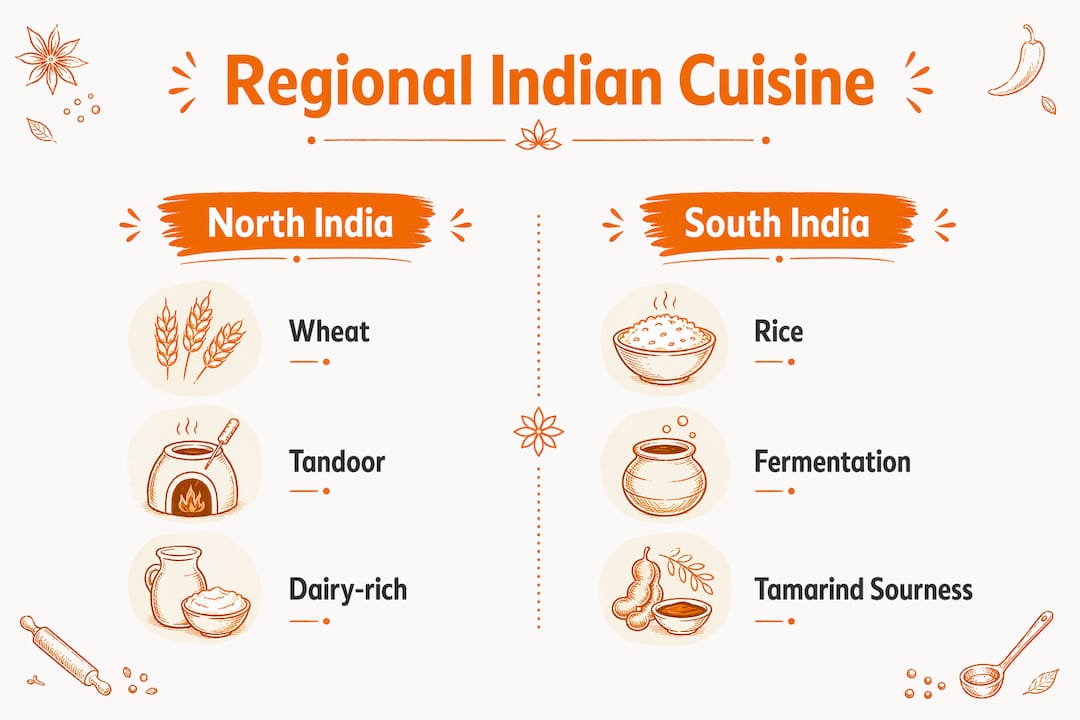
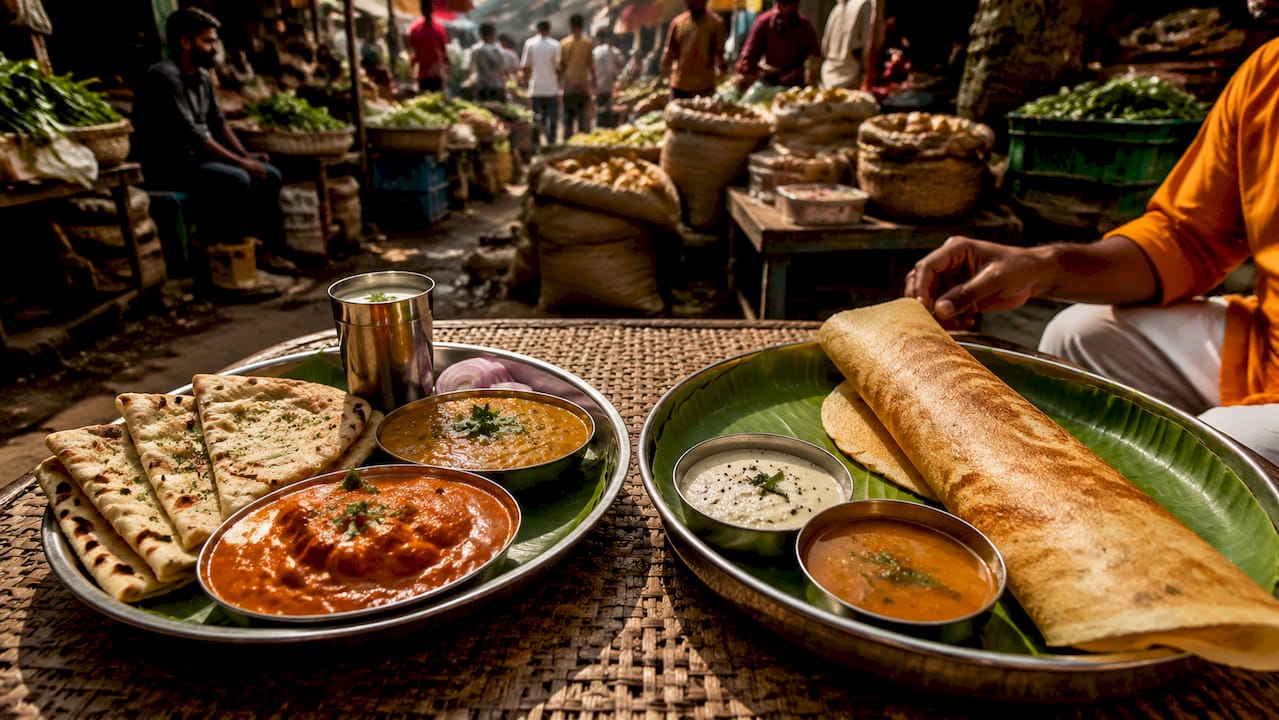
North Indian cuisine is defined by its dairy richness. Dishes like butter chicken, dal makhani, and palak paneer rely on cream, ghee, and yoghurt for their depth. The tandoor oven produces breads and meats with a distinctive char that no other technique replicates.
South Indian cuisine operates on entirely different logic. Tamarind provides sourness, coconut adds body, and fermentation creates complexity. A traditional South Indian meal served on a banana leaf, known as a sadhya in Kerala, can include 20 or more dishes simultaneously, each with a distinct purpose in the meal’s structure.
Eastern India, particularly West Bengal and Odisha, uses mustard oil and the panch phoron spice blend to create dishes with a pungency that is immediately recognisable. Seafood is central here, with hilsa fish holding near-sacred status in Bengali culture.
Gujarati cuisine’s sweet-salty-spicy balance stands apart from every other regional tradition. A Gujarati thali presents this three-way flavour philosophy in a single meal. This contrasts sharply with the chili-forward intensity of Andhra or Maharashtrian cooking, where heat is a deliberate and celebrated feature.
Pro Tip: The best way to understand traditional Indian meal diversity is to eat a regional thali. A thali presents every element of a regional cuisine in one sitting, from bread to pickle to dessert, and shows you how the flavours are designed to work together.
What cultural and historical factors shape indian food?
Indian cuisine reflects 5,000 years of political upheaval, trade, and cultural exchange. That history is not background detail. It is the direct cause of the culinary diversity you encounter today.
Geography is the first and most powerful influence. Coastal regions from Kerala to Goa to West Bengal developed seafood-centred cuisines because the sea was their primary food source. Mountain communities in Himachal Pradesh and Uttarakhand relied on hardy grains and preserved foods suited to cold climates. Desert regions in Rajasthan developed techniques for cooking with minimal water and for preserving food in extreme heat.
Historical trade routes introduced ingredients that are now considered quintessentially Indian:
- Chillies arrived from the Americas via Portuguese traders in the 16th century. Before that, black pepper provided heat.
- Tomatoes also came from the Americas and are now central to North Indian gravies.
- Potatoes followed the same route and became foundational to dishes like aloo gobi and samosa filling.
Religion has shaped dietary choices across every community. Jain dietary laws prohibit root vegetables, producing a cuisine of extraordinary creativity within strict constraints. Hindu traditions of ahimsa (non-violence) drove widespread vegetarianism across many communities. Muslim culinary traditions introduced Mughal-era techniques like dum cooking, where food is slow-cooked in a sealed pot, producing dishes like biryani and nihari.
Regional food identities also function as markers of community and caste. The food served at a Brahmin wedding in Tamil Nadu differs entirely from that at a Kshatriya celebration in Rajasthan. Understanding cultural influences on Indian food means recognising that every dish carries social and historical meaning beyond its ingredients.
What emerging trends are redefining indian cuisine?
The most significant shift in Indian culinary culture right now is the move toward micro-regional specificity. Hyper-local ingredients like wild desert melons (kachri) and Himalayan berries (hisalu) are moving from village kitchens into serious culinary conversation. This represents a direct rejection of the homogenised restaurant-style Indian food that dominated global perceptions for decades.
Several trends are driving this shift:
- Indigenous grain revival: Chefs are returning to barnyard millet, finger millet, and amaranth, grains that were sidelined during the Green Revolution but are now recognised for their nutritional depth and flavour.
- Terroir-driven cooking: Neighbouring villages use different cooking fats based on what grows locally. Mustard oil versus coconut oil is not just a regional preference. It reflects the soil and climate of a specific place.
- Temple kitchen preservation: Ancient techniques like sun-curing, stone-grinding, and fermentation survive in temple kitchens where recipes have remained unchanged for centuries. These kitchens are now recognised as custodians of culinary authenticity.
- Fine dining interpretation: Restaurants across Mumbai, Delhi, and Bengaluru are building tasting menus around single districts or even single villages, presenting Indian culinary richness at a level of specificity that was previously invisible to most diners.
Pro Tip: When you want to explore Indian food beyond the familiar, look for restaurants that name the specific region or community behind a dish, not just “North Indian” or “South Indian.” That specificity is the mark of genuine culinary knowledge.
The culinary tourism angle is also growing. Food lovers travelling through India are increasingly seeking out micro-regional cuisine experiences that go beyond the standard restaurant circuit. Village homestays, temple meal experiences, and regional food festivals now attract serious food enthusiasts who understand that the most interesting Indian food is often the least visible.
Key takeaways
Indian food diversity is defined by over 30 distinct regional traditions, each shaped by geography, history, religion, and ingredient availability, making it one of the world’s most complex culinary systems.
| Point | Details |
|---|---|
| Over 30 regional cuisines | Indian food is not one cuisine but a collection of distinct regional traditions with unique ingredients and techniques. |
| Spice means aroma, not just heat | Indian spice use primarily builds aromatic complexity; heat levels vary enormously by region. |
| History shapes every dish | Trade routes, religion, and 5,000 years of cultural exchange are directly visible in what each region eats. |
| Micro-regional detail matters | Neighbouring villages can use entirely different cooking fats and grains based on local soil and climate. |
| Temple kitchens preserve authenticity | Ancient techniques like stone-grinding and sun-curing survive in temple kitchens unchanged for centuries. |
Beyond north and south: what most diners miss
Most people who love Indian food still think in two categories: North Indian and South Indian. That binary is useful as a starting point, but it misses the vast majority of what Indian cuisine actually contains. I have spent years eating across Indian regional traditions, and the most surprising discovery is always how wrong the common assumptions are.
The idea that Indian food is uniformly spicy is the most persistent misconception. Bengali cuisine can be delicate and subtly sweet. Kashmiri cooking uses dried fruits and saffron in ways that feel closer to Persian cooking than to anything you would find in Chennai. The authentic flavour complexity of Indian food is built on layering, not on heat for its own sake.
What genuinely excites me about the current moment in Indian cuisine is the micro-regional movement. When a chef builds a dish around kachri, a wild desert melon from Rajasthan, or uses barnyard millet from a specific Himalayan valley, they are making a statement about place and identity that goes far beyond flavour. That is food as cultural argument. It challenges the globalised, simplified version of Indian cuisine that most of the world has accepted as the real thing.
My honest recommendation is this: resist the urge to categorise. Every time you think you understand Indian food, eat something from a region you have not tried before. The cuisine will surprise you every time.
— YellowRock
Taste indian food diversity at Desigallibcn in barcelona
Desigallibcn brings the energy and authenticity of Indian street food culture to the heart of Barcelona. The menu draws from multiple regional Indian traditions, from the chaat and samosas of North Indian street markets to the bold spiced curries that reflect the subcontinent’s culinary breadth.
If you want to move beyond the standard restaurant experience, Desigallibcn is the place to start. Explore the Indian street food flavours that define authentic regional cooking, or discover the street desserts that showcase the sweeter, lesser-known side of Indian culinary tradition. Every dish at Desigallibcn is a direct expression of the regional diversity this article describes, made accessible in one Barcelona address.
FAQ
How many regional cuisines does india have?
India has over 30 distinct regional cuisines, each shaped by geography, climate, and cultural history. These are not minor variations but fundamentally different culinary traditions with unique ingredients and techniques.
Is all indian food spicy?
No. Indian spice use focuses on aromatic layering rather than heat. Bengali cuisine is often mild and balanced, while Andhra cooking is genuinely fiery. Heat levels vary enormously across regions.
What is the difference between north and south indian food?
North Indian cuisine centres on wheat, dairy, and tandoor cooking, while South Indian cuisine is built around rice, coconut, tamarind, and fermentation. The two traditions reflect entirely different geographies and flavour philosophies.
What are micro-regional indian cuisines?
Micro-regional cuisines focus on village-level ingredients and preparations, such as wild desert melons or Himalayan berries, that differ even between neighbouring communities. This movement is redefining authentic Indian culinary identity beyond broad regional labels.
How has history shaped indian food diversity?
5,000 years of trade, politics, and cultural exchange introduced ingredients like chillies, tomatoes, and potatoes while shaping religious dietary traditions and Mughal-era cooking techniques such as dum cooking. Every regional cuisine carries this layered history in its recipes.
Recommended
- Defining authentic Indian restaurants: the real guide – Desi Galli
- What is indian comfort food? a cultural guide – Desi Galli
- Why embrace indian street flavours: a cultural guide – Desi Galli
- Indian flavours: Authentic tastes and culinary secrets – Desi Galli