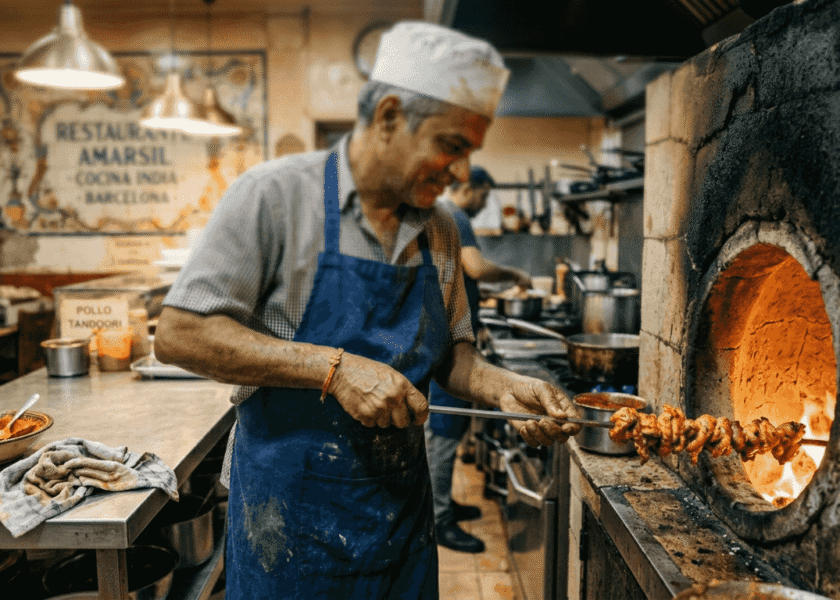

Few things frustrate a genuine food lover more than sitting down in an “Indian restaurant” and being handed a menu of generic korma, tikka masala, and a token biryani. Defining authentic Indian restaurants goes far beyond chilli heat or the presence of naan bread. Real Indian cuisine is one of the world’s most regionally complex culinary traditions, shaped by geography, religion, agriculture, and centuries of cultural exchange. This guide gives you the specific knowledge to tell the difference between a restaurant that honours that tradition and one that merely borrows its aesthetics.
Table of Contents
- Key takeaways
- Defining authentic Indian restaurants through regional diversity
- Cooking techniques and spice layering
- Why vegetarian sections reveal cultural depth
- Ingredient sourcing, service, and the dining experience
- How to choose and evaluate authenticity in practice
- My perspective on what authenticity really means
- Taste authentic Indian food for yourself
- FAQ
Key takeaways
| Point | Details |
|---|---|
| Regional diversity matters | A menu featuring dishes from multiple Indian states signals far greater authenticity than one built around a handful of popular staples. |
| Spice is about flavour, not fire | Authentic Indian cooking layers spices to build complexity, not simply to turn up the heat. |
| Vegetarian sections reveal depth | A strong, multi-preparation vegetarian menu reflects Indian cultural and culinary roots, not an afterthought for non-meat eaters. |
| Cooking techniques are telling | Presence of tandoor cooking, dum biryani, and freshly ground spices indicates a kitchen with genuine technical commitment. |
| Service and ingredients complete the picture | Staff who can explain a dish’s regional origin and menus that name specific ingredients like ghee or kokum are reliable markers of the real thing. |
Defining authentic Indian restaurants through regional diversity
India is not one cuisine. It is thirty-odd distinct culinary traditions sharing a border. A restaurant that understands this will show it clearly on the menu. Menus reflecting regional diversity are one of the clearest indicators of authenticity, and diner guides in 2026 specifically warn against restaurants that lean almost entirely on korma, tikka masala, and biryani as their anchor dishes.
Think about what genuine regional representation looks like. A South Indian section might offer a full dosa with fresh sambar and coconut chutney, not just one token masala dosa buried at the bottom of a long list. A Goan influence shows in vindaloo made with toddy vinegar and Kashmiri chillies, not simply a hot curry labelled “Goan.” Bengali cuisine brings mustard-based fish preparations and mishti doi for dessert. Punjabi cooking centres on the tandoor and robust, dairy-rich gravies. Each of these has a distinct technique, ingredient base, and cultural story.
The practical lesson here is straightforward. When you open a menu at a new restaurant, scan it for specificity. Are dishes named generically, or do they reference a region, a community, or a technique? A restaurant confident in its culinary identity will tell you that a dish is Chettinad, Hyderabadi, or Malvani. Generic labels like “chef’s special curry” or “mixed vegetable masala” reveal very little.
- Look for at least two or three distinct regional sections or clearly labelled regional dishes
- Check whether bread options go beyond naan (paratha, puri, appam, and dosa are all region-specific)
- Seek out dishes you have never heard of. Unfamiliarity is often a good sign.
- Notice whether rice preparations vary (jeera rice, lemon rice, curd rice, and biryani are all distinct traditions)
Pro Tip: Ask the server which region a dish comes from. An authentic kitchen’s staff will answer with confidence and often genuine enthusiasm. Vague or deflecting answers suggest the menu was assembled with aesthetics, not tradition, in mind.
Cooking techniques and spice layering
Here is the misconception that trips up even experienced diners: authentic Indian food is not necessarily spicy. Spice in authentic Indian cooking is used to enhance and contextualise flavour, not to overwhelm the palate. A Kashmiri dish can be deeply aromatic and barely hot at all. A coastal Keralan preparation might carry a slow, building warmth from fresh green chillies entirely different from the blunt heat of dried chilli powder.
The real test of a kitchen’s authenticity lies in how spices are handled. Here is what to look for:
- Whole spice tempering. Many authentic preparations begin by blooming whole spices, cardamom pods, cloves, or mustard seeds, in hot oil before any other ingredient is added. This technique releases volatile oils that no pre-ground powder can replicate.
- Sequential spice addition. Onions, ginger, and garlic are cooked separately before ground spices are added at the right moment. Rushing this step produces the raw, powdery flavour common in less careful kitchens.
- Absence of a heat slider. If a menu asks only whether you want mild, medium, or hot, that is a red flag. Dishes in an authentic kitchen are calibrated per regional style, and the cook controls that balance, not a three-option checkbox.
- Tandoor evidence. Freshly made tandoori dishes require a clay oven running at extreme temperatures. You can often smell the char and smoke. Tandoori chicken that arrives pale and oven-baked tells you everything you need to know.
- Biryani as a benchmark. Genuine biryani uses the dum cooking method, with rice and meat or vegetables layered and slow-cooked under a sealed lid. Each grain should be separate and fragrant. A biryani that resembles a wet rice dish has been boiled, not layered.
Pro Tip: Order a biryani and a tandoori dish on your first visit to any Indian restaurant. These two preparations reveal the kitchen’s technical range better than anything else on a standard menu.
Why vegetarian sections reveal cultural depth
In much of India, vegetarianism is not a dietary preference. It is a way of life rooted in religious practice, caste tradition, and regional identity. A restaurant that treats its vegetarian section as a concession to non-meat eaters has missed this entirely. A strong vegetarian menu with culturally complete meals is a genuine marker of authenticity.
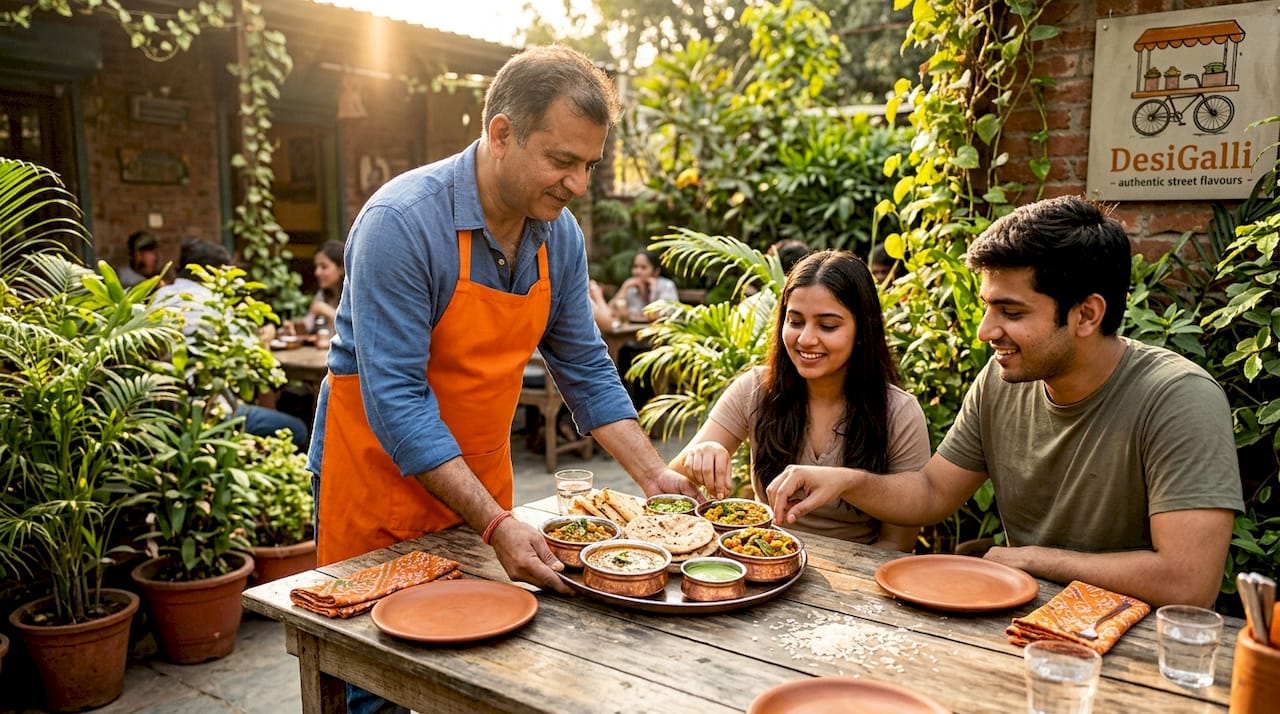
The difference between authentic vegetarian Indian cooking and a substitution-based approach is dramatic. Consider dal makhani: made properly, it involves black lentils soaked overnight, slow-cooked for hours, and finished with cream and butter over a low flame. A shortcut version uses tinned lentils and tastes like it. Chole bhature from Punjab requires fermented dough and a chickpea gravy built with dried amla for tartness. Palak paneer, done well, uses freshly blanched and puréed spinach, not frozen. These are not simple dishes. They are multi-stage preparations with genuine technique behind them.
What to assess in a vegetarian section:
- Do dishes represent multiple regions rather than the same basic gravy in different forms?
- Are the preparations described with enough detail to suggest real cooking rather than reheating?
- Does the menu include region-appropriate techniques like fermented batters, tamarind-based gravies, or mustard-tempered preparations?
- Are there traditional snacks and street foods, like chaat, alongside main dishes?
You can find inspiration for this kind of cooking at Desigallibcn’s vegetarian approach, which connects the cultural roots of vegetarian Indian food with genuine preparation.
Ingredient sourcing, service, and the dining experience
Beyond the menu itself, several subtler signals reveal whether a restaurant is genuinely committed to Indian culinary culture. Staff knowledge and ingredient transparency consistently appear in guides to authentic Indian dining as markers that go deeper than décor.
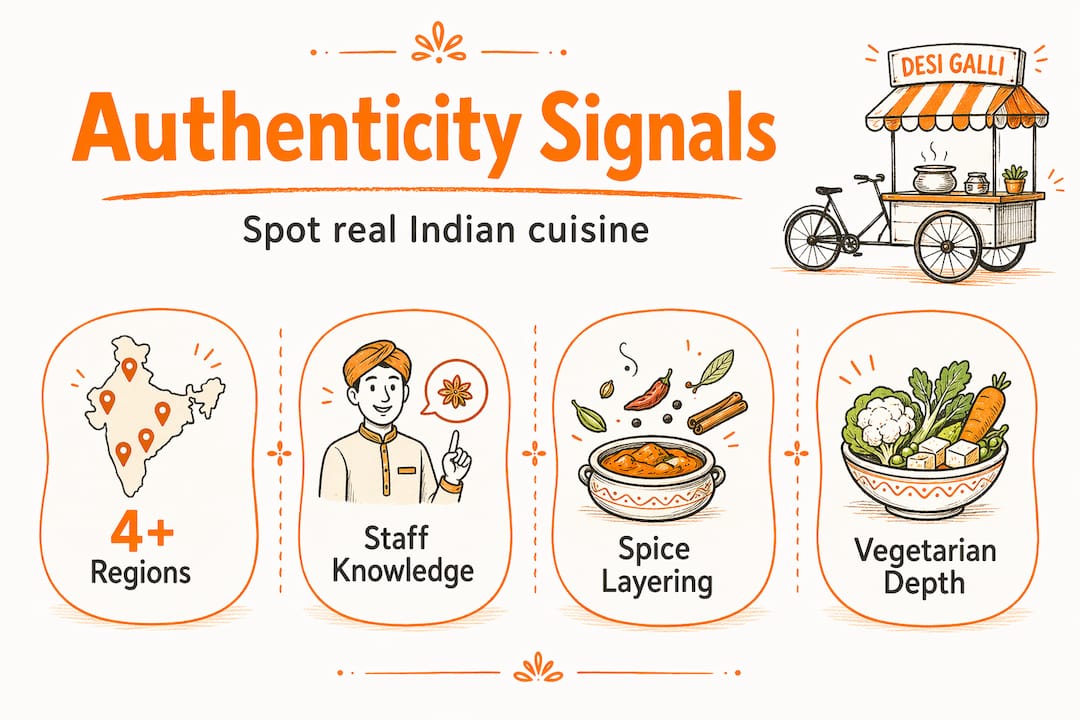
| Authenticity signal | What to look for | Red flag |
|---|---|---|
| Ingredient specificity | Menu names ghee, kokum, tamarind, or fresh curry leaves | Vague “house spice blend” with no further detail |
| Staff knowledge | Servers explain regional origins and cooking methods confidently | Staff unfamiliar with dish backgrounds or ingredients |
| Meal pacing | Traditional progression from pickles and papad through to sweets | Everything arrives simultaneously with no structure |
| Ingredient fidelity | Specific local products like freshly ground spices | Pre-packaged spice mixes listed as primary flavour source |
| Restaurant story | Clear cultural connection to a region, chef background, or family tradition | Generic “Indian cuisine” branding with no cultural context |
A word on décor: Indian restaurants are sometimes judged by Bollywood posters and bronze statues alone. These surface signals mean very little. What matters is whether the kitchen, the menu, and the people serving you reflect genuine cultural knowledge and care.
How to choose and evaluate authenticity in practice
Knowing what to look for is one thing. Applying that knowledge confidently when you are standing outside a restaurant or scrolling through reviews is another. Here are practical steps for using your knowledge effectively.
- Treat the menu as a map. The range and specificity of dishes tells you where in India the kitchen’s knowledge comes from and how deep that knowledge runs. Use it as your primary guide when you choose an Indian restaurant.
- Read reviews with scepticism. Reviews that focus on “great curry” or “really spicy” tell you very little. Look for reviewers who name specific dishes, compare them to regional versions they know, or remark on cooking techniques.
- Ask one informed question. Asking what region a dish comes from, or what makes the biryani different from others on offer, will tell you more in thirty seconds than ten minutes of menu reading.
- Look for a clear culinary story. The best authentic restaurants usually have one: a family recipe, a home region, a chef with roots in a specific cuisine. This context is not window dressing. It signals that the food is coming from somewhere real.
- Stay open to innovation. Authenticity does not mean frozen in time. A restaurant can use fresh local produce alongside traditional techniques and remain entirely authentic in spirit. The Indian restaurant authenticity checklist from Desigallibcn captures this balance well.
Pro Tip: When reading online reviews for Indian restaurants, filter specifically for terms like “dal,” “chaat,” “dosa,” or specific regional names. These keywords signal reviewers who know what they are talking about, and their comments will be far more useful than general star ratings.
My perspective on what authenticity really means
I have spent years eating in Indian restaurants across Europe, and the single most common mistake I see is treating authenticity as a fixed destination rather than a living relationship between cook, ingredient, and tradition.
What I have found is that the restaurants that feel most genuine are rarely the ones making the loudest claims about authenticity. They are the ones where the kitchen clearly knows why a dish is made a certain way, not just how. A chef who understands that the sourness in a Goan curry comes from kokum because kokum grows on the Konkan coast, and because it suits the local fish, is operating from real cultural knowledge. That context cannot be faked, and it shows in the food.
I have also learned that cultural humility matters as much as technique. The best Indian restaurants I have encountered hold their food’s story with genuine respect. They are not selling an experience. They are sharing a tradition. There is a real difference, and you can feel it the moment you sit down.
Authenticity builds trust. When a restaurant earns that trust through specificity, care, and cultural honesty, it transforms a meal into something worth remembering.
— YellowRock
Taste authentic Indian food for yourself
If all this talk of regional depth, spice layering, and cultural tradition has made you genuinely hungry, that is exactly the point.
Desigallibcn brings the energy and honesty of Indian street food to the heart of Barcelona. The menu at Desi Galli draws on real street food traditions: samosas with proper spiced filling, chaat assembled fresh, and curries built on layered masalas rather than shortcuts. Whether you are a seasoned fan of Indian cuisine or approaching it for the first time, it is the kind of place where you can taste the difference that genuine care makes. Explore the full story of Indian street food in Barcelona and book a table to experience it directly.
FAQ
What are the main signs of an authentic Indian restaurant?
Look for a regionally diverse menu, clearly named dishes with regional origins, evidence of tandoor cooking, and staff who can explain dish backgrounds confidently. Generic menus built around a handful of popular staples are the clearest warning sign.
Does authentic Indian food have to be very spicy?
No. Authentic Indian food uses spices to build flavour and complexity, with heat calibrated to regional style rather than uniformly applied. Many genuinely traditional dishes are mild, aromatic, or sour rather than hot.
How can I tell if a vegetarian dish is authentically Indian?
Authentic vegetarian dishes feature multi-step preparation, region-specific techniques, and full-bodied flavour. If the vegetarian section reads like a list of meat dishes with the protein removed, that is a sign the menu was not built with Indian culinary culture in mind.
Why does biryani quality matter so much?
Biryani requires the dum cooking method, slow layering under a sealed lid, which produces distinct, fluffy rice with deeply absorbed flavour. A wet or mushy biryani suggests the kitchen skipped that process entirely, which points to broader shortcuts in the kitchen.
What is the quickest way to assess a restaurant before visiting?
Read the menu online and look for regional specificity in dish names and descriptions. Then check reviews for mentions of specific dishes rather than general praise. Restaurants with a clear cultural story or chef background on their website are worth prioritising.
Recommended
- Descubre la autenticidad de la cocina india: sabores reales – Desi Galli
- Cómo Elegir Restaurante Indio Sin Errores Turísticos – Desi Galli
- Discover authentic Indian street food flavours in Barcelona – Desi Galli
- Guía para probar comida india: vive una experiencia auténtica – Desi Galli