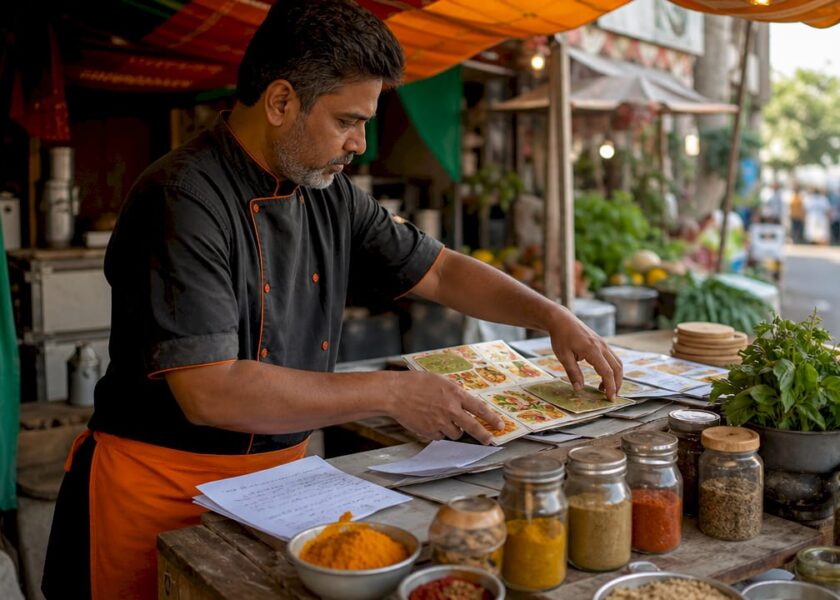

Street food feeds an estimated 2.5 billion people daily worldwide, making it one of the most significant culinary forces on the planet. Yet the advantages of street food experience go far beyond filling a stomach cheaply. For travellers and food enthusiasts alike, eating from stalls, carts, and market counters unlocks cultural memory, sensory intensity, and genuine human connection in ways that restaurant dining rarely replicates. This guide breaks down every major benefit, backed by real examples from India to Singapore, so you can approach your next street food encounter with both appetite and understanding.
Table of Contents
- Key takeaways
- 1. Affordability and accessibility: the core advantage
- 2. Authenticity and cultural immersion through every bite
- 3. Sensory pleasures that no restaurant can fully replicate
- 4. Global culinary recognition and the rise of street food prestige
- 5. Community empowerment and economic independence
- My honest take on street food and why it deserves more respect
- Discover authentic Indian street food in Barcelona at Desigallibcn
- FAQ
Key takeaways
| Point | Details |
|---|---|
| Unmatched affordability | Street food offers exceptional value for money, accessible to travellers and locals on any budget. |
| Living cultural archive | Every dish carries recipes, migration stories, and rituals passed across generations of vendors. |
| Sensory richness | The sights, aromas, and sounds of street food preparation are as rewarding as the food itself. |
| Global culinary recognition | Singapore leads with 148 Michelin-recognised stalls, proving street food’s serious gastronomic credentials. |
| Economic empowerment | Supporting street vendors directly sustains livelihoods and preserves community identity. |
1. Affordability and accessibility: the core advantage
The most immediate benefit of street food is straightforward: it costs far less than almost any alternative. In Bangkok, a bowl of boat noodles costs the equivalent of under one euro. In Mumbai, a plate of pav bhaji feeds a hungry person for a fraction of what a café would charge. This affordability is not accidental. It is structural.
Street vendors operate with minimal overheads. No rent on a dining room, no waiting staff, no printed menus. Those savings go directly to the customer. In Thailand, street food comprises 69% of all food businesses and generates over 271 billion baht annually, reflecting how deeply embedded affordable options are in daily urban life.
The accessibility angle matters just as much. Street food does not discriminate by dress code, reservation, or income bracket. A student, a business traveller, and a local factory worker can stand at the same counter and eat the same dish. That democratising quality is rare in food culture.
Pro Tip: When budgeting for travel, allocate a specific daily amount to street food only. You will eat better, spend less, and discover dishes that no restaurant guide lists.
- Street food typically costs 60 to 80 per cent less than equivalent restaurant meals in the same city
- It is available at hours when restaurants are closed, serving night-shift workers and late travellers
- No tipping culture, no minimum spend, no awkward waiter dynamics
- Portions are often generous because vendors compete on value, not ambience
2. Authenticity and cultural immersion through every bite
Street food is not just food. It is cultural transmission, carrying recipes that map family migrations, ancient trade routes, and seasonal rituals. A vendor making dosas in Chennai is performing the same movements their grandmother made, adjusting for local taste but preserving the essential technique. That continuity is what makes street food irreplaceable.
“Street food is the most honest form of cooking. There is nowhere to hide behind a polished dining room. The food must speak entirely for itself.” This is the quality that makes the cultural experience of street food so distinct from anything you find in a formal setting.
Travellers who engage seriously with street food gain access to a city that guidebooks cannot map. The vendor selling chaat outside a Delhi temple at 7am knows the neighbourhood’s rhythms, its festivals, its gossip. Eating there places you briefly inside that world.
Here is what makes street food culture such a powerful vehicle for cultural immersion:
- Recipes are transmitted orally, keeping them alive and adaptive rather than frozen in cookbooks
- Vendors often specialise in a single dish or technique, reaching a level of mastery rarely seen in broader kitchens
- Street stalls serve as social gathering points where locals discuss politics, sport, and daily life
- Seasonal and regional ingredients appear on street menus long before they reach restaurant tables
- The physical act of eating standing up, in a crowd, connects you to a community’s daily rhythm
Street food is also socially mobile and adaptive, shifting to new neighbourhoods, responding to migration patterns, and absorbing new influences without losing its core identity. That resilience is part of what makes local street food advantages so enduring across generations.
3. Sensory pleasures that no restaurant can fully replicate
Eating street food engages senses in a sequence that restaurant dining often skips. You smell the charcoal before you see the stall. You watch the vendor’s hands move with practised speed, stretching dough or ladling sauce with a precision that comes from repetition. The visual spectacle of preparation, combined with aromatic spices and the noise of a busy market, creates a multifaceted experience that is genuinely irreducible to the food on your plate.
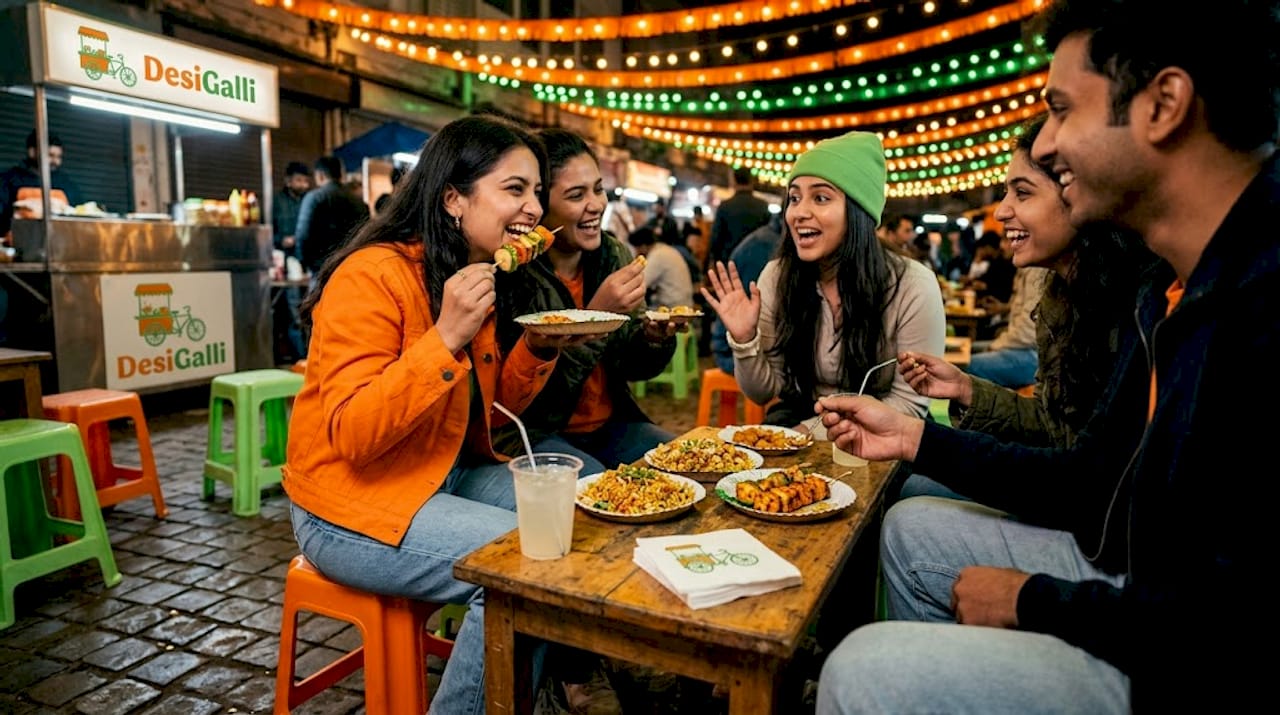
Bold flavours are another defining quality. Street food is rarely subtle. It is calibrated for impact because vendors are competing for attention in an open market. The chilli is hotter, the tamarind is sharper, the caramelisation is deeper. These are flavours designed to arrest your attention and bring you back tomorrow.
Pro Tip: Look for stalls with high turnover rather than long queues alone. High turnover and vendor cleanliness are stronger indicators of freshness and safety than popularity metrics.
- Watch where vendors source their ingredients. Fresh produce delivered during your visit is a strong positive signal
- Engage with the vendor. Ask what is fresh today or what they recommend. Most will tell you honestly
- Eat at off-peak hours if you want to observe technique without distraction
- Follow locals, not tourists. The queue with office workers at lunchtime is almost always the better choice
The atmosphere of a night market or a roadside stall contributes something that cannot be ordered on a menu. It is participatory. You are not an audience member; you are part of the scene.
4. Global culinary recognition and the rise of street food prestige
For decades, food critics dismissed street food as informal, inconsistent, or beneath serious consideration. That position has become increasingly difficult to defend. Singapore leads globally with 148 Michelin-recognised street food stalls, and Thailand had 137 Bib Gourmand venues as of 2026. The Bib Gourmand designation specifically identifies high-quality, affordable eateries, which is essentially the definition of what street food has always offered.
| Country | Michelin-recognised street food venues (2026) | Notable dishes recognised |
|---|---|---|
| Singapore | 148 | Laksa, chicken rice, char kway teow |
| Thailand | 137 | Pad Thai, khao man gai, mango sticky rice |
| India | Growing presence | Chaat, dosas, vada pav |
| Japan | Established | Takoyaki, ramen stalls, yakitori |
This recognition matters beyond prestige. It validates what billions of daily consumers already knew: street food influences the global casual dining sector with agile operations and authentic flavours. The trend accelerated after the 2008 to 2009 financial crisis, when both consumers and restaurateurs recognised that quality did not require formality or high price points.
Street food tourism is now a defined travel category. Destinations market their hawker centres, night markets, and food streets as primary attractions. This benefits local economies directly, channelling tourist spending into the hands of independent vendors rather than hotel restaurants or international chains.
5. Community empowerment and economic independence
Street food vending is one of the most accessible forms of self-employment available in urban economies. The startup costs are low. The skills are transferable. The location can shift with demand. In India alone, nearly 10 million street food vendors depend on this trade for their livelihoods, making it a structural pillar of the informal economy.
When you eat at a street stall, the money you spend has a high probability of staying in the local community. It pays for ingredients from nearby suppliers, school fees for the vendor’s children, and rent in the neighbourhood where the stall operates. That economic circularity is genuinely different from spending at a chain or a tourist-facing restaurant.
- Vendors build loyal customer bases over years, creating genuine community anchors within urban neighbourhoods
- Family-run stalls often represent multi-generational investment in a specific recipe or technique
- Co-created standards and affordable infrastructure support safe, viable street food cultures better than top-down restrictions
- Consumers who learn vendor names, return regularly, and share stalls within their networks actively participate in cultural preservation
The tension between hygiene regulation and economic necessity is best resolved by working directly with vendors, not against them. Cities that have done this successfully, including Singapore and parts of Southeast Asia, have created street food cultures that are both safe and thriving.
My honest take on street food and why it deserves more respect
I have eaten street food on four continents, and the single biggest shift in my thinking came not from the food itself but from watching what happens around it. Street food is not a spectacle for outsiders. It is a living tradition that functions whether or not a traveller is present to observe it.
What I have found is that the travellers who benefit most from street food experiences are those who treat vendors as skilled professionals, not as photogenic subjects. Asking permission before photographing someone’s stall, returning to the same vendor across multiple visits, and learning even a handful of words in the local language changes the nature of the exchange entirely.
I also think recording and sharing vendor techniques with consent is genuinely valuable. Too many recipes and methods disappear when a vendor retires. Documentation, done respectfully, helps preserve culinary heritage that belongs to communities, not to the food media.
My practical advice: resist the instinct to eat everywhere and instead eat the same dish multiple times from different vendors in the same city. That comparison teaches you more about local food culture than any guided tour could.
— YellowRock
Discover authentic Indian street food in Barcelona at Desigallibcn
Barcelona has its own answer to the question of why try street food. Desigallibcn brings the energy, flavour, and cultural richness of Indian street markets to the heart of the city.
At Desigallibcn, dishes like samosas, chaat, and fragrant curries carry the same stories and techniques that vendors have refined across generations in India. The Indian street food flavours available here reflect the regional diversity and bold spice profiles that define the subcontinent’s street food tradition. Whether you are a Barcelona local or a visitor exploring the city’s food culture, Indian street food in Barcelona offers an experience that is both accessible and genuinely memorable. Pair your meal with one of Desigallibcn’s crafted cocktails for the full sensory picture.
FAQ
What are the main advantages of a street food experience?
The main advantages include affordability, authentic cultural immersion, bold flavours, and direct support for local vendors. Street food also provides a sensory experience, from watching preparation to smelling spices, that formal dining rarely offers.
Is street food safe to eat when travelling?
Street food can be eaten safely by choosing vendors with high turnover, visible cleanliness, and freshly prepared dishes. These markers are more reliable indicators of safety than queue length or price.
Why is street food culturally significant?
Street food transmits recipes, techniques, and community stories across generations, acting as a living archive of cultural identity. Vendors often specialise in a single dish for decades, preserving techniques that would otherwise disappear.
How does street food support local economies?
Money spent at street stalls circulates directly within local communities, supporting ingredient suppliers, families, and neighbourhoods. In India alone, nearly 10 million vendors depend on street food vending for their primary income.
What makes Indian street food particularly distinctive?
Indian street food is defined by its layered spice complexity, regional diversity, and the ritual of preparation. Dishes like chaat combine sweet, sour, salty, and spicy elements in a single serving, reflecting centuries of culinary refinement unique to the subcontinent.
Recommended
- Street Food Experience: Sabores Indios en Barcelona – Desi Galli
- Benefits of Indian street food in Barcelona – Desi Galli
- Street Food en Barcelona: Sabores, Opciones y Tendencias – Desi Galli
- Indian street food: Flavours, rituals and where to try in Barcelona – Desi Galli