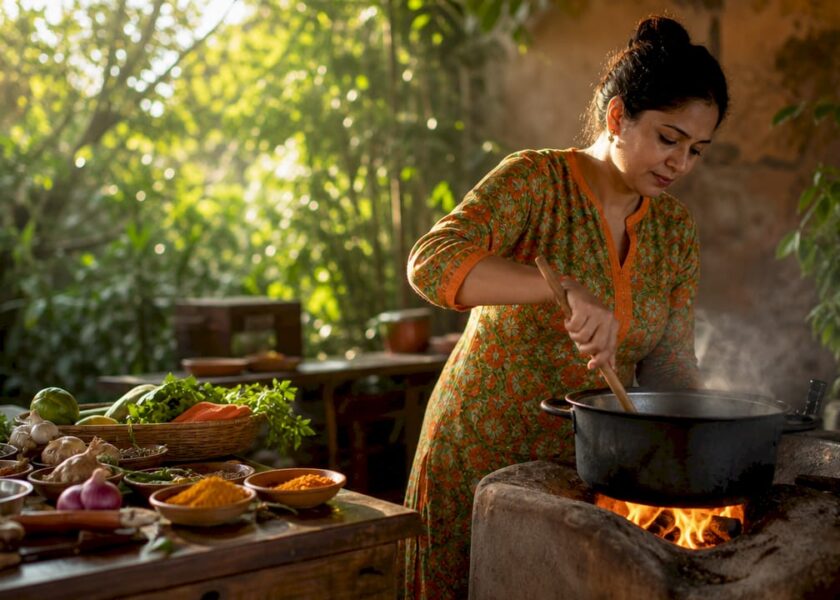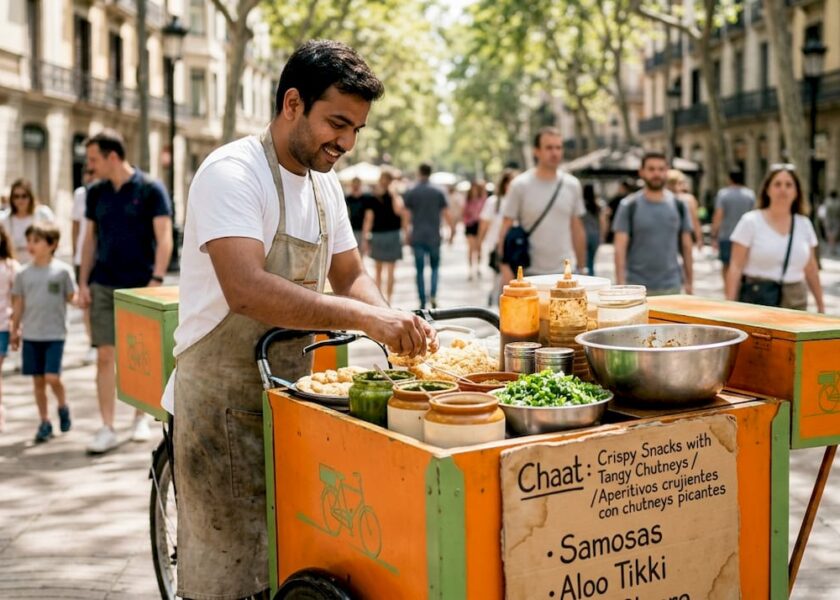

Mention “authentic Indian food” to most people in Barcelona and watch their eyes immediately conjure images of a fiery curry or a mountain of spiced rice. That picture, while appealing, is only a sliver of a far more complex culinary world. India has 28 states, each with its own agricultural traditions, cooking rituals, and flavour profiles shaped by centuries of history. Understanding this diversity is not just interesting for food lovers; it is the key to truly enjoying what Barcelona’s growing Indian street food scene has to offer.
Table of Contents
- Understanding authentic Indian food: Regional roots and culinary identity
- Street food as a gateway to authenticity in Barcelona
- Signals and benchmarks for authenticity: How to judge your Indian meal
- Navigating ‘authenticity’: Marketing, fusion, and the traveller’s dilemma
- Why the pursuit of authentic Indian food in Barcelona is about curiosity, not just tradition
- Discover and taste authentic Indian street food in Barcelona
- Frequently asked questions
Key Takeaways
| Point | Details |
|---|---|
| Regional roots matter | Authentic Indian food is shaped by region, local ingredients, and culinary traditions. |
| Street food reveals authenticity | Barcelona’s Indian street food offers a window into real regional flavours and culture. |
| Menu clues are key | Spot authenticity by looking for regional staples, cooking methods, and chef/staff knowledge. |
| Marketing uses ‘authentic’ | Restaurants may use ‘authentic’ as a buzzword—ask questions to check for true regional depth. |
| Curiosity leads to true experience | Exploring and asking about origins uncovers genuine culinary encounters in Barcelona. |
Understanding authentic Indian food: Regional roots and culinary identity
The first and most important thing to accept is that there is no single “Indian flavour.” As food historians and culinary experts note, Indian cuisine is not a single national style; it varies by region, local agriculture, and history. A meal in Rajasthan relies heavily on dried spices, lentils, and preserved ingredients because of the arid landscape. A meal in Kerala, just a few thousand kilometres south, features coconut milk, fresh fish, and curry leaves grown in tropical abundance. The same country, completely different plates.
What does this mean for authenticity? Authentic Indian food is best understood as regional cuisine that prioritises cooking techniques, local ingredients, and cultural context rather than a fixed set of dishes. A dosa from Tamil Nadu is just as authentically Indian as a butter chicken from Punjab, but comparing the two is like comparing a French baguette to a Sicilian arancino. Both are European, yet entirely distinct.
| Region | Signature dishes | Key ingredients | Cooking style |
|---|---|---|---|
| North India | Butter chicken, roti, dal makhani | Wheat, dairy, dried spices | Tandoor, slow cooking |
| South India | Dosa, sambar, rasam | Rice, tamarind, coconut | Steaming, tempering |
| West India | Dhokla, vada pav, thali | Chickpea flour, peanuts | Fermentation, frying |
| East India | Macher jhol, rasgulla | Mustard oil, fresh fish | Slow simmering |
Cultural and religious context shapes everything too. Many North Indian dishes are vegetarian by tradition because of Hindu and Jain influences, while coastal regions developed seafood cultures over centuries of trade with Arab and Portuguese merchants. Religious festivals brought sweets and specific ritual preparations into everyday cooking. You cannot separate the food from the story behind it.
“Authenticity in Indian food is about connecting a dish to its place of origin, not simply about replicating a recipe.”
Exploring these authentic tastes and culinary secrets is one of the most rewarding ways to approach Indian food as a traveller. Rather than looking for “the most authentic,” look for the most specific. The more a dish tells you about where it comes from, the more genuine the experience.
Here are the key pillars that define regional authenticity:
- Cooking techniques: Tandoor baking, slow braising, fermentation, tempering in hot oil (known as tadka), and dry roasting of whole spices
- Local ingredients: Mustard oil in Bengal, coconut in Kerala, saffron in Kashmir, tamarind in Tamil Nadu
- Cultural and ritual foods: Festival sweets, street snacks tied to specific bazaars, religious dietary observances
- Historical influences: Persian, Mughal, Portuguese, and British trade routes all left permanent marks on regional cooking
Street food as a gateway to authenticity in Barcelona
Understanding authenticity leads us to the heart of Barcelona’s Indian food scene: its vibrant street food offerings. Street food is where Indian culinary identity truly lives. The best Indian meals are not always served on white tablecloths. They come in small portions from busy stalls, eaten standing up, with paper napkins and no apology. That energy is exactly what Indian restaurants in Barcelona are beginning to replicate.
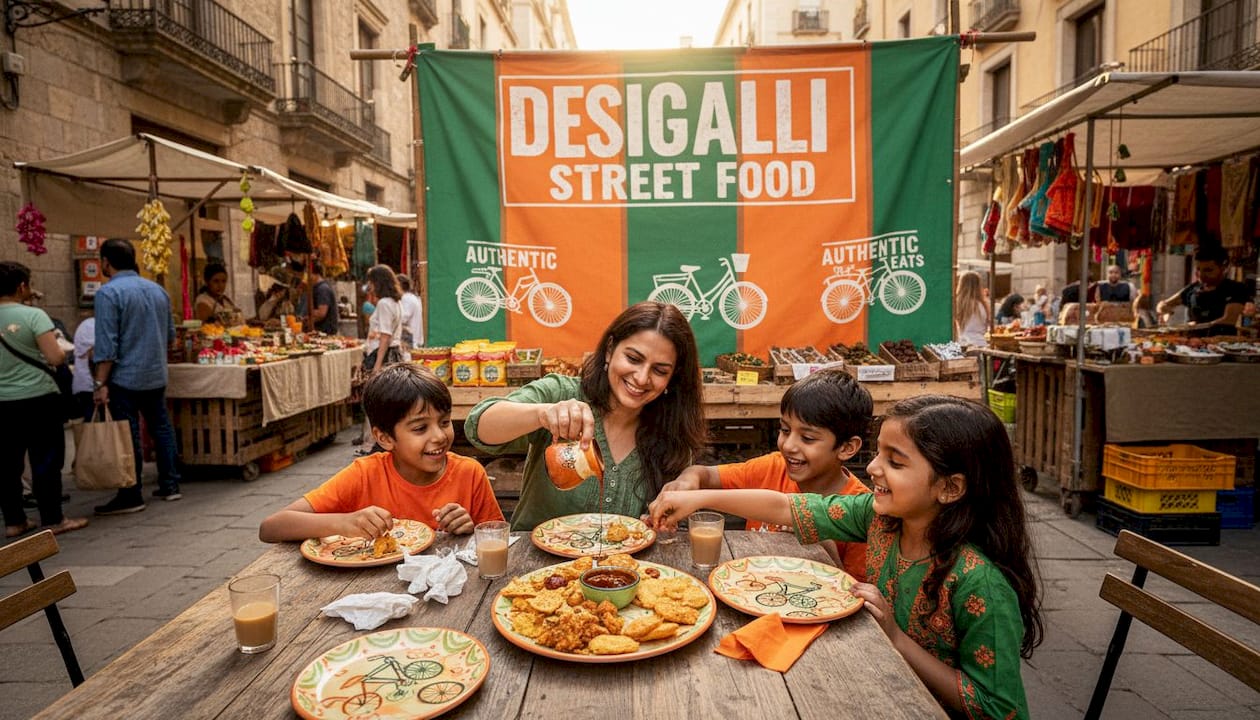
Many travellers look for street-food-style Indian options in Barcelona such as chaat, pakoras, and samosas. These dishes are accessible, shareable, and representative of Indian culinary culture at its most direct. A well-made samosa is not just a pastry; it is a study in texture, spice balance, and regional filling traditions. Chaat, meanwhile, is a full sensory event: sour tamarind, sweet chutney, crunchy papdi, and yoghurt all in one bite.
| Dish type | Authentic version | International adaptation |
|---|---|---|
| Samosa | Spiced potato, peas, thin pastry, fried fresh | Thick pastry, baked, minimal seasoning |
| Chaat | Hand-assembled, multiple chutneys, regional base | Pre-mixed, limited condiments |
| Pakora | Seasonal vegetables in seasoned batter | Generic batter, standardised filling |
| Curry | Regional spice blend, slow cooked | Uniform “curry powder,” quick preparation |
When enjoying Indian street food in Barcelona, use this numbered approach to get the most from your visit:
- Start with snacks before mains: Samosas, pakoras, and chaat reveal more about a kitchen’s skill than a large main course
- Order dishes you cannot name: Unfamiliar items often represent the most regional, least-adapted choices on the menu
- Notice the chutneys: Fresh green chutney and tamarind chutney prepared in-house are strong indicators of attention to tradition
- Ask about vegetarian options: Indian street food has an incredibly rich vegetarian tradition; a strong menu in this area often signals genuine knowledge of regional cuisine
- Try the chai: A properly prepared masala chai, with warming spices and a robust tea base, rounds off any street food experience
Pro Tip: The authentic Indian gastronomy checklist is a practical starting point before you visit any Indian restaurant in Barcelona. It gives you specific markers to look for so you arrive with confidence rather than guesswork.
Signals and benchmarks for authenticity: How to judge your Indian meal
With so many choices available, it is vital to know how to spot true authenticity in your meal. The good news is that there are concrete signals, and none of them require deep culinary expertise to identify.
Look for a match to region in staples and techniques, not just spice level. The spice level is the most misleading measure of authenticity. A dish can be fiery and completely inauthentic, or mild and deeply traditional. The real markers are structural: what is the base of the sauce? What cooking method was used? Does the menu reference a state or city of origin?
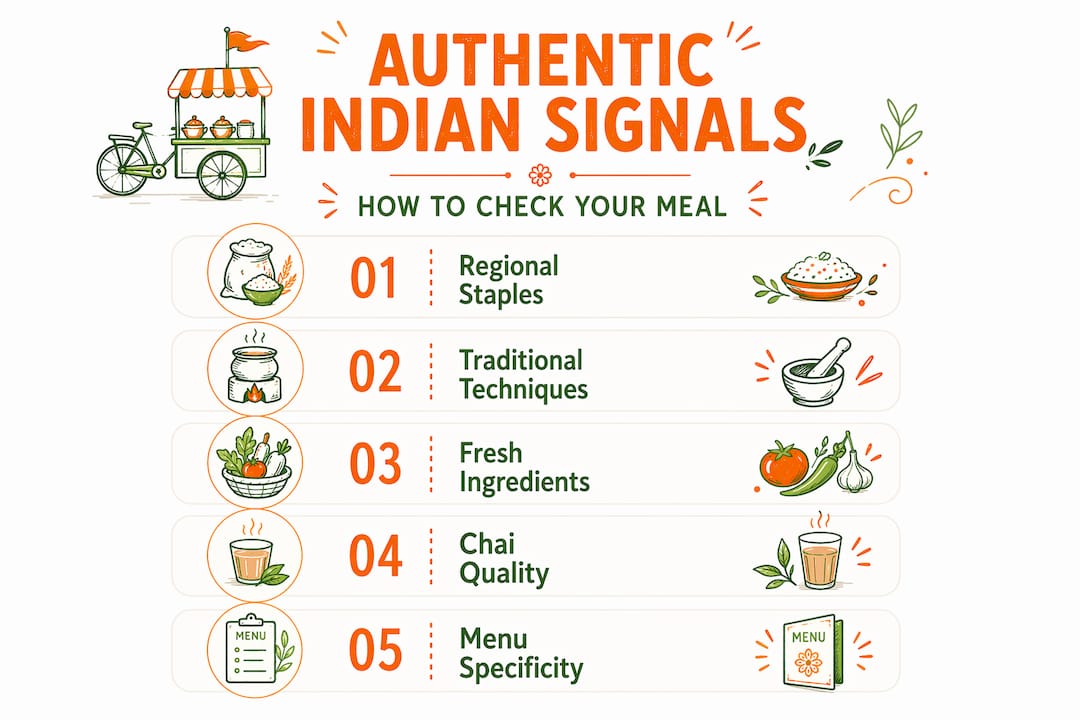
Check for menu signals and ask staff about regional origin of dishes; expect regional fundamentals but also some adaptation in cities outside India. Menus that list dishes with regional names such as “Lucknowi biryani” or “Chettinad chicken” are signalling awareness of provenance. That specificity usually reflects genuine knowledge in the kitchen.
Signals that indicate authenticity:
- Regional dish names with clear geographic references
- Seasonal ingredients or specials that change with availability
- A strong vegetarian section that goes beyond a token salad
- Menu descriptions that mention cooking methods (tandoor, dum, tawa)
- Staff who can explain where a dish originates and what makes it different
Signals that suggest heavy adaptation:
- A menu that lists dozens of dishes with no regional context
- Identical spice profiles across multiple dishes
- Descriptions that emphasise “mild” or “Westernised” versions without alternatives
- No visible evidence of fresh chutney preparation or spice blending in-house
The benefits of Indian street food extend beyond flavour. Genuinely prepared street food tends to use fresher ingredients, lighter cooking methods, and bold flavours built through technique rather than heavy sauces. It is also more accessible for those with dietary needs, given that much of the traditional street food canon is naturally plant-based.
Pro Tip: When choosing a restaurant in Barcelona, look at the chai. A kitchen that takes its masala chai seriously, simmering whole spices, using proper tea, and adjusting the milk ratio, almost certainly takes its food seriously too.
Worth noting: Studies tracking global Indian restaurant growth show that demand for regionally specific menus has increased significantly in European cities over the past decade. Diners are becoming more informed, and restaurants that offer genuine regional detail are earning stronger loyalty as a result.
Navigating ‘authenticity’: Marketing, fusion, and the traveller’s dilemma
Even with the best intentions, authenticity can become blurred. Let us make sense of it amidst marketing and fusion trends.
The term “authentic” can be used in marketing and reviews, sometimes even for dishes adapted for international diners. This is not always dishonest; it is often a reflection of genuinely different definitions. A restaurant founded by a family from Mumbai may describe their menu as authentic because it reflects their personal culinary heritage, even if some dishes have been adjusted for local palates. That is a legitimate form of authenticity, just not a regional benchmark.
Authentic Indian flavours are dominating global restaurant menus, with media framing this as a market trend moving away from fusion and toward tradition. This shift reflects real consumer demand. Diners in Barcelona, like those in London and Paris, increasingly want to know where their food comes from and what story it tells.
The problem is that fusion has sometimes used the language of authenticity without the substance. Consider these practical distinctions:
- Traditional regional dish: Prepared using historic techniques, regionally appropriate ingredients, cultural context intact
- Adapted traditional dish: Regional origins preserved but some ingredients substituted; still recognisable in structure and flavour
- Fusion dish: Deliberately combining Indian elements with another cuisine; creative, but not a benchmark for regional authenticity
- Marketing “authentic”: Applying the word as a descriptor without specific regional grounding; requires scrutiny
The traveller’s dilemma is real. You are in Barcelona, you want an honest Indian meal, and the menus all use similar language. The solution is not cynicism. It is curiosity. Ask specific questions. What region does this dish come from? What spice mix do you use? Has anything been changed for local taste? A kitchen proud of its roots will welcome those questions.
Understanding why Indian street food is popular in Barcelona helps too. The city’s food culture values bold flavour, fresh ingredients, and communal eating, values that align naturally with Indian street food traditions. Barcelona diners are curious, adventurous, and increasingly literate about world cuisines, which means the market is pushing restaurants toward greater authenticity rather than away from it.
The casual Indian street food experience is actually one of the best formats for honest food because there is less pressure to present a “fine dining” version of a cuisine that was never meant to be formal.
Why the pursuit of authentic Indian food in Barcelona is about curiosity, not just tradition
Here is an opinion that might surprise you: obsessing over “the most authentic version” of any dish is actually a barrier to enjoying Indian food, not a gateway.
Authenticity in Indian cuisine has never been static. The dishes we now consider traditional were themselves innovations at some point. Chilli peppers, now inseparable from Indian cooking, only arrived in India via Portuguese traders in the 16th century. Tomatoes, a base ingredient in countless “authentic” North Indian sauces, came from the Americas even later. Every generation adapted the cuisine to new ingredients, new influences, and new contexts.
What matters more than rigid tradition is informed curiosity. When you sit down at a table and ask about the origin of a dish, when you try something unfamiliar because it represents a region you have never tasted, when you compare a chaat you had in London to one you try in Barcelona, you are engaging with Indian food exactly as it deserves to be experienced.
Street food is particularly honest in this regard. It was never designed to be preserved in amber. It evolved in bazaars, at railway stations, on temple steps, wherever people gathered and needed something delicious and affordable. When an Indian street food restaurant in Barcelona brings that energy to your plate, even with some local adaptation, it is continuing a tradition of movement and evolution, not betraying one.
The real mark of a good experience is whether you leave knowing more than when you arrived. Did the food tell you something about a place, a people, or a way of cooking you had not considered before? That is the goal. Explore planning authentic cuisine events if you want to take your engagement with Indian food to the next level, whether you are visiting Barcelona for a weekend or planning a deeper culinary experience with friends.
Discover and taste authentic Indian street food in Barcelona
Barcelona has a genuinely exciting Indian food scene, and knowing what to look for makes every meal richer. Desi Galli brings the colour, noise, and honest flavour of Indian street markets to the heart of the city, with dishes rooted in real culinary tradition rather than generic interpretation.
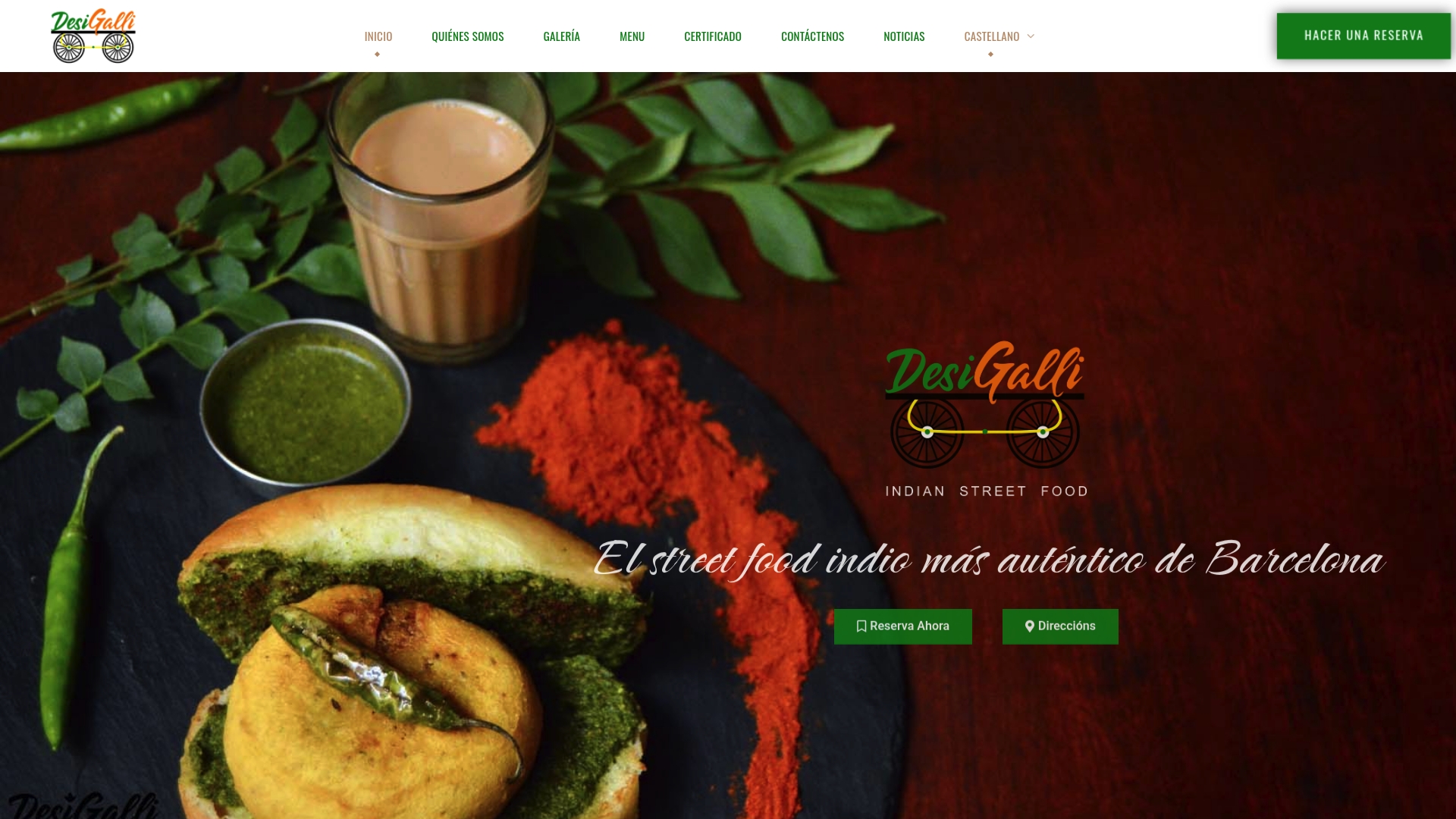
From freshly made samosas and layered chaats to warming curries that reference regional origins, the menu at Desi Galli is built for curious eaters who want something real. Whether you are a visitor exploring Barcelona’s food scene or a local looking to expand your culinary horizons, the experience is designed to give you both flavour and story in equal measure. Visit Desi Galli to browse the menu, plan your visit, or make a reservation and find out exactly what authentic Indian street food tastes like when it is done with genuine care.
Frequently asked questions
How can I tell if Indian food in Barcelona is authentic?
Check whether dishes match regional staples and techniques and ask staff about the origins; authenticity comes from regional identity and cooking method, not from spice intensity alone.
Are fusion dishes considered authentic in Indian cuisine?
Fusion dishes are creative adaptations that may offer excellent flavour, but as marketers sometimes claim authenticity for adapted menus, they should not be used as benchmarks for regional culinary tradition.
What Indian street food dishes should travellers try first in Barcelona?
Classic snacks like samosas, pakoras, and chaats are widely available and, when well prepared, represent some of the most genuine street-food-style Indian experiences the city offers.
Does ‘authentic’ always mean traditional when used in Barcelona restaurant menus?
Not necessarily; “authentic” is often used in marketing to describe adapted dishes, so it is always worth asking for regional detail and finding out how a dish is prepared before drawing conclusions.
Recommended
- Indian street food: Flavours, rituals and where to try in Barcelona – Desi Galli
- 🎖️ Restaurante de Comida India Callejera en Barcelona
- Benefits of Indian street food in Barcelona – Desi Galli
- Steps to enjoy authentic Indian street food in Barcelona – Desi Galli