
Tandoori is defined as food cooked inside a tandoor, a cylindrical clay oven that reaches temperatures around 480°C, producing the smoky, charred flavour that no grill or conventional oven can match. The word itself tells you everything: the cooking method, not the spice blend, is what makes a dish truly tandoori. You will find tandoori chicken, naan bread, and lamb kebabs on menus from Mumbai to Barcelona, all sharing that same fire-kissed character. Understanding what tandoori cooking actually involves changes how you order, cook, and appreciate Indian food entirely.
What is tandoori cooking and how does it work?
Tandoori cooking is the practice of preparing food inside a tandoor, a traditional clay oven fired with charcoal or wood. The result is food with a deeply smoky crust, tender interior, and a flavour profile that radiant heat and smoke create together. Many people assume tandoori refers only to a spice mix. The spices matter, but the oven is the defining element.
The tandoor’s cylindrical shape traps heat and directs it upward in a concentrated column. Meat is threaded onto long metal skewers and lowered vertically into the oven, cooking from all sides simultaneously. Bread like naan is slapped directly onto the clay walls, where it bakes in 90–120 seconds and develops a texture that standard ovens simply cannot produce. The speed and intensity of the heat seal moisture inside the food while charring the outside.
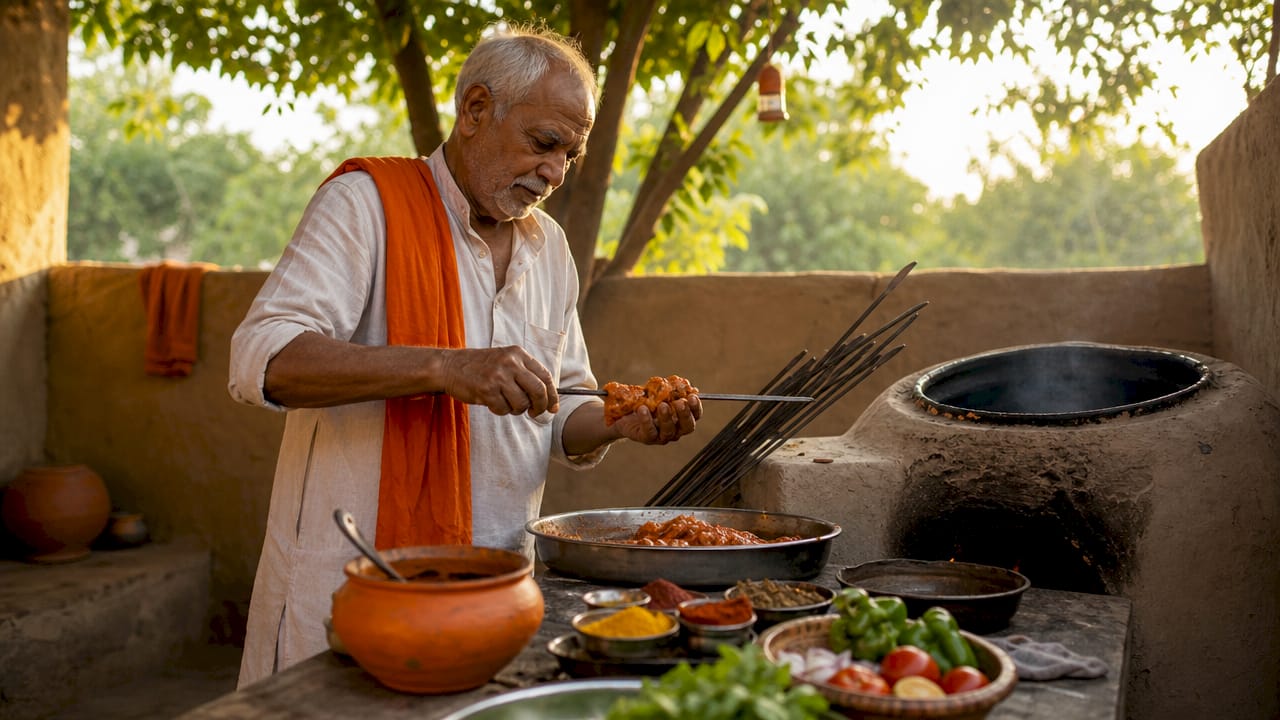
The most distinctive element is the smoke itself. When marinade drips from the meat onto the red-hot charcoal at the base, it vaporises instantly and rises back through the food. That upward smoke flow coats every surface inside the clay chamber, which is why tandoori chicken tastes nothing like grilled chicken, even when seasoned identically.
Pro Tip: If you visit an Indian restaurant and want to judge the quality of their tandoor cooking, order naan alongside a meat dish. Genuine tandoor-baked naan has irregular charred bubbles and a slight chew that oven-baked flatbread never achieves.
Key differences between a tandoor and a conventional oven
- A tandoor reaches around 480°C. A typical home oven reaches roughly 260°C.
- Tandoor heat comes from three sources at once: radiant heat from the clay walls, direct flame from the charcoal base, and rising smoke.
- Conventional ovens use dry circulated air. Tandoors use a combination of direct and radiant heat with no air circulation.
- Cooking times in a tandoor are dramatically shorter. A whole chicken leg cooks in under 15 minutes.
- New clay tandoors require gradual seasoning fires over several days before first use to prevent the clay from cracking.
What are the most popular tandoori dishes?
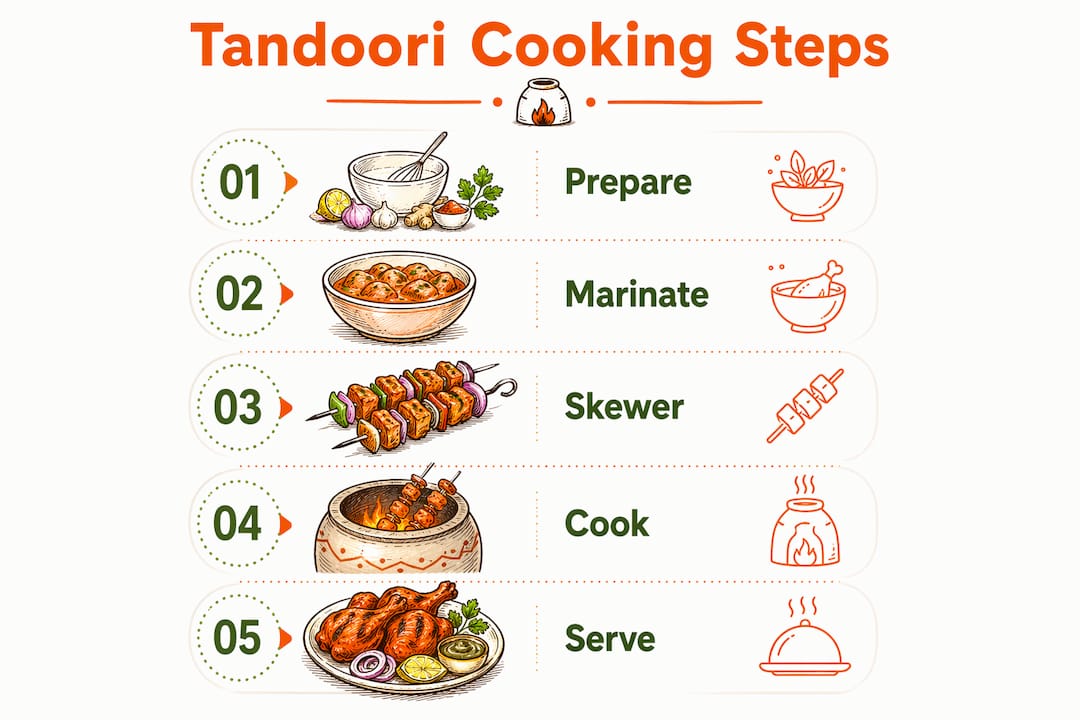
Tandoori dishes span meat, bread, and vegetables, all united by the same preparation logic: marinate, skewer or shape, then cook fast at extreme heat.
The classic dishes and how they are prepared
-
Tandoori chicken. Chicken pieces are scored deeply so the marinade penetrates the flesh. The marinade combines yoghurt, ginger, garlic, lemon juice, and tandoori masala, a spice blend typically including cumin, coriander, paprika, garam masala, and chilli. The chicken marinates for a minimum of four hours, though overnight produces the best result. It then cooks on skewers inside the tandoor, emerging with blackened edges and a juicy centre.
-
Seekh kebab. Minced lamb or chicken is mixed with onion, fresh coriander, green chilli, and spices, then moulded around flat metal skewers. The high heat cooks the kebab evenly from all sides in minutes.
-
Naan bread. Raw dough is shaped by hand, then slapped firmly against the interior clay wall of the tandoor. The dough adheres to the wall and bakes rapidly. The result is a bread with a soft, slightly chewy interior and charred spots where it touched the clay directly.
-
Paneer tikka. Cubes of firm Indian cheese are marinated in the same yoghurt and spice mixture used for chicken, then skewered with peppers and onion. This is the most popular vegetarian tandoori option and holds its shape well under intense heat.
-
Tandoori prawns. Large prawns marinated briefly in yoghurt, turmeric, and chilli cook in under five minutes in the tandoor. The shells char slightly while the flesh stays moist.
Tandoori chicken vs grilled chicken: a direct comparison
| Feature | Tandoori chicken | Grilled chicken |
|---|---|---|
| Heat source | Charcoal, radiant clay, and smoke | Direct flame or electric element |
| Temperature | Around 480°C | Typically 200–260°C |
| Cooking time | 10–15 minutes | 25–35 minutes |
| Marinade | Yoghurt and tandoori masala | Variable, often oil-based |
| Texture | Charred outside, moist inside | Variable, often drier |
| Smoke flavour | Pronounced, from marinade drippings | Mild or absent |
What is the history of tandoori cooking?
The tandoor is one of the oldest cooking technologies in human history. Archaeological evidence places clay ovens structurally similar to the modern tandoor in the Indus Valley civilisation, dating back to at least 3000 BCE. That makes tandoori cooking older than most of the world’s major culinary traditions.
Persian and Mughal influences shaped how the tandoor spread across South Asia. The Mughal courts adopted the clay oven and elevated it from a rural staple to a refined cooking method for meats and breads. The word “tandoor” itself derives from Persian and Akkadian roots, reflecting the oven’s long journey across cultures and centuries.
“The tandoor was never just a cooking vessel. In Punjab, it was the centre of village life, a place where families gathered, bread was shared, and community bonds were reinforced daily.”
Communal tandoors in Punjab served entire villages. Women would bring raw dough each morning, and the shared oven became a social institution as much as a practical one. That communal identity is still embedded in Punjabi food culture today.
The global spread of tandoori food owes much to Kundan Lal Gujral, who opened Moti Mahal restaurant in Delhi in the 1940s and popularised tandoori chicken as a restaurant dish. His innovation was adapting a rural cooking tradition for an urban dining audience. From Delhi, the dish spread to London, New York, and eventually Barcelona, carried by the Indian diaspora and the universal appeal of authentic tandoori flavour.
- Tandoors date to at least 3000 BCE in the Indus Valley.
- Persian and Mughal courts spread and refined tandoor use across South Asia.
- Kundan Lal Gujral and Moti Mahal brought tandoori chicken to mainstream restaurant culture post-1940s.
- The Indian diaspora carried tandoori cooking to Europe, North America, and beyond.
- Today, tandoori dishes appear on menus across more than 100 countries.
Can you make tandoori dishes at home without a tandoor?
Home cooks can approximate tandoori flavours, but home ovens cannot fully replicate the intense dry heat and smoke combination of a real tandoor. A domestic oven maxes out at around 260°C, which is roughly half the temperature of a working tandoor. The result is still delicious, but the char, smoke, and speed are different.
The marinade becomes even more critical when you cook at home. Yoghurt tenderises the meat and helps it char under a grill. A well-made tandoori spice mix includes cumin, coriander, paprika, garam masala, turmeric, and chilli powder. Marinate chicken pieces for at least four hours, preferably overnight.
Pro Tip: For the closest home result, use your oven’s grill function at maximum heat rather than conventional baking. Place marinated chicken on a wire rack over a tray so heat circulates underneath. Finish under a very hot grill for the last three minutes to char the surface.
Practical approaches for home tandoori cooking:
- Conventional oven grill: Set to maximum heat (250°C or above). Use a wire rack. Expect good flavour but less smoke.
- Outdoor charcoal grill: The closest domestic alternative. Charcoal produces real smoke, and high heat creates genuine char. Cover the grill to trap smoke around the food.
- Cast iron griddle pan: Works well for naan and flatbreads. Preheat until smoking hot before placing dough.
- Air fryer: Produces surprisingly good results for chicken tikka. The circulating heat chars the marinade quickly. Cook at 200°C for 18–20 minutes.
- Tandoor-style clay ovens for home use: Compact clay ovens designed for domestic gardens are available and reach temperatures closer to a restaurant tandoor. They require the same gradual seasoning process as professional models.
The most common mistake at home is under-marinating. The yoghurt and spice mixture needs time to penetrate the meat. Rushing this step produces surface flavour only. The cooking method and marinade work together. Neither alone produces the result you want.
Key takeaways
Tandoori cooking is defined by the tandoor oven’s combination of extreme heat, radiant clay walls, and rising smoke, not by spices alone.
| Point | Details |
|---|---|
| Tandoori means oven-cooked | The term refers to the cooking method in a clay tandoor, not a spice blend. |
| Extreme heat is the key | Tandoors reach around 480°C, nearly double a home oven’s maximum temperature. |
| Smoke creates the flavour | Marinade drippings on hot charcoal produce smoke that coats food inside the clay chamber. |
| History spans millennia | Tandoor use dates to at least 3000 BCE in the Indus Valley civilisation. |
| Home cooking is possible | A charcoal grill or maximum-heat oven grill produces the closest domestic result. |
Why tandoori cooking changed how I think about fire and food
I grew up eating what I thought was tandoori chicken from high-street Indian restaurants in the UK. It was good. Then I tasted the real thing, cooked in a proper clay tandoor, and I understood immediately that I had been eating a very polite imitation.
The difference is not subtle. The char on genuine tandoori chicken has a depth that tastes almost mineral, like the clay itself has contributed something to the food. The smoke is not a background note. It is present in every bite. The meat is juicy in a way that seems impossible given how quickly it cooked.
What surprises most newcomers is how clean the flavour is. People expect tandoori to be heavy with spice. The spices are there, but they are balanced. The yoghurt marinade tenderises without masking. The heat does the work. This is why Indian street food culture built itself around the tandoor for thousands of years. The oven is not a tool. It is the technique.
My honest advice: do not judge tandoori cooking by what you can make at home. Try it from a kitchen that uses a real tandoor first. Then you will know what you are working towards.
— YellowRock
Authentic tandoori flavours at Desigallibcn in Barcelona
Desigallibcn brings the spirit of Indian street food to the heart of Barcelona, with a menu built around the bold, fire-driven flavours that define genuine Indian cooking. The kitchen draws on the same traditions that made tandoori dishes famous across the subcontinent and beyond.
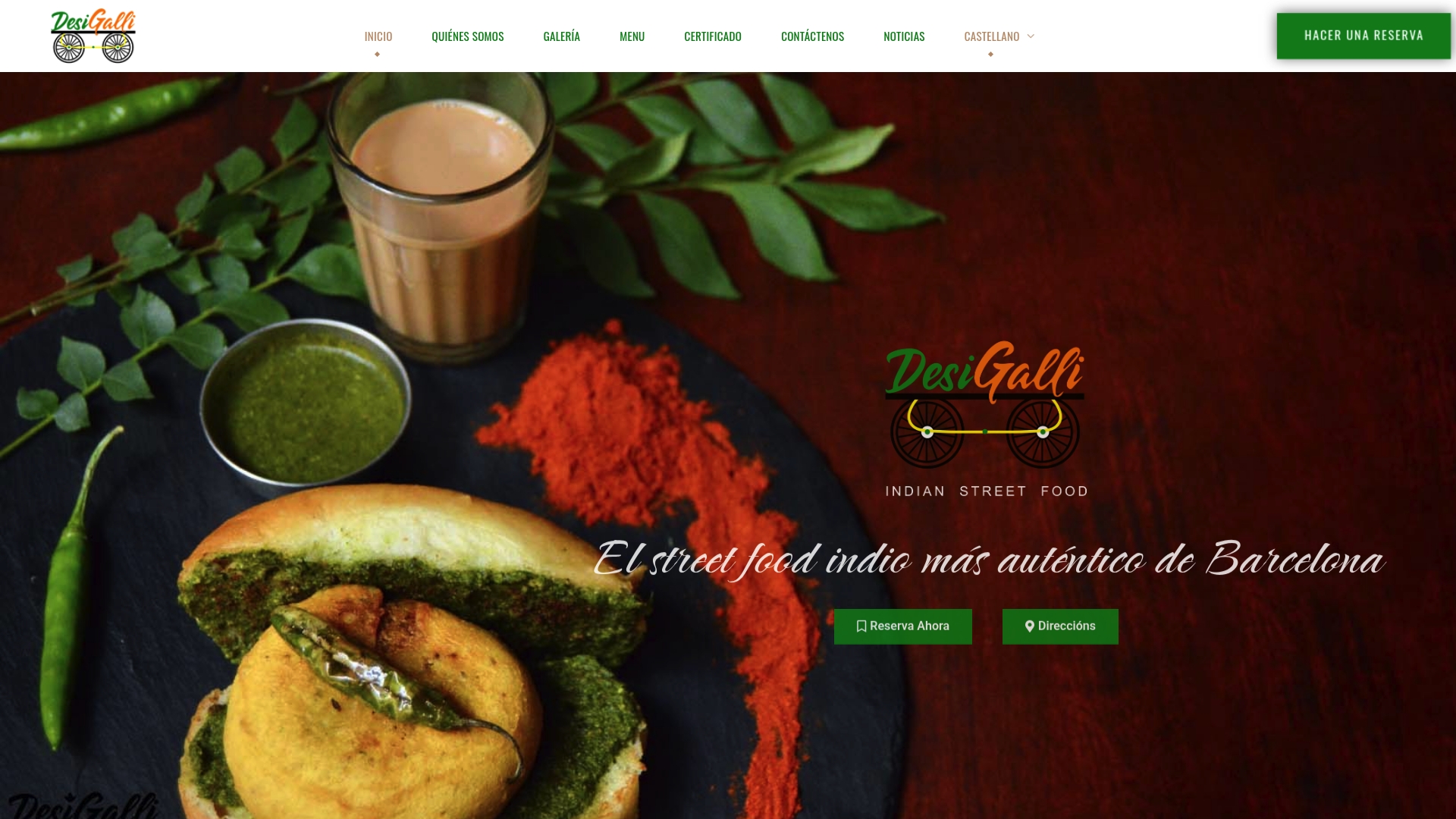
Whether you are new to Indian cuisine or a regular at the spice counter, Desigallibcn offers a direct way to experience what tandoori cooking actually tastes like. From charred meats to freshly prepared street food classics, the menu reflects the depth and variety of Indian street food in Barcelona. Tandoori dishes sit alongside samosas, chaat, and rich curries, giving you the full picture of what Indian street cooking offers. Booking a table or browsing the menu online is the fastest way to move from reading about tandoori to tasting it.
FAQ
What does “tandoori” actually mean?
Tandoori describes food cooked inside a tandoor, a traditional cylindrical clay oven. The term refers to the cooking method, not a specific spice blend.
What temperature does a tandoor oven reach?
A tandoor operates at around 480°C, which is nearly double the maximum temperature of a standard home oven. That extreme heat is what creates the characteristic char and rapid cooking.
Is tandoori chicken always red?
The red colour traditionally comes from Kashmiri chilli powder or red food colouring added to the marinade. Authentic tandoori chicken without colouring is orange to golden-brown from the spices and char.
What is the difference between tandoori and tikka?
Tandoori refers to the cooking method using the clay oven. Tikka refers to small pieces of boneless meat or paneer marinated and cooked in the tandoor. All tikka is tandoori, but not all tandoori dishes are tikka.
Can you make genuine naan bread without a tandoor?
A cast iron pan or very hot oven grill produces a reasonable naan, but genuine naan texture comes from rapid searing on the clay wall of a tandoor, which no standard kitchen appliance fully replicates.
Recommended
- Qué significa tandoori: sabor auténtico indio en Barcelona – Desi Galli
- Your complete guide to indian curries by region – Desi Galli
- Essential Indian food tips for beginners: master authentic flavours – Desi Galli
- Defining authentic Indian restaurants: the real guide – Desi Galli