
An Indian thali is defined as a complete meal platter featuring multiple dishes served simultaneously, designed to deliver a balanced range of flavours, textures, and nutrients in a single sitting. Knowing how to order Indian thali correctly transforms a potentially confusing menu into one of the most satisfying meals you can experience. This guide covers every component of a traditional thali, the best time to order one, a step-by-step process for both restaurant and online ordering, and the most common mistakes to avoid. Whether you are visiting a restaurant in person or placing an order from home, you will finish this guide ready to eat with confidence.
What is an indian thali and what does it contain?
A traditional Indian thali is a round metal plate holding several small bowls called katoris, each containing a different dish. The standard components include steamed rice, at least one bread such as roti or puri, dal (lentil soup), one or two vegetable curries, chutneys, pickles, a cooling element like curd or raita, and a small sweet. Every item on the plate serves a purpose. The dal provides protein, the chutneys add sharpness, and the sweet signals the end of the meal.
Regional differences are significant and worth knowing before you order. A North Indian thali typically features wheat-based breads, richer cream-based curries, and paneer dishes. A South Indian thali, served on a banana leaf in many traditional restaurants, centres on rice, sambar, rasam, and coconut-based chutneys. The authentic flavours guide at Desigallibcn explains how these regional distinctions shape the tasting sequence and combination logic behind each meal.
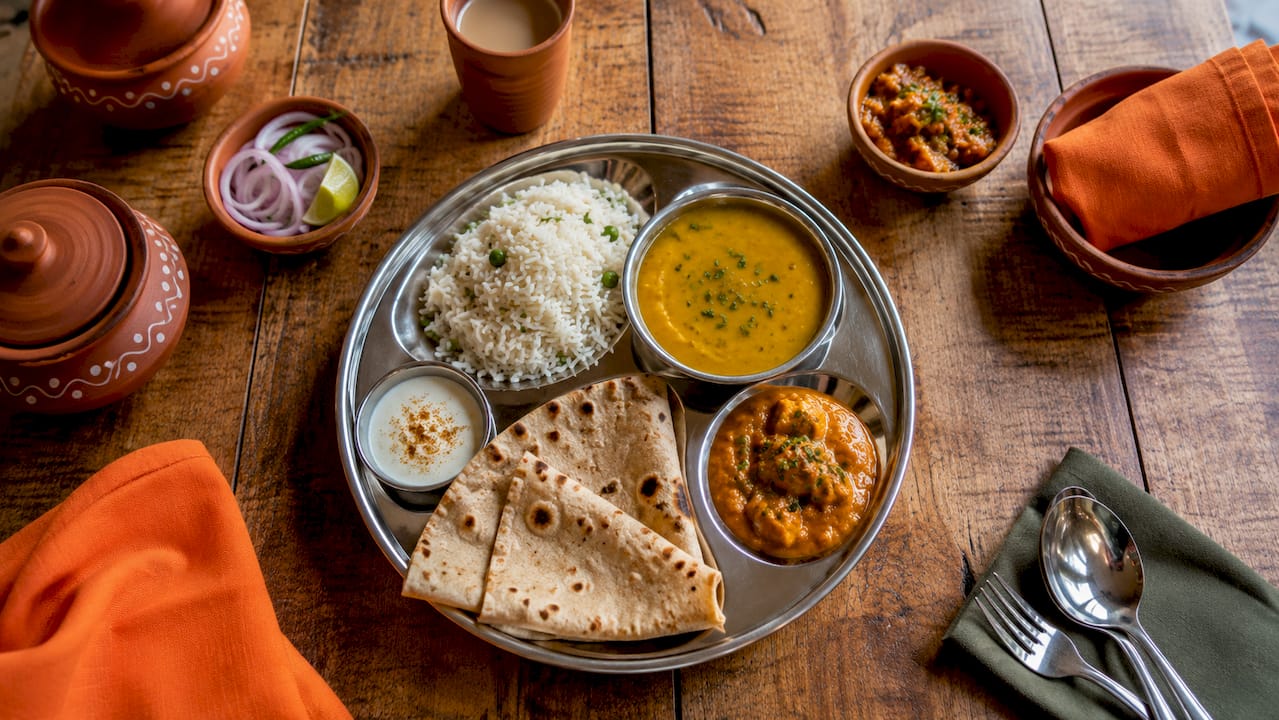
The balance of a thali is its defining quality. You get spicy, cooling, sweet, sour, and crunchy elements all at once. That variety is not accidental. It reflects centuries of Ayurvedic thinking about how a complete meal should nourish the body.
| Component | Description | Eating Tip |
|---|---|---|
| Rice | Steamed basmati or parboiled rice | Use as a base for mixing curries and dal |
| Roti or puri | Wheat flatbread, plain or fried | Tear and use as a scoop for thick dishes |
| Dal | Spiced lentil soup | Pour over rice or eat separately |
| Vegetable curry | One or two seasonal vegetable dishes | Taste individually before mixing |
| Curd or raita | Yoghurt, plain or with cucumber | Use to cool the palate after spicy bites |
| Chutney and pickle | Small condiment portions | Add sparingly to enhance flavour |
| Sweet | Kheer, halwa, or gulab jamun | Eat last to close the meal traditionally |
Pro Tip: Start by tasting each component individually before mixing anything. This is the traditional sequence followed by experienced diners, and it helps you understand what each dish contributes before the flavours merge.
What to know before you order a thali
Timing matters more than most first-time diners realise. The traditional lunch thali is authentically served between 12:30 PM and 3:30 PM. Outside those hours, many restaurants switch to a shorter à la carte menu, and the full thali experience may not be available. If you are planning a visit specifically for a thali, arrive within that window.
Before you sit down or open an app, check the menu carefully. Thali offerings vary widely between restaurants. Some include sweets as standard; others charge extra. Some list specific breads while others offer a generic “bread” category that could mean anything from roti to naan. Knowing what is included before you commit saves disappointment.
Consider your spice tolerance honestly. Indian thalis can range from mild to genuinely hot depending on the region and the restaurant. If you are unsure, ask the staff directly. Most Indian restaurants actively welcome questions from new diners, and the staff at places like Desigallibcn are there to help you choose well.
Here is what to confirm before ordering:
- What breads are included? Roti, puri, and paratha are all different. Ask which one comes with the thali.
- Is a sweet included? Some restaurants treat this as an add-on.
- What is the spice level? Ask whether the curries are mild, medium, or hot.
- Are refills available? Many traditional restaurants offer unlimited rice and dal. Knowing this changes how much you serve yourself initially.
- Is there a vegetarian or vegan version? Most thalis are vegetarian by default, but it is worth confirming.
Pro Tip: If you are ordering for the first time, ask the staff to recommend the house thali rather than building your own. The house selection is usually the most balanced and representative of the kitchen’s strengths.
How to order indian thali step by step
Ordering a thali in a restaurant follows a straightforward process once you know the logic behind it.
-
Arrive during lunch service. The 12:30–3:30 PM window is when the full thali menu is live. Arriving early in this window also means the kitchen is at its freshest.
-
Review the thali options. Most restaurants offer two or three versions: a standard vegetarian thali, a special thali with additional dishes, and sometimes a regional thali. Read each description carefully.
-
Select one main dish, one side, and a cooling element. For first-time diners, the most reliable strategy is one main, one side, plus curd or raita. This combination gives you enough variety without overwhelming your palate.
-
Ask about inclusions. Confirm whether sweets, salad, and specific breads are part of the set. This is especially relevant when ordering thali online, where menu descriptions are often abbreviated and key items can be missing from the delivery version.
-
Place your order clearly. State the thali name, any customisation (spice level, bread preference), and whether you want extras such as additional rice or a second bread.
-
Begin eating in sequence. A traditional tasting sequence starts with tasting each item individually, then mixing curries with rice, and finishing with curd and sweets. This is not a strict rule, but it helps you appreciate each component.
-
Use bread as an edible scoop. Experienced diners use bread or small mounds of rice to scoop runny dishes like dal, which prevents spills and keeps the plate tidy.
-
Accept refills confidently. If the restaurant offers unlimited rice or dal, take advantage. Refills are standard practice in many Indian dining settings and are not considered greedy.
For online ordering, the process requires one extra step. Always verify thali inclusions before confirming your basket. Online menus frequently omit sweets, specific breads, or salad accompaniments that would be included in the restaurant version. If the listing is unclear, call the restaurant directly before ordering.
Common mistakes to avoid when savouring your thali
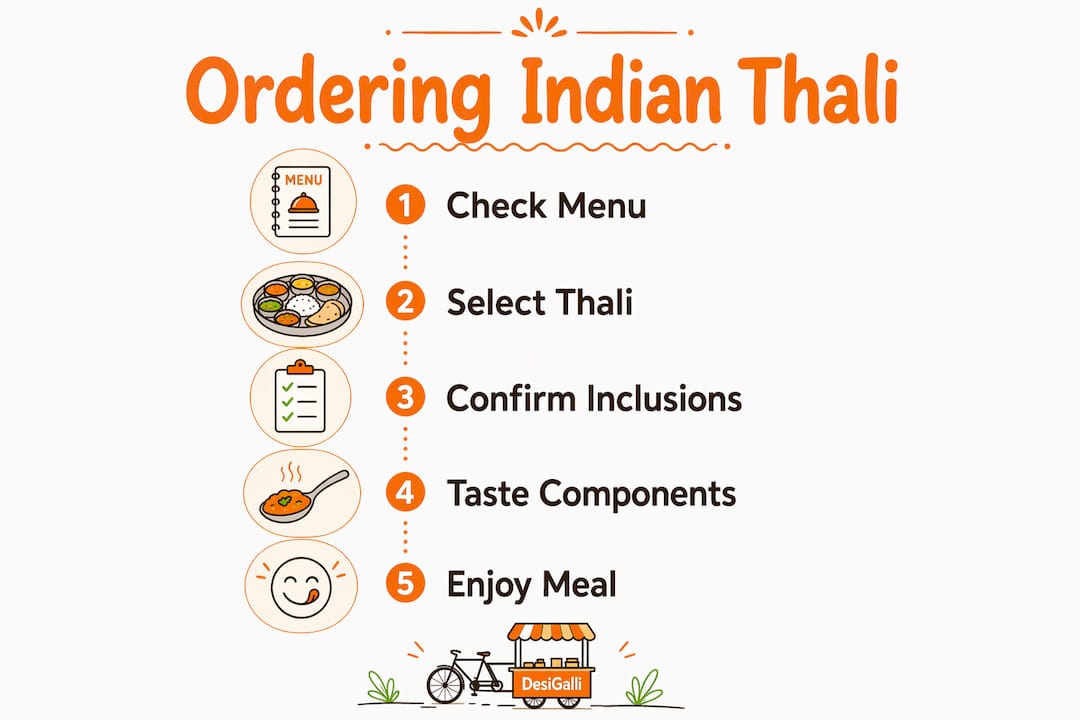
The most common mistake is ordering without reading the menu properly. Many first-time diners assume all thalis are identical and are then surprised when their platter arrives without a sweet or with a bread they did not expect. Spend two minutes on the menu description before you order.
A second frequent error is reaching for water when the spice becomes too strong. Drinking water spreads the heat rather than neutralising it. Yoghurt, rice, or a small sweet are far more effective at soothing a spicy palate. Every thali includes at least one of these, so use them.
Here are the key pitfalls to sidestep:
- Mixing everything at once. Combine only small portions of rice and curry at a time. Mixing in small amounts keeps the plate manageable and the flavours distinct.
- Ignoring the chutney bowls. Remove small chutney and pickle bowls from the main plate before you start eating. This frees up space for mixing rice and curry without knocking things over.
- Worrying about eating with your hands. Using cutlery is fully acceptable in any restaurant setting. No one will judge you for choosing a spoon or fork. That said, eating with your fingertips does give you a better sense of food temperature and texture.
- Overloading on spice early. Taste the chutneys and pickles in tiny amounts first. They are intense by design and are meant to accent the meal, not dominate it.
Pro Tip: If the restaurant offers refills, pace yourself through the first round. Take smaller initial portions of rice and dal, taste everything, then refill what you enjoyed most. This is how regular thali diners approach the meal.
For more on managing spice levels and building confidence with Indian flavours, the beginners’ food tips at Desigallibcn are worth reading before your first visit.
Key takeaways
Ordering an Indian thali well requires knowing its components, timing your visit correctly, and following a simple sequence to get the most from every dish on the plate.
| Point | Details |
|---|---|
| Arrive during lunch service | The authentic thali window is 12:30–3:30 PM; outside this, menus often change. |
| Verify inclusions before ordering | Always confirm sweets, breads, and salad are included, especially when ordering online. |
| Start with one main and curd | First-time diners should choose one main dish, one side, and a cooling element like raita. |
| Follow the tasting sequence | Taste each component individually before mixing curries with rice. |
| Soothe spice with yoghurt, not water | Yoghurt, rice, or sweets neutralise heat far more effectively than water. |
Why the thali taught me to stop rushing my food
The first time I sat down in front of a full South Indian thali, I made every mistake in this article. I mixed everything together immediately, reached for water the moment the rasam hit, and ignored the small bowls of chutney entirely because I did not know what they were for. The meal was still good. But it was not what it could have been.
What changed my approach was a simple piece of advice from a member of staff: “Taste each thing on its own first.” That one instruction restructured the entire experience. Suddenly the meal had a beginning, a middle, and an end. The sweet at the finish was not just dessert. It was a full stop.
The tactile element surprised me most. Using your right hand and fingertips to mix rice and curry gives you information a fork simply cannot. You feel the temperature, the consistency, and the resistance of the food before it reaches your mouth. That connection changes how you eat. It slows you down in the best possible way.
My honest view is that the etiquette around thali eating is not about rules. It is about getting more from the meal. Removing the chutney bowls, mixing in small portions, and finishing with curd are all habits that make the food taste better. They are worth adopting even if you are eating with a spoon.
If you are new to Indian cuisine and feel uncertain about where to start, the restaurant booking guide at Desigallibcn walks you through the full process of selecting and visiting an Indian restaurant for the first time.
— YellowRock
Taste authentic indian street food at Desigallibcn
Desigallibcn brings the energy of Indian street markets to the centre of Barcelona, with a menu built around bold spices, fresh ingredients, and genuine regional recipes. Whether you want to try your first thali in a relaxed setting or explore Indian street food classics like samosas, chaat, and flavourful curries, the kitchen is designed to guide you through the experience.
The team at Desigallibcn welcomes first-time diners and is happy to explain every item on the plate. You can dine in for the full experience or order online for delivery. Visit Desigallibcn to explore the current menu and find the thali or street food combination that suits you best.
FAQ
What is an indian thali?
An Indian thali is a complete meal platter containing rice, bread, dal, vegetable curries, chutneys, curd, and a sweet, all served simultaneously on a single round plate or banana leaf.
What is the best time to order a thali?
The traditional lunch thali is served between 12:30 PM and 3:30 PM. Outside these hours, many restaurants reduce their menu and the full thali may not be available.
How do i order thali online without missing items?
Always check the menu description carefully and confirm that sweets, specific breads, and salad accompaniments are included before placing your order. Call the restaurant if the listing is unclear.
Can i eat a thali with cutlery instead of my hands?
Using cutlery is fully accepted in any restaurant setting and no judgement is made. Eating with fingertips is traditional and enhances the sensory experience, but it is entirely optional.
How do i cool down if the thali is too spicy?
Eat yoghurt, plain rice, or a small sweet rather than drinking water. Water spreads the heat, while dairy and starch actively neutralise the spice compounds in the food.
Recommended
- Guide to sustainable Indian dining: eat well, eat right – Desi Galli
- Step by step Indian restaurant booking guide – Desi Galli
- Tips for choosing Indian restaurants in Barcelona – Desi Galli