
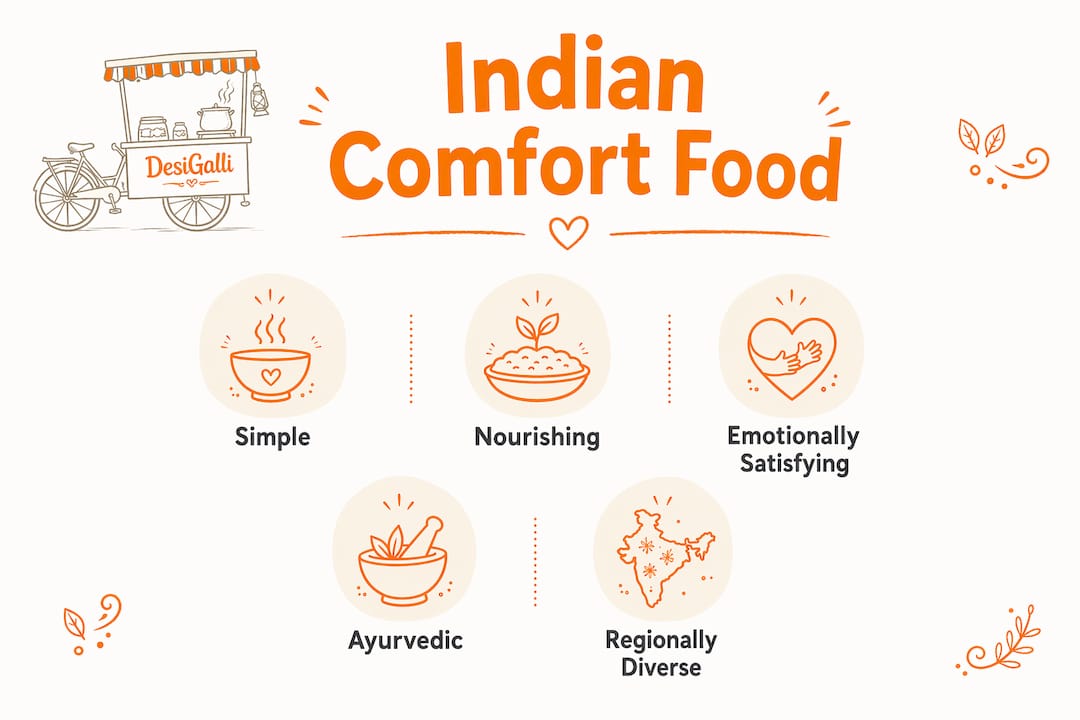
Indian comfort food is defined as a collection of simple, nourishing, and emotionally satisfying home-cooked dishes rooted in regional traditions and Ayurvedic principles. These are not restaurant showpieces. They are the meals that appear when someone is unwell, exhausted, or simply in need of warmth. Dishes like khichdi, dal-chawal, and curd rice sit at the heart of this category, each one tied to memory, family, and the steady rhythm of Indian domestic life. Understanding what Indian comfort food truly means requires looking at both the plate and the culture behind it.
What is indian comfort food, really?
Indian comfort food is a category of simple, nourishing, emotionally satisfying home-cooked dishes found across every Indian region. The term “comfort food” is widely used in Western culinary writing, but in Indian households, the concept has a more specific character. It overlaps with what nutritionists and Ayurvedic practitioners call sattvic food: meals that are fresh, light, minimally processed, and calming to both body and mind.
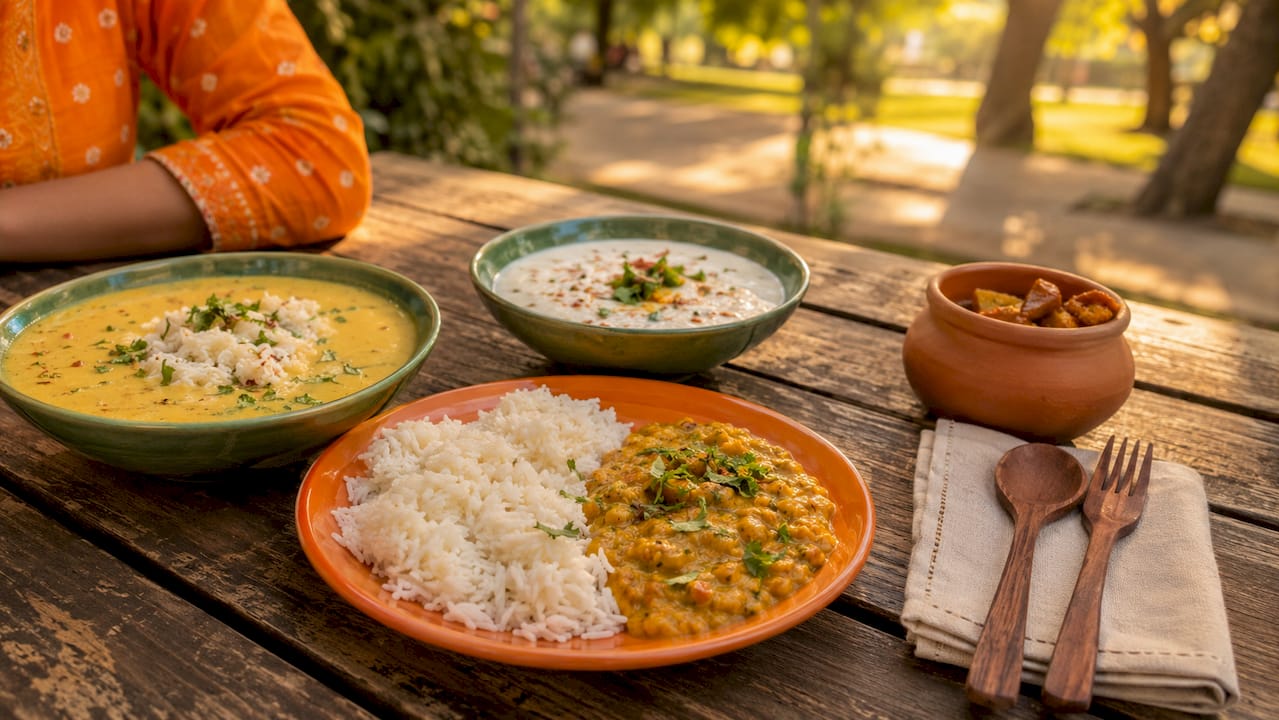
The most recognised examples include khichdi (rice and lentils cooked together), dal-chawal (lentil soup with rice), kadhi chawal (yoghurt-based curry with rice), curd rice, and litti chokha from Bihar. Each of these dishes shares a set of qualities: they are warm, soft in texture, easy to digest, and built from a small number of familiar ingredients. None of them demand complex technique or rare spices.
What separates Indian comfort food from other Indian dishes is its intention. A biryani is celebratory. A comfort dish is restorative. The goal is not to impress but to soothe, and that distinction shapes everything from the cooking method to the spice level.
Pro Tip: If you are new to Indian cuisine, start with khichdi or dal-chawal. Both are accessible, mild, and give you a genuine sense of how Indian home cooking actually tastes, rather than the restaurant version.
Which classic dishes appear on every indian comfort food list?
Classic Indian comfort dishes share four defining features: simplicity of ingredients, soft or yielding texture, gentle spicing, and a warm serving temperature. These are not accidental qualities. They reflect centuries of practical wisdom about what the body and mind need during stress or recovery.
The most widely cited examples are:
- Khichdi: A one-pot dish of rice and lentils cooked until very soft. Dietitians highlight its gentle digestion and suitability during illness. It is the dish most Indian families reach for when someone has a fever.
- Dal-chawal: Lentil soup ladled over plain rice. The combination is nutritionally complete and emotionally familiar to virtually every Indian household.
- Curd rice: Cooked rice mixed with yoghurt and tempered with mustard seeds and curry leaves. It is cooling, probiotic-rich, and deeply associated with South Indian home life.
- Kadhi chawal: A tangy yoghurt and gram flour curry served over rice, particularly beloved in North India and Rajasthan.
- Litti chokha: Wheat dough balls baked over fire and served with roasted aubergine mash. This is Bihar’s answer to comfort, and it carries a distinctly smoky, earthy character unlike anything else on this list.
Texture plays a larger role than most people realise. Practitioners cook khichdi until it is extremely soft specifically to soothe the digestive system during periods of stress. The consistency is not accidental. It is a deliberate therapeutic choice passed down through generations.
Pro Tip: When making khichdi at home, use a 1:2 ratio of moong dal to rice and cook it longer than you think necessary. The softer the texture, the more comforting the result.
How does regional diversity shape popular indian comfort dishes?
India’s size means that comfort food looks very different depending on where you are. Regional ingredients and spice blends shape the character of each dish, and what feels like home in Kerala bears little resemblance to what feels like home in Punjab.
| Region | Signature Comfort Dish | Key Flavour Profile |
|---|---|---|
| North India | Kadhi chawal, dal makhani | Tangy, creamy, warming |
| South India | Curd rice, bisi bele bath | Cooling, sour, lightly spiced |
| East India (Bihar) | Litti chokha | Smoky, earthy, rustic |
| West India | Khichdi with ghee, poha | Mild, buttery, gently spiced |
The tempering technique, known as tadka, is where regional identity becomes most visible. Mustard seeds and curry leaves define South Indian tempering, lending a sharp, aromatic quality to dishes like curd rice and bisi bele bath. In the North, cumin seeds and asafoetida in hot ghee create a deeper, earthier base note. These are not interchangeable. Each tempering style produces a distinct emotional response in the people who grew up eating it.
Karnataka’s bisi bele bath adds tamarind sourness to the mix, creating a dish that is simultaneously warming and bright. That balance of contrasting flavours within a single comforting bowl is a hallmark of South Indian culinary thinking, and it explains why the dish has such devoted followers outside Karnataka as well.
What role does ayurveda play in defining indian comfort food?
Ayurveda favours a sattvic diet built on fresh, light, minimally processed foods that calm the body and mind. This is not a modern wellness trend. It is a framework that has shaped Indian domestic cooking for thousands of years, and it explains precisely why Indian comfort food looks the way it does.
Sattvic foods include fruits, vegetables, whole grains, pulses, milk, yoghurt, and ghee. Every dish on the classic Indian comfort food list falls within this framework. Khichdi uses moong dal and rice. Dal-chawal uses pulses and whole grains. Curd rice uses yoghurt. The overlap is not coincidental.
Sattvic dietary concepts offer a mental clarity and emotional stability framework that explains why simple home dishes are labelled comforting in Indian culture. The philosophy holds that food directly influences the state of the mind. Light, fresh food produces clarity and calm. Heavy, oily, or overly spiced food produces agitation. Indian comfort food is, by design, the former.
The practical implications are worth noting:
- Ghee is used in small quantities as a digestive aid, not as a flavour excess.
- Spices like turmeric, cumin, and coriander are chosen for their digestive and anti-inflammatory properties.
- Dishes are cooked fresh and served warm, never reheated multiple times.
- Salt and chilli levels are kept low to avoid overstimulating the system.
This Ayurvedic logic also explains why comfort foods aid digestion and provide familiar warmth during stress or illness. The food is not just emotionally soothing. It is biologically calibrated to support recovery.
Why does indian comfort food matter culturally and emotionally?
Home-cooked Indian comfort foods evoke memories of family gatherings and create a sense of togetherness through shared meals. This emotional dimension is not a side effect. It is the point. The dish and the memory are inseparable.
The cultural significance of traditional Indian comfort meals operates on several levels:
- Healing ritual: Khichdi served during illness is not just nutrition. It is a signal that someone cares enough to cook. The act of preparation carries as much meaning as the food itself.
- Family continuity: Recipes for dal-chawal or kadhi chawal are rarely written down. They are transmitted through observation and repetition across generations, making each version a living record of family history.
- Emotional regulation: Comfort food serves an emotional and practical role, aiding digestion and providing familiar warmth during stress. Curd rice after a difficult day is a recognised domestic remedy across South India.
- Slow preparation as care: Slow cooking and layering of spices create the nurturing sensation linked to Indian comfort food. The time invested in cooking communicates love in a way that fast food cannot replicate.
The flexibility of these dishes also matters. Comfort foods are adjusted by spice level, consistency, and dal choice within households to suit health and emotional states. A khichdi made for a sick child is softer and blander than one made for a healthy adult. That adaptability is what makes these dishes genuinely personal rather than merely traditional.
For anyone curious about authentic Indian restaurant culture, understanding comfort food is the most direct route into how Indian people actually eat at home, as opposed to how Indian food is presented for outside audiences.
Key takeaways
Indian comfort food is defined by simplicity, Ayurvedic balance, and emotional resonance, not by complexity or spectacle.
| Point | Details |
|---|---|
| Core definition | Indian comfort food is simple, nourishing, and emotionally satisfying home-cooked food rooted in regional and Ayurvedic traditions. |
| Signature dishes | Khichdi, dal-chawal, curd rice, kadhi chawal, and litti chokha are the most widely recognised examples across India. |
| Regional variation | Each Indian region has its own comfort staples, shaped by local spices, tempering styles, and ingredients. |
| Ayurvedic foundation | Sattvic principles explain why these dishes are light, fresh, and calming rather than heavy or richly spiced. |
| Emotional significance | Comfort food in India carries family memory, healing ritual, and generational continuity beyond its nutritional value. |
Why indian comfort food resonates far beyond india
I have eaten Indian comfort food in Mumbai homes, London kitchens, and Barcelona restaurants, and the reaction is always the same. People who have never tasted khichdi before describe it as “somehow familiar.” That response tells you something important about what this food actually does.
Most Western comfort food relies on fat, sugar, or salt to produce its effect. Indian comfort food works differently. The comfort comes from balance, warmth, and the sense that someone took time. Indian comfort food’s appeal stems less from flashy flavours and more from balance, slow rhythm, and patient preparation. That is a harder thing to replicate than a recipe.
What I find most interesting is how these dishes travel. Dal-chawal eaten in Barcelona tastes different from dal-chawal in Delhi, but the emotional register is recognisable. The warmth, the softness, the simplicity: these qualities cross cultural lines in a way that more complex dishes do not. If you want to understand Indian food at its most honest, skip the restaurant menu and start with a bowl of khichdi. You can find Indian food tips for beginners that will help you navigate the cuisine from that starting point outward.
— YellowRock
Experience indian comfort and street food at Desigallibcn in barcelona
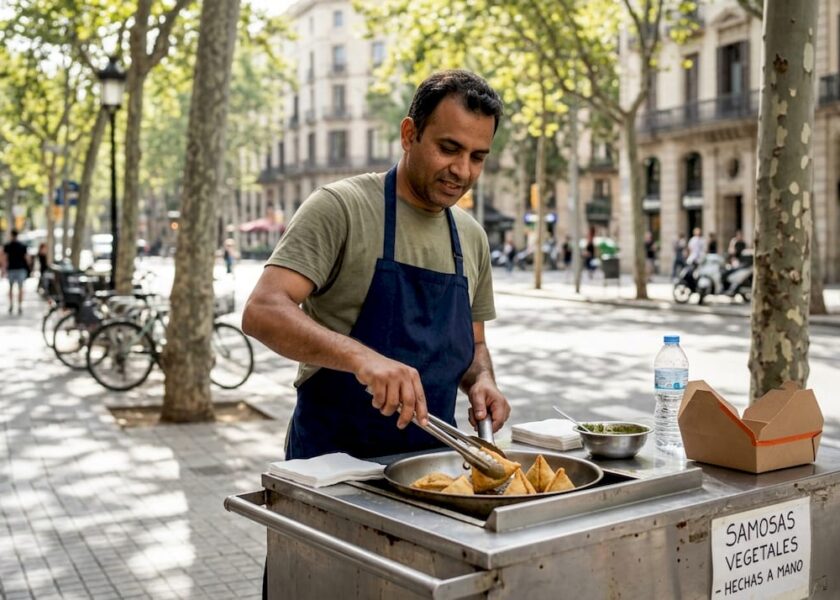
Desigallibcn brings the warmth and authenticity of Indian home cooking to the streets of Barcelona. The menu draws on traditional flavours, bold spices, and the kind of careful preparation that defines genuine Indian comfort food. Whether you are new to Indian cuisine or already familiar with its regional depth, Desigallibcn offers a direct, honest taste of what Indian food looks and feels like at its best.
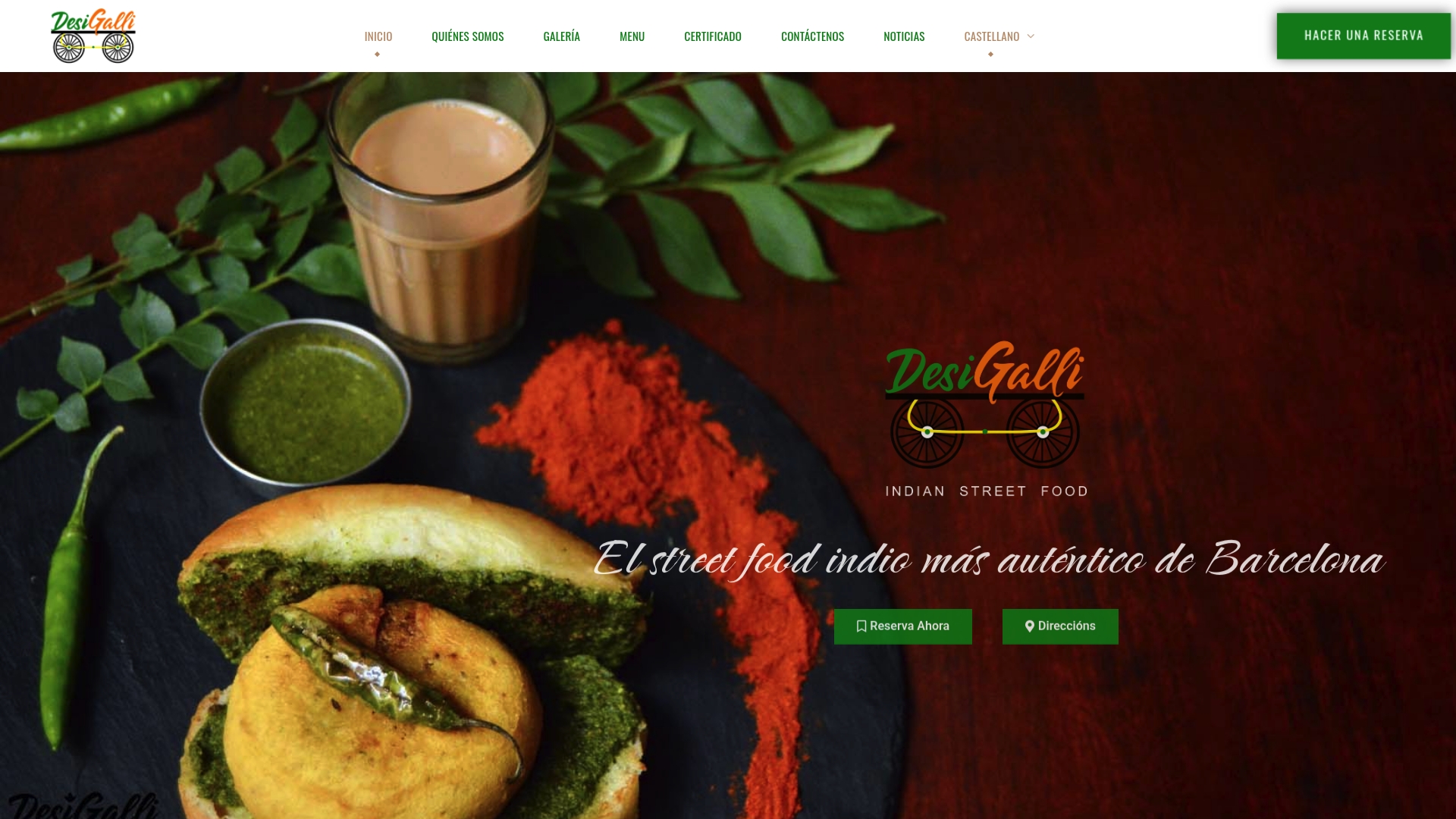
From samosas and chaat to richly spiced curries, every dish reflects the same principles that make Indian comfort food so enduring: simplicity, balance, and real flavour. Explore the full street food menu and discover which classic Indian dishes resonate with you. Desigallibcn is open to locals and visitors alike, and the kitchen is ready to show you what Indian comfort truly tastes like.
FAQ
What is indian comfort food in simple terms?
Indian comfort food refers to simple, warm, easily digestible home-cooked dishes like khichdi, dal-chawal, and curd rice that provide emotional and physical nourishment. These dishes are rooted in Ayurvedic principles and regional Indian traditions.
Which dish is considered the ultimate indian comfort food?
Khichdi is widely regarded as the quintessential Indian comfort food, a one-pot combination of rice and lentils cooked until soft and served warm. Dietitians recommend it specifically for its gentle digestion and suitability during illness or recovery.
How does indian comfort food differ from regular indian restaurant food?
Indian comfort food is home-style, lightly spiced, and focused on nourishment rather than spectacle. Restaurant Indian food is often richer, more complex, and designed to impress, whereas comfort dishes prioritise ease, warmth, and familiarity.
Is indian comfort food always vegetarian?
The most iconic Indian comfort dishes, including khichdi, dal-chawal, curd rice, and kadhi chawal, are all vegetarian. This reflects the strong influence of Ayurvedic and sattvic dietary principles, which favour plant-based, minimally processed ingredients.
Can indian comfort food be made easily at home?
Most easy Indian comfort recipes require only a handful of staple ingredients such as rice, lentils, yoghurt, and basic spices. Khichdi, for example, needs only moong dal, rice, turmeric, and ghee, and can be ready in under thirty minutes.
Recommended
- Defining authentic Indian restaurants: the real guide – Desi Galli
- What is Indian food presentation: culture meets art – Desi Galli
- What is Mumbai street food: a cultural guide – Desi Galli
- Essential Indian food tips for beginners: master authentic flavours – Desi Galli