
Sitting down to a plate of papri chaat or a golden samosa at one of Barcelona’s best Indian street food spots, most diners reach for whatever drink is nearest. A cola, a sparkling water, perhaps a lager. It is a missed opportunity. The right pairing does not just accompany your food; it transforms it, pulling out hidden layers of tamarind, amplifying the warmth of chaat masala, and cooling the heat just enough to make you want another bite. This guide gives you practical, evidence-based frameworks to pair drinks and sides with Indian street food so that every visit becomes a genuinely memorable flavour experience.
Table of Contents
- Master the basics of Indian food pairing
- How to pair classic Indian street snacks: Chaat, samosas, and rolls
- The do’s and don’ts of pairing: What to avoid and clever fixes
- Wine pairings and why ‘sweet white’ isn’t always right
- Why Indian street food pairings are more creative than you think
- Ready to try food and drink pairings at Desi Galli?
- Frequently asked questions
Key Takeaways
| Point | Details |
|---|---|
| Balance every bite | Aim for harmony by matching street food’s salty, sour, spicy and sweet elements with drinks that add refreshment or contrast. |
| Avoid bitter drinks | Bitterness increases the perception of heat in spicy dishes, so choose mild, fruity, or acidic pairings instead. |
| Match complexity to intensity | Pair nuanced, layered Indian snacks with equally complex beverages to prevent either from overpowering the other. |
| Experiment confidently | Creative, localised pairings can be surprisingly delicious in a rich food scene like Barcelona’s—use the rules as a springboard. |
Master the basics of Indian food pairing
To get your pairing right, you first need a foundation. Indian street food flavours inform the perfect match, and understanding the core logic makes every choice easier and more instinctive.
Indian street food is built on a four-way tension of flavours: salty, sour, spicy, and sweet. Chaat is the purest expression of this. As Serious Eats explains, chaat’s pairing logic should follow its core flavour balance model of salty, sour, spicy, and sweet, then use drinks that interact via acidity, tartness, carbonation, and flavour resonance. When you understand that balance, you stop guessing and start choosing with purpose.
The second principle is weight-matching. A light, fresh dish needs a light, refreshing drink. A rich, fried snack needs something with enough body or acidity to cut through the fat. Established guidance on Indian food pairings stresses matching the weight of the dish to the drink, balancing spice with sweetness or fruitiness, and avoiding bitter drinks that can make spicy food feel hotter.
Here is a quick diagnostic to run before you order:
- Identify the dominant chutney: Is it tamarind (sweet, sour) or mint (herbal, sharp)?
- Assess texture: Is the dish fried and oily, or fresh and light?
- Rate the heat level: Mild, medium, or fiery?
- Spot the sweetness: Is there yoghurt, jaggery, or fruit involved?
Once you have those answers, your tools are simple: acidity to cut richness, carbonation to refresh the palate, sweetness to soothe heat, and fruity or herbal notes to echo the spices.
“The goal is not to overpower the food with your drink, but to create a conversation between the two.”
Pro Tip: When you are combining Indian dishes across a shared table, order at least one acidic drink and one sweet or creamy drink so different diners can swap based on what they are eating at that moment.
How to pair classic Indian street snacks: Chaat, samosas, and rolls
Now that you know what to look for, see how these principles apply to some of Barcelona’s most tempting Indian street snacks.
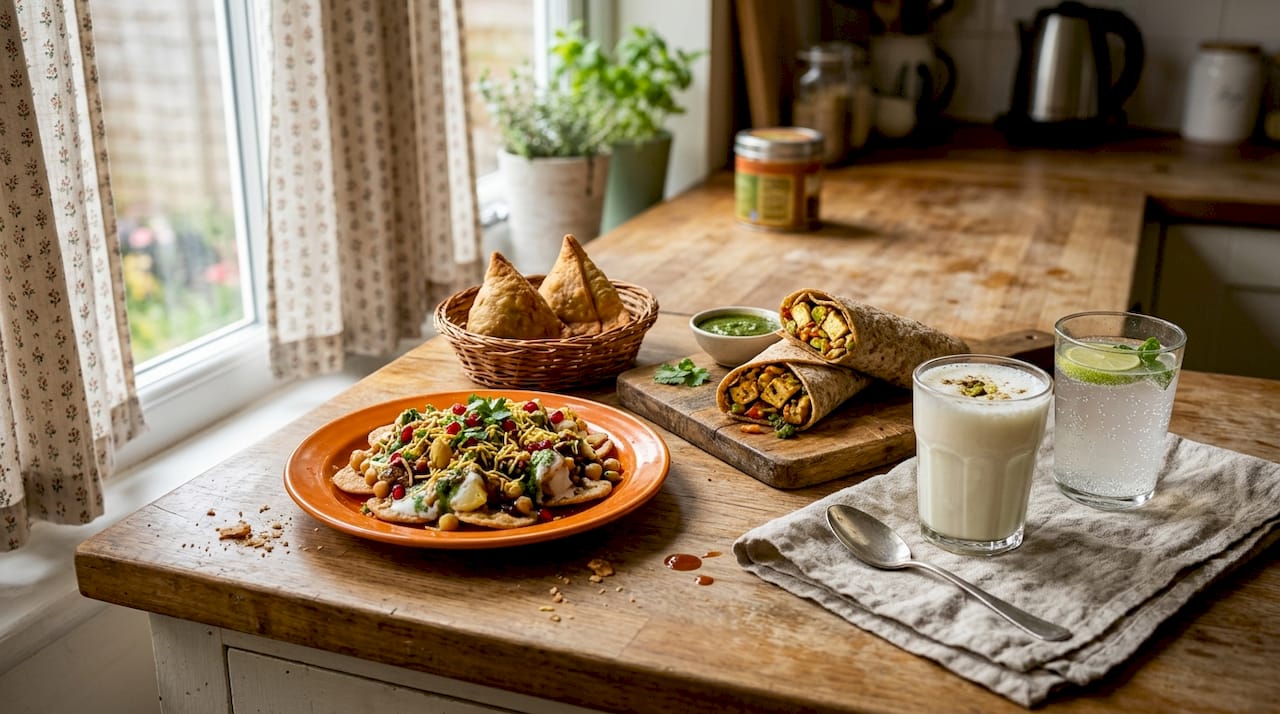
Chaat is arguably the most complex street food to pair because it layers so many contrasting flavours simultaneously. The ideal approach for Indian street snacks is to choose drinks that cut through richness with acidity or tartness, refresh with carbonation, and echo or contrast spices with appropriate malt, yeast, citrus, or tonic character. That framework gives you a clear shortlist every time.
For samosas, the golden fried exterior and spiced potato or lentil filling call for something that can handle both the fat and the heat. Mango lassi is the classic for good reason: the sweetness soothes the chilli, the lactic tang cuts the oil, and the mango echoes any fruit chutney on the side. A crisp pilsner works equally well, using carbonation and light bitterness to refresh between bites.
For kati rolls and frankies, the combination of grilled filling, fresh onion, and tangy chutney inside a soft wrap pairs beautifully with a salty lime soda. The salt amplifies the savoury notes, the lime adds brightness, and the fizz keeps the palate clean.
Here is a quick-reference guide to the most popular typical Indian drinks matched to street food examples in Barcelona:
- Papri chaat: Salty lime soda, light sour beer, or sparkling water with lemon
- Samosas: Mango lassi, crisp pilsner, or a lightly spiced chai
- Bhel puri: Rose sherbet, ginger beer, or a dry sparkling white
- Aloo tikki: Sweet lassi, amber ale, or a structured rosé
- Kati rolls: Salty lime soda, light lager, or a herbal iced tea
| Street food | Main flavours | Ideal drink |
|---|---|---|
| Papri chaat | Salty, sour, spicy, sweet | Salty lime soda, light sour beer |
| Samosa | Rich, spiced, fried | Mango lassi, crisp pilsner |
| Bhel puri | Tangy, crunchy, herbal | Ginger beer, dry sparkling white |
| Aloo tikki | Earthy, spiced, crispy | Sweet lassi, amber ale |
| Kati roll | Savoury, fresh, tangy | Salty lime soda, light lager |
Research on flavour perception shows that carbonation physically refreshes taste receptors by creating a mild, pleasant tingling sensation, which is why fizzy drinks are so consistently satisfying alongside bold, spicy food. This is not just preference; it is physiology working in your favour.
The do’s and don’ts of pairing: What to avoid and clever fixes
Even the best principles can go wrong. Here are the top mistakes and what to do instead, so you never fall into a flavour trap.
- Choosing heavily hopped IPAs with spicy dishes. High bitterness and high heat multiply each other, making the dish feel far hotter than it is. Switch to a pilsner, a wheat beer, or a light lager instead.
- Ordering a dry, tannic red wine with chaat. Tannins clash with the acidity in tamarind chutney and leave a metallic aftertaste. Choose a low-tannin red or a structured rosé.
- Drinking very sweet sodas throughout the meal. A single sweet drink to soothe heat is useful; a whole meal of sugary drinks dulls your palate and masks the spice complexity you came to enjoy.
- Pairing creamy yoghurt drinks with very mild dishes. Lassi is brilliant with heat, but it can overwhelm subtle, lightly spiced dishes. Save it for the fiery plates.
- Ignoring water entirely. Plain still water is underrated. A sip of water between bites resets your palate without interfering with any flavour, which is especially useful when you are sharing multiple dishes.
As pairing guidance for Indian food confirms, bitter drinks amplify perceived heat in spicy dishes, so always prefer styles where bitterness is subdued or balanced by sweetness, fruit, or acidity.
If your only drink options are fizzy, sweet, or plain water, here is how to work with each:
- Fizzy: Add a squeeze of lemon or lime to create a DIY salty lime soda effect.
- Sweet: Sip sparingly and use it specifically after the hottest bites, not throughout.
- Water: Add fresh mint or cucumber if available; the herbal note echoes Indian spices pleasantly.
Pro Tip: The benefits of Indian street food go well beyond taste. Many spices used in chaat and samosa fillings, such as cumin and coriander, support digestion. Pairing with a gently acidic drink like lime soda can further aid digestion and make a long sharing meal feel lighter. When you follow the steps to enjoy street food thoughtfully, the whole experience becomes more comfortable and satisfying.
Wine pairings and why ‘sweet white’ isn’t always right
Not all foodies want beer or lassis. Wine can be superb with Indian street food, if you follow these modern pairing rules.
The persistent myth is that sweet white wine is the only sensible match for Indian food. It is not wrong exactly, but it is incomplete. Expert wine pairing advice for Indian cuisine stresses complexity matching rather than assuming sweetness, because the intensity and nuance in Indian dishes require equally complex wines. A one-dimensional sweet white can actually flatten the layered spice notes you are paying to experience.
The better framework is to think about the weight and intensity of the dish first, then match those qualities in the wine.
“Indian cuisine’s layered spice profiles reward wines that bring their own complexity to the table, not just sweetness.”
Here are wine styles that genuinely work with Indian street food:
- Light-bodied reds with low tannin (such as Gamay or Pinot Noir): Excellent with chaat because their bright acidity mirrors the tamarind, and their gentle fruit notes echo sweet chutneys without fighting the spice.
- Structured rosés: A dry Provençal or Spanish rosado has enough body for samosas, enough acidity to cut the fried exterior, and enough fruit to complement mint chutney.
- Aromatic, non-bitter whites (such as Gewürztraminer or Viognier): Their floral, lychee, and stone-fruit character resonates beautifully with the cardamom and fennel seeds in many street food spice blends.
- Off-dry Riesling: The residual sweetness soothes heat while the high acidity keeps the palate fresh. It is one of the most versatile options for a mixed street food spread.
| Dish | Flavour profile | Recommended wine |
|---|---|---|
| Papri chaat | Salty, sour, spicy | Light Pinot Noir, dry rosé |
| Samosa with mint chutney | Rich, herbal, fried | Structured rosé, Viognier |
| Bhel puri | Tangy, crunchy | Off-dry Riesling, Gewürztraminer |
| Aloo tikki with tamarind | Earthy, sweet-sour | Gamay, light Grenache |
If you want to explore Indian traditional beverages alongside wine options, you will quickly see that the principles overlap: both categories reward complexity, acidity, and a willingness to move beyond the obvious choice.
Why Indian street food pairings are more creative than you think
Now that we have covered expert rules, let us challenge convention and spotlight how creativity leads to the most memorable pairings in Barcelona.
Here is something most pairing guides will not tell you: the rules are a starting point, not a ceiling. At Desi Galli, we have watched diners discover genuinely surprising combinations that no textbook would predict, and those moments are often the most joyful of the whole meal.
Barcelona is a uniquely fertile place for this kind of experimentation. The city’s food culture is built on Mediterranean boldness, a love of contrast, and a genuine curiosity about flavour. When you bring that sensibility to Indian street food, interesting things happen. A glass of local cava with spicy bhel puri, for instance, sounds unlikely until you try it. The fine bubbles act like a palate reset, the yeasty depth echoes the tamarind, and the dryness lets the chaat masala shine.
This is not accidental. Indian cuisine’s foundational concept of rasa frames meals around the balance and contrast of taste layers: sweet, sour, salty, bitter, pungent, and astringent. That framework actively invites creative pairing because it is built on interaction, not isolation. Every element on the plate is designed to talk to every other element.
The popularity of Indian street food in Barcelona is growing precisely because the city’s diners are open to that conversation. They are not looking for a safe, predictable meal. They want to be surprised. The most satisfying pairings we see are the ones where someone trusted their instincts, applied a basic principle or two, and then let curiosity take over.
Our honest advice: learn the rules well enough to know when breaking them will work. A structured rosé with samosas is a safe, excellent choice. A glass of cava with bhel puri is an adventure. Both are worth having.
Ready to try food and drink pairings at Desi Galli?
With your new pairing know-how, why not bring your appetite to Desi Galli and put your choices to the test?
At Desi Galli, every dish on the menu has been crafted with flavour balance at its core, which means the pairings you have read about here come to life naturally the moment you sit down. Our team is genuinely passionate about helping you find the right match, whether that is a classic mango lassi alongside a samosa or something more adventurous from our drinks selection.
Explore our cocktail pairings at Desi Galli for expert-crafted combinations designed to complement our Indian street food dishes perfectly. Whether you are visiting for the first time or returning for your favourite chaat, our staff are always happy to guide you towards a pairing that makes the meal. Book your table and discover what authentic Indian street food in Barcelona truly tastes like at Desi Galli Barcelona.
Frequently asked questions
Which non-alcoholic drinks work best with spicy Indian snacks?
Sweet lassi, salty lime soda, and yoghurt-based drinks are excellent for balancing spicy flavours and cooling the palate. These choices work because they interact with chaat’s core flavour balance of salty, sour, spicy, and sweet through acidity, carbonation, and flavour resonance.
Can I pair red wine with Indian street food?
Yes, opt for light-bodied reds with low tannin and good acidity to match the vibrant spices and freshness of many street dishes. Complexity matching rather than sweetness is the key principle for wine with Indian food.
What’s the rule about pairing beer with chaat?
Choose beers with high carbonation and mild bitterness, such as pilsners or light sours, to refresh the palate and balance bold chaat flavours. The ideal beer framework prioritises drinks that cut richness with acidity and echo spices without amplifying heat.
How can I identify a good pairing for a new Indian dish?
Start by identifying the most dominant elements, such as spice, richness, tang, or crunch, then match with drinks that offer balance, contrast, or resonance. A component-first method means checking the chutney type and texture before selecting your drink.
Is there a universal pairing tip for all Indian street foods?
Balance is key: seek drinks that soothe heat, cut grease, or bring out hidden spice complexity without overpowering the food. The core flavour balance model of salty, sour, spicy, and sweet gives you a reliable compass for any dish you encounter.
Recommended
- Steps to enjoy authentic Indian street food in Barcelona – Desi Galli
- Benefits of Indian street food in Barcelona – Desi Galli
- Comparativa street food india barcelona: Top 8 opciones 2026 – Desi Galli
- Why Indian street food is popular in Barcelona – Desi Galli