
Street food fusion is the culinary practice of combining traditional street-food formats with global flavours and cooking techniques to produce dishes that are culturally resonant, balanced, and genuinely exciting. The trend has moved well beyond novelty mashups. In 2026, explaining street food fusion trends means understanding a sophisticated interplay of consumer curiosity, multicultural urban living, and the craft of chefs who treat cultural exchange as a serious discipline. Platforms like Instagram and TikTok have accelerated the spread of fusion food moments, turning a bowl of kimchi-loaded fries or a chaat-inspired taco into a global conversation within hours.
What factors are driving the rise of street food fusion worldwide?
Street food fusion accelerates when consumers travel, relocate, and connect digitally across borders. Social media platforms such as Instagram and TikTok amplify fusion food trends by spotlighting unique flavour combinations and vibrant presentations. Viral food moments frequently originate from unexpected pairings that spark sharing and conversation. This visibility creates demand that chefs and street vendors then race to satisfy.
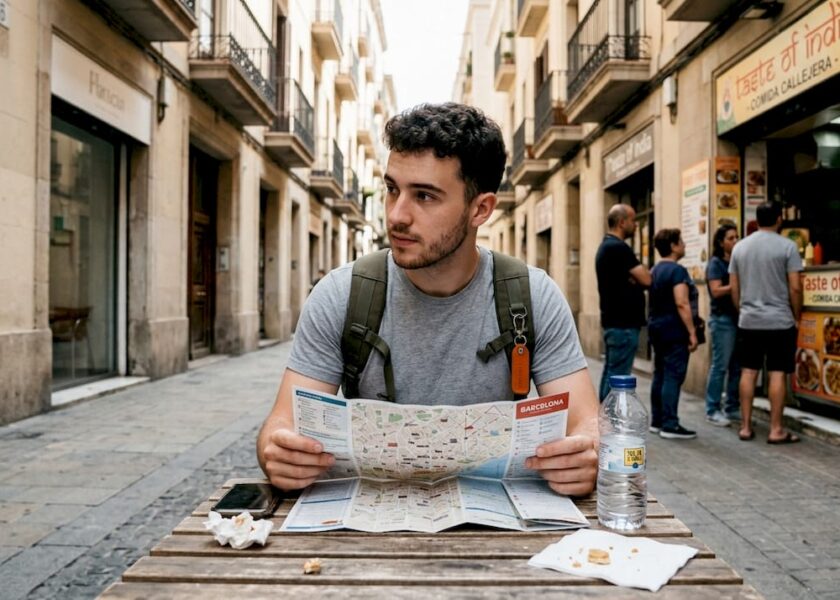
Multicultural urban neighbourhoods are the second major driver. Cities like Barcelona, London, and Toronto function as natural culinary laboratories where Indian, Middle Eastern, Korean, and West African food traditions coexist on the same street. The advantages of street food experiences in these settings include direct cultural exchange and the organic transformation of tradition. Proximity breeds experimentation.
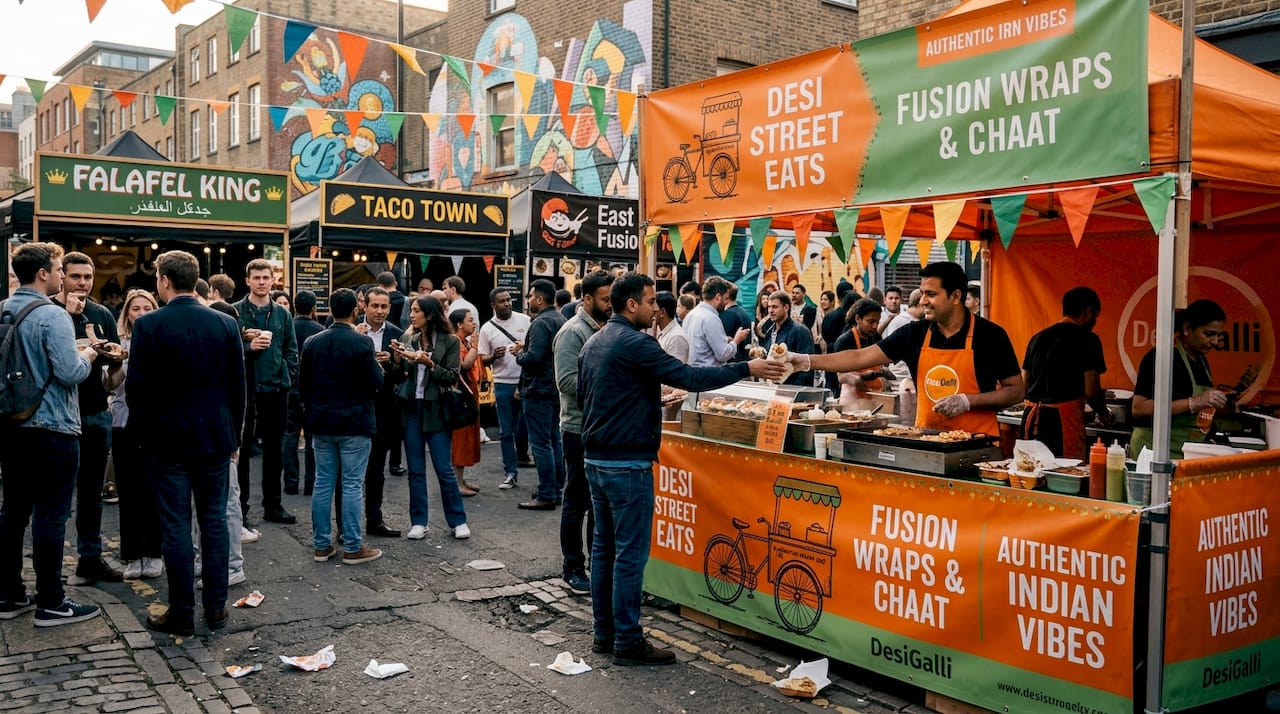
The third driver is ingredient availability. Global pantry staples like gochujang, harissa, and za’atar are now stocked in mainstream supermarkets across Europe and North America. This empowers both professional chefs and home cooks to experiment with bold international flavours at every price point, from market stalls to restaurant kitchens.
The most telling shift, however, is qualitative. Fusion has evolved from novelty for novelty’s sake towards thoughtful, balanced pairings that reflect genuine cultural appreciation. Consumers want new flavours to feel approachable and authentic, not random. This expectation is reshaping how chefs and food entrepreneurs approach the craft.
Key drivers at a glance:
- International travel and digital exposure broadening consumer palates
- Multicultural urban neighbourhoods enabling organic culinary cross-pollination
- Wider availability of global ingredients from gochujang to tamarind
- Consumer demand for culturally grounded, balanced flavour pairings
- Social media amplification turning fusion dishes into global food trends
Pro Tip: When exploring fusion street food in a new city, look for dishes where the cooking technique, not just the ingredients, crosses cultural lines. A samosa filled with spiced pulled pork tells a richer story than one that simply swaps a sauce.
How do chefs create authentic and meaningful street food fusion dishes?
The distinction between a gimmick and a genuine fusion dish lies in culinary intent and technique. Hong Kong chefs are leading this conversation, shifting fusion from awkward East-West combinations to what food writers now call “third-culture” cuisine. These menus are neither purely Chinese nor Western. They are a cultural synthesis built on serious culinary craftsmanship, and they are earning critical respect precisely because the intent is evident in every element of the dish.
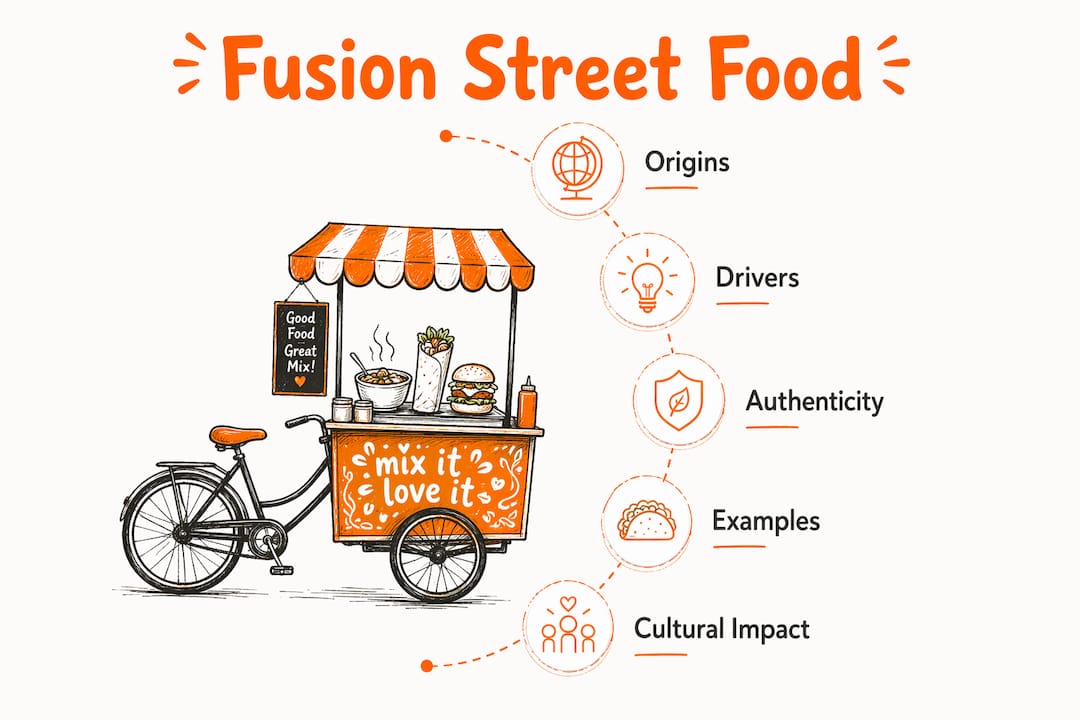
The most credible fusion dishes share one characteristic: the cooking logic travels with the recipe. Kolkata’s Indo-Chinese cuisine is the clearest example. The Hakka wok technique and high-heat frying that define dishes like chilli paneer are not decorative. They are structurally integral. Remove the technique and the dish collapses. This is what separates authentic fusion from ingredient tourism.
How chefs build credible fusion dishes:
- Start with technique, not ingredients. Identify a cooking method from one tradition that genuinely complements the flavour profile of another.
- Respect the source material. Study the original dish deeply before adapting it. Chefs who understand why a spice blend works are better placed to translate it across cultures.
- Test for balance, not novelty. A fusion dish should taste coherent, not like a competition between two cuisines fighting for dominance.
- Tell the story. Diners respond to dishes with a clear cultural narrative. A menu note explaining the Hakka roots of a chilli paneer adds meaning, not just context.
- Iterate with community feedback. The best fusion chefs work closely with communities from both source cultures to refine dishes and avoid misrepresentation.
Chefs’ intent and craftsmanship directly affect how audiences receive fusion food. Serious third-culture menus gain credibility and reduce the stigma that has historically surrounded the word “fusion” in fine-dining circles.
Pro Tip: Ask your server about the origin of a fusion dish. Restaurants that can explain the cultural logic behind a pairing are almost always the ones worth returning to.
What are notable examples and formats of street food fusion in 2026?
Format fusion is one of the most useful concepts for understanding how street food hybrids actually work. It describes the practice of using a familiar street-food format, such as fries, tacos, flatbreads, or skewers, as a consistent platform for rotating international flavour profiles. The format provides comfort and familiarity. The flavour provides discovery.
The hyper-fusion trend blurs national cuisine boundaries by using street-food formats like loaded fries as platforms for international flavours. Korean kimchi and gochujang on fries is the defining example of 2024 to 2026. East Asian influences transform a neutral base like potato into a bold international flavour carrier, and the result is a dish that feels both familiar and genuinely new. Ramen burgers, Middle Eastern flatbreads with Mediterranean toppings, and Indian chaat served in taco shells follow the same logic.
| Format | Origin | Fusion flavour layer | Example dish |
|---|---|---|---|
| Loaded fries | North America | Korean (kimchi, gochujang) | Korean poutine |
| Flatbread | Middle East | Mediterranean (labneh, za’atar) | Manakish with harissa hummus |
| Taco shell | Mexico | Indian (chaat masala, tamarind) | Chaat taco |
| Skewer | Global | West African (suya spice) | Suya chicken skewer |
| Bao bun | China | Latin American (pulled pork, jalapeño) | Carnitas bao |
Neutral bases are the secret weapon of successful format fusion. Pairing bold international flavours with neutral bases like potatoes or plain dough lowers the adoption barrier for diners who are curious but cautious. The familiar texture provides a safety net while the flavour does the adventuring.
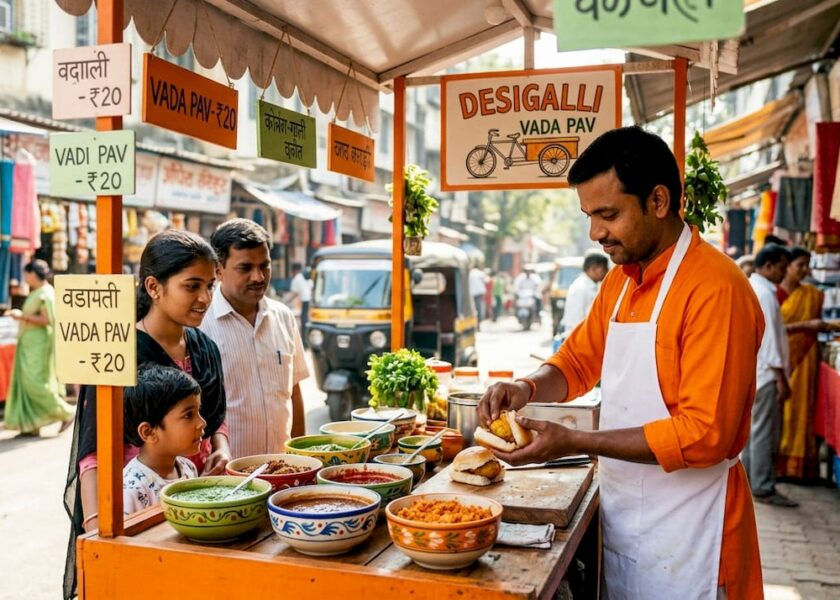
The role of fusion in Indian street food deserves particular attention here. Indian street food flavours, from tamarind chutney to chaat masala to the heat of green chillies, are exceptionally well-suited to fusion formats because they are already built on layering. Understanding Indian street condiments like imli chutney, mint raita, and pickled onions reveals a culinary grammar that translates powerfully into cross-cultural dishes. You can explore Indian street food in Barcelona to see how these flavours are landing in a European context.
How does street food fusion reflect cultural exchange and heritage transmission?
Street food fusion is not simply a commercial trend. It is a mechanism of cultural exchange with institutional recognition at the highest level. UNESCO views creative fusion as a meaningful cultural exchange mechanism, linking gastronomy festivals to strengthening local economies and broadening visitor engagement. Nearly 40 UNESCO Creative Cities of Gastronomy have convened alongside creative professionals to promote inclusive urban development through culinary culture. This framing positions fusion not as dilution of tradition but as its living continuation.
“Foodways are living heritage. They require active transmission, community-led documentation, and institutional support to survive beyond commercial cycles.” — UNESCO International Food Atlas
The UNESCO International Food Atlas project highlights the importance of sustaining food practices for cultural identity and resilience. Foodways are considered living heritage involving community-led safeguarding that goes well beyond what any restaurant trend can achieve alone. This is why the most enduring fusion traditions, such as Kolkata’s Indo-Chinese or Hawaii’s plate lunch, are rooted in communities rather than menus.
| Cultural mechanism | Role in fusion | Example |
|---|---|---|
| Gastronomy festivals | Foster dialogue between culinary cities | UNESCO Cities of Gastronomy events |
| Community documentation | Preserves original techniques and recipes | International Food Atlas project |
| Diaspora communities | Carry and adapt food traditions across borders | Indian communities in Barcelona |
| Fine dining chefs | Elevate and legitimise fusion narratives | Hong Kong third-culture menus |
Institutions like ASSAIA in New York demonstrate how fine dining can engage seriously with heritage transmission, treating a national cuisine as a living document rather than a fixed archive. The parallel with street food fusion is direct: the most meaningful fusion dishes are those where heritage is honoured, not erased.
Key takeaways
Street food fusion succeeds when technique, cultural respect, and familiar formats combine to make bold new flavours genuinely approachable.
| Point | Details |
|---|---|
| Technique drives authenticity | Fusion dishes gain credibility when cooking methods, not just ingredients, cross cultural lines. |
| Format fusion lowers barriers | Familiar formats like fries or flatbreads make bold international flavours accessible to cautious diners. |
| Social media accelerates trends | Instagram and TikTok turn unexpected fusion pairings into global food conversations within hours. |
| UNESCO frames fusion as heritage | Creative fusion is recognised as cultural exchange that strengthens economies and community identity. |
| Indian street food is fusion-ready | Layered flavour profiles and versatile condiments make Indian street food a natural partner for cross-cultural formats. |
Why the future of street food fusion excites me more than any other food trend
The conversation around fusion food has shifted in a way that feels genuinely significant. For years, “fusion” was a word that made serious food people wince. It conjured images of confused menus and cynical novelty. What I am seeing now, and what the evidence from Hong Kong to Barcelona confirms, is something far more considered.
The chefs and vendors who are doing this well are not mixing cuisines for the sake of a photograph. They are asking harder questions: What does this technique do that mine cannot? What does this spice say that mine leaves unsaid? That intellectual curiosity, grounded in real culinary knowledge, is what produces dishes worth eating twice.
What strikes me most is the role of Indian street food in this evolution. The flavour architecture of Indian street food, built on layering spice, acid, heat, and texture simultaneously, is one of the most sophisticated in the world. Understanding Indian vegan street dishes like pani puri or aloo tikki reveals a culinary logic that is both ancient and remarkably adaptable. Vegan Indian appetisers, from samosas to bhel puri, are already fusion-compatible by design. They travel well across formats precisely because their flavour grammar is so structured.
The future I find compelling is one where fusion becomes a form of culinary dialogue rather than a marketing category. Where a guide to Indian vegan snacks sits alongside a guide to pairing Indian drinks with craft cocktails, and both are understood as expressions of the same living tradition. Food explorers who take the time to understand the stories behind the dishes they eat will find that fusion, at its best, is not confusion. It is conversation.
— YellowRock
Discover authentic Indian street food fusion in Barcelona
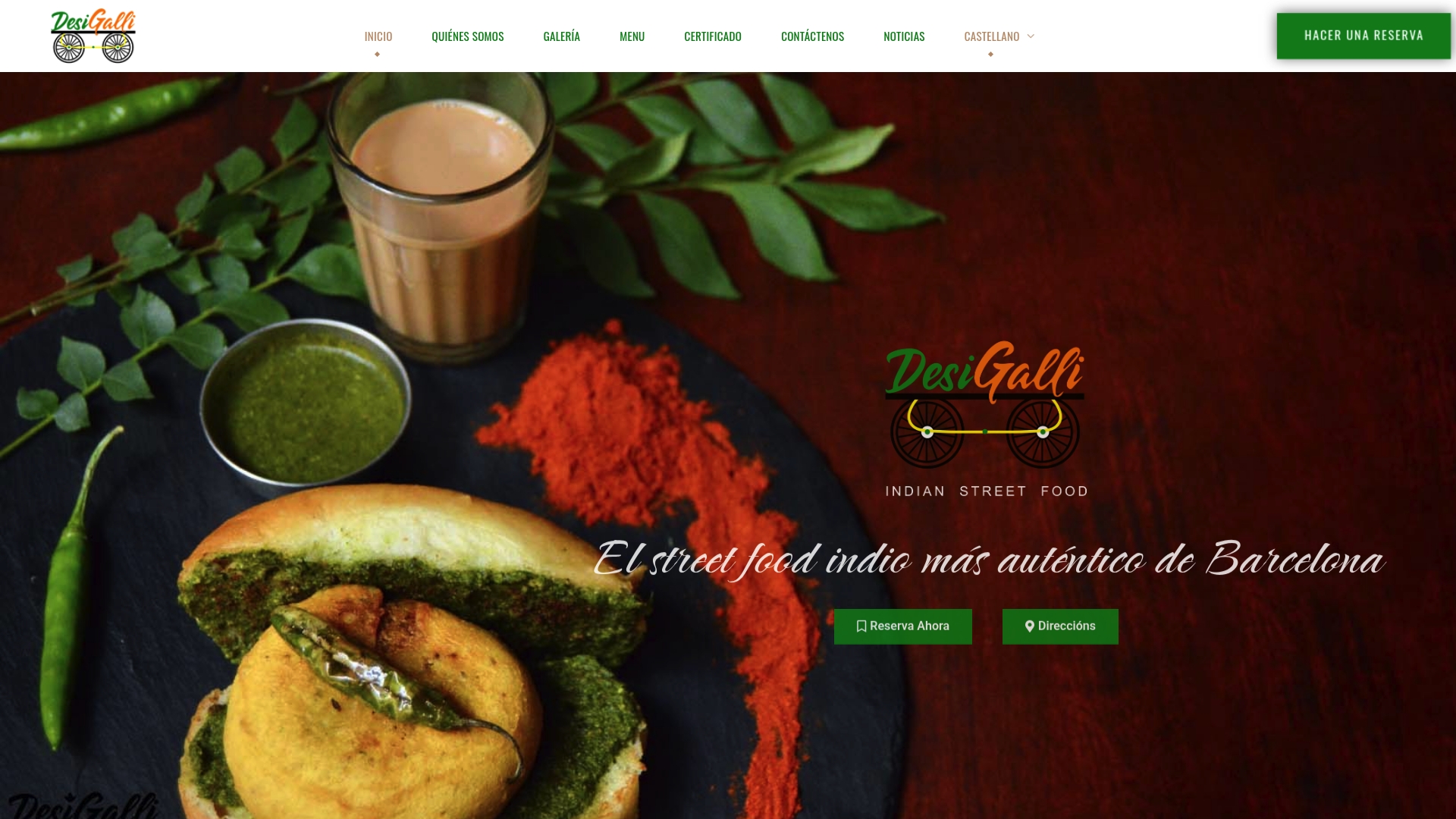
Desigallibcn brings the full depth of Indian street food fusion to the heart of Barcelona. The menu at Desi Galli moves between classic street food formats and creative cross-cultural pairings, all grounded in the bold spices and vibrant condiments that define Indian culinary tradition. From chaat to samosas to vegan-forward dishes that reflect the best of understanding Indian vegan street dishes, every plate carries a clear cultural story. If you are ready to experience Indian street food flavours in a setting that takes both authenticity and creativity seriously, Desi Galli is the place to start your exploration in Barcelona.
FAQ
What is street food fusion?
Street food fusion is the practice of combining traditional street-food formats with flavours, ingredients, or cooking techniques from a different culinary culture. The result is a dish that draws on multiple traditions while remaining coherent and approachable.
Why has fusion food become more popular recently?
International travel, multicultural urban living, and the reach of platforms like Instagram and TikTok have all broadened consumer exposure to global flavours. Wider availability of ingredients like gochujang and harissa has made fusion accessible at every level of cooking.
What makes a fusion dish authentic rather than gimmicky?
Authenticity in fusion comes from technique, not just ingredients. Dishes where the cooking method travels with the recipe, as in Kolkata’s Indo-Chinese cuisine using Hakka wok technique, are considered credible because the culinary logic is structurally sound.
How does Indian street food fit into global fusion trends?
Indian street food flavours are built on layering spice, acid, heat, and texture, making them naturally compatible with cross-cultural formats. Condiments like tamarind chutney and chaat masala translate powerfully into fusion dishes from tacos to flatbreads.
Does UNESCO recognise street food fusion as culturally significant?
UNESCO frames creative fusion as a mechanism of cultural exchange, with nearly 40 Creative Cities of Gastronomy using gastronomy festivals to strengthen local economies and promote inclusive urban development through culinary culture.
Recommended
- Defining modern street food: beyond the basics – Desi Galli
- Fusionar comida callejera: experiencias únicas en Barcelona – Desi Galli
- Advantages of street food experience: a global guide – Desi Galli
- What is Mumbai street food: a cultural guide – Desi Galli