

Most people exploring vegetarian diets know that Indian food is spice-forward and filling. Fewer realise that the question of why vegetarian Indian food exists in such abundance is answered not by accident or trend, but by thousands of years of philosophy, agriculture, and culinary craft. India is home to 29 states with distinct vegetarian traditions, each shaped by local ecology, religion, and seasonal produce. What you find on a typical restaurant menu is only the surface. Below it lies one of the richest, most nutritionally considered food systems on the planet.
Table of Contents
- Key takeaways
- Why vegetarian Indian food has such deep roots
- The remarkable regional diversity you are probably missing
- The health case for choosing vegetarian Indian food
- Why this matters now: the contemporary case
- My honest take on Indian vegetarian food
- Discover authentic vegetarian Indian street food in Barcelona
- FAQ
Key takeaways
| Point | Details |
|---|---|
| Rooted in ancient ethics | Vegetarianism in India stems from ahimsa, a principle of non-violence central to Hindu, Jain, and Buddhist practice. |
| Far more than paneer | Indian vegetarian cuisine spans 29 regional traditions with fermented, spiced, and seasonal dishes most menus never show. |
| Nutritionally well-designed | Traditional meals balance legumes, grains, fermented foods, and spices in ways that support long-term wellbeing. |
| Vegan adaptation is possible | Many South Indian dishes are naturally vegan; dairy-heavy dishes can be adapted using cashew or coconut cream. |
| Growing global relevance | Younger Indians and global diners are rediscovering regional vegetarian traditions driven by sustainability and flavour. |
Why vegetarian Indian food has such deep roots
The story begins with a single Sanskrit word: ahimsa. Translated as non-violence, it is a principle that runs through Hindu, Jain, and Buddhist philosophy alike. Ancient texts describe dietary ethics as inseparable from spiritual life, with food choices understood as a daily act of moral commitment, not just nourishment.
Jainism takes ahimsa furthest. Strict Jain practitioners avoid root vegetables like onions and garlic because harvesting them destroys the whole plant. The logic is rigorous: minimise harm at every stage of eating. Buddhist traditions, particularly in certain monastic communities, apply similar reasoning. Hinduism, meanwhile, connects vegetarianism to concepts of purity and ritual cleanliness, with many communities observing meat-free days tied to religious calendars.
“Food is not merely sustenance in Indian philosophy. It is an expression of one’s relationship with living beings and the cosmos.” This framing is not metaphor. It is practical guidance that has shaped what millions of people cook and eat daily for centuries.
Beyond religion, food carries deep ceremonial weight. Wedding feasts, temple offerings, and seasonal festivals each follow specific food rules. Many offerings to deities must be vegetarian, and food prepared in a sattvic style (pure, light, and free from stimulants) is considered spiritually conducive. This ritual dimension means that vegetarianism’s sociocultural evolution in India is not simply a dietary preference. It is woven into how communities mark time, celebrate life, and express identity.
The important consequence of all this? India did not stumble into vegetarianism. It built an entire culinary architecture around it, one sophisticated enough to satisfy not just ethical principles but genuine human pleasure.
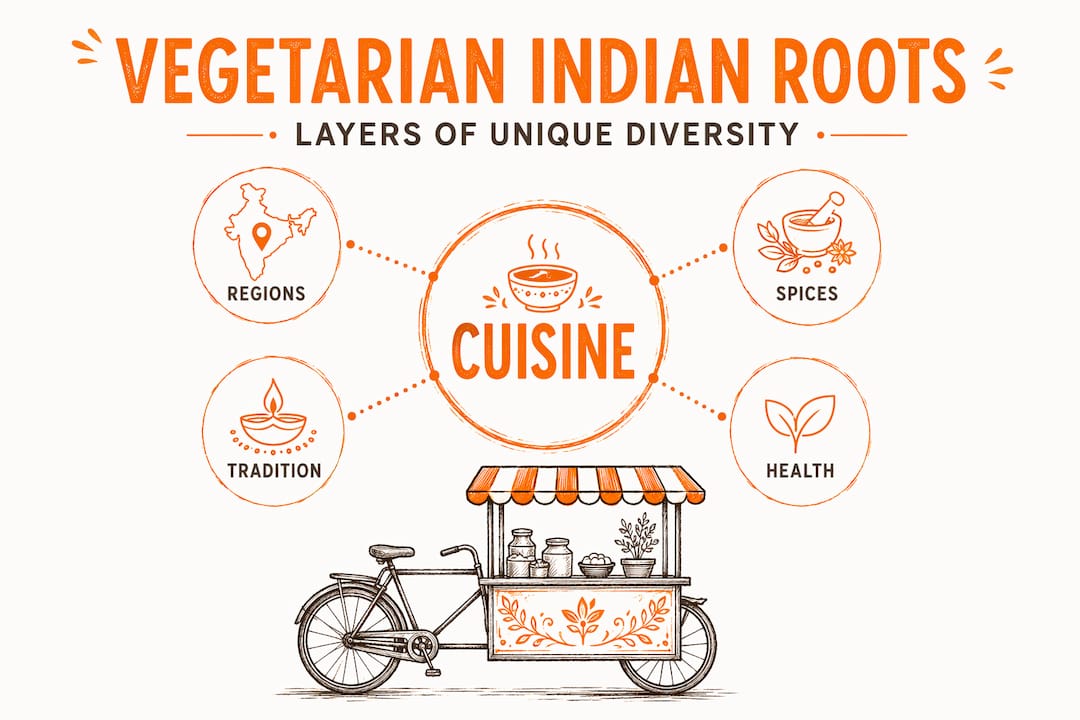
The remarkable regional diversity you are probably missing
If you picture Indian vegetarian food and land on butter chicken’s vegetarian equivalent, a rich orange gravy with paneer, you are looking at one dish from one region. India’s regional dishes differ enormously in preparation, technique, and ingredient logic. Here is what that actually looks like across the country.
| Region | Signature style | Key ingredients | Notable dishes |
|---|---|---|---|
| North India | Dairy-forward, rich gravies | Paneer, ghee, cream, wheat | Dal makhani, palak paneer, aloo paratha |
| South India | Coconut-based, fermented | Lentils, coconut, tamarind, rice | Dosa, idli, sambar, avial |
| West India | Tangy and sweet-spiced | Groundnuts, jaggery, fenugreek | Dhokla, undhiyu, pav bhaji |
| East India | Mustard-forward, lighter | Mustard oil, panch phoron, rice | Shukto, cholar dal, aloo posto |
| Central India | Earthy and substantial | Millets, wild greens, sesame | Bafla, lapsi, dal baati churma |
The contrast between a fermented South Indian idli and a North Indian stuffed paratha cooked in ghee is as wide as the contrast between French cassoulet and Greek horiatiki. These are not variations on a theme. They are distinct culinary traditions that happen to share a subcontinent.
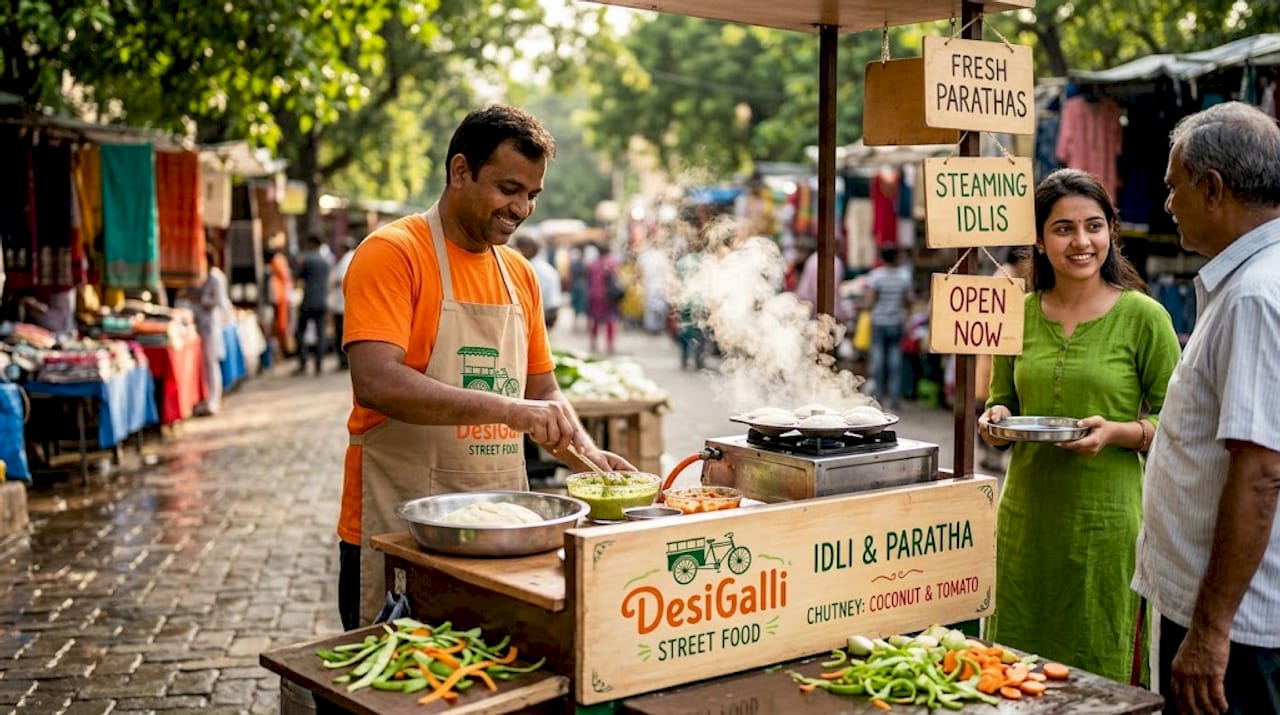
What drives this diversity is seasonal and ecological adaptation. Coastal regions use coconut milk and tamarind where they grow freely. Landlocked areas rely on legumes and millets suited to drier soils. This is a food system built around what the land offers, not what a restaurant menu finds convenient.
Technique matters just as much as ingredients. Blooming spices in hot oil or ghee extracts fat-soluble aromatic compounds that water-based cooking simply cannot release. Skipping or rushing this step produces flat, muted flavours. It is the single most common reason a home-cooked Indian dish tastes less vivid than a version made by someone who grew up doing it.
Pro Tip: When cooking Indian vegetarian dishes at home, add whole spices like cumin seeds or mustard seeds to hot oil first and wait for them to splutter before adding anything else. That 30-second step changes the entire flavour profile of the finished dish.
The health case for choosing vegetarian Indian food
The advantages of vegetarian Indian food from a nutritional standpoint are genuine, though they come with important context. Traditional home-cooked Indian meals and the restaurant versions sold globally are not the same thing.
At home and in street food settings, the diet leans heavily on:
- Legumes such as dal, rajma, and chana, which deliver protein, fibre, and iron in combinations that support satiety and gut health.
- Fermented foods like idli, dosa, and kadhi, which introduce beneficial bacteria and improve nutrient absorption from grains.
- Spices with functional properties, including turmeric (anti-inflammatory compounds), fenugreek (blood sugar regulation support), and ginger (digestive aid).
- Seasonal vegetables, rotated throughout the year to provide changing nutrient profiles and avoid monotony.
The rasa principle in Indian cooking balances six fundamental tastes: sweet, sour, salty, bitter, pungent, and astringent. This is not aesthetic preference. It reflects a traditional understanding that complete meals should engage all physiological and digestive responses, producing food that is both satisfying and medicinal.
Traditional meals adapt with seasonal cycles, meaning the benefits are not static. Winter dishes in North India tend to be warming and fat-rich. Summer fare in South India favours cooling coconut and tamarind. This built-in seasonality is something most modern diets have abandoned entirely.
The challenge for those exploring vegan Indian food specifically is dairy. Ghee, paneer, and yoghurt are culturally significant and functionally important in many dishes. Removing dairy thoughtfully requires substitutes like cashew cream or coconut milk to preserve the richness these ingredients provide. Many South Indian dishes sidestep the issue entirely, being naturally dairy-free and among the most nutritionally balanced options in the cuisine.
Why this matters now: the contemporary case
The reasons to choose vegetarian Indian food in 2026 go well beyond tradition. Younger urban Indians are returning to regional vegetarian traditions not for religious reasons but for sustainability and flavour. This is vegetarianism as an active, modern choice rather than an inherited constraint, and it is bringing renewed attention to dishes that restaurant menus had sidelined.
For global audiences, vegetarian Indian cuisine offers something genuinely rare: a culinary tradition where plant-based cooking was never a compromise. The dishes were not created by removing meat from something else. They were built from scratch around plants, spices, and grains. That distinction produces a different quality of food.
Here is why more diners are paying attention:
- Flavour density without meat. The combination of bloomed spices, fermented bases, and rasa balance produces dishes with layered complexity that most plant-based cuisines cannot match.
- Sustainability by design. Indian vegetarian food evolved around local ecology and seasonal crops, making low-impact eating its natural state, not a conscious addition.
- Affordability. Lentils, rice, vegetables, and spices are inexpensive. Some of the most nutritionally complete Indian meals are also the cheapest to produce.
- Global accessibility of ingredients. Unlike some regional cuisines requiring obscure imports, Indian vegetarian cooking works well with widely available supermarket staples.
The one obstacle worth naming honestly is this: standardised restaurant menus have conditioned many people to expect paneer-heavy gravies as the default. Experts actively encourage diners to look for regional vegetarian dishes beyond the familiar, because that is where the real nutritional and flavour rewards live.
Pro Tip: Look for South Indian dishes like rasam, sambar, or kootu on any Indian menu. These are almost always naturally vegan, made without dairy, and represent the lighter, more genuinely traditional side of the cuisine.
You can also explore authentic Indian restaurant selection to understand what markers separate genuinely regional cooking from generic curry-house fare.
My honest take on Indian vegetarian food
I have eaten my way through a fair amount of Indian food across different contexts, from simple street food stalls to formal restaurant menus, and the gap between them still surprises me. Most people who say they are not sure about vegetarian Indian food have only ever tried the restaurant-standardised version: heavy, cream-laden, built around paneer and a handful of familiar sauces.
What they have missed is the dish where someone’s grandmother fermented the batter overnight, or the street chaat assembled with six textures and four temperatures in one bite. That version of Indian vegetarian food is not a substitute for anything. It stands entirely on its own.
The broader problem is that globalisation flattened the cuisine. Restaurants learned quickly that butter-rich North Indian gravies travel well commercially. So those became the template, and the dosa stalls, the dry sabzi dishes cooked with seasonal greens, the tamarind-sharp chutneys and the earthy dal preparations faded from view in global markets.
What I find genuinely exciting now is watching that reverse. The interest in fresh, seasonal ingredients as markers of authenticity is pulling people back toward the regional and the traditional. That is not nostalgia. It is good taste recognising where the real quality was all along. If you are exploring vegetarian diets and have not yet gone beyond the paneer dishes, you are about three-quarters of the way through a very good story. The best parts are still ahead.
— Desigallibcn
Discover authentic vegetarian Indian street food in Barcelona
At Desigallibcn, the menu reflects Indian vegetarian food as it actually exists: diverse, spiced with intention, and built around dishes that do not need meat to be memorable. From samosas with house-made chutney to chaat assembled with textures that make each bite different from the last, the focus is on the street food tradition where Indian vegetarian cooking has always been most alive.
If you want to understand what makes this cuisine worth exploring, the best starting point is eating it in a setting where authenticity is the priority. Read more about Indian street food in Barcelona to find out what to order, what to expect, and how the Desigallibcn kitchen approaches the balance between tradition and a Barcelona dining room. Reservations are open, and the vegetarian menu tradition is well worth your time.
FAQ
What makes Indian food naturally suited to vegetarians?
Indian vegetarian cuisine was built around plants from the outset, driven by philosophical principles like ahimsa. The result is a complete culinary system with protein sources, flavour complexity, and cooking techniques specifically developed for plant-based ingredients, not adapted from meat-based traditions.
What is the difference between vegetarian and vegan Indian food?
Vegetarian Indian food often includes dairy products such as ghee, paneer, and yoghurt, which are culturally significant. Vegan Indian food removes these, and South Indian dishes using coconut milk and lentils are often naturally vegan without requiring substitution.
Which Indian curries are best for vegans?
South Indian dishes like sambar, rasam, and dal tadka are among the top Indian curries for vegans because they are made without dairy. Many chutneys, dhals, and chaat preparations are also naturally vegan and represent some of the most flavourful options in the cuisine.
Why does vegetarian Indian food taste so complex?
The rasa principle balances six tastes in each meal: sweet, sour, salty, bitter, pungent, and astringent. Combined with bloomed spices and fermented ingredients, this produces layered flavour that does not depend on meat for depth or richness.
Is vegetarian Indian street food a good option for health-conscious diners?
Yes. Vegetarian Indian street food like dosa, idli, and chaat combines fermented grains, legumes, and spiced chutneys in formats that are typically lower in saturated fat than restaurant curry-house dishes. The seasonal ingredient basis of traditional street food also means nutritional variety is built into the format.
Recommended
- Menú Vegetariano en India: Tradición y Modernidad – Desi Galli
- 7 tipos de comida india vegana esenciales para probar hoy – Desi Galli
- Defining authentic Indian restaurants: the real guide – Desi Galli
- Beneficios de probar platos veganos indios auténticos – Desi Galli