
Herbs in Indian street food are aromatic and flavouring plants that define the sensory identity of every dish, from samosas to chaat. Coriander (Dhaniya) and curry leaves (Murraya koenigii) are the two most recognisable, but fenugreek, mint, and a handful of others are equally responsible for the flavours that make Indian street food so addictive. Fresh and dried herbs play distinct roles. Fresh herbs deliver volatile top notes; dried herbs contribute deeper, more concentrated flavour. Understanding how each herb works gives you real control over the food you cook at home.
Which herbs are most popular in Indian street food?
Coriander is the single most used herb across Indian street food. Used for over 3,000 years in Indian cuisine, it functions as both a fresh leaf and a dried seed, making it genuinely dual purpose. The leaves deliver a bright, citrusy freshness to chutneys and chaat, while the seeds add a warm, nutty depth to spice blends. No other plant in the Indian kitchen crosses the herb and spice boundary so completely.
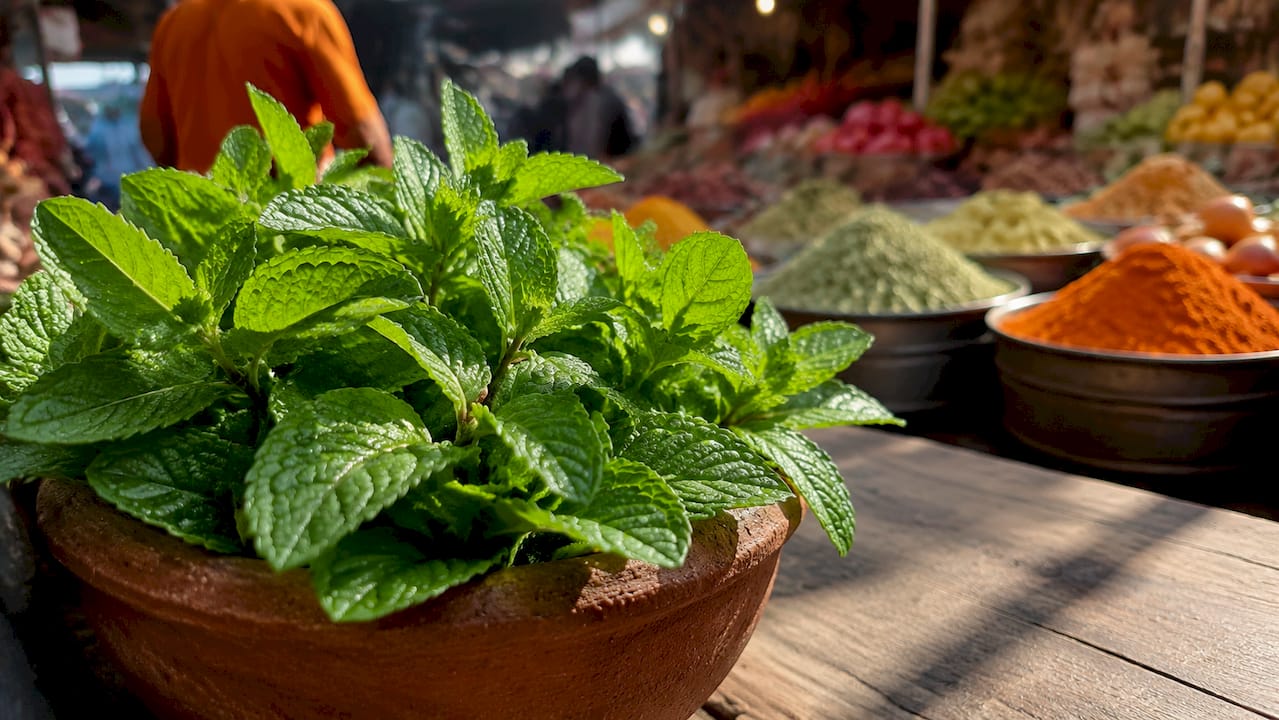
Mint (Pudina) is the second pillar of Indian street food herbs. Its cooling menthol quality cuts through the heat of green chillies and balances the earthiness of coriander. You will find it in green chutney, raita, and scattered fresh over chaat. Without mint, green chutney tastes flat and one dimensional.
Curry leaves (Murraya koenigii) are the defining herb of South Indian street food. Fresh curry leaves retain far more aromatic oils than dried ones, which lose up to 90% of their volatile compounds in the drying process. That figure explains why dried curry leaves produce a noticeably weaker result. Always use fresh leaves when you can source them.
Fenugreek, known as kasuri methi in its dried form, rounds out the core group. Its bitter, slightly sweet flavour is unlike anything else in the herb world. You will find it in snacks like methi mathri and as a finishing herb in street curries. The key herbs used in Indian snacks, summarised:
- Coriander (Dhaniya): Fresh leaves for chutneys and garnish; seeds ground into spice blends
- Mint (Pudina): Cooling contrast in chutneys, raita, and chaat toppings
- Curry leaves (Murraya koenigii): Fried in oil for tempering; essential in South Indian snacks
- Fenugreek (Kasuri methi): Dried and crushed into snack doughs and finishing sauces
- Green chilli: Technically a fruit, but used as a fresh aromatic herb in chutneys and fillings
Pro Tip: Buy curry leaves fresh and freeze them in a single layer on a tray. Frozen leaves go straight into hot oil without thawing, and they retain far more flavour than any dried alternative.
How are herbs prepared for authentic street food flavour?
Preparation technique separates a good herb from a great one. The method you choose determines whether a herb delivers its full aromatic potential or fades into the background.
Blanching for vivid green chutneys
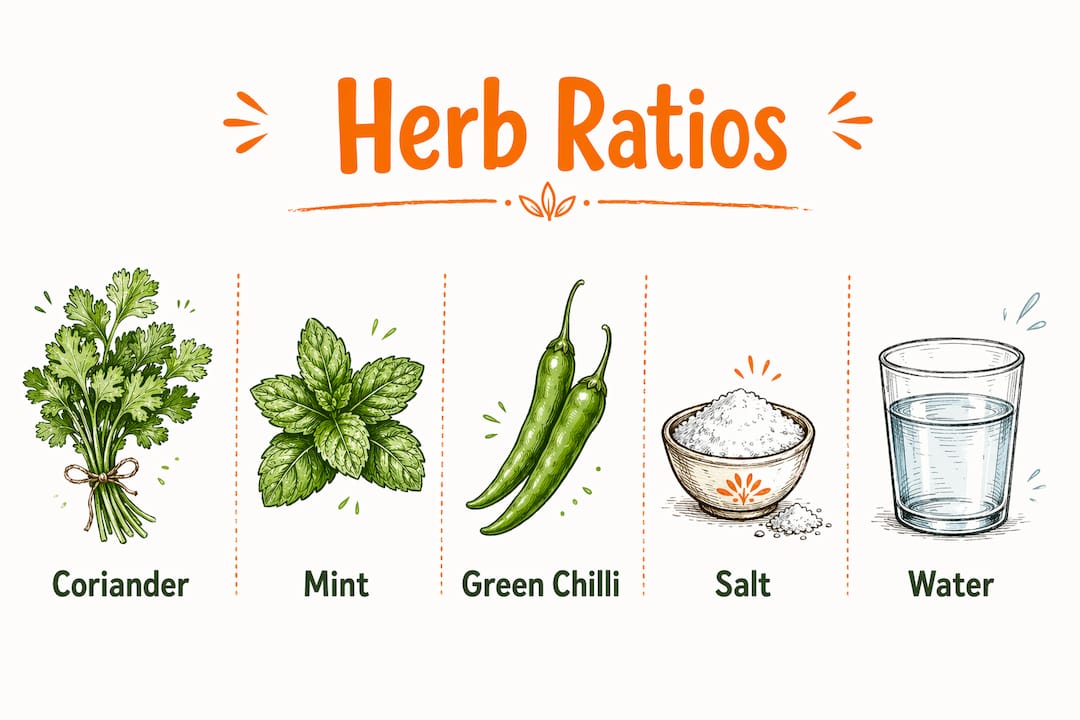
Restaurant-style green chutney follows a 60% coriander, 20% mint, and 10% green chilli ratio by weight. That ratio is not arbitrary. Coriander provides the body, mint provides the lift, and green chilli provides the heat. Getting the balance wrong produces a chutney that is either too sharp or too flat.
Colour is the other challenge. Blanching herbs for 45–60 seconds in salted boiling water, followed immediately by an ice water shock, deactivates the polyphenol oxidase enzyme responsible for browning. The result is a chutney that stays vivid green for hours rather than turning grey within minutes. This is the technique professional kitchens use, and it works just as well at home.
Tempering (tadka) to release volatile oils
Tempering, known as tadka, is the process of frying whole spices and herbs in hot oil or ghee. Tempering transforms raw ingredients by releasing volatile oils that would otherwise remain locked inside the plant’s cell walls. Curry leaves dropped into hot oil crackle and release a wave of aroma within seconds. That aroma is the foundation of countless street food dishes.
Crushing dried herbs before use
- Take a small handful of dried fenugreek leaves (kasuri methi).
- Rub them firmly between your palms over the dish or dough.
- The friction breaks the dried leaf structure and releases the trapped volatile oils that give fenugreek its bitter-sweet character.
- Add immediately after crushing. Delay reduces the aromatic impact significantly.
Pro Tip: Never crush kasuri methi in advance and store it. The oils oxidise within minutes of release. Crush directly over the dish at the moment of use.
Coarse versus fine grinding
Coarsely broken spices and herbs create varied mouthfeel and bursts of essential oil that fine grinding destroys. In a Masala Vada, for example, curry leaves and black pepper are kept coarse so they release flavour during frying rather than oxidising before the food even reaches the pan. Fine grinding is suited to home cooking where a smooth, even flavour is preferred. Street food demands texture and intensity.
What health benefits do street food herbs offer?
The health benefits of street food herbs are not incidental. Many of the herbs used in Indian snacks have documented therapeutic properties that align directly with their culinary roles.
Coriander is the most studied. Clinical studies show that coriander leaf extract reduces mercury accumulation, supporting its long-standing role in Ayurvedic detoxification practice. This is not folk medicine. It is a pharmacological effect confirmed in controlled research. Coriander’s chelating properties make it genuinely functional, not just flavourful.
Timing matters enormously for preserving these benefits. Cooking coriander reduces its volatile flavour compounds by 80–90%. The same heat that destroys flavour also degrades the heat-sensitive polyphenols responsible for health effects. Adding fresh coriander at the very end of cooking, or using it raw as a garnish, preserves both the taste and the therapeutic value.
Fenugreek carries its own set of benefits. Its bitter compounds, particularly diosgenin, have been linked to digestive support and blood sugar regulation in traditional Ayurvedic practice. Street food vendors have used fenugreek in snack doughs for generations, partly for flavour and partly because the bitter note was understood to aid digestion after a rich meal.
Fresh herbs added at the end of cooking deliver the most flavour and the most nutritional value. Heat is the enemy of both.
Chaat masala, which combines dried mango powder (amchur) and black salt (kala namak), also contributes to the flavour harmony of Indian street snacks. The sour and mineral notes it provides are not purely sensory. Amchur is a source of vitamin C, and the combination of sour and salty flavours is traditionally understood to stimulate digestive enzymes.
How does herb use differ between street food and home cooking?
The gap between street food and home cooking is not just about recipes. It is about the intensity and method of herb use.
| Feature | Street food approach | Home cooking approach |
|---|---|---|
| Herb quantity | Aggressive, high volume | Measured, moderate |
| Grinding method | Coarse, for texture and oil bursts | Fine, for smooth, even flavour |
| Curry leaf use | Fresh, fried in tadka | Often dried or omitted |
| Coriander timing | Raw garnish added at service | Stirred in during cooking |
| Fenugreek handling | Crushed fresh at point of use | Pre-mixed into spice blends |
Street food vendors use fresh aromatics aggressively because their dishes are eaten immediately. There is no time for flavours to meld and soften. The herb has to hit hard and fast. Home cooking allows for longer cooking times, which means herbs can be added earlier and in smaller quantities with the same cumulative effect.
The Masala Vada is a perfect case study. Its batter contains coarsely crushed curry leaves, black pepper, and fresh chilli. None of these are finely ground. The coarse texture means each bite delivers a different aromatic hit. That unpredictability is part of what makes street food exciting. Home cooks who fine-grind everything into a smooth paste lose that dimension entirely. The role of spices in street snacks follows the same logic: coarse processing is a deliberate choice, not a shortcut.
Key takeaways
Fresh herbs added at the end of cooking, and dried herbs crushed at the point of use, are the two techniques that most reliably separate authentic Indian street food flavour from a home-cooked approximation.
| Point | Details |
|---|---|
| Coriander is dual purpose | Use fresh leaves for garnish and chutneys; use dried seeds ground into spice blends. |
| Fresh curry leaves are non-negotiable | Dried leaves retain only about 10% of the aromatic oils found in fresh ones. |
| Blanch herbs for vivid chutney | A 45–60 second blanch and ice shock deactivates browning enzymes and locks in colour. |
| Crush kasuri methi at the last moment | Crushing releases volatile oils that oxidise within minutes; add directly to the dish. |
| Coarse grinding defines street food texture | Coarsely broken herbs and spices create flavour bursts that fine grinding eliminates. |
Why I think most home cooks underestimate herbs
Most home cooks treat herbs as garnish. A few leaves scattered on top before serving. That habit produces food that looks right but tastes thin. The real work of herbs in Indian street food happens before the dish is plated, in the tadka, in the chutney ratio, in the decision to crush rather than pre-grind.
What changed my understanding was watching how vendors handle fresh coriander. They do not stir it in. They pile it on at the last second, in quantities that look excessive, because they know the heat will kill half of it instantly. The excess is the calculation. That is not intuition. It is technique developed over decades of cooking for people who will tell you immediately if something tastes wrong.
Sourcing is the other underrated factor. Fresh curry leaves from an Asian grocery are a different ingredient from the dried version in a supermarket jar. The fresh herb experience is worth seeking out, even if it means a longer trip to find them. Once you cook with fresh curry leaves in a proper tadka, the dried version becomes genuinely unsatisfying.
Experiment with the 60:20:10 chutney ratio before you adjust it. Most people who say they do not like green chutney have only ever had a version where the ratios were wrong. Get the proportions right first, then decide what you want to change.
— YellowRock
Authentic herb-forward street food at Desigallibcn in Barcelona
Desigallibcn brings the herb-forward flavour of Indian street markets to the centre of Barcelona. Every dish on the menu reflects the same principles covered here: fresh coriander added at service, curry leaves fried in tadka, and chaat masala balanced to hit all four taste dimensions at once.
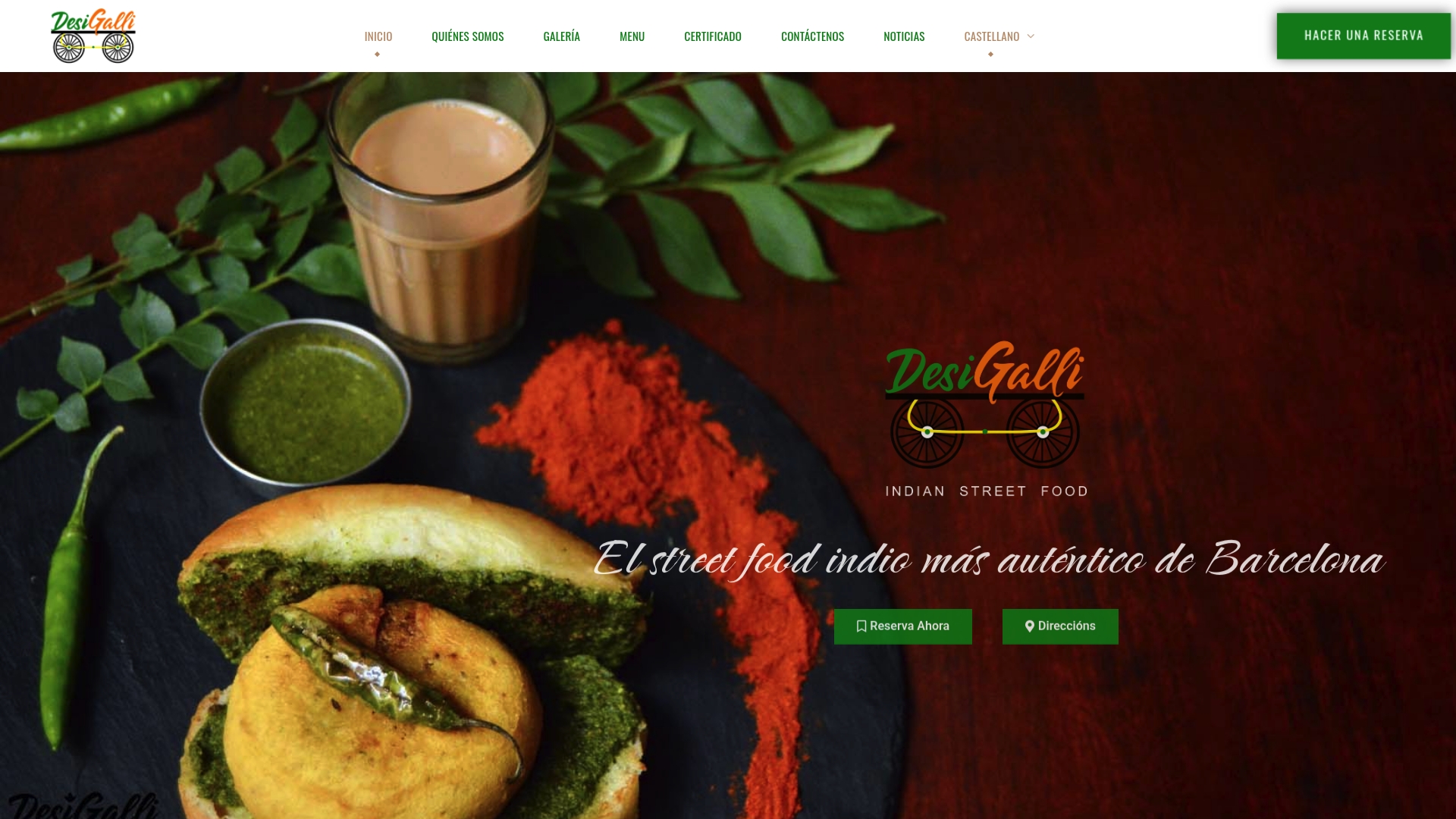
If you want to taste what proper herb technique produces before you replicate it at home, the Indian street food menu at Desigallibcn is the clearest reference point in the city. From samosas to chaat, every dish shows how fresh and dried herbs work together in practice. You can also read about the flavours and rituals behind authentic Indian street food to deepen your understanding before your visit.
FAQ
What herbs are most used in Indian street food?
Coriander, mint, and curry leaves are the three most common herbs in Indian street food. Dried fenugreek (kasuri methi) is the fourth, used widely in snack doughs and finishing sauces.
Why does fresh coriander taste so different when cooked?
Cooking reduces coriander’s volatile flavour compounds by 80–90%, which is why street food vendors add it raw at the point of service rather than stirring it into hot dishes.
What is the correct ratio for restaurant-style green chutney?
The standard ratio is 60% coriander, 20% mint, and 10% green chilli by weight. Blanching the herbs for 45–60 seconds before blending prevents browning and locks in the vivid green colour.
How do I use dried fenugreek leaves properly?
Crush kasuri methi between your palms directly over the dish at the moment of use. Pre-crushing and storing the leaves causes the released oils to oxidise quickly, which weakens the flavour significantly.
What is the difference between herbs and spices in Indian cooking?
Herbs are the leafy, aromatic parts of plants, used fresh or dried. Spices come from seeds, bark, roots, or dried fruit. Coriander crosses both categories: its leaves are an herb and its seeds are a spice.
Recommended
- The role of spices in street snacks explained – Desi Galli
- Essential Indian food tips for beginners: master authentic flavours – Desi Galli
- Why embrace indian street flavours: a cultural guide – Desi Galli
- Top Indian spices to try for bold street food flavour – Desi Galli