

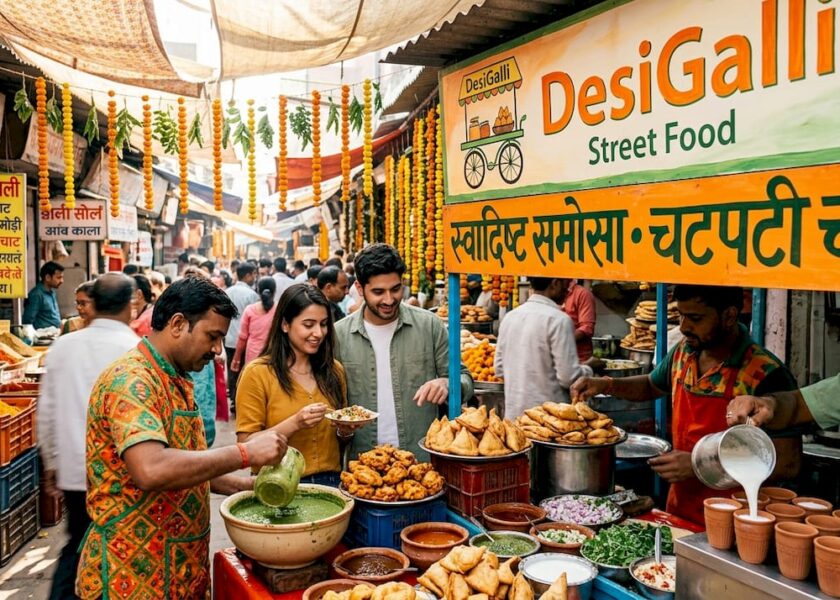
Think Indian food is just curry? That’s one of the most common misconceptions food lovers carry into their first proper Indian dining experience. The reality is far richer, far messier, and far more exciting. Indian street food represents one of the world’s most vibrant culinary traditions, built on bold spices, contrasting textures, and flavours that hit multiple notes at once. Barcelona’s growing Indian food scene means you no longer need a plane ticket to experience samosas, chaat, pakoras, and regional specialities that define what authentic Indian street food truly tastes like.
Table of Contents
- What makes a dish classic in Indian street food
- Samosas, pakoras and fritters: The crispy classics
- Chaat: The tangy, layered superstar
- Curries, breads and regional specialities: Beyond the basics
- Why Indian street food classics are misunderstood and how to savour them authentically
- Find authentic Indian food classics in Barcelona
- Frequently asked questions
Key Takeaways
| Point | Details |
|---|---|
| Classics beyond curries | Indian street food classics include samosas, chaat, pakoras, and more than just curries. |
| Balance is authenticity | Authentic dishes balance sweet, sour, spicy, and tangy flavours with contrasting textures. |
| Freshness is crucial | Street food is best enjoyed fresh and layered, often messy for optimal taste. |
| Regional variety matters | Classic dishes vary by region, so explore both North and South Indian specialties. |
| Barcelona offers real taste | Local places in Barcelona make it easy to savour authentic Indian food classics. |
What makes a dish classic in Indian street food
Not every dish earns the label “classic.” In Indian street food, a classic is quick to prepare, affordable to eat, and so layered in flavour that it creates a lasting impression after the first bite. These are dishes that have survived generations, crossed regional borders, and still taste as exciting today as they did decades ago on the streets of Delhi, Mumbai, or Chennai.
Authentic preparation emphasises a balance of flavours, sweet, sour, spicy, and tangy, alongside textures that range from crispy to creamy to crunchy. Street food is meant to be messy, layered, and eaten immediately. That freshness is not optional. It is the entire point.
What also defines a classic is its regional identity. India’s street food culture shifts dramatically as you move from north to south, east to west. Street food flavours and rituals vary enormously across regions, but certain dishes rise above local geography to become beloved nationally and internationally.
Here are the core characteristics that mark a dish as a true Indian street food classic:
- Balance of flavour: Every bite should deliver sweet, sour, spicy, and tangy at once
- Contrasting textures: Crunchy elements meet soft, creamy, or chewy components
- Regional identity: The dish reflects a specific culinary tradition from a particular part of India
- Freshness-dependent: Best eaten immediately after preparation, not reheated
- Served with chutneys: Fresh mint, tamarind, or yoghurt sauces elevate every bite
“The best Indian street food teaches you that flavour is not a single note. It is a full conversation.” This is the lens through which you should experience every dish.
Pro Tip: Look for dishes where crunchy sev (chickpea noodles), creamy yoghurt, and tangy tamarind chutney collide in the same bite. That contrast is your signal that you’re eating the real thing. You can also explore the benefits of Indian street food to understand why these dishes are as nourishing as they are delicious.
Samosas, pakoras and fritters: The crispy classics
Few things in food are as universally satisfying as something hot, crispy, and freshly fried. That is exactly what India’s crispy street food classics deliver, and they do it with remarkable variety and depth of flavour.
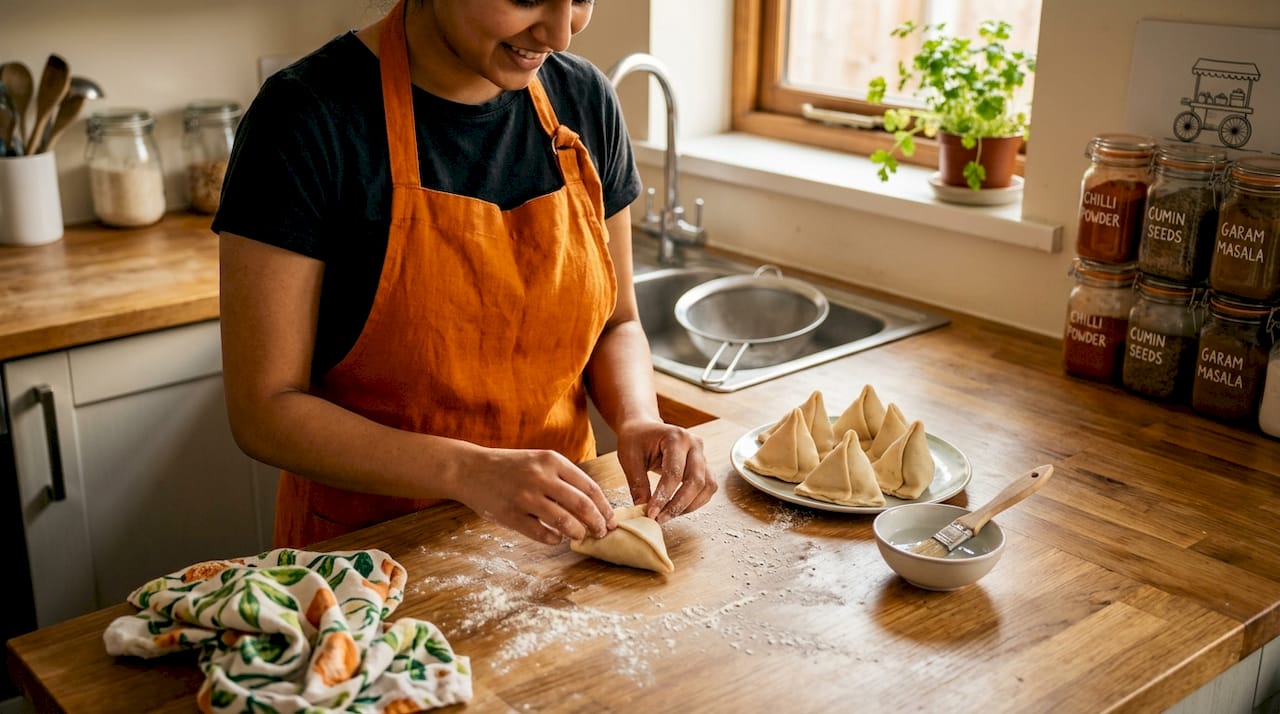
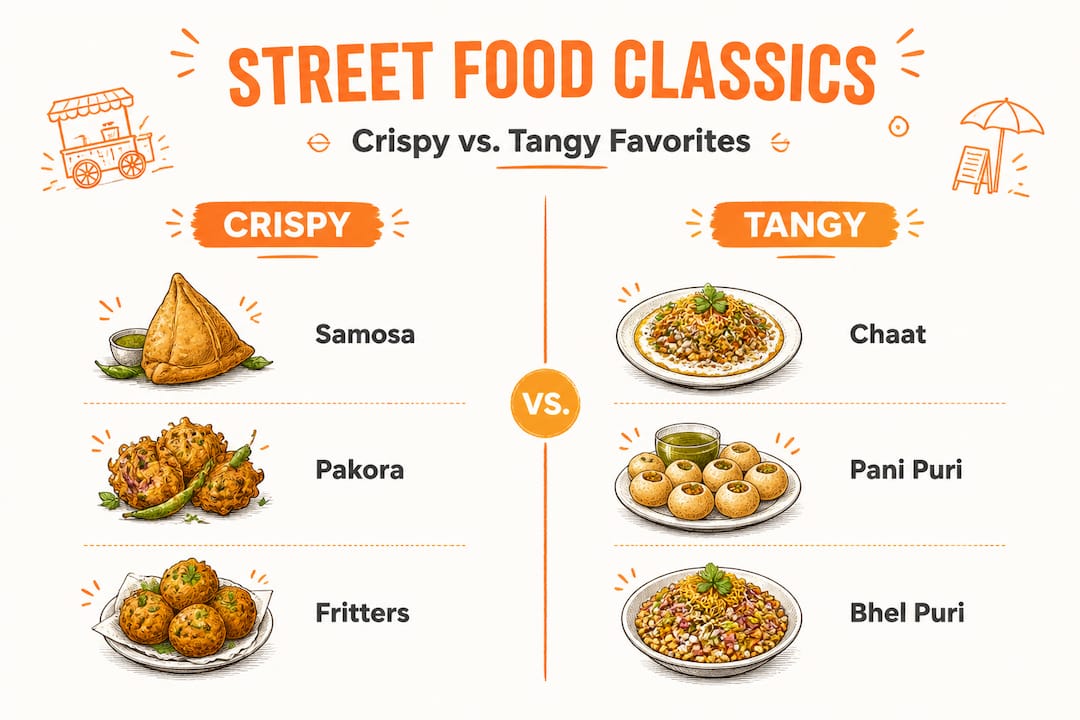
Samosas are a classic Indian street food snack: crispy, triangular pastries stuffed with spiced potatoes, peas, and sometimes meat, fried golden and served alongside chutneys. The exterior should shatter when you bite through it. The filling should be warmly spiced, never bland, and the chutney should cut through the richness with acidity and heat. A samosa without good chutney is an incomplete experience.
Pakoras follow a different route to the same destination of crispy satisfaction. Vegetables such as onion, spinach, cauliflower, or chilli are coated in a spiced chickpea batter and deep-fried until golden. The batter should be light enough to let the vegetable shine through, but seasoned boldly with cumin, turmeric, and green chilli. Meat versions exist too, but vegetarian pakoras remain the most iconic.
Classic street foods also include chole bhature, a spicy chickpea curry paired with deep-fried fluffy bread, as well as dosa and masala dosa, fermented rice and lentil crepes filled with spiced potatoes. These dishes show how India plays with crispiness, from paper-thin dosa to puffed bhature to golden fritters.
Here is a quick comparison of the most beloved crispy classics:
| Dish | Main ingredients | Flavour profile | Served with |
|---|---|---|---|
| Samosa | Pastry, potato, peas | Spiced, savoury | Mint and tamarind chutney |
| Pakora | Vegetable, chickpea batter | Earthy, spicy | Green chutney, chai |
| Chole bhature | Chickpeas, fried bread | Rich, tangy | Pickled onions, chutney |
| Masala dosa | Fermented crepe, potato | Crispy, mild to spicy | Sambar, coconut chutney |
These tasty Indian street foods represent the foundation of what makes Indian snacking so compelling. Each dish is a self-contained experience, portable, satisfying, and built around layers of seasoning that reward attention.
When seeking out authentic versions in Barcelona, pay close attention to the filling of a samosa. A properly spiced filling includes cumin seeds, green chillies, fresh coriander, and dried mango powder (amchur) for tartness. If your samosa tastes like mashed potato with no depth, something important has been left out. Browse through examples of Indian street food to know what to look for before you order.
Chaat: The tangy, layered superstar
If crispy classics are the foundation of Indian street food, chaat is the architecture built upon it. Chaat refers to an entire category of tangy, spicy snacks where the art lies in the layering, and the skill lies in getting every element balanced perfectly.
Chaat encompasses dishes like samosa chaat (crushed samosas topped with chickpeas, yoghurt, tamarind chutney, green chutney, onions, sev, and chaat masala), pani puri (crispy hollow shells filled with potatoes, chickpeas, and flavoured spiced water), bhel puri (puffed rice tossed with chutneys, onions, and spices), and pav bhaji (mashed vegetable curry served with buttered bread rolls). Each version plays by different rules but shares the same philosophy: maximum flavour in every mouthful.
Here is how to approach eating authentic chaat properly, especially if it is your first time:
- Eat it immediately. Chaat degrades within minutes as the crunchy elements absorb moisture. The moment it is assembled, start eating.
- Start with a small bite to assess the balance. Is there enough tamarind? Enough heat? Ask for adjustments before you’re halfway through.
- Layer your own additions. Fresh coriander, extra sev, or a splash more chutney can transform the experience. Most chaat vendors expect you to customise.
- Try pani puri in a single mouthful. Fill the hollow puri with the spiced water, then place the whole thing in your mouth at once. This is non-negotiable.
- Finish with the leftover sauce. The liquid at the bottom of a samosa chaat bowl contains concentrated layers of tamarind, yoghurt, and spice. It deserves attention.
| Chaat type | Key textures | Dominant flavour | Signature ingredient |
|---|---|---|---|
| Samosa chaat | Crispy, creamy, crunchy | Tangy and spicy | Tamarind chutney |
| Pani puri | Crispy shell, liquid filling | Spicy, cooling | Flavoured water (pani) |
| Bhel puri | Crunchy, soft | Tangy, fresh | Puffed rice |
| Pav bhaji | Soft, saucy | Rich, buttery, spiced | Spiced vegetable mash |
Understanding the steps to enjoy Indian street food properly will make your chaat experience dramatically better. The difference between eating chaat correctly and eating it incorrectly is the difference between a revelation and a confused mouthful.
Pro Tip: Always request extra tamarind chutney on the side when ordering samosa chaat. The sweet-sour depth of a good tamarind chutney is what ties every element together. Without enough of it, the dish loses its defining character. Good Indian food pairing tips can also guide you towards drinks and sides that complement chaat beautifully.
The Indian culinary secrets behind chaat lie in the masala blend. Chaat masala is a seasoning powder containing dried mango powder, black salt, cumin, and coriander. That dusty, slightly sulphurous, intensely sour sprinkle is what gives chaat its unmistakable nose.
Curries, breads and regional specialities: Beyond the basics
Curries represent Indian food to much of the world, but thinking of curry as a single dish is like thinking of pasta as one recipe. The regional styles across India produce wildly different curries: butter chicken from Delhi is creamy and mild, while a Chettinad curry from Tamil Nadu is fiercely spiced with whole peppercorns and dried red chillies. Spice level adjustments and fresh chutneys are essential for authenticity, whether you’re eating in Chennai or Barcelona.
North Indian classics such as chole bhature deserve special mention. The bhature bread is deep-fried in oil until puffed and pillowy, then torn apart and dipped into a robust chickpea curry spiked with ginger, garlic, tomato, and a warming spice blend. Eaten together, the richness of the bread and the tang of the chickpeas create a combination that is deeply satisfying.
South Indian street food follows a completely different logic. Masala dosa, a paper-thin fermented rice crepe filled with spiced potato, is served with sambar (a lentil and vegetable broth) and coconut chutney. The sourness of the dosa batter, developed through fermentation, balances the earthy potato filling and the fresh coconut chutney beautifully. It is a lesson in how regional techniques produce entirely distinct flavour languages.
Understanding the culinary differences between north and south Indian cuisine helps you make more informed choices when exploring a menu. Here are the key contrasts to keep in mind:
- North Indian street food: Richer, cream and ghee-based, wheat bread (bhature, pav), stronger on chaat
- South Indian street food: Lighter, rice and lentil-based, fermented preparations, coconut-forward
- Spice approach: North uses aromatic whole spices; South relies on peppercorns, curry leaves, and mustard seeds
“A dosa and a bhature come from the same country but from entirely different culinary worlds. Both deserve your full attention.”
Pro Tip: If you are new to Indian food and nervous about spice, start with masala dosa or pav bhaji. Both are flavourful without being overwhelming, and they give you a genuine sense of Indian street food’s range before you step into the heat of a chaat platter.
Why Indian street food classics are misunderstood and how to savour them authentically
Here is something we have noticed consistently: most people outside India approach Indian street food with the wrong expectation. They expect a polished, plated experience, and when the chaat arrives messy and dripping, or the samosa is unapologetically greasy, they read that as a lack of quality. It is actually the opposite.
The mess is the message. Authentic Indian street food was designed to be eaten standing up, wrapped in newspaper, or balanced on a tiny paper plate at the edge of a busy market. The flavours are bold because they need to cut through noise, distraction, and the competing smells of a hundred other vendors. When you bring that food into a restaurant setting in Barcelona, the core experience should be preserved: freshness, layering, and intensity.
What often goes wrong is Westernisation. Dishes get simplified, spice levels get dialled down to avoid complaints, and fresh chutneys get replaced by bottled sauces. The result tastes fine but delivers none of the complexity that makes Indian street food worth seeking out. Our authentic Indian gastronomy checklist gives you practical criteria to assess whether what you’re eating is genuinely representative or a diluted version.
The best advice we can offer is this: engage with the kitchen. Ask whether the chutney is made fresh that day. Ask where the recipe originates. Ask for the dish as it would be served on the streets. A chef who has grown up eating these foods will welcome those questions. A chef who cannot answer them is telling you something important.
Find authentic Indian food classics in Barcelona
Barcelona’s food scene continues to expand its appetite for genuinely international cuisine, and Indian street food is finding its rightful place among the city’s most exciting dining options.
At Desi Galli, we have built our entire approach around staying true to the classics: bold flavours, fresh chutneys, proper texture contrasts, and recipes that respect their regional origins. Whether you’re craving the crunch of a freshly fried samosa or the tangy chaos of a samosa chaat, our menu is designed to bring those street food experiences to the heart of Barcelona without compromise. Use our guide to trying Indian food in Barcelona to plan your visit, explore what’s on the menu, and arrive ready to eat like you mean it.
Frequently asked questions
What are the top Indian street food classics to try in Barcelona?
Samosas, pakoras, chaat, including pani puri and bhel puri, alongside pav bhaji, masala dosa, and chole bhature are the most popular and authentic choices worth seeking out in Barcelona.
How can I tell if an Indian street food dish in Barcelona is authentic?
Look for layering of flavours and textures. Genuinely authentic dishes arrive messy, tangy, and spiced properly, served with fresh chutneys and eaten immediately rather than sitting under a heat lamp.
Are there regional Indian street food favourites available in Barcelona?
Yes. North Indian chaat, South Indian dosa, and region-specific curries such as butter chicken and chole bhature can all be found in Barcelona, offering a diverse and representative cross-section of India’s street food geography.
What is the key to enjoying Indian street food in Barcelona?
Eat it fresh, ask for fresh chutney, customise your spice level confidently, and order a variety of dishes rather than sticking to a single plate. Indian street food rewards exploration and an open appetite.
Recommended
- Indian street food: Flavours, rituals and where to try in Barcelona – Desi Galli
- 7 ejemplos de platos callejeros indios para saborear en Barcelona – Desi Galli
- Indian food pairing tips for your Barcelona street food – Desi Galli
- Benefits of Indian street food in Barcelona – Desi Galli


Comment(01)