
Barcelona’s Indian dining scene is vibrant, but ordering authentically spicy food can be surprisingly confusing. Menus across the city use inconsistent heat symbols, and what one restaurant labels “hot” barely raises an eyebrow for a seasoned spice lover. Whether you’re a devoted chilli enthusiast or simply curious about bold, layered flavours, this guide will show you exactly how to navigate spice levels, communicate your preferences clearly, manage the heat at the table, and walk away with a genuinely memorable meal at the best Indian restaurants Barcelona has to offer.
Table of Contents
- Understanding spice levels in Barcelona’s Indian restaurants
- Preparing for your spicy adventure: Reservation and timing tips
- How to order and customise spice: Making it work for you
- Managing the burn: Pairings and recovery for spicy dishes
- Why recalibrating your spice expectations in Barcelona matters
- Discover authentic spicy Indian street food in Barcelona
- Frequently asked questions
Key Takeaways
| Point | Details |
|---|---|
| Icons are unreliable | Menu spice labels are not standardised; always ask staff and look for customisation options. |
| Condiments are your allies | Boost spice at the table with hot sauces and trays for perfect personal heat. |
| Reservations matter | Indian street food spots get busy—book ahead, especially in popular neighbourhoods. |
| Avoid water for relief | Milk, bread and sweet items soothe spice burn better than water. |
| Recalibrate spice expectations | European versions of Indian heat often differ; test and adjust to local standards. |
Understanding spice levels in Barcelona’s Indian restaurants
Now that we’ve set the stage, let’s uncover how spice levels are actually signalled and interpreted in Indian restaurants across Barcelona.
Walk into almost any Indian restaurant in Barcelona and you’ll notice a familiar sight: chilli icons beside dish names, sometimes one pepper for mild, two for medium, three for hot. The problem? These icons are entirely unstandardised. A three-chilli dish at one venue might taste milder than a two-chilli dish at the next. There is no governing body, no shared scale, and no consistent agreement among chefs about what “hot” actually means for a local Barcelona audience.
This matters enormously because many diners, especially those familiar with top Indian spices like ghost pepper, Kashmiri chilli, or green bird’s eye chilli, arrive with expectations shaped by authentic Indian cooking. The reality is that many restaurants calibrate their heat for a general European palate, which trends considerably milder than what you’d find in Mumbai, Delhi, or Chennai.
Rather than trusting the icons, focus on what food writers call the “heat mechanism” — essentially, how a restaurant allows you to order and control heat, rather than what labels they slap on the menu. Ask your server whether heat can be adjusted per dish, and whether the kitchen will prepare something on request rather than from a fixed formula. Many restaurants in Barcelona are flexible, especially if you explain your preferences calmly and clearly.
What to look for when assessing spice on the menu:
- Dishes described with specific chilli names (e.g., green chilli, red chilli paste) tend to be more reliably spicy than vague “spicy” labels
- Vegetarian dishes, particularly dal or chana masala, can carry hidden heat through mustard seeds and whole dried chillies
- Curries with coconut or cream bases often carry heat that builds slowly rather than hitting immediately
- Condiment trays on the table (pickles, green chutney, tamarind sauce) are your best friend for adjusting heat yourself
The condiment tray deserves special attention. Green chutney made with green chillies and coriander can dramatically increase a dish’s intensity when spooned on top. Mango pickle and lime pickle both carry sharp, spicy notes. Learning to use these at the table is one of the most effective ways to take control of your heat experience without relying entirely on the kitchen.
Pro Tip: Start with a moderate heat level on your first visit to any Indian restaurant in Barcelona. Use the condiments provided to build heat gradually. This gives you both control and a benchmark for future visits.
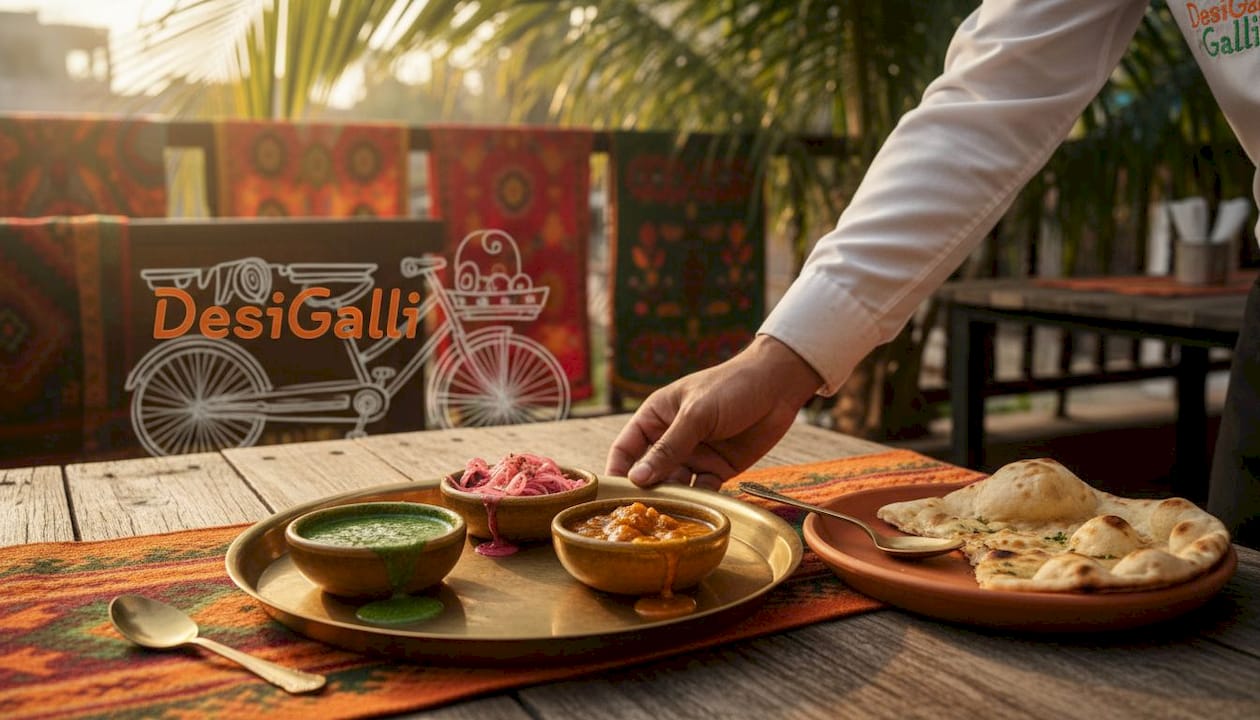
Understanding the Indian street food rituals behind these condiment pairings helps you appreciate why they exist. In India, condiments are not afterthoughts. They are integral to the dish, designed to balance, complement, and intensify flavour in real time.
Preparing for your spicy adventure: Reservation and timing tips
Understanding spice levels is just one part of the equation. Next, let’s ensure you’re well-prepared for a memorable meal with the right timing and location.
Barcelona’s Indian food scene is surprisingly concentrated. Certain neighbourhoods like El Raval, Gràcia, and the Eixample district host the majority of authentic options. El Raval in particular has a long-standing reputation for immigrant-led food businesses, and several of the city’s more adventurous Indian kitchens are located within a ten-minute walk of each other there. This makes it a natural starting point for anyone wanting to compare styles or try multiple dishes across different spots in an evening.
According to the Indian restaurant guide for Barcelona, reservation timing matters at popular venues, particularly around peak dinner hours between 9 pm and 11 pm, when locals and tourists converge. Arriving without a reservation on a Friday or Saturday evening can mean a long wait or missing out entirely on specific dishes that sell out quickly.
Planning your visit for maximum spice satisfaction:
- Reserve at least 48 hours ahead for Friday and Saturday evenings, particularly at restaurants with smaller dining rooms
- Visit midweek for a quieter experience, which gives you more time to discuss spice preferences with staff without them feeling rushed
- Ask about the day’s specials when you book, as some restaurants rotate regional Indian dishes that carry bolder spice profiles
- Check the menu online beforehand using the restaurant’s website or an Indian gastronomy checklist so you arrive with a clear idea of what you want to try
- Arrive slightly before peak hours (around 8:30 pm) to get your server’s full attention when placing your spice requests
| Timing | Crowd level | Best for |
|---|---|---|
| Weekday lunch | Low | Exploring the menu slowly |
| Weekday dinner | Moderate | Good staff interaction |
| Weekend lunch | Moderate | Tasting menus and sharing |
| Weekend dinner | High | Energy, but less flexibility |
The table above reflects a general pattern across Barcelona’s Indian restaurants. Weekday lunches are ideal if you want to have a proper conversation with the kitchen about spice customisation, ask about ingredients, or try lesser-known dishes like papdi chaat or aloo tikki that might not feature prominently on the evening menu.
“El Raval is one of the best areas in Barcelona for experiencing street-food style Indian cooking with genuine spice character. The neighbourhood’s multicultural energy mirrors the spirit of Indian street markets, and many restaurants there cater to diners who actively seek bold flavours.”
When exploring top street food options in Barcelona, look beyond the most visible tourist-facing menus. The best spice experiences often come from smaller, family-run kitchens where the cooking is driven by regional Indian traditions rather than a pan-Indian compromise designed to please the widest possible audience.
How to order and customise spice: Making it work for you
Once you’ve secured your table and picked the right spot, let’s walk through exactly how to order for the spiciest, most satisfying outcome.
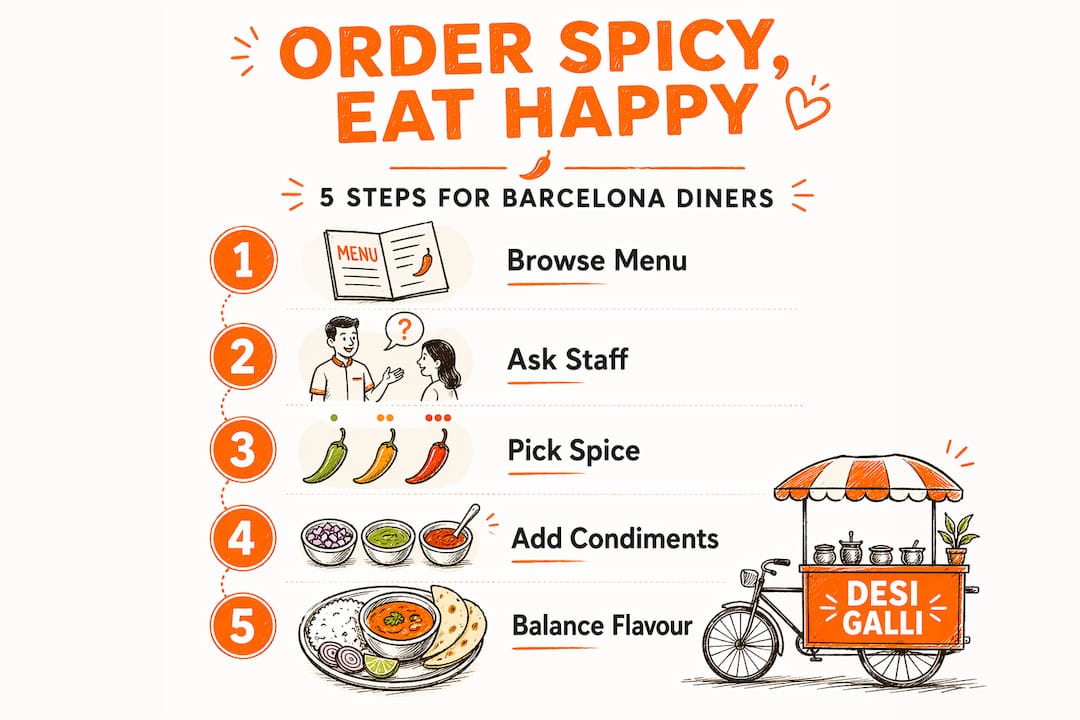
Communicating spice preferences to a server requires a bit of strategy. Simply saying “I like it spicy” is too vague. Indian cooking uses spice in layered, complex ways — whole spices, ground masalas, fresh chillies, dried chilli powders — and each layer produces a different kind of heat. Some burn immediately on the tip of your tongue; others build at the back of the throat and linger for minutes.
Here’s a step-by-step approach to ordering effectively:
- Name your reference point: Tell the server you enjoy dishes like vindaloo or a very hot green chilli curry. Giving a reference dish helps the kitchen calibrate to a real flavour memory rather than guessing
- Ask whether the chef can prepare it fresh: Some dishes are pre-prepared in bulk. If the kitchen can make it fresh, the spice level is far more adjustable
- Request the chilli on the side first: For dishes like chaat or curry, ask whether extra fresh green chilli or chilli oil can be served separately, giving you control over how much heat enters each bite
- Order a test dish first: If you’re visiting somewhere new, order one moderately spicy dish first. Assess it, then order a hotter version of the next course based on what you’ve learnt
- Be specific about what you mean: “More heat from the chilli rather than the spices” tells a chef something concrete and useful
As the restaurant heat scales guide points out, kitchen heat interpretation varies widely: “extra spicy” is not a consistent instruction, and starting from a moderate base and iterating upwards is almost always more effective than committing to maximum heat from the outset.
Pro Tip: Watch the server’s expression when you make a spice request. If they look uncertain or glance at the kitchen, it usually means the dish is pre-made and heat cannot be adjusted. If they nod with confidence, that’s a strong sign the kitchen works flexibly with ingredients.
The guide to ordering authentic dishes in Barcelona provides more detail on navigating menus. Once you’ve established a rapport with a particular restaurant, subsequent visits become much easier. Staff remember guests who appreciate genuine spice and will often suggest off-menu options or regional specials from their home state in India.
Don’t underestimate the value of exploring Indian spices before you visit. Knowing the difference between the slow burn of Kashmiri red chilli and the sharp, immediate heat of green bird’s eye chilli means you can hold a far more useful conversation with your server about what you actually want.
Managing the burn: Pairings and recovery for spicy dishes
After you’ve dialled in the right heat, it’s key to enjoy and recover from the spicy burst. Here’s how to make each bite pleasure, not punishment.
Spice management during the meal is a skill that separates genuinely enjoyable experiences from painful ones. The most common mistake is reaching for water the moment your mouth starts to burn. Water is almost entirely ineffective against capsaicin, the active compound in chillies responsible for the burning sensation. Capsaicin is fat-soluble, not water-soluble, which means water simply spreads it around your mouth rather than neutralising it.
The right approach is evidence-backed: cooling accompaniments such as milk, yoghurt-based raita, and sweet mango lassi are your most effective tools. Fat and sugar both bind to capsaicin molecules and carry them away, providing rapid relief. Plain white rice and bread like naan or paratha also work well because starch absorbs and dilutes the capsaicin concentration.
Best pairings and recovery tools for spicy Indian dishes:
- Raita (yoghurt with cucumber or mint): Excellent between bites as a palate reset
- Mango lassi: Sweet and thick, very effective at cooling prolonged heat
- Plain basmati rice: Dilutes intensity when mixed directly into a hot curry
- Naan or paratha: Absorbs spice and gives your palate a temporary break
- Sweet chutney (tamarind-based): The sweetness counteracts chilli heat quickly
What to avoid:
- Water (spreads capsaicin, temporarily intensifies the burn)
- Carbonated drinks (the bubbles can amplify irritation)
- Beer (alcohol increases capsaicin absorption, making heat feel stronger)
The tips for enjoying street food in Barcelona include practical pairing suggestions specific to the Indian street food format, where dishes arrive quickly and you may not have time to consider pairings between courses.
Pro Tip: Before ordering your hottest dish, ask the server to bring a small cup of whole milk or a raita to the table. This prevents any scramble to find relief mid-meal and lets you focus entirely on enjoying the heat rather than managing the aftermath.
The rhythm of a well-managed spicy meal is genuinely satisfying. Alternate between bold bites and soothing accompaniments. Give your palate a moment to recover before the next chilli hit. This approach lets you taste more across the meal rather than numbing your senses early with an overwhelming dose of heat.
Why recalibrating your spice expectations in Barcelona matters
To truly master spicy Indian dining in Barcelona, let’s step back for an honest look at what expectations to set — and why recalibration is your secret weapon.
Here is the uncomfortable truth that most Indian food guides won’t tell you plainly: Indian food served in Europe is frequently milder than the equivalent dish prepared in India. This is not a quality failure. It’s a deliberate calibration for a different audience. Most European diners, even those who consider themselves spice lovers, have a lower tolerance baseline than diners in regions of India where chilli is consumed daily from childhood. Chefs adapt their cooking accordingly.
A community discussion among Indian food lovers confirms this European heat gap: many diners who have eaten extensively in India find that restaurants abroad consistently underdeliver on heat intensity, regardless of what the menu claims. This is particularly relevant for anyone arriving in Barcelona with high expectations shaped by travels through Rajasthan, Kerala, or Andhra Pradesh.
The practical implication is this: your first visit to any new Indian restaurant in Barcelona should be a calibration exercise rather than an all-out assault on the spice chart. Order something rated medium and evaluate it honestly. Does the kitchen use whole spices effectively? Is there complexity beneath the heat? Does the chilli linger or fade quickly? These observations tell you far more about the kitchen’s capabilities than any menu description.
Once you understand a specific restaurant’s heat ceiling, you can make far better decisions about how to push the spice further. This is where local knowledge becomes invaluable. Regulars know which kitchens can genuinely deliver, which dishes hold heat best, and which servers are empowered to make real adjustments. The culinary secrets behind authentic Indian cooking reward patience and curiosity far more than brute-force heat requests.
Recalibration also makes the experience more enjoyable. When you stop chasing a heat level that matches your preconceptions and instead explore what a particular kitchen does exceptionally well, you often discover dishes and spice combinations that are genuinely surprising and delicious in their own right.
Discover authentic spicy Indian street food in Barcelona
Ready to take your spicy food adventure to the next level? Here is where you can explore and book the most authentic Indian street food experiences Barcelona has to offer.
At Desi Galli, we’ve built our menu around the bold, unapologetic flavours of Indian street markets — from crispy samosas loaded with green chutney to chaat that layers sweet, sour, and fiery notes in every spoonful. We understand spice not as a novelty but as a craft, and our kitchen is happy to discuss heat preferences openly with every guest.
Whether you’re planning your first visit or returning to explore more of our menu, our street food flavours guide gives you a comprehensive look at what to expect. You can also browse our full range of dishes and make a reservation directly through our website at desigallibcn.com. Come hungry, come curious, and we’ll take care of the rest.
Frequently asked questions
How can I tell if a dish is genuinely spicy in Barcelona?
Menu spice icons are not reliable across Barcelona’s Indian restaurants. Ask your server about the heat ordering options and request condiments so you can adjust intensity personally at the table.
What should I drink if the food is too hot?
Reach for milk, raita, or a sweet mango lassi rather than water. Water spreads capsaicin and makes the burn feel worse, while dairy and sweet items neutralise it quickly.
Are there specific areas in Barcelona for spicy Indian street food?
El Raval is the most well-known neighbourhood for Indian street food in Barcelona. Peak dinner hours in this area are busy, so booking ahead for weekend evenings is strongly recommended.
Why does “extra spicy” sometimes disappoint in Barcelona?
Different kitchens interpret heat requests differently, and many calibrate for a general European palate. Start at a moderate level and use condiments to build heat gradually rather than committing to maximum from the outset.
Recommended
- Top Indian spices to try for bold street food flavour – Desi Galli
- Checklist for authentic Indian gastronomy in Barcelona – Desi Galli
- Indian street food: Flavours, rituals and where to try in Barcelona – Desi Galli