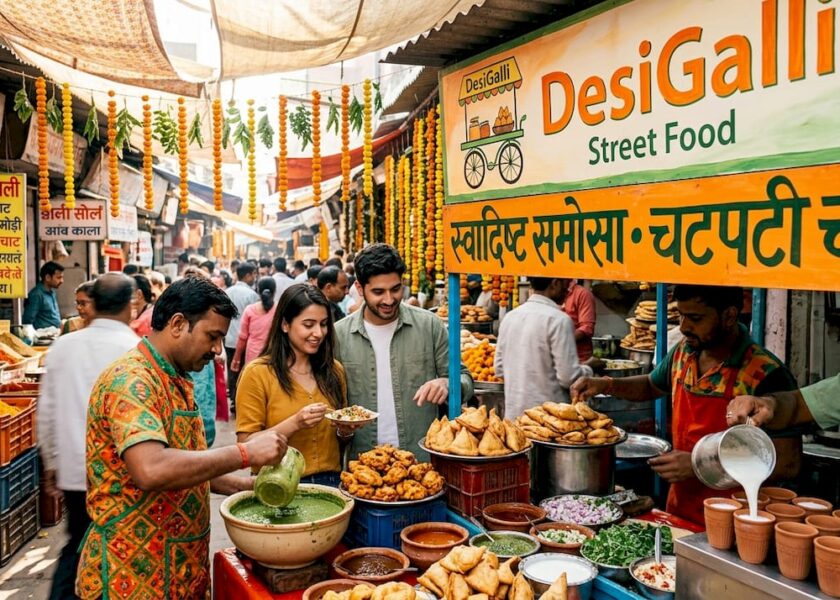

Spices are the defining architecture of Indian street snacks, transforming flour, lentils, and vegetables into dishes with layered sensory identities. The role of spices in street snacks extends far beyond seasoning: they create aroma, build texture, signal freshness, and carry cultural memory in every bite. Chaat masala, kala namak, amchur, and cumin are not interchangeable ingredients. Each performs a specific function within a precise flavour system. Understanding how these spices work, and why Indian street food vendors apply them the way they do, is the difference between replicating a dish and truly understanding it.
What is the flavour role of chaat masala in indian street snacks?
Chaat masala is the most recognisable spice blend in Indian street snacks, and it functions as a complete flavour system rather than a single seasoning. Serious Eats describes chaat masala as delivering salty, funky, spicy, and sour notes simultaneously through its core ingredients: kala namak and dried mango powder (amchur). That combination targets every major taste receptor in one sprinkle. No other spice blend in Indian cooking achieves the same breadth in a single application.
The individual components each carry a specific role:
- Amchur (dried mango powder): Delivers sharp, fruity sourness without adding liquid. It brightens the overall flavour and cuts through richness in fried snacks like papri chaat.
- Kala namak (black salt): Provides a savoury, sulphurous depth that table salt cannot replicate. It is the backbone of chaat masala’s distinctive “funky” quality.
- Cumin (roasted): Adds an earthy, smoky warmth. Roasting before grinding amplifies its essential oils and removes raw bitterness.
- Coriander: Contributes citrus-adjacent brightness and rounds off the sharper notes from amchur and kala namak.
- Chili: Brings heat, but also a dry, fruity undertone that lifts the blend’s overall complexity.
Chaat masala is classified as a finishing blend, not a cooking spice. Adding it after assembly preserves its top-note aromas, which heat would dissipate or dull. Sprinkle it on papri chaat, fruit chaat, or roasted chickpeas immediately before serving. Cooking it into a sauce destroys the very qualities that make it worth using.
Pro Tip: Make a small batch of chaat masala at home by dry-roasting cumin and coriander seeds separately before grinding. The difference in aroma compared to pre-ground versions is immediate and significant.
For food bloggers, presenting chaat masala as a “simple spice powder” misses the story. It is a multi-sensory spice blend that targets sour, salty, spicy, and umami-adjacent notes in a single application. That framing gives your readers something genuinely useful to take away.
How do tempering and grinding shape flavour in street snacks?
Spice preparation technique determines flavour outcome as much as the spices themselves. Two techniques define Indian street snack cookery: tempering (tadka) and grinding. Both are misunderstood, and both reward precision.
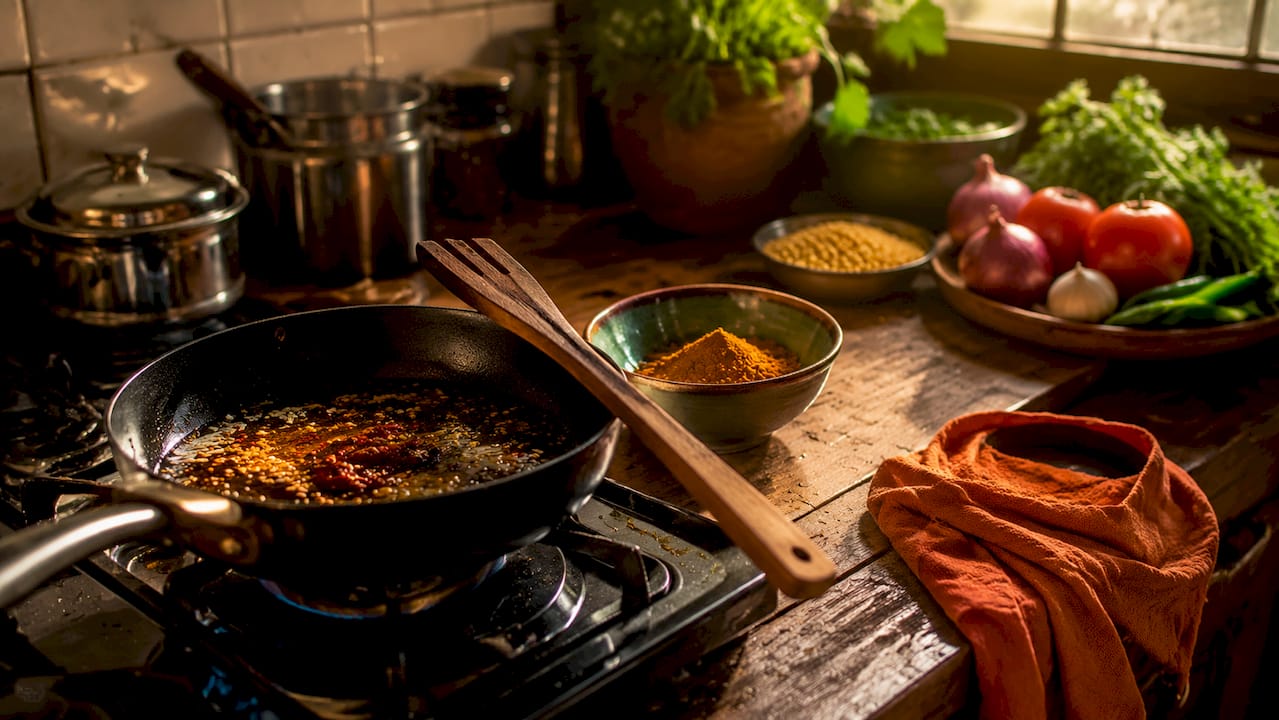
Tempering is the process of cooking whole spices briefly in hot fat to release their fat-soluble aromatic compounds. Wikipedia defines tempering) as a brief heat process that dissolves essential oils into fat, making those aromatics available throughout the dish. Fat acts as a transport medium, carrying flavour into every component it touches. This is why a tadka of mustard seeds, curry leaves, and dried chili transforms a simple lentil dish into something with genuine depth.
The technique requires control. UmamiCart’s 2026 guide to tadka identifies precise temperature and timing as the critical variables. Underheat the fat and the spices release nothing useful. Overheat it and the essential oils burn, producing bitterness rather than aroma. The correct approach follows a clear sequence:
- Heat the fat (ghee, mustard oil, or neutral oil) until it shimmers but does not smoke.
- Add whole spices in order of density: harder seeds like mustard first, then cumin, then softer aromatics like curry leaves.
- Watch for the visual cue: seeds should splutter and pop within 20–30 seconds.
- Add the tempered fat immediately to the dish, or add wet ingredients directly to the pan to stop the cooking.
Grinding is equally consequential. Coarse grinding of spices in masala vada preserves crunch and releases essential oils gradually per bite, whereas fine grinding accelerates bitterness and removes textural contrast. South Indian street vendors who make masala vada understand this intuitively. The broken spice pieces inside the batter are not a shortcut. They are a deliberate choice that produces a more complex eating experience.
Pro Tip: When grinding spices for street snack blends, pulse rather than blend continuously. A coarser grind retains more aromatic variety and gives your finished dish better textural contrast.
Why is kala namak indispensable in street food?
Kala namak, also called black salt or Himalayan black salt, is defined by its sulphurous mineral composition. Its distinctive egg-like aroma comes from hydrogen sulphide and other sulphur compounds formed during volcanic processing. That aroma is precisely what makes it irreplaceable in chaat masala and several other Indian street food applications.
The contrast with table salt is significant:
- Flavour intensity: Kala namak delivers a complex, mineral-forward savouriness. Table salt delivers only sodium chloride sharpness.
- Aroma: Kala namak has a detectable sulphurous smell even before tasting. Table salt is odourless.
- Usage quantity: Kala namak is more potent per gram. Recipes that call for it require less than you would use of regular salt.
- Applications: Chaat masala, raitas, jal jeera (a cumin-spiced drink), and fruit salads all rely on kala namak for their characteristic depth.
Kala namak must be treated as a potent flavour ingredient with its own intensity curve, not as a direct substitute for table salt. Using it at table-salt quantities overwhelms a dish. The correct approach is to start with half the amount you would use of regular salt, taste, and adjust. Its sulphurous quality fades slightly when heated, which is another reason chaat masala is applied as a finishing blend rather than cooked into dishes.
For food bloggers covering spice blends in Indian street snacks, kala namak is one of the most compelling ingredients to write about. Its unusual aroma, volcanic origin, and specific culinary function give readers a concrete, memorable detail that generic spice content rarely provides.
How do spices contribute beyond flavour in indian street snacks?
Spices in Indian street snacks perform three functions beyond taste: they modify texture, extend ingredient usability, and allow real-time customisation at the point of sale. Understanding these roles explains why spice blends for vegetarian Indian dishes are structured the way they are, and why street food culture produces such consistent results under variable conditions.
Texture through particle size and oil release. Coarse spice particles in a batter or coating create micro-pockets of aroma and crunch. Fine spice powders integrate smoothly but sacrifice that textural contrast. The sensory layering in chaat-style blends targets sour, salty, heat, and cooling elements simultaneously, producing a multi-contrast eating experience that keeps the palate engaged.
Freshness management in street settings. Chaat’s layered condiment ecology allows vendors to use sour agents and spice blends to mask staleness and maintain palatability in ingredients that have been held for hours. Tamarind chutney, amchur, and chili all suppress off-notes that develop in cut vegetables and fried items over time. This is not deception. It is a practical application of flavour chemistry that has been refined over generations of street cooking.
Consumer-level customisation. Street vendors in Mumbai, Delhi, and Chennai routinely adjust spice levels per customer request. A single base of papri chaat can be served mild, medium, or fiery by varying the chaat masala and green chili chutney applied at assembly. This flexibility is built into the spice system by design.
| Spice Function | Example Ingredient | Street Snack Application |
|---|---|---|
| Sourness and brightness | Amchur (dried mango powder) | Papri chaat, fruit chaat |
| Sulphurous depth | Kala namak | Chaat masala, jal jeera |
| Earthy heat | Roasted cumin | Raita, chaat masala |
| Structural crunch | Coarse coriander seeds | Masala vada batter |
| Capsaicin heat | Dried red chili | Tempering, finishing blends |
Capsaicin from chili activates heat perception through the TRPV1 receptor pathway, and its intensity varies significantly between individuals. Street vendors who offer adjustable spice levels are, in effect, accommodating this biological variability. That is a sophisticated culinary insight embedded in what looks like a simple service choice.
Key takeaways
Spices in Indian street snacks function as a complete sensory system, not a collection of individual seasonings, and mastering their roles requires understanding chemistry, technique, and cultural context together.
| Point | Details |
|---|---|
| Chaat masala is a flavour system | It targets sour, salty, spicy, and funky notes simultaneously through amchur and kala namak. |
| Finishing timing preserves aroma | Apply chaat masala after assembly, not during cooking, to retain its top-note sulphurous and tangy qualities. |
| Tempering requires precision | Fat temperature and spice sequence determine whether essential oils release correctly or burn. |
| Grind size shapes texture | Coarse grinding retains crunch and aromatic variety; fine grinding increases bitterness and smoothness. |
| Kala namak is not a salt substitute | Use it at half the quantity of table salt and treat its sulphurous aroma as a flavour ingredient in its own right. |
What i have learned from spices in indian street food
The most common mistake food bloggers make with Indian spice content is treating each spice as a standalone ingredient rather than a component in a system. Chaat masala does not work because amchur is sour. It works because amchur’s sourness is balanced by kala namak’s mineral depth, cumin’s smokiness, and chili’s dry heat. Remove one element and the whole structure shifts.
I have found that the most useful thing you can do before writing about a spice blend is to taste each component individually. Smell kala namak before you use it. Taste amchur on its own. Roast cumin and notice how the aroma changes within 90 seconds in a dry pan. That direct sensory experience gives you language and authority that no recipe card provides.
Tempering is where most home cooks and bloggers underinvest their attention. The chemistry is straightforward: fat carries aromatic compounds, heat releases them, timing determines whether you get fragrance or bitterness. Once you understand that sequence, you can troubleshoot any Indian dish that tastes flat. The answer is almost always in the tadka.
The cultural dimension matters too. Spice blends in Indian street snacks are not fixed formulas. They are living systems shaped by regional ingredients, vendor creativity, and customer preference. A chaat masala from Delhi will differ from one made in Mumbai. That variation is the story. For food bloggers, pairing Indian spices with the right dishes and explaining why specific combinations work is far more valuable content than listing ingredients. Give your readers the reasoning, and they will trust your expertise on every dish you cover after that.
— YellowRock
Taste the spice system at Desigallibcn in barcelona
Desigallibcn brings the full spice architecture of Indian street food to Barcelona, with dishes built on the same chaat masala, kala namak, and tempering techniques described in this article. Every plate at Desi Galli reflects the flavour logic of Indian street markets: layered, precise, and designed to engage every part of the palate.
If you want to experience authentic Indian street food rather than just read about it, Desigallibcn is the place to start in Barcelona. The menu covers samosas, chaat, curries, and vegetarian options that demonstrate exactly how these spice blends perform in practice. You can also explore Indian food classics like papri chaat and masala snacks that put every technique from this article on the plate in front of you. For culinary enthusiasts and food bloggers, a meal at Desigallibcn is primary research.
FAQ
What is the primary role of chaat masala in street snacks?
Chaat masala functions as a finishing spice blend that delivers sour, salty, spicy, and funky flavour simultaneously through amchur and kala namak. It is applied after assembly to preserve its aromatic top notes.
How does tempering (tadka) improve flavour in indian street food?
Tempering releases fat-soluble essential oils from whole spices into hot fat, distributing aromatic compounds throughout the dish. Precise temperature control determines whether the result is fragrant or bitter.
What makes kala namak different from regular table salt?
Kala namak contains sulphur compounds that produce a distinctive egg-like aroma absent in table salt. It is more potent per gram and should be used at roughly half the quantity of regular salt.
Why do indian street snacks use coarse-ground spices in some recipes?
Coarse grinding in dishes like masala vada preserves textural crunch and releases aromatic oils gradually per bite. Fine grinding accelerates bitterness and removes the textural contrast that defines these snacks.
Can spice blends extend the usability of street food ingredients?
Sour agents like amchur and tamarind, combined with chili and salt, suppress off-notes in ingredients held for extended periods at street stalls. This is a practical application of flavour chemistry refined through generations of street cooking.
Recommended
- Street food pairing ideas for Indian flavour lovers – Desi Galli
- Indian spices list 2026: a home cook’s guide – Desi Galli
- Advantages of street food experience: a global guide – Desi Galli
- Indian food pairing tips for your Barcelona street food – Desi Galli