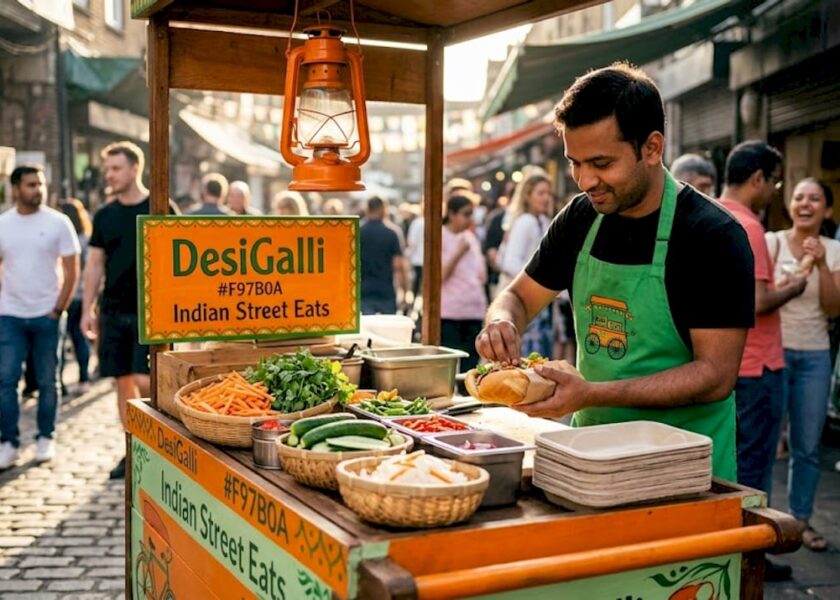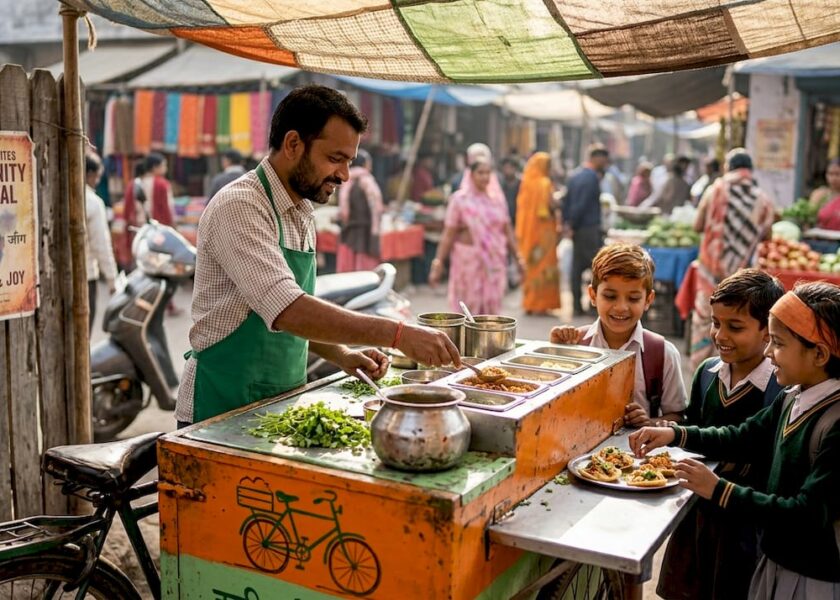

Walking into an Indian restaurant in Barcelona for the first time can feel both thrilling and slightly bewildering. Most people assume they’ll encounter a simple menu of tikka masalas and naan bread, but the reality is far richer, more layered, and honestly more exciting than that. Barcelona’s Indian dining scene has quietly evolved into a vibrant celebration of regional street food, bold spices, and genuine culinary traditions that stretch well beyond the standard curry-house formula. This article gives you everything you need to order confidently, navigate etiquette comfortably, and truly savour every bite.
Table of Contents
- How Indian restaurant menus are structured
- Managing spice levels and flavour contrasts
- Dining etiquette and sharing culture: What’s authentic and what’s local
- Discovering authentic street food in Barcelona
- What most guides miss: Surprising realities for adventurous diners
- Explore authentic Indian street food in Barcelona
- Frequently asked questions
Key Takeaways
| Point | Details |
|---|---|
| Menu structure matters | Indian restaurant menus follow categories—using them helps you create a balanced meal. |
| Spice control | You can request spice levels to suit your taste and add cooling condiments for balance. |
| Dining etiquette | Sharing is encouraged and eating with fingers for snacks is traditional, but utensils are widely accepted. |
| Street food focus | Look for venues highlighting street-food classics like samosas and pakoras to get an authentic experience. |
| Overcome menu overwhelm | Anchoring your order with a starter, contrasting mains, bread/rice, and cooling sides reduces confusion. |
How Indian restaurant menus are structured
The first thing to understand is that an Indian restaurant meal is usually structured in clear categories: starters and snacks, mains and curries, breads and rice, plus cooling sides like raita and condiments such as pickles and chutneys. This isn’t random. Each category plays a specific role in balancing the meal’s temperature, texture, and intensity.
In Barcelona, this structure often leans visibly towards street food. Menus regularly open with an impressive snack section featuring samosas, pakoras, chaat, and aloo tikki. These aren’t just appetisers; they’re the soul of the menu. The flavours and rituals of Indian street food are deeply tied to how Indians eat on the move, and restaurants here faithfully recreate that energy in a seated setting.
When it comes to building a satisfying meal, experts recommend a balanced first order that includes a starter or appetiser, one vegetarian curry, one non-vegetarian curry if you eat meat, a rice or biryani dish, at least one bread, and an optional cooling side or condiment. This framework works brilliantly whether you’re dining solo or with a group.
Here’s a quick look at how menu categories compare:
| Menu category | Typical items | Purpose |
|---|---|---|
| Starters and snacks | Samosas, pakoras, chaat, aloo tikki | Light bites, street-food experience |
| Mains and curries | Butter chicken, dal makhani, palak paneer | Hearty, flavour-forward centrepiece |
| Breads and rice | Naan, roti, basmati, biryani | Base to absorb and balance |
| Sides and condiments | Raita, mango chutney, pickle | Cooling, contrasting, palate-cleansing |
To get the most out of your visit, consider the following approach:
- Start with one or two street-food snacks to warm up your palate.
- Choose one creamy curry and one spicier option for contrast in your mains.
- Order both a bread and a rice dish if dining with others, so you have variety.
- Always include a raita or chutney to moderate heat between bites.
The authentic Indian street food steps to a great meal are simpler than they look once you understand this logical structure. Think of it less like reading a complicated foreign document and more like assembling a playlist. Every dish has its moment.
Managing spice levels and flavour contrasts
One of the most common fears among first-time diners is the spice. The good news? Spice levels can be adjusted on request at most Indian restaurants, and any good establishment will happily tailor the heat to your preference. Never assume the menu’s default is fixed.
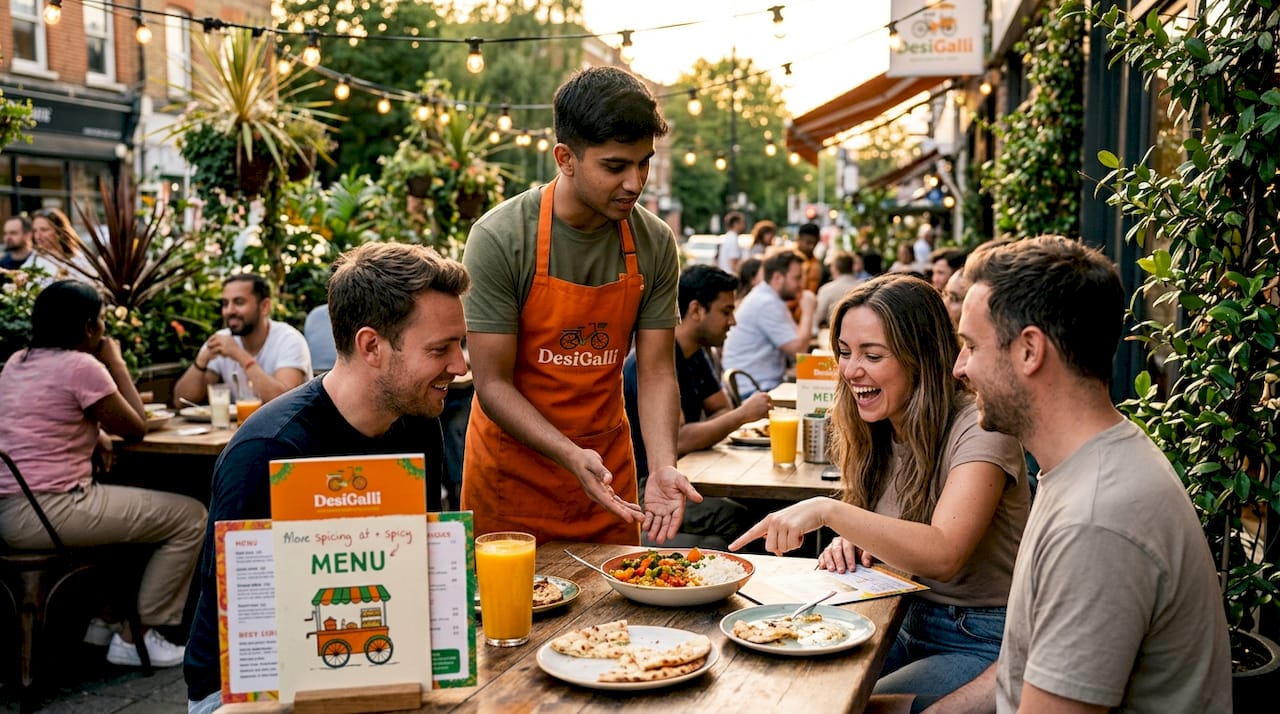
This is worth repeating because so many people walk in, see words like “chilli” or “masala,” and immediately order the blandest item they can find. That’s a missed opportunity. Even dishes labelled mild carry complex layers of flavour from aromatic spices such as cumin, coriander, cardamom, and turmeric. None of these are necessarily “hot.” Heat and flavour are two entirely different things in Indian cooking.
Here’s a useful reference for understanding spice levels:
| Spice level | What to expect | Best paired with |
|---|---|---|
| Mild | Aromatic, warming, no burn | Ideal for first-timers; try a korma or dal |
| Medium | Gentle heat with depth | Good all-rounder; works with most dishes |
| Spicy | Noticeable heat, vibrant intensity | Pair with raita or lassi to cool down |
| Extra spicy | Significant burn, bold flavour | For experienced spice lovers only |
Understanding flavour contrasts is equally important. Ordering two creamy curries together produces a monotonous meal. Instead, try pairing a rich, buttery dish like dal makhani with something bright and tangy like a vegetable jalfrezi. The contrast makes each dish taste more vivid by comparison. This is precisely why the benefits of Indian street food extend far beyond nutrition; variety and contrast are built into the cuisine’s philosophy.
Pro Tip: Before your food arrives, mention your spice preference clearly when ordering. A simple “medium, please, but on the lower end” gives the kitchen useful information and avoids any unpleasant surprises mid-meal.
The authentic Indian gastronomy checklist for any visit should include a raita or yoghurt-based condiment. Even if you enjoy heat, raita cleanses your palate between bites and makes subsequent flavours crisper and more distinct.
Key tips for managing spice and flavour:
- Ask staff to rate dishes on heat intensity before ordering.
- Order a mango lassi; it’s one of the most effective heat neutralisers available.
- Avoid drinking water to cool spice, as it spreads capsaicin. Dairy is far more effective.
- Request sauces on the side for dishes you’re uncertain about.
Dining etiquette and sharing culture: What’s authentic and what’s local
Indian dining culture has its own rich set of customs, but don’t worry. You don’t need a crash course in traditional etiquette to enjoy a meal in Barcelona. What you do need is a basic awareness of how sharing and eating styles work, so you can relax and participate fully.
In India, sharing dishes and using hands for many foods is standard practice. Utensils are generally used for liquid dishes like curries and dal, while breads and snacks are traditionally eaten by hand. Wasting food is also considered impolite, as hospitality and abundance are deeply meaningful in Indian food culture.
“Sharing is the natural rhythm of an Indian meal. It’s not just practical; it reflects the idea that food is communal, generous, and best enjoyed together.”
In Barcelona’s restaurants, these customs are welcomed but never enforced. Here’s what to expect in a typical setting:
- Sharing is encouraged. Order two or three dishes between you and pass them around the table. This is genuinely the best way to experience a wide range of flavours in one sitting.
- Utensils are always provided. No Barcelona restaurant will expect you to eat dal with your fingers. Forks and spoons are on the table; use them freely.
- Eating bread by hand is perfectly acceptable. Tear off a piece of naan, scoop up some curry, and enjoy. This is actually the most satisfying way to eat it.
- Avoid leaving large amounts of food uneaten. It’s not a strict rule here, but ordering mindfully is appreciated and culturally resonant.
- Don’t be shy about asking staff for guidance. Restaurants catering to tourists and Barcelona locals are very used to newcomers and genuinely enjoy explaining the menu.
The popularity of Indian street food in the city partly stems from how accessible and unpretentious it feels. Unlike some fine-dining experiences where etiquette can feel anxiety-inducing, Indian street food invites you to be relaxed, curious, and a bit messy in the best possible way.
Pro Tip: If you’re unsure whether a dish is meant to be shared or served individually, just ask. Staff at Indian restaurants in Barcelona are used to this question and will happily clarify.
Discovering authentic street food in Barcelona
Barcelona’s Indian food scene has grown remarkably in recent years, and the most exciting corner of it is the street-food segment. Rather than simply offering a menu of classic curries, several venues now centre their entire identity around the kind of food you’d find at a stall in Mumbai or Delhi.
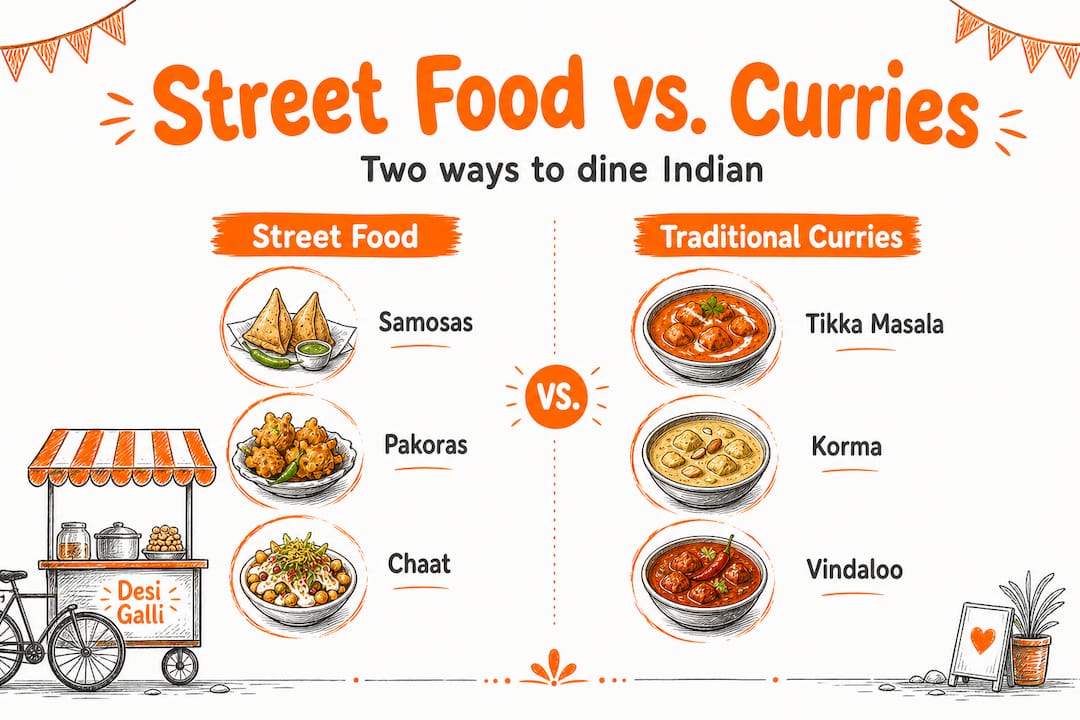
The benchmarks for authentic street food are clear: samosas, pakoras, and chaat. These three items tell you almost everything you need to know about a kitchen’s commitment to genuine street-food flavours. A properly made samosa should be golden, crisp, and packed with spiced potato and peas. Pakoras should be light and crunchy, not oily. Chaat should be an explosion of sweet, sour, and tangy, all at once.
Here’s how street-food starters compare to typical curry-restaurant fare:
| Dish type | Street-food experience | Traditional curry focus |
|---|---|---|
| Samosas | Crisp, spiced, served with tamarind chutney | Sometimes offered as a side |
| Pakoras | Light, battered vegetables or paneer | Occasional starter |
| Chaat | Complex layered dish with multiple condiments | Rarely on the menu |
| Curry | Present but secondary to snacks | Central to the menu |
| Bread | Served fresh to accompany snacks | Standard accompaniment |
When searching for the right venue, look for places that explicitly position themselves around Indian street food and earn strong reviews specifically mentioning the quality of their snacks. This is a reliable indicator of authenticity and kitchen skill.
For a broader sense of how Barcelona’s Indian food fits into the wider European street food landscape, the European street food guide offers useful context on how cities across the continent are embracing authentic international street cuisines.
What to look for when choosing a street-food venue:
- Menus that lead with snacks and small plates rather than burying them at the bottom.
- Reviews that specifically mention chaat, pani puri, or bhel puri alongside samosas.
- Venues that offer fresh chutneys and tamarind sauces made in-house.
- Casual atmospheres that reflect the energy of an actual street market.
Desi Galli stands out as a destination for exactly this kind of experience. The authentic Indian street food in Barcelona you’ll find there is rooted in real culinary tradition, served with the kind of vibrant energy that makes street food so compelling in the first place. For those wanting a broader taste of what’s on offer in the city, the Indian street food experiences page is a great starting point.
What most guides miss: Surprising realities for adventurous diners
Most articles about Indian restaurants spend their time listing dishes. What they rarely address is the psychological side of ordering, specifically the mild panic that sets in when you open a 40-item menu and recognise very little. This is something we understand well, having watched it happen at our own tables more times than we can count.
The solution isn’t memorising a glossary of Indian dish names. It’s using the category framework we outlined earlier as your anchor. Start at the top of the menu and work down. Starters first, then mains, then bread and rice, then sides. Within each category, pick based on spice preference and protein. The structure does the heavy lifting.
Street food venues in Barcelona are particularly forgiving for newcomers. The menus tend to be shorter, the staff more conversational, and the expectation of sharing means you’re rarely locked into one dish. If something doesn’t suit you, there’s always something else on the table to reach for.
What genuinely surprises most first-time visitors is how relaxed the etiquette feels compared to what they’d read online. Strict Indian customs around hand-washing, seating order, and food hierarchy don’t translate rigidly to the Barcelona restaurant context. What remains is the warmth, the generosity of portions, and the sense that food is meant to be enjoyed together.
Our strong opinion: don’t overthink it. Anchor your order using the steps to enjoy authentic Indian street food and trust your instincts. Choose a starter you’re curious about, pick contrasting mains, add a bread and rice, and grab a cooling condiment. That’s genuinely all you need to have an outstanding meal.
The most adventurous thing you can do isn’t ordering the spiciest dish on the menu. It’s letting go of the assumption that Indian food needs to be navigated carefully and allowing yourself to simply explore.
Explore authentic Indian street food in Barcelona
Barcelona’s Indian street food scene deserves to be experienced firsthand, and Desi Galli is the place to start. Whether you’re a seasoned fan of South Asian cuisine or entirely new to these flavours, the menu offers something that speaks to genuine culinary curiosity.
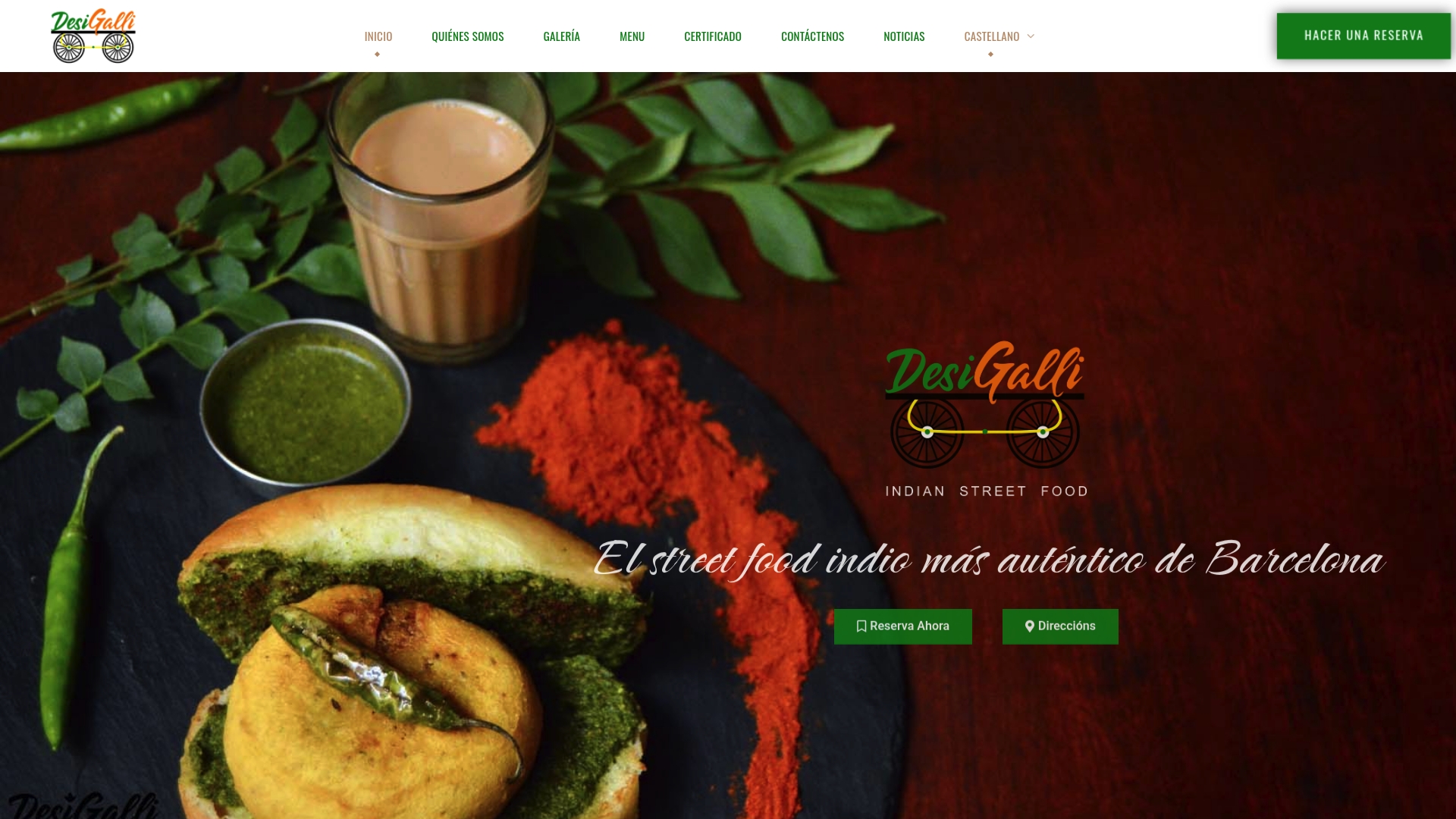
At Desi Galli, you’ll find the kind of bold, vibrant, and unpretentious food that defines real Indian street culture. From crisp samosas to layered chaat and fragrant curries, every dish is rooted in tradition and crafted with quality ingredients. The restaurant’s flavours and rituals page gives you a taste of the experience before you even arrive, and the menu is designed to guide both newcomers and regulars towards their perfect order. Come hungry, bring friends, and let the food do the talking.
Frequently asked questions
Is it okay to use utensils in an Indian restaurant in Barcelona?
Yes, most Barcelona Indian restaurants provide utensils and expect newcomers to use them, especially for curries. The local dining norms are more relaxed than traditional Indian customs, and staff will always guide you if you’re unsure.
How spicy is Indian food in Barcelona restaurants?
Spice levels are usually adjustable, so just ask for mild, medium, or spicy, as most places are happy to cater to your preference. The ability to manage heat on request means you’re never stuck with more than you bargained for.
Can I just order snacks like samosas and pakoras as my meal?
Yes, street food-focused restaurants in Barcelona often allow you to build a meal entirely from snack starters and even encourage it. Tripadvisor reviews consistently describe these snacks as satisfying meal options in their own right.
Is sharing food expected or required?
Sharing is typical in Indian restaurants but never required. Indian dining etiquette encourages family-style eating to explore multiple flavours, but Barcelona restaurants are relaxed about individual orders.
What’s the best way to order if overwhelmed by the menu?
Anchor your order with a starter, choose contrasting main dishes, add bread and rice, and include a cooling side or condiment for balance. This balanced ordering framework makes even the longest menu feel manageable.
Recommended
- How to book an Indian restaurant for parties in Barcelona – Desi Galli
- Indian street food: Flavours, rituals and where to try in Barcelona – Desi Galli
- Steps to enjoy authentic Indian street food in Barcelona – Desi Galli
- Casual Indian street food and authentic flavours in Barcelona – Desi Galli