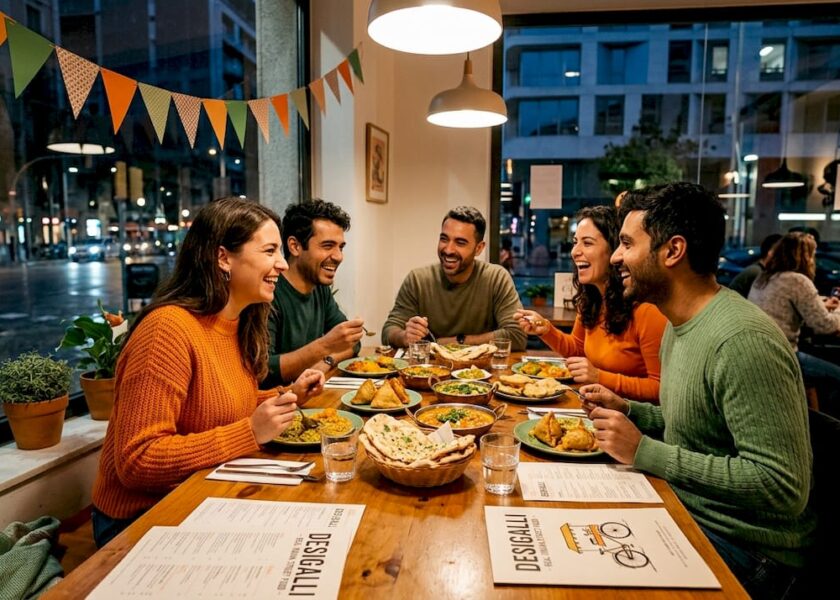
Indian tapas is defined as a modern dining format that reimagines traditional Indian snacks and street food into small, shareable plates designed for communal eating and culinary exploration. The concept draws directly from India’s own deep-rooted culture of sharing food, then layers on the social energy of tapas-style service. Cities like London and New York have seen demand for small plates rise 25–30% by 2025, and Indian cuisine sits at the centre of that shift. What makes Indian tapas genuinely exciting is not the Spanish borrowing. It is the way it unlocks regional Indian flavours, from Keralan coastal bites to Punjabi street snacks, that rarely appear together on a single menu.
What is indian tapas and what dishes define it?
Indian tapas is a curated selection of small, shareable plates built from the full spectrum of India’s regional snack traditions. The format borrows the service style of Spanish tapas but the flavours, ingredients, and cultural logic are entirely Indian. Think of it as a tasting journey across a subcontinent, compressed into four to eight dishes per table.
Common dishes on an indian tapas menu
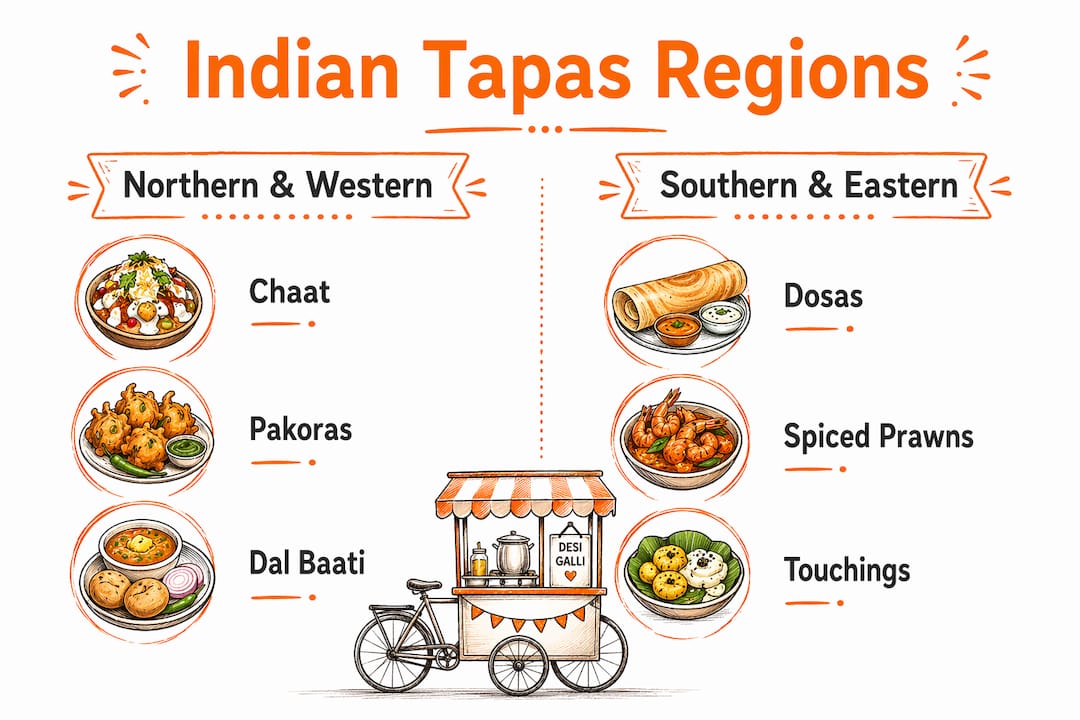
The most popular Indian tapas dishes include chaat, pakoras, dosas, and coastal small plates, all presented with modern plating and portion control. Chaat, the tangy street snack built on chickpeas, tamarind, and yoghurt, translates brilliantly into a small plate because every bite already delivers a complete flavour experience. Pakoras, the spiced fritters made from vegetables or paneer, work as a shared starter in the same way Spanish croquetas do.
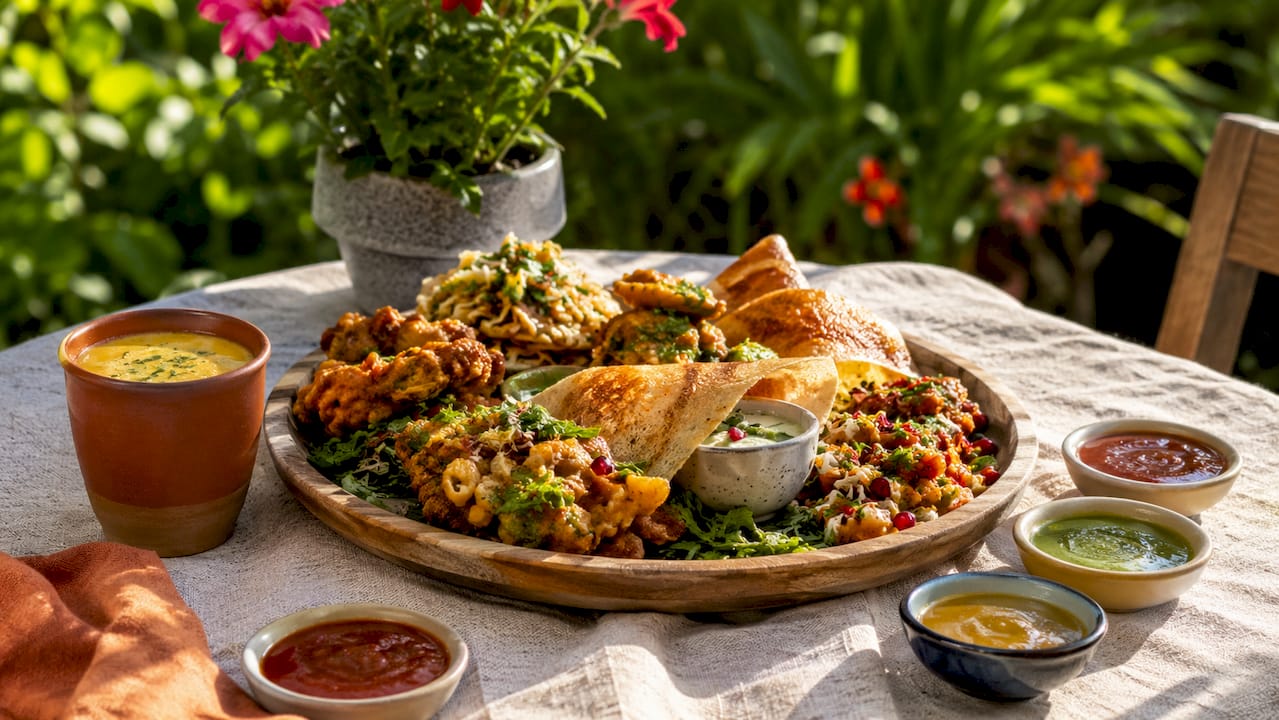
More creative menus push further. Dishes like Burrata Tokri Chaat, dosa-inspired onion rings, and Dal Baati tarts show how chefs blend regional Indian recipes with contemporary plating techniques. These are not fusion experiments. They are reframings of dishes that already existed, given a format that suits modern restaurant dining.
Regional diversity and dietary flexibility
Indian tapas draws from North Indian, South Indian, East Indian, and West Indian traditions. That regional breadth is one of its defining strengths. A single menu might feature a Rajasthani lentil tart alongside a Goan prawn bite and a Bengali mustard fish cake.
The format also suits a wide range of dietary needs. Vegetarian and vegan options are abundant because Indian cuisine already relies heavily on vegetables, pulses, and dairy. Gluten-free dishes appear naturally across South Indian rice-based snacks and many chaat preparations. For diners with dietary restrictions, Indian small plates often offer more genuine choice than a standard curry house menu.
Pro Tip: When ordering Indian tapas for the first time, choose dishes from at least three different regions. You will get a far more accurate picture of how varied Indian cooking actually is.
How does indian tapas reflect india’s communal dining culture?
Indian tapas is not a Western invention applied to Indian food. It is a formalisation of how Indians have always eaten. Sharing food is the default mode of dining across the subcontinent, from family meals where every dish sits at the centre of the table to street food stalls where strangers eat side by side.
“Indian tapas encourages social eating and offers a convivial atmosphere that contrasts sharply with the formal, individual-plate dining of traditional curry houses.” — Evening Standard
Kerala’s ‘touchings’: the cultural ancestor of indian tapas
The clearest cultural precursor to Indian tapas comes from Kerala. Kerala’s ‘touchings’ are small, intensely spiced side dishes traditionally served alongside toddy in local drinking dens. The name comes from the practice of eating these small bites while drinking, touching the food between sips. A Keralan chef recently built an entire New York City restaurant concept around this tradition, proving that the cultural logic was always there. It simply needed a format that Western diners could recognise.
This matters because it reframes the entire conversation. Indian tapas is not India borrowing from Spain. It is India’s own communal snacking culture finding a name that global audiences understand. The authentic roots of Indian small plates run far deeper than the marketing term suggests.
Social dining and the modern evolution
Traditional curry house dining placed a large plate in front of each diner and kept conversation secondary to consumption. Indian tapas reverses that dynamic. Dishes arrive in rounds, decisions are made collectively, and the meal becomes a shared event rather than a parallel one. That shift in social energy is a large part of why the format has grown so quickly in cities with active food cultures.
Why is indian tapas growing in popularity worldwide?
The global rise of Indian tapas reflects two converging forces: diners want more variety and less commitment per dish, and Indian cuisine has the regional depth to deliver it. Demand for small plates rose 25–30% by 2025. That figure reflects a structural shift in how people want to eat out, not a passing trend.
What the numbers show
| City | Typical Spend Per Head | Format |
|---|---|---|
| London | £25–£40 | Curated sharing menus |
| New York | $30–$50 | Small plates with cocktail pairings |
| Barcelona | €20–€35 | Street food tapas style |
Dining spend in London at Indian tapas restaurants typically runs £25–£40 per person. That positions it above a standard curry house but below a tasting menu restaurant. The price point reflects the quality of ingredients and the kitchen labour involved in producing multiple small dishes to a consistent standard.
The chef’s perspective and kitchen challenges
Chefs see Indian tapas as a genuine creative opportunity. The format allows cross-cultural flavour pairings that a traditional curry menu would never accommodate. A chef can place a Keralan coconut prawn bite next to a Punjabi spiced lamb chop and a South Indian rice cake without the menu feeling incoherent.
The operational challenge is real, though. Producing eight to twelve distinct small dishes to a consistent quality requires a well-organised kitchen and tight menu curation. The best Indian tapas restaurants limit their menus deliberately. Tight menu curation is not a constraint. It is a quality decision that separates serious operators from those chasing a trend. You can explore how food trends are shaping Indian dining in 2026 to see how this plays out in practice.
Pro Tip: At a well-run Indian tapas restaurant, a shorter menu is a good sign. It means the kitchen is focused on doing fewer things exceptionally well.
How to order, share, and pair indian tapas
Getting the most from an Indian tapas meal requires a slightly different approach than ordering a standard restaurant meal. The decisions are collective, the pacing matters, and the cost can surprise you if you are not paying attention.
-
Start with three to four dishes for two people. Indian tapas portions are generous enough that over-ordering is easy. Order a first round, eat, then decide whether you want more. Experienced diners recommend sharing 3–4 dishes per person initially to gauge portion sizes before committing to more.
-
Balance your flavour profile across the table. Choose one dish that is rich and creamy, one that is sharp and tangy, one that is spiced and dry, and one that is light and fresh. That combination mirrors how a traditional Indian meal is structured, with contrasting textures and flavours working together.
-
Order across regions, not just cuisines you already know. If you always order tikka masala, use Indian tapas as a chance to try something from South India or the coastal regions. The format exists precisely to make that kind of exploration low-risk.
-
Pair with drinks that can handle bold spice. Cocktails built around mango, tamarind, or ginger work well because they echo the flavour logic of the food. Lighter lagers and sparkling wines also cut through rich spiced dishes effectively. Avoid heavy red wines, which tend to clash with the acidity and heat in chaat-based dishes.
-
Watch the bill as you go. Ordering many small dishes can escalate costs faster than a traditional set meal. Order in rounds rather than all at once, and you will have a much clearer sense of what you are spending. This is the single most practical piece of advice for anyone new to the format.
Key takeaways
Indian tapas is the most accessible and culturally honest way to explore the full breadth of Indian regional cuisine in a single sitting.
| Point | Details |
|---|---|
| Core definition | Indian tapas are small, shareable Indian dishes served in a tapas-style format rooted in communal dining. |
| Cultural roots | Kerala’s ‘touchings’ and Indian street food traditions predate the tapas label by centuries. |
| Regional variety | A well-designed menu draws from North, South, East, and West Indian cooking traditions. |
| Ordering strategy | Start with 3–4 dishes per person and order in rounds to manage both flavour balance and cost. |
| Global growth | Demand for small plates rose 25–30% by 2025, with London and New York leading the Indian tapas scene. |
Why indian tapas matters more than the name suggests
The phrase “Indian tapas” is a marketing convenience, and I say that without criticism. It does the job of communicating a format to diners who might otherwise not know what to expect. But the concept it describes is far older and more interesting than the label implies.
What genuinely excites me about this format is what it does for regional Indian cooking. A standard curry house menu in London or Barcelona represents perhaps 15% of what Indian cuisine actually contains. It leans heavily on North Indian dishes, butter-based sauces, and a handful of bread options. Indian tapas breaks that template. When a chef puts a Keralan toddy shop snack next to a Bengali mustard preparation and a Rajasthani lentil bite, they are doing something that matters culturally. They are showing diners that India is not one cuisine. It is dozens.
The culinary experiences that stay with people are the ones that teach them something. Indian tapas, at its best, does exactly that. It is not just a way to eat. It is a way to understand a country through its food. The format will keep evolving, and the most interesting developments will come from chefs who go deeper into regional authenticity rather than broader into fusion novelty. That is the direction worth watching.
— YellowRock
Discover authentic indian street food at Desigallibcn
Desigallibcn brings the energy and flavour of Indian street food to the heart of Barcelona. The menu draws on the same traditions that define Indian tapas, from crispy samosas and tangy chaat to richly spiced curries, all served in a casual atmosphere that reflects the communal spirit of Indian dining.
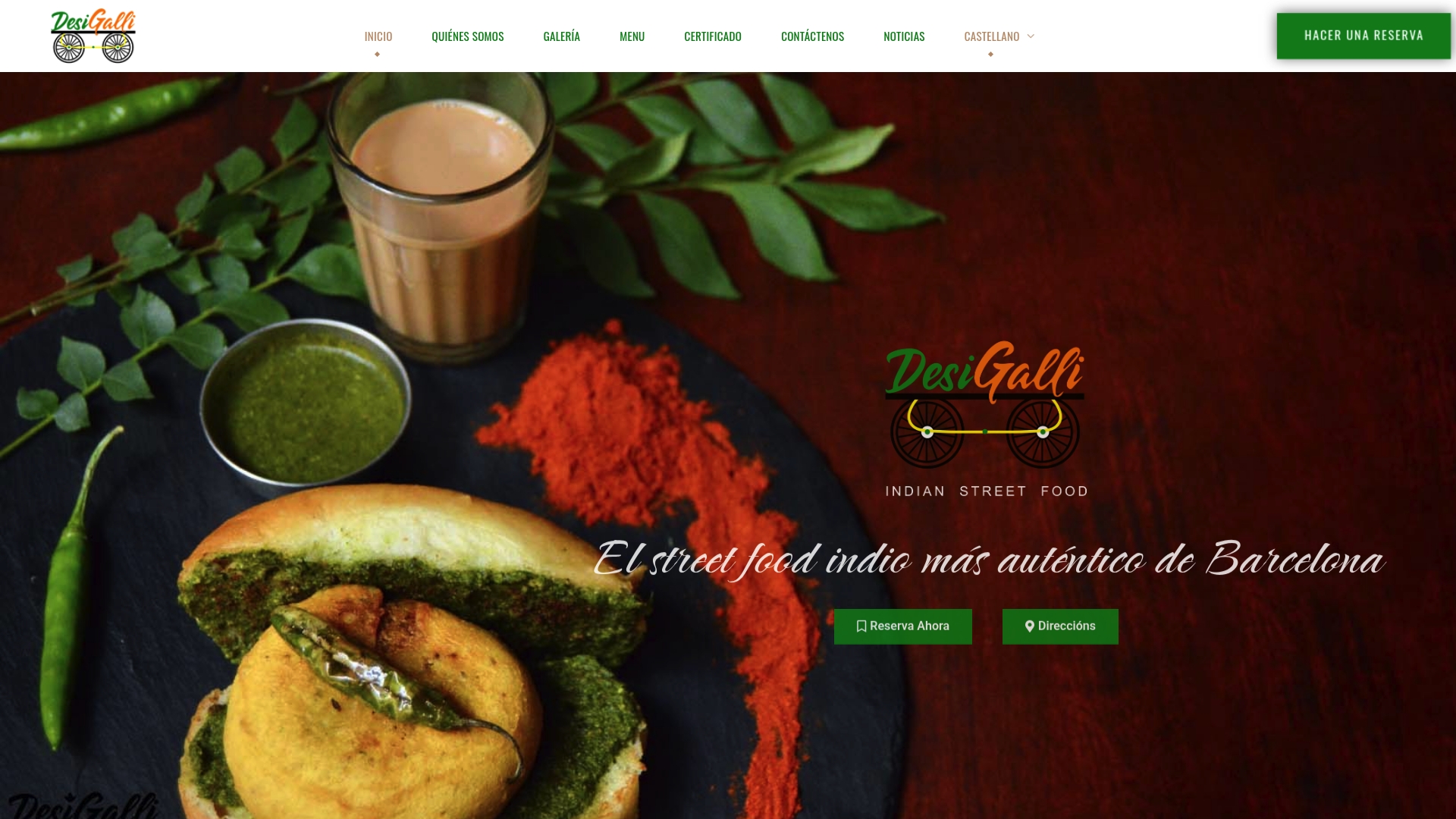
Whether you are new to Indian cuisine or a seasoned enthusiast, Desigallibcn offers a genuine entry point into the regional diversity that makes Indian food so compelling. Explore the full range of Indian street foods and cocktail pairings curated by the team, and finish your meal with one of the signature Indian street desserts that round off a sharing menu perfectly. Book your table and taste the real thing.
FAQ
What exactly is indian tapas?
Indian tapas is a modern dining format that serves traditional Indian snacks and regional dishes as small, shareable plates. The concept is rooted in India’s communal eating culture and draws on street food traditions from across the subcontinent.
What are the most popular indian tapas dishes?
Common Indian tapas dishes include chaat, pakoras, dosas, and coastal small plates such as spiced prawn bites. More creative menus feature dishes like Burrata Tokri Chaat, Dal Baati tarts, and dosa-inspired onion rings.
Is indian tapas vegetarian-friendly?
Indian tapas is one of the most vegetarian and vegan-friendly dining formats available. Indian cuisine relies heavily on vegetables, pulses, and dairy, so plant-based options appear naturally across most small-plate menus.
How much does indian tapas typically cost?
Dining at Indian tapas restaurants in London typically costs £25–£40 per person. Costs can rise quickly if you order many rounds, so ordering in stages is the most practical approach.
What is the cultural origin of indian tapas?
The clearest cultural ancestor is Kerala’s ‘touchings’, small spiced dishes served alongside toddy in local drinking dens. This tradition predates the tapas label and represents an authentic Indian precursor to the modern small-plates format.
Recommended
- 6 ideas de tapas indias para compartir y sorprender – Desi Galli
- What is indian comfort food? a cultural guide – Desi Galli
- Indian flavours: Authentic tastes and culinary secrets – Desi Galli
- Why embrace indian street flavours: a cultural guide – Desi Galli