
Step onto any busy street in Mumbai, Delhi, or Chennai and you will understand immediately that Indian street food is not simply a quick bite between meetings. It is a living, breathing ritual. The hiss of oil in a hot wok, the sharp tang of tamarind chutney, the press of shoulders at a crowded stall — these are not incidental details. They are the point. Barcelona may be thousands of kilometres from the subcontinent, but the city’s appetite for bold, vibrant, community-driven food has created a genuine home for these traditions. Here is everything you need to know before your first bite.
Table of Contents
- Understanding Indian street food: More than just a meal
- Iconic Indian street food dishes and preparation methods
- The street food culture of India: Scale, affordability and ritual
- Trends, authenticity and regional variations: What to look for in Barcelona
- How to enjoy Indian street food in Barcelona: Practical tips for food lovers
- The heart of Indian street food: Why authenticity beats imitation
- Where to experience Indian street food in Barcelona
- Frequently asked questions
Key Takeaways
| Point | Details |
|---|---|
| True street food culture | Indian street food is about community, sensory delight, and ritual, not just eating on the go. |
| Vegetarian-friendly options | Most classic Indian street foods are vegetarian, making them perfect for plant-based food lovers. |
| Affordability and value | Street food is both affordable and offers an opportunity to sample an array of traditional tastes. |
| Regional and modern diversity | From North to South India, dishes and flavours vary; Barcelona adds fresh spins while still celebrating tradition. |
| How to enjoy in Barcelona | Seek out venues specialising in authentic recipes, ask about preparation, and customise spice levels for your ideal experience. |
Understanding Indian street food: More than just a meal
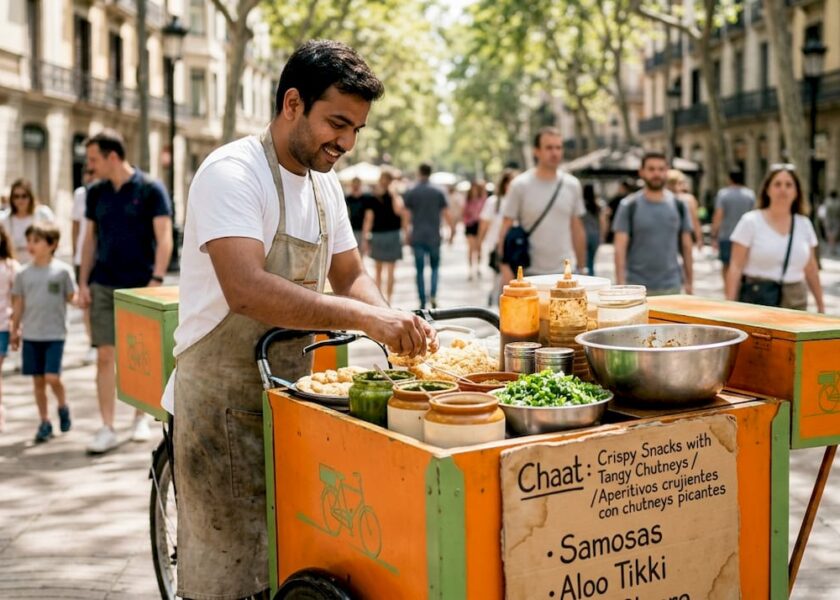
Most people arrive at their first Indian street food experience expecting something like a snack. What they actually encounter is closer to a performance. Every element is deliberate: the vendor’s practised hands assembling a chaat in seconds, the theatrical pour of chutneys, the communal press of strangers sharing a narrow bench. This is not convenience food. It is culture served on a leaf plate.
Street food’s popularity in Barcelona has grown precisely because food lovers here recognise that distinction. Barcelona already has a deep tradition of communal eating — think La Boqueria, think tapas shared across a table — so the democratic spirit of Indian street food resonates strongly.
“Indian street food thrives on sensory overload and community — sizzling sounds, spice aromas, shared plates — a democratic and cultural ritual. In Barcelona, spots recreate this vibrant street vibe with a vegetarian focus for curious tourists.”
What sets Indian street food apart from other global street cuisines is the layering. A single dish like pani puri carries sweet, sour, spicy, and savoury notes simultaneously. The textures shift between crisp, soft, creamy, and crunchy within a single mouthful. This complexity is not accidental. It reflects centuries of regional cooking tradition, religious dietary customs, and a deeply social way of eating.
Key reasons why Indian street food is a cultural ritual rather than mere convenience:
- Communal identity: Stalls become neighbourhood gathering points where stories, news, and laughter are exchanged alongside food.
- Religious and seasonal cycles: Many dishes are tied to festivals, fasting traditions, or harvests, giving them meaning beyond flavour.
- Generational craft: Recipes and techniques are passed down through families, with vendors often working the same spot for decades.
- Inclusive access: From schoolchildren to office workers to elderly residents, the same stall serves everyone at the same price.
In Barcelona, restaurants that honour this spirit recreate the atmosphere with traditional music, open kitchens, and menus built around sharing plates rather than individual portions.
Iconic Indian street food dishes and preparation methods
Understanding what you are eating transforms the experience entirely. Indian street food has dozens of iconic dishes, and the majority happen to be vegetarian. This is not a modern health trend. It reflects India’s long history of plant-based cooking, shaped by Hindu, Jain, and Buddhist dietary traditions.
The five most celebrated vegetarian street foods are worth knowing before you sit down:
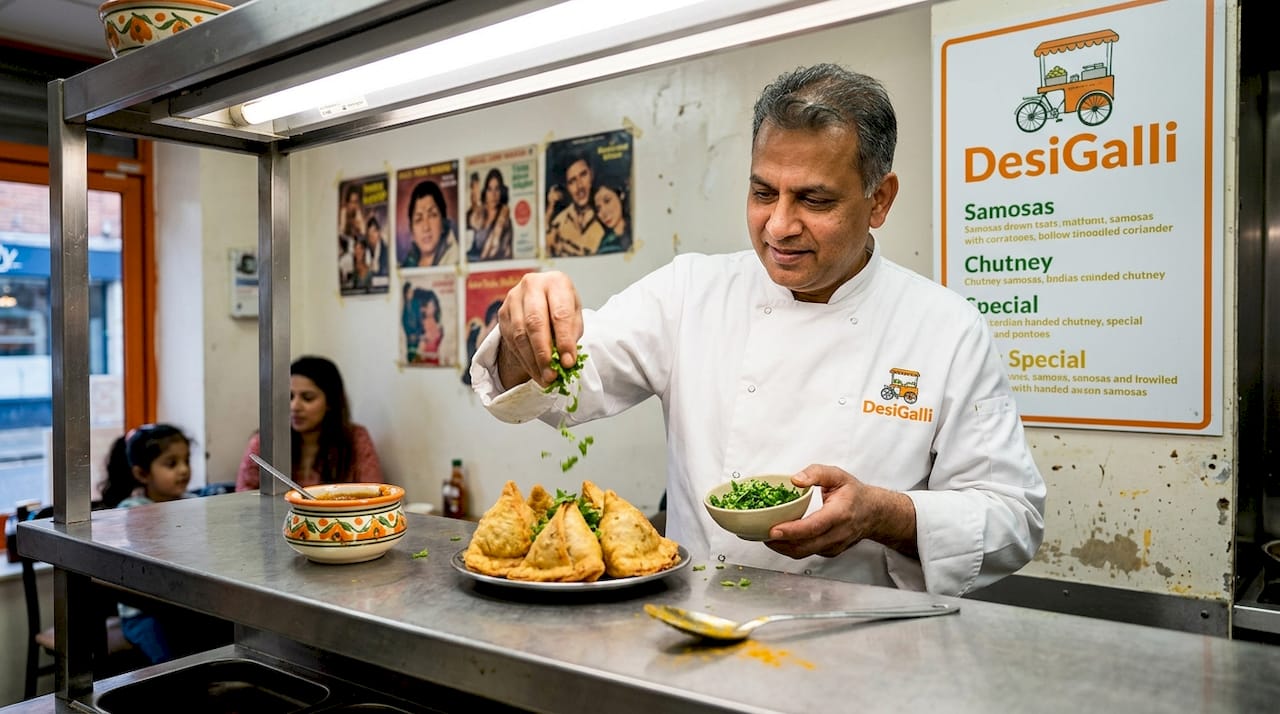
- Samosa: A triangular pastry filled with spiced potato and peas, deep-fried until golden. The crust should shatter slightly when you bite through it.
- Chaat: A broad category of savoury snacks assembled with chutneys, yogurt, sev (crispy chickpea noodles), and fresh herbs. Every region has its own version.
- Vada pav: Mumbai’s beloved street burger — a spiced potato fritter inside a soft bread roll, served with dry garlic chutney. Simple, filling, and addictive.
- Dosa: A thin, fermented rice and lentil crêpe from South India, typically served with sambar (a lentil soup) and coconut chutney. Crisp at the edges, slightly chewy at the centre.
- Idli: Steamed rice cakes, also fermented, with a pillowy texture. Lighter than most street foods and perfect for those new to bold spices.
Enjoying authentic Indian street food means appreciating how each dish is made. The key preparation methods include deep frying for pakoras, samosas, and vada pav; fermenting for dosa and idli batters; assembling chaats with chutneys, yogurt, and sev on puris or papdis; and tandoor grilling for breads and kebabs. Dishes are served immediately on disposable plates for quick consumption, preserving maximum freshness.
Here is a quick comparison between Indian street food preparation and typical fast food:
| Feature | Indian street food | Typical fast food |
|---|---|---|
| Preparation style | Fresh, made to order | Pre-cooked, reheated |
| Ingredient complexity | Multiple spices, chutneys, textures | Standardised, minimal seasoning |
| Dietary options | Predominantly vegetarian | Often meat-centred |
| Serving time | Seconds to two minutes | Minutes |
| Cultural significance | High — tied to region and ritual | Low |
| Customisation | High — spice, chutney, toppings | Limited |
Pro Tip: When ordering chaat or any assembled dish, ask staff to adjust the chutney balance. More tamarind gives sweetness and depth; more green chutney adds heat and freshness. Most good venues are happy to customise for your palate.
The street food culture of India: Scale, affordability and ritual
The numbers behind India’s street food scene are genuinely staggering. According to India’s street food market data, approximately 2.5 million vendors serve around 80% of India’s urban population daily, with the market valued at roughly ₹50,000 crore. Street food accounts for nearly 29% of the entire food service sector in India.
| Metric | Data |
|---|---|
| Number of vendors | ~2.5 million |
| Urban population served daily | ~80% |
| Market value | ~₹50,000 crore |
| Share of food service sector | ~29% |
| Average meal cost | Equivalent of a few euros |
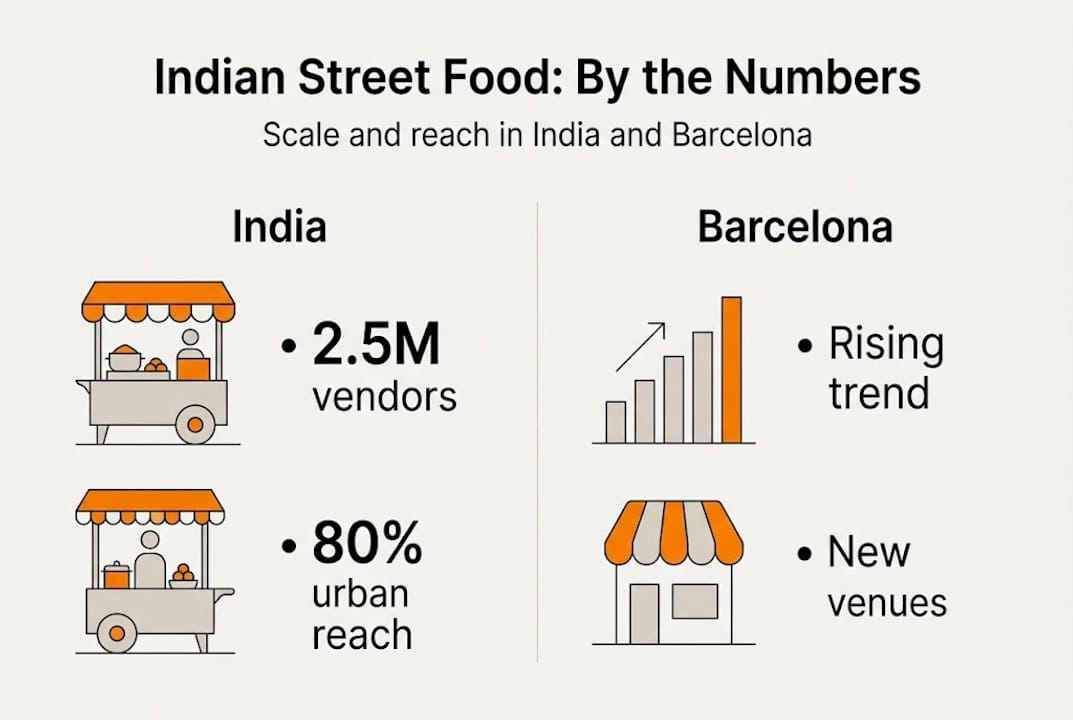
These figures explain why street food is not a niche interest in India. It is the backbone of daily eating life. For millions of workers, students, and families, a meal from a street stall is breakfast, lunch, or dinner — not a novelty.
What makes this culture so captivating to visitors is the contrast between the apparent chaos and the extraordinary consistency of quality. A vendor who has been making the same pani puri for thirty years develops a precision that no restaurant kitchen can fully replicate. The benefits of Indian street food extend beyond flavour: the affordability, the freshness of daily-prepared ingredients, and the social warmth of the experience all contribute to its enduring appeal.
Barcelona’s Indian food scene adapts this culture thoughtfully. Rather than the open-air chaos of a Delhi bazaar, you get a curated version: the same bold flavours, the same communal spirit, but within a clean, comfortable setting that suits the city’s dining expectations. The street food experience in Barcelona has evolved to honour the original while making it accessible to a European audience.
Key characteristics of India’s street food culture that translate well to Barcelona:
- Speed and freshness: Dishes assembled in front of you, ingredients prepared that morning.
- Affordability: Accessible price points that encourage trying multiple dishes rather than committing to one.
- Variety: A single menu can span North Indian, South Indian, and Western regional styles.
- Social eating: Sharing is expected and encouraged, making it ideal for groups.
Trends, authenticity and regional variations: What to look for in Barcelona
India is not a monolith. Its street food reflects enormous regional diversity, and understanding this helps you navigate a menu with genuine confidence. The regional differences are significant: chaat culture dominates the North, particularly in Delhi and Uttar Pradesh; dosa and idli define the South, especially Tamil Nadu and Karnataka; vada pav is inseparable from Mumbai’s identity in the West.
These are not interchangeable. A Delhi-style papdi chaat has a completely different flavour profile from a Chennai dosa, even though both are vegetarian, both are inexpensive, and both are eaten standing up. Recognising which region a dish comes from adds an entirely new layer of appreciation.
Modern trends have also shaped what you will find. Indo-Chinese fusion emerged in Kolkata decades ago, blending Chinese cooking techniques with Indian spices to create dishes like chilli paneer and Hakka noodles. These are now mainstream across India and appear on many menus abroad. Purists sometimes resist them, but they represent a genuine and historically rooted evolution of street food culture.
What to look for when seeking authentic Indian street food in Barcelona:
- Region-specific dishes: A venue offering both North Indian chaat and South Indian dosa signals genuine breadth of knowledge.
- Fresh chutneys: Tamarind, green coriander, and mint chutneys should taste bright and freshly made, not bottled.
- Clearly marked vegetarian options: Authentic Indian street food menus are predominantly vegetarian, so this should be the default, not the exception.
- Customisable spice levels: Real street food adapts to the eater. If a venue offers no flexibility, that is a sign of a standardised rather than authentic approach.
- Transparency about preparation: Staff who can explain where a dish comes from and how it is made are a strong indicator of genuine investment in the cuisine.
Pro Tip: Use the authentic Indian gastronomy checklist before visiting any venue. It helps you ask the right questions and spot the difference between a kitchen that truly understands the cuisine and one that is simply offering a surface-level version of it.
How to enjoy Indian street food in Barcelona: Practical tips for food lovers
Knowing the culture is one thing. Knowing how to actually navigate an Indian street food experience in Barcelona is another. Here is a practical guide to getting the most from every visit.
- Start with familiar textures. If you are new to Indian spices, begin with samosas or idli. Both are mild enough to appreciate the seasoning without overwhelming heat.
- Order to share. Indian street food is designed for communal eating. Order three or four dishes for two people and taste everything rather than committing to a single plate.
- Ask about chutney combinations. Different chutneys transform the same base dish. A samosa with tamarind chutney tastes completely different from one with green chutney. Try both.
- Request your spice level honestly. Most venues in Barcelona are accustomed to adjusting heat for European palates. There is no shame in asking for mild — you will still experience the full flavour complexity.
- Talk to the staff. Indian street food thrives on shared knowledge and community. Asking a staff member about the origins of a dish or the preparation method almost always results in a richer experience and often a recommendation you would not have found on the menu.
- Attend food events. Barcelona hosts periodic food markets and cultural events where Indian cuisine features prominently. These are excellent opportunities to taste a wider range of regional styles in one sitting.
Following these steps for enjoying Indian street food ensures you move beyond the surface and into the genuine experience. The goal is not just to eat well, but to understand what you are eating and why it matters.
Pro Tip: Go beyond the menu. Ask staff which dish is the kitchen’s personal favourite or which item best represents their regional background. This question consistently unlocks the most interesting and often most authentic options available.
The heart of Indian street food: Why authenticity beats imitation
Here is an opinion that might surprise you: the best Indian street food experience you will have in Barcelona has very little to do with the recipe itself. Recipes can be copied. Techniques can be taught. What cannot be replicated easily is the intention behind the food.
Authentic Indian street food carries a story in every ingredient. The specific ratio of spices in a chaat masala, the particular sourness of a tamarind chutney, the exact thickness of a samosa crust — these details are not arbitrary. They are the accumulated decisions of generations of cooks who refined each element through daily practice and honest feedback from real customers.
When a venue in Barcelona invests in that tradition rather than simply mimicking its surface appearance, you feel it immediately. The food tastes more alive. The experience feels more generous. There is a warmth in the interaction that no amount of décor or branding can manufacture.
We have seen this pattern clearly in how the popularity of Indian street food has grown in Barcelona. The venues that attract genuine loyalty are not the ones with the most elaborate menus or the most Instagram-friendly presentation. They are the ones where the kitchen clearly cares about getting it right, where the staff can explain the food with genuine enthusiasm, and where the communal atmosphere feels earned rather than staged.
Fusion has its place. Indo-Chinese dishes are genuinely delicious and historically valid. But if you want to understand what Indian street food truly is, seek out the traditional forms first. Eat a papdi chaat assembled fresh in front of you. Taste a dosa made from a properly fermented batter. Share a plate of samosas with strangers. That is where the real magic lives.
Where to experience Indian street food in Barcelona
Barcelona’s food scene is one of Europe’s most adventurous, and Indian street food has found a genuinely enthusiastic audience here. If you are ready to put everything you have just learnt into practice, the next step is finding the right table.
At Desi Galli, we have built our entire menu around the principles explored in this article: fresh preparation, regional authenticity, bold flavours, and a dining atmosphere that reflects the communal energy of an Indian street market. Whether you are looking for the top street food dishes in Barcelona or want to explore a dedicated vegetarian Indian menu that celebrates plant-based tradition, you will find it here. Visit our Indian street food restaurant in the heart of Barcelona to book your table, explore the menu, and taste the difference that genuine intention makes.
Frequently asked questions
What makes Indian street food unique compared to other cuisines?
Indian street food blends bold flavours, fresh preparation, and a communal eating style that reflects deep cultural rituals, making it far more layered and socially significant than most other street cuisines.
Are vegetarian options common in Indian street food?
Yes, the vast majority of Indian street foods are vegetarian. Favourites like samosa, aloo chaat, and idli celebrate traditional plant-based techniques including fermenting, frying, and fresh assembly.
How affordable is Indian street food in India and Barcelona?
In India, street food is highly affordable, often costing the equivalent of just a few euros per meal. In Barcelona, prices remain accessible relative to the city’s broader dining scene.
How can I spot authentic Indian street food in Barcelona?
Look for venues offering region-specific classics with fresh chutneys, clearly marked vegetarian dishes, and staff who can explain the origins and preparation of each item.
Why has Indian street food become popular in Barcelona?
Its vibrant, layered flavours, inclusive vegetarian focus, and communal dining spirit resonate strongly with Barcelona’s multicultural and food-forward community.
Recommended
- Street Food en Barcelona: Sabores, Opciones y Tendencias – Desi Galli
- Benefits of Indian street food in Barcelona – Desi Galli
- Why Indian street food is popular in Barcelona – Desi Galli
- Steps to enjoy authentic Indian street food in Barcelona – Desi Galli


Comments(08)