
When you walk through the streets of Barcelona and see the word “tandoori” on a menu, you might wonder what makes this culinary style so special. The term evokes images of reddish meats, smoky aromas, and bold flavors that have captivated palates worldwide.
Tandoori is not just a dish—it’s a centuries-old tradition that combines ancestral techniques, carefully selected ingredients, and a unique cooking method. Understanding its meaning will help you better appreciate authentic Indian cuisine in Barcelona, where both locals and tourists seek experiences that transport them straight to the streets of Delhi or Mumbai.
Table of contents
Key insights about tandoori
Origin and cultural meaning of tandoori
How the tandoor oven works and its unique cooking method
Marinades and signature tandoori flavors
Tandoori in Barcelona today
Experience authentic Indian cuisine in Barcelona with Desi Galli
Frequently asked questions
Key insights about tandoori
Aspect | Details
Dual meaning | Refers to both the clay oven (tandoor) and the cooking style
Ancient roots | Originates from the Indus Valley civilization over 5,000 years ago
Extreme heat | Tandoor ovens reach up to 480°C, creating smoky flavors
Signature marinade | Yogurt and spices like turmeric, cumin, and Kashmiri chili define the taste
Global popularity | Widely adapted in cities like Barcelona while maintaining authenticity
Origin and cultural meaning of tandoori
The term “tandoori” comes from the tandoor, a cylindrical clay oven that has been central to South Asian cooking for thousands of years.
This method dates back to the Indus Valley civilization, where similar ovens were used over 5,000 years ago. The word itself has roots in Hindustani and Persian, reflecting deep cultural exchange.
Beyond cooking, the tandoor represents community and tradition. In many regions of India, Pakistan, and Bangladesh, tandoors were shared between families, making cooking a social and cultural activity.
Key characteristics of tandoori cooking:
- Use of clay ovens for heat retention
- Cooking at extremely high temperatures
- Use of charcoal or wood for smoky flavor
- Long marination processes
Professional tip: Look for restaurants that specifically mention using a traditional tandoor oven—this is a key sign of authenticity.
How the tandoor oven works
The tandoor oven is a masterpiece of traditional engineering.
It reaches temperatures between 400°C and 480°C, using three heat mechanisms:
- Radiation from hot clay walls
- Convection from circulating air
- Conduction when food touches the oven walls
This combination creates:
- Crispy exteriors
- Juicy interiors
- Deep smoky flavors
Tandoor cooking overview
Feature | Technical detail | Result
Temperature | 400–480°C | Fast cooking, sealed flavors
Cooking time | 3–15 minutes | Crispy outside, tender inside
Heat type | Radiant + convection + conduction | Multi-layered texture
Fuel | Charcoal or wood | Authentic smoky aroma
The famous flavor comes from the Maillard reaction, which creates complex aromas and the signature golden-brown finish.
Professional tip: Authentic tandoori dishes often have slight char marks—a sign of real high-heat cooking.
Marinades and signature tandoori flavors
The marinade is the heart of tandoori cuisine.
It typically includes:
- Yogurt (for tenderness)
- Lemon juice
- Ginger and garlic
- Spices like cumin, coriander, turmeric, and Kashmiri chili
Kashmiri chili is especially important because it gives the signature red color without excessive heat.
Marination usually lasts:
- Minimum: 4 hours
- Ideal: 24 hours
Key marinade elements
- Yogurt for texture and tenderness
- Garam masala for depth
- Mustard oil for intensity
- Fresh spice blends for aroma
Professional tip: A natural deep red color indicates quality spices, not artificial coloring.
Tandoori in Barcelona today
Barcelona has embraced tandoori cuisine as part of its multicultural food scene.
Restaurants maintain traditional techniques while adapting to:
- Local preferences
- Dietary needs (vegan, vegetarian)
- Moderate spice levels
You’ll find dishes like:
- Tandoori chicken
- Paneer tikka (vegetarian)
- Tandoori vegetables
How to identify authentic tandoori in Barcelona
- Presence of a tandoor oven
- Natural red marinade color
- Visible char marks
- Balanced spice profile
- Juicy texture with slight crispiness
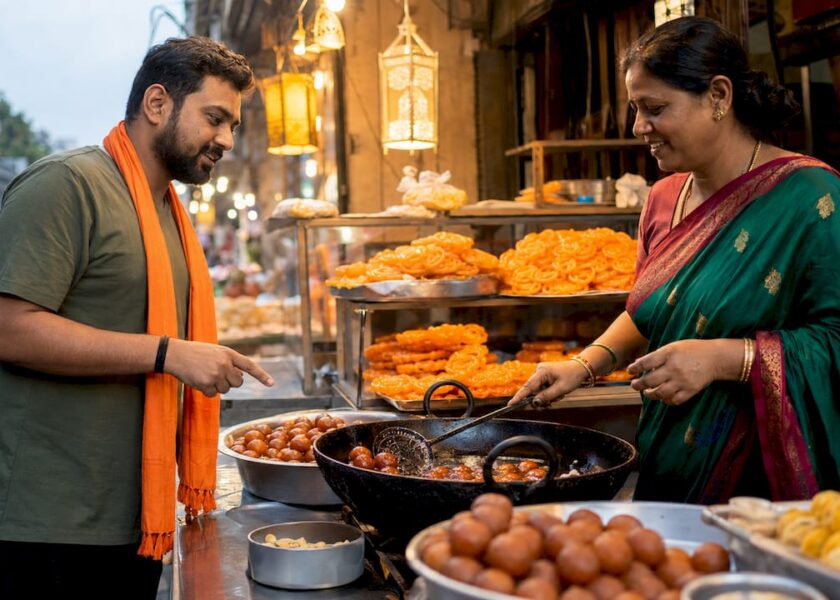
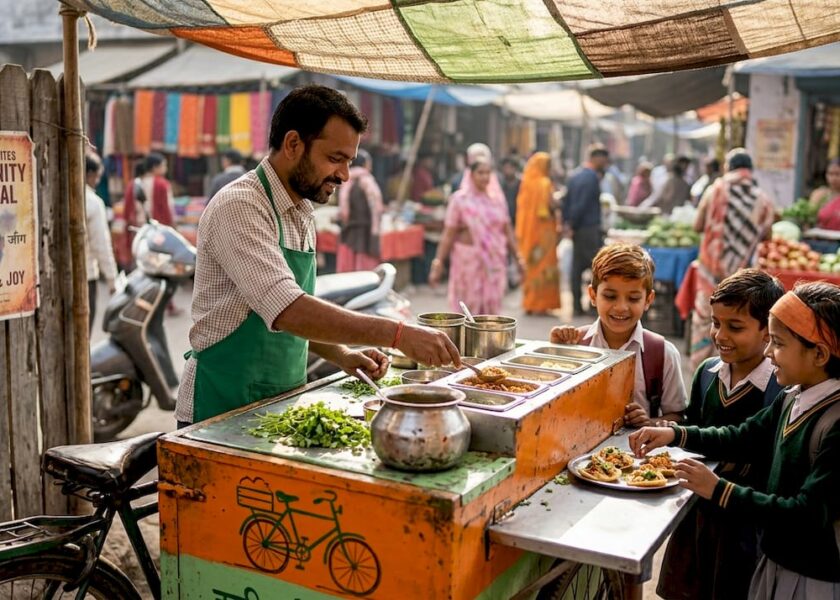
Indian street food has grown rapidly in Barcelona, offering both traditional and modern interpretations of tandoori cuisine.
Experience authentic Indian cuisine in Barcelona with Desi Galli
After understanding what tandoori means, the next step is to experience it.
At Desi Galli, you can discover authentic Indian street food in Barcelona, prepared using traditional techniques and imported spices.
Our menu includes:
- 24-hour marinated tandoori dishes
- Vegetarian options like paneer tikka
- Authentic recipes inspired by Indian street culture
The atmosphere recreates the vibrant streets of India, offering a complete cultural and culinary experience.
Frequently asked questions
Does tandoori refer to the oven or the dish?
Both—it refers to the oven, the cooking method, and the dishes.
What gives tandoori its red color?
Mainly Kashmiri chili, not artificial coloring.
Are there vegetarian tandoori options?
Yes—paneer, vegetables, and mushrooms are common.
Is tandoori food healthy?
Yes, it uses minimal oil and includes spices with health benefits.
How can I identify authentic tandoori?
Look for char marks, natural color, and balanced flavors.
Is tandoori always spicy?
No—spice levels can be adjusted to your preference.