

Discover why traditional Indian beverages stand out
Many people believe that traditional Indian beverages are limited to spiced teas or overly sweet infusions without much complexity. The reality is that these drinks offer unique flavor profiles, health benefits supported by centuries of Ayurvedic tradition, and deep cultural roots that make them far more than simple refreshments.
This guide will help you understand why these beverages stand out, especially if you’re looking to experience authentic Indian street food in Barcelona. From the intense masala chai to the creamy lassi, you’ll discover how each drink reflects India’s cultural identity and delivers a truly unique sensory experience.
Table of contents
Key insights about traditional Indian beverages
The unique flavors that make Indian drinks stand out
Climate adaptations and health benefits of Indian beverages
Authentic street preparation and cultural value
Regional diversity and festivals reflected in Indian drinks
Experience authentic Indian beverages in Barcelona
Frequently asked questions
Key insights
Aspect
Details
Spiced and creamy flavors
These beverages feature multi-layered profiles thanks to spices like cardamom, ginger, clove, and cinnamon combined with black tea or yogurt
Traditional spice preparation
Masala chai is brewed with whole spices and milk to extract essential oils, creating depth and aroma
Climate adaptation and health benefits
These drinks respond to India’s extreme climate by cooling or warming the body, while providing probiotics and electrolytes
Street food cultural identity
Street preparation with fresh ingredients preserves cultural authenticity and reflects regional diversity and hospitality
The unique flavors that make Indian beverages stand out
Spices are the soul of Indian drinks. Cardamom adds floral and citrus notes, ginger brings warmth and spice, while clove and cinnamon provide aromatic depth.
Traditional Indian beverages stand out due to their explosion of spiced flavors. Masala chai combines black tea with cardamom, ginger, clove, cinnamon, and pepper, while lassi blends creamy yogurt with fruits or spices. These flavor profiles are far more complex than Western commercial versions.
Masala chai is prepared through a method that maximizes the release of essential oils from spices. Black tea is boiled with whole spices for several minutes, allowing the aromatic compounds to fully infuse. Milk and sugar are then added to balance the intensity. The result is a full-bodied, aromatic drink with evolving layers of flavor.
Lassi represents another dimension of Indian gastronomy. Made with yogurt, fruits like mango, or salt and spices, it offers a creamy and refreshing texture. The natural fermentation creates a balance between acidity and sweetness or saltiness.
Indian flavor combinations are intentional. Each ingredient plays a role. Black pepper, for example, enhances the absorption of beneficial compounds. Jaggery adds sweetness with caramel notes that complement spices without overpowering them.
Professional tip: To experience authentic chai, avoid powdered spice mixes and choose preparations made with whole fresh spices. The difference in aroma and complexity is significant.
Flavor combinations include:
Sweet and spiced: masala chai with jaggery and cardamom
Creamy and tangy: mango lassi with fermented yogurt
Salty and refreshing: chaas with roasted cumin and black salt
Aromatic and floral: thandai with rose petals and saffron
Climate adaptations and health benefits of Indian beverages
India experiences extreme climates, from scorching summers above 45°C to cold winters in mountainous regions. Traditional beverages evolved as practical responses to these conditions.
Drinks like lassi, chaas, and aam panna cool the body and replenish electrolytes, while chai provides warmth during colder periods.
Lassi and chaas contain natural probiotics from fermented yogurt, supporting gut health. During hot months, they help prevent dehydration. Aam panna, made from green mango, salt, and spices, is particularly effective against heatstroke due to its sodium and potassium content.
Chai may seem counterintuitive in a tropical climate, but its consumption in cooler conditions makes physiological sense. Ayurvedic principles highlight its digestive, antioxidant, and anti-inflammatory properties.
“Spices in Indian beverages are not just flavoring agents, but medicinal components used in Ayurvedic medicine for over 3,000 years.”
Cardamom has antioxidant properties, clove contains anti-inflammatory compounds, and cinnamon helps regulate blood sugar levels.
Professional tip: Salted lassi (namkeen lassi) can neutralize spicy food thanks to casein in yogurt, which reduces the effect of chili heat.
Health benefits include:
Improved digestion
Better hydration through electrolytes
Anti-inflammatory effects
Immune system support
Enhanced metabolism and nutrient absorption
Authentic street preparation and cultural value
Chai wallahs and lassi wallahs are iconic figures in India. These street vendors use traditional techniques passed down through generations.
Chai is brewed in large metal pots with whole spices, creating intense aromas that fill the streets. Lassi is mixed using a traditional wooden whisk (mathani), creating a creamy texture and a visual experience.
Street stalls are social spaces where people gather and connect. Drinking chai in a clay cup while watching the street life is part of India’s cultural identity.
Authentic preparation relies on fresh ingredients: daily-made yogurt, freshly ground spices, and loose-leaf tea. This creates flavors impossible to replicate with industrial methods.
Preparation comparison:
Method
Traditional
Commercial
Spices
Whole, freshly ground
Pre-mixed powders
Tea
Loose leaves
Tea bags or extracts
Milk
Boiled with spices
Added separately
Yogurt
Naturally fermented
Processed
Time
10–15 minutes
2–3 minutes
Flavor
Complex and aromatic
Flat and uniform
Authenticity comes from:
Using whole spices
Slow boiling processes
Balanced regional recipes
Traditional presentation
Regional diversity and festivals in Indian beverages
India’s diversity is reflected in its drinks.
Chai dominates the north, while filter coffee is popular in the south. Thandai is associated with Rajasthan and the Holi festival.
Each beverage reflects a region or occasion:
Region / Festival
Drink
Characteristics
North India
Masala chai
Spiced tea with milk
South India
Filter coffee
Strong coffee with foam
Rajasthan
Thandai
Milk with nuts and spices
Punjab
Salted lassi
Yogurt with salt and cumin
Gujarat
Chaas
Light spiced buttermilk
Hospitality in India is expressed through offering drinks. Accepting chai is a sign of respect and connection.
Regional variations include:
Kashmiri kahwa
Solkadhi
Panakam
Jal jeera
Experience authentic Indian beverages in Barcelona
If you want to experience these drinks without traveling to India, Barcelona offers authentic options.
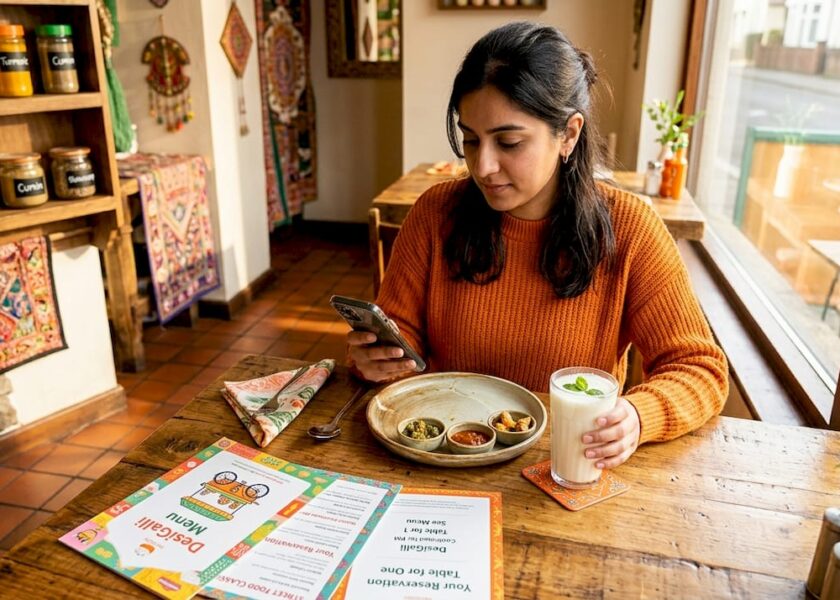
At Desi Galli, we prepare masala chai and lassi using traditional methods with fresh whole spices and naturally fermented yogurt. Our atmosphere recreates the vibrant energy of Indian street food.
Each drink is made fresh using authentic techniques. This dedication makes Desi Galli a top destination for those seeking Indian culture in Barcelona.
Professional tip: Book in advance, especially on weekends.
Frequently asked questions
What is the difference between masala chai and commercial chai?
Authentic masala chai is brewed with whole spices, creating a complex and aromatic drink. Commercial versions use powders and lack depth.
Do Indian beverages have health benefits?
Yes. They support digestion, immunity, and metabolism thanks to spices and probiotics.
Where can I try authentic chai and lassi in Barcelona?
At Desi Galli, prepared using traditional methods and fresh ingredients.
Why are whole spices used?
They preserve essential oils and create more complex flavors.
Which Indian drink is best for summer?
Lassi, chaas, and aam panna are ideal for hydration and cooling.
Does chai always include milk?
Traditional masala chai does, but variations exist, including vegan options.

Comment(01)