
An authentic Indian menu selection workflow is a structured process that combines regional culinary knowledge, balanced dish categories, and practical execution to deliver a genuinely satisfying Indian dining experience. Most diners reduce Indian food to a single word: curry. That single word flattens one of the world’s most geographically and culturally varied cuisines. This guide gives you the framework to move past that, whether you are ordering at a restaurant, planning a dinner party, or exploring Indian food diversity for the first time.
What is the authentic Indian menu selection workflow?
The workflow is a sequential decision process covering four stages: identify regional style, build a balanced dish structure, sequence your ordering or preparation, and read the menu with confidence. Each stage depends on the one before it. Skip regional identification and your menu becomes a random collection of dishes that clash in flavour and texture. Get all four stages right and every course reinforces the next.
Diners who move beyond the generic term “curry” to identify regional markers report significantly higher satisfaction and a stronger sense of authenticity. That finding matters because it shifts the starting point from “what sounds good?” to “which region am I drawing from?” The distinction produces menus with internal logic rather than accidental variety.
How do regional Indian cuisine styles shape your menu?
India’s culinary geography divides broadly into four zones, each with distinct flavour signatures. Understanding those signatures is the foundation of any authentic Indian dish selection.
North India is defined by rich, dairy-based gravies. Dishes like butter chicken, rogan josh, and dal makhani use cream, ghee, and yoghurt to create depth. Tandoor cooking, which uses a clay oven at very high heat, is central to this region. Breads such as naan and paratha are the standard accompaniment.
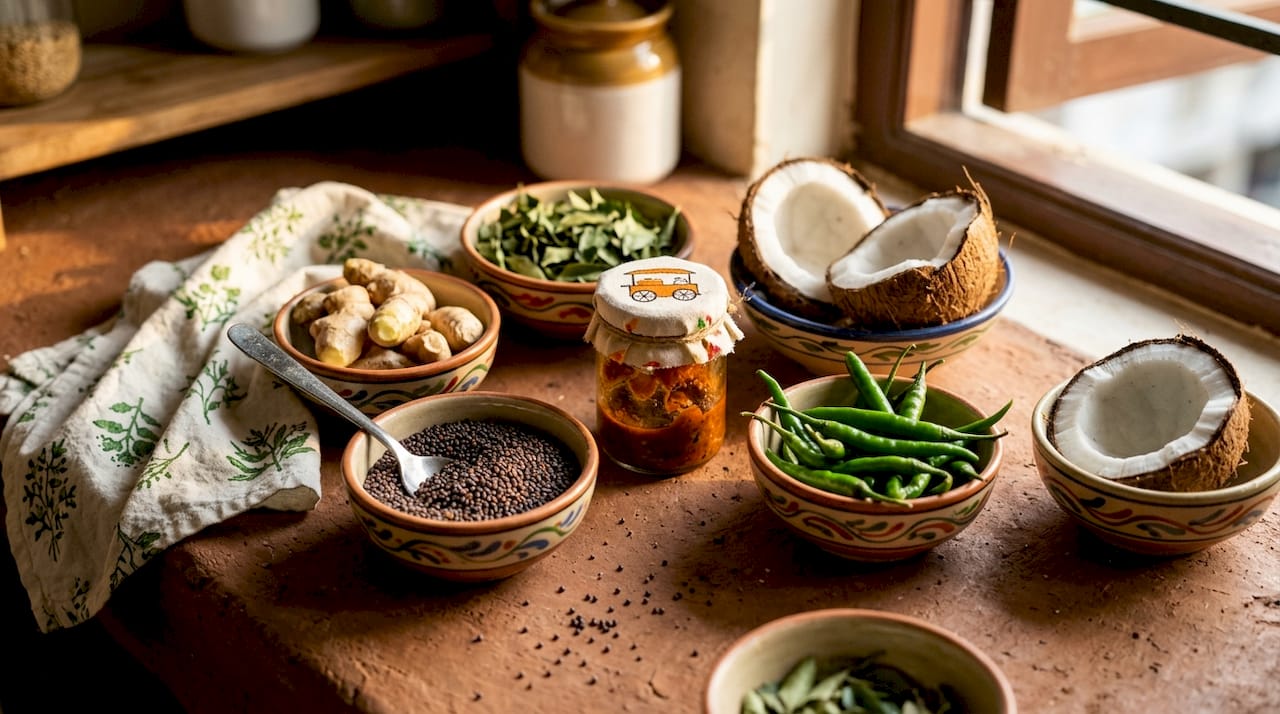
South India relies on tamarind, coconut, and curry leaves for its characteristic sourness and fragrance. Sambar, rasam, and fish curries from Kerala sit at the opposite end of the flavour spectrum from North Indian gravies. Rice replaces bread as the primary carbohydrate, and fermented preparations like dosa and idli are common starters.
East India, particularly Bengal and Odisha, favours mustard oil and panch phoron, a five-spice blend. Fish is the dominant protein. Sweets such as rasgulla and sandesh originate here and are among India’s most celebrated desserts.
West India splits between the fiery, vinegar-based curries of Goa and the vegetarian, lentil-heavy cooking of Gujarat and Rajasthan. Goan vindaloo and Gujarati dal dhokli represent opposite ends of the same regional zone.
- North Indian: creamy gravies, tandoori proteins, naan and roti
- South Indian: tamarind and coconut bases, rice, fermented breads
- East Indian: mustard oil, fish, panch phoron spice blend
- West Indian: vinegar-based Goan curries or vegetarian Gujarati thalis
Pro Tip: Pick one or two regions as your anchor when planning a menu. Mixing all four at once produces flavour confusion. A North and South pairing works well because the contrast is clear and complementary.
Desigallibcn draws on this regional logic when curating its street food menu in Barcelona, presenting dishes that carry clear regional identity rather than a blended approximation of Indian food.
What components form a balanced Indian menu?
A well-structured Indian menu follows a clear sequence of categories. Each category plays a functional role in the overall eating experience.
- Starters and appetisers. Samosas, chaat, pakoras, and seekh kebabs open the meal. They are designed to be light, shareable, and flavour-forward. Chaat in particular, with its combination of sweet tamarind, yoghurt, and spice, prepares the palate for richer mains.
- Main dishes: creamy versus dry. The most common mistake in Indian menu planning is ordering all creamy mains. A balanced selection pairs one rich, sauce-heavy dish such as paneer makhani with one drier preparation such as a bhuna or a tandoori dish. The contrast in texture is as important as the contrast in flavour.
- Breads and rice. Naan, roti, paratha, and steamed basmati rice are not afterthoughts. They are the structural base of the meal. For a North Indian menu, naan is the default. For a South Indian selection, steamed rice or biryani takes that role.
- Sides and condiments. Raita, pickles, and chutneys provide acidity and freshness that cut through rich gravies. A mint chutney alongside a creamy korma is not decoration. It is a functional flavour reset.
- Desserts. Gulab jamun, kheer, and kulfi close the meal. They are sweet but not heavy, and they work as a palate cleanser after bold spices.
Set menus and thalis manage this balance automatically. They reduce the decision burden for diners and improve service speed for restaurants. A thali presents all five categories in one plate, making it the most efficient format for experiencing a complete Indian meal.
Vegetarian and vegan options exist naturally across all five categories. Dal, chana masala, aloo gobi, and vegetable biryani are not substitutions. They are original dishes with their own regional histories. Including them is not accommodation. It is accuracy.
| Category | Creamy or rich option | Dry or light option |
|---|---|---|
| Starters | Malai tikka | Samosa or chaat |
| Mains | Butter chicken or paneer makhani | Bhuna lamb or tandoori chicken |
| Sides | Raita | Mint chutney or pickle |
| Breads | Butter naan | Plain roti or paratha |
| Desserts | Kheer | Kulfi or fresh fruit chaat |
Step-by-step workflow for selecting and organising an Indian menu
Whether you are dining out or hosting at home, the selection process follows the same logical sequence.
- Establish your regional anchor. Decide which region or regions your menu will draw from. This sets the flavour logic for every subsequent choice.
- Confirm guest preferences and dietary needs. Identify any vegetarian, vegan, or allergen requirements before selecting dishes. Indian cuisine accommodates these naturally, but you need to know them upfront.
- Select starters. Choose two or three shared starters. Aim for one fried option, one chaat-style dish, and one protein-based starter such as seekh kebab or tandoori prawns.
- Choose mains with contrast. Select at least one creamy main and one dry or roasted main. Add a vegetarian main as a third option for groups of four or more.
- Add breads and rice. Match the bread to the region. Naan for North Indian menus, rice for South Indian selections.
- Include sides and condiments. Raita and at least one chutney are non-negotiable. They balance the meal structurally.
- Close with dessert. One or two desserts are sufficient. Gulab jamun travels well for home hosting. Kulfi is a reliable restaurant choice.
Pro Tip: For home hosting, follow the timing sequence of morning marination, mid-afternoon slow cooking, and late high-heat roasting. This preparation timeline synchronises all dishes so they are ready at the same time without any single dish sitting too long.
For restaurant ordering, digital menus with photos increase order confidence significantly. Menus that include food photography see order volume rise by 60% compared to text-only formats. That statistic reflects a real cognitive benefit: a photo confirms what a dish actually looks like before you commit. When a menu lacks photos, use the dish descriptions and ask your server about spice levels before ordering.
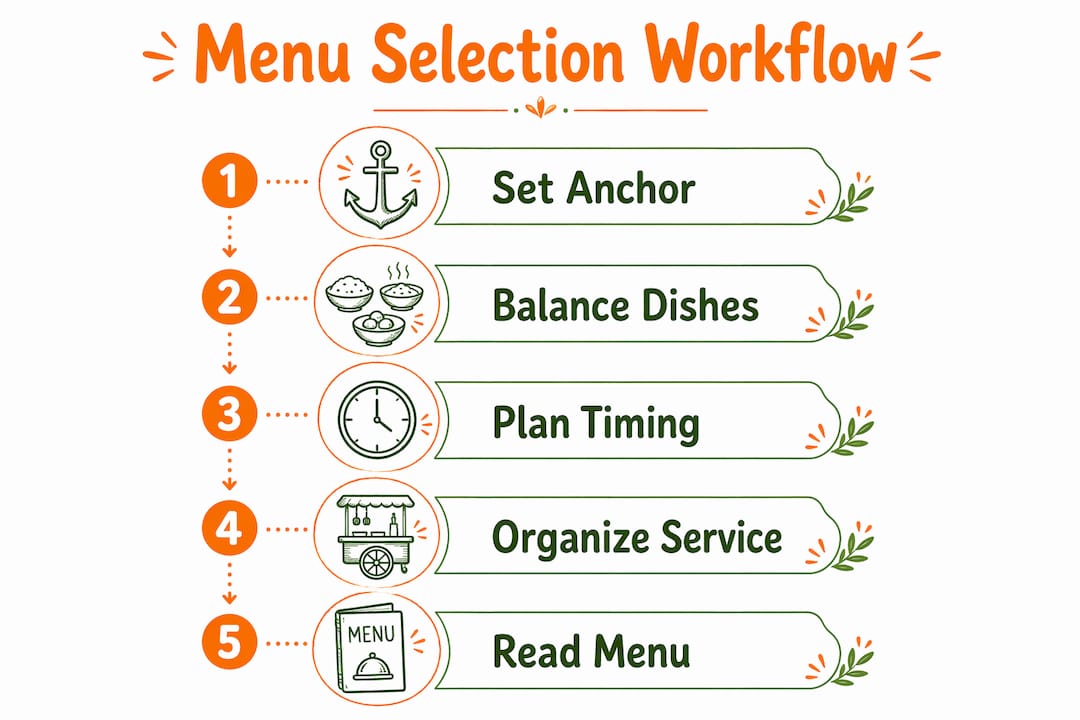
| Step | Action | Key decision |
|---|---|---|
| 1 | Set regional anchor | North, South, East, West, or mixed |
| 2 | Confirm dietary needs | Vegetarian, vegan, allergen requirements |
| 3 | Select starters | Two to three shared dishes |
| 4 | Choose mains | One creamy, one dry, one vegetarian |
| 5 | Add breads and rice | Match to regional style |
| 6 | Add sides | Raita and chutney minimum |
| 7 | Choose dessert | One or two options maximum |
For group dining workflows, a family-style service model works best. Place all dishes in the centre of the table and allow guests to serve themselves. This format mirrors how Indian meals are eaten in most households and reduces the pressure of individual ordering.
How do you read an Indian restaurant menu confidently?
Decoding flavour terms is the single most effective skill for navigating an Indian menu. Most menus use a consistent vocabulary that signals both cooking method and flavour intensity.
- Korma: mild, cream or nut-based sauce, very low heat
- Butter or makhani: rich tomato and cream base, mild to medium
- Masala: spiced sauce, medium heat, varies by region
- Bhuna: dry-cooked with spices, concentrated flavour, medium to hot
- Vindaloo: vinegar-based, very hot, Goan origin
- Tandoori: clay-oven roasted, smoky, dry finish
Understanding these terms means you can build a balanced plate without asking for a full explanation of every dish. A korma and a bhuna together give you the creamy-versus-dry contrast the meal structure requires.
Spice level indicators on menus are a guide, not a guarantee. Chilli symbols vary between restaurants. If you are sensitive to heat, ask your server to confirm the actual heat level of a dish rather than relying on the printed indicator alone.
Pro Tip: When ordering for a group with mixed spice tolerances, anchor the table on one mild dish and one medium dish, then add one hot option for those who want it. This prevents the common mistake of ordering all dishes at the same heat level, which flattens the experience.
Dietary restrictions are easier to accommodate than most diners expect. Vegetarian Indian food covers the full range of flavour profiles, from mild paneer dishes to intensely spiced chana masala. Vegan diners can avoid dairy by choosing tomato-based or lentil-based dishes and requesting that ghee is replaced with oil. These are standard requests at any authentic Indian restaurant.
Menu placement also signals value. Tandoori items placed centrally on a menu are typically high-margin dishes the kitchen executes well. Breads and desserts listed as callouts or sidebars are designed to be added to an existing order. Knowing this helps you read the menu as a curated selection rather than an exhaustive list.
Key takeaways
An authentic Indian menu selection workflow requires regional anchoring, structured dish balance, and confident menu reading to deliver a genuinely satisfying dining experience.
| Point | Details |
|---|---|
| Start with regional identity | Choose one or two regional styles before selecting any individual dishes. |
| Balance creamy and dry mains | Always pair a sauce-heavy dish with a roasted or dry-cooked option. |
| Use menu terminology | Terms like korma, bhuna, and tandoori reliably indicate flavour and heat level. |
| Follow a sequential workflow | Move through starters, mains, breads, sides, and desserts in order. |
| Thalis simplify the process | A thali or set menu delivers all five categories in one balanced, cost-efficient format. |
Why I think most diners overcomplicate Indian menu selection
The most common mistake I see is treating an Indian menu like a puzzle to solve rather than a conversation to have. Diners spend the full 30–90 seconds of typical menu browsing time reading every dish description in sequence, then panic-ordering whatever sounds familiar. The result is three creamy mains, no bread, and a starter that arrives after the mains.
The fix is simpler than most people expect. Decide your regional anchor before you sit down. If you are at a restaurant that specialises in North Indian food, you already know the flavour logic. You are choosing within a system, not across an entire subcontinent. That mental shift reduces the decision to a manageable set of contrasts: one creamy, one dry, one vegetarian, bread, a side, and a dessert.
The other thing I would push back on is the idea that authenticity requires obscure dishes. Butter chicken is authentic. Dal makhani is authentic. The question is not whether a dish is well-known but whether it is made with the right technique and the right ingredients. A well-executed butter chicken at a place like Desigallibcn tells you more about Indian cooking than a poorly made regional speciality you have never heard of. Authenticity lives in the execution, not the obscurity.
— YellowRock
Desigallibcn: where the workflow meets the plate
Desigallibcn brings the authentic Indian menu selection process to life at its street food restaurant in the heart of Barcelona. The menu is built around the same regional logic and dish-balance principles covered in this guide, from samosas and chaat to curries and Indian street food classics.
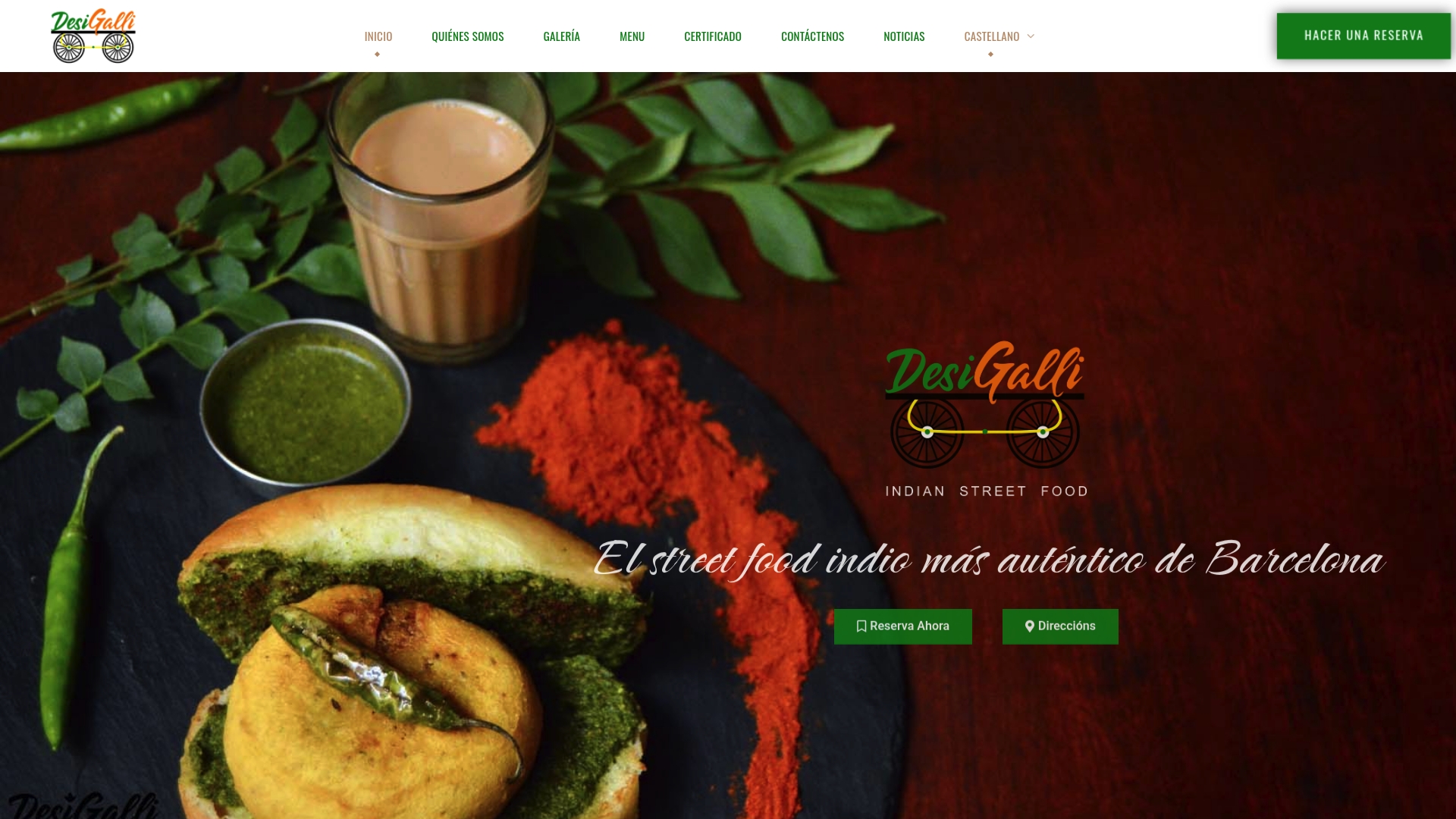
Every dish at Desigallibcn reflects a specific regional identity and a deliberate place in the meal structure. Vegetarian and vegan diners are fully catered for without compromise on flavour. The street food flavours on offer give you a direct, hands-on way to practise everything covered in this guide. Book a table or explore the full menu at Desigallibcn to experience the workflow in action.
FAQ
What is an authentic Indian menu selection workflow?
It is a structured process of choosing dishes by regional style, balancing starters, mains, breads, sides, and desserts, and reading menu terminology to match flavour preferences. The workflow applies equally to restaurant ordering and home hosting.
How do I choose between North and South Indian dishes?
North Indian dishes use cream, ghee, and tandoor cooking, while South Indian dishes rely on tamarind, coconut, and rice. Choose based on whether you prefer rich, dairy-based flavours or lighter, sourer profiles.
What does “thali” mean on an Indian menu?
A thali is a set plate that includes multiple small portions covering all meal categories: starter, mains, bread or rice, sides, and dessert. It is the most efficient way to experience a balanced Indian meal in one sitting.
How do I avoid ordering all spicy dishes by mistake?
Use menu terminology as your guide. Korma and makhani dishes are mild. Masala dishes are medium. Bhuna and vindaloo dishes are hot. Anchor your order on one mild and one medium dish before adding anything hotter.
Can I follow this workflow as a vegetarian or vegan diner?
Fully. Indian cuisine has a deep tradition of vegetarian cooking across all regions. Dishes like dal, chana masala, aloo gobi, and paneer-based curries cover every flavour profile in the workflow. Vegan diners can request oil instead of ghee in most dishes at any authentic Indian restaurant.
Recommended
- Step by step Indian restaurant booking guide – Desi Galli
- Workflow for group dining at an Indian restaurant – Desi Galli
- Tips for choosing Indian restaurants in Barcelona – Desi Galli