
Barcelona has no shortage of Indian restaurants, but walking into one and confidently ordering a chaat you’ll actually love is harder than it sounds. The flavour combinations are bold, the textures shift with every spoonful, and the menu descriptions rarely prepare you for what arrives at the table. Whether you’re trying papri chaat for the first time or you’re a seasoned fan who wants to go deeper, you need a reliable framework. This guide gives you exactly that: a practical, enjoyable approach to ordering, tasting, and evaluating chaat in Barcelona so you leave every meal genuinely satisfied.
Table of Contents
- Understanding chaat: The science of flavour and texture
- Setting up your tasting: What to look for and how to order
- Mastering the tasting: How to taste, customise, and rate your chaat
- Troubleshooting your chaat experience: Common pitfalls and fixes
- A fresh perspective on the Barcelona chaat experience
- Where to try authentic chaat in Barcelona
- Frequently asked questions
Key Takeaways
| Point | Details |
|---|---|
| Balance is everything | Great chaat should hit sweet, sour, salty, and spicy notes in each bite while offering contrasting textures. |
| Plan variety | Taste a range of chaat styles and textures for the most authentic and satisfying experience. |
| Customise your plate | Ask for extra chilli, more chutney, or less onion to fine-tune the flavours to your preference. |
| Eat quickly | Freshness and crunch matter—enjoy your chaat soon after serving for the best texture. |
Understanding chaat: The science of flavour and texture
With those challenges in mind, let’s break down what sets a top chaat apart from the average snack.
Chaat is not a single dish. It’s a whole category of Indian street food built around a very specific principle: the deliberate collision of opposing flavours and textures. Understanding that principle changes how you taste everything on the plate.
The four main flavour poles in any well-made chaat are sweet, sour, salty, and spicy. These aren’t just seasoning choices; they’re structural components. A good chaat doesn’t let any single pole dominate for long. The sweetness of tamarind chutney gives way to the sharp tang of amchur (dried mango powder), which then yields to the prickle of green chilli. You can treat chaat as a framework built around contrasting flavour poles and contrasting textures, choosing dishes that cover all four axes.
Texture is equally important. A well-constructed chaat layers:
- Crunchy elements: papri (fried crisps), sev (thin chickpea noodles), puffed rice
- Soft or creamy elements: chickpeas, boiled potato, dahi (yogurt)
- Cool and refreshing elements: yogurt, fresh coriander, raw onion
- Warm and robust elements: the base, spiced chickpeas, or fried components
The chutneys deserve their own moment. The tamarind and mint chutneys are not garnishes. Tamarind chutney delivers that sweet-sour punch; mint chutney brings cool herbal freshness. Chaat masala ties everything together with its salty, tangy, slightly sulphurous depth.
Here’s a quick reference for what each ingredient contributes to the overall experience:
| Ingredient | Primary texture | Flavour contribution |
|---|---|---|
| Papri (fried crisps) | Crunchy | Neutral, carries chutneys well |
| Sev (chickpea noodles) | Crunchy, airy | Mild, adds textural contrast |
| Dahi (yogurt) | Cool, creamy | Tangy, cooling, balances heat |
| Tamarind chutney | Liquid | Sweet, sour, fruity |
| Mint chutney | Liquid | Cool, herbal, sharp |
| Chaat masala | Powder | Salty, tangy, pungent |
| Chickpeas | Firm, soft | Earthy, filling, absorbs spice |
| Puffed rice | Light, crunchy | Neutral carrier for flavours |
You can explore more about the classics of Indian chaat in Barcelona and the broader context of Indian street food rituals to sharpen your understanding before you visit.
Pro Tip: When your chaat arrives, scan it before eating. Does it show at least three visible layers or textures? Can you see both chutneys applied? Is there a dusting of chaat masala? If yes, you’re likely in good hands.
Setting up your tasting: What to look for and how to order
Once you know what makes a superb chaat, it’s time to put theory into practice during your visit.
The difference between a mediocre chaat outing and a genuinely memorable one usually comes down to how thoughtfully you order. Most people pick one dish and hope for the best. A smarter approach is to build a small tasting menu that deliberately covers different textures, temperatures, and sauce profiles.
Follow these steps when planning your visit:
- Look for restaurants that name specific chaat dishes. Generic “Indian snack platters” are not the same as a place that confidently lists papri chaat, bhel puri, or samosa chaat by name. Specificity signals kitchen confidence.
- Identify the base structure of each option. Some chaats use puffed or crunchy bases (bhel puri, papri chaat); others rely on soft components like chickpeas or potatoes with yogurt. You want both represented in your order.
- Confirm chutneys are made in-house. Bottled chutneys exist and they’re noticeably inferior. A restaurant serious about authentic Indian food in Barcelona will be proud of their chutney-making.
- Note the heat options. Ask whether dishes can be adjusted for chilli level. A kitchen that offers this flexibility understands balance.
- Order in courses if possible. Start lighter and crunchier, move towards richer, yogurt-based options.
Here is a practical side-by-side comparison to help you plan which dishes to pick:
| Chaat dish | Base texture | Dominant flavour | Chutney type | Best for |
|---|---|---|---|---|
| Papri chaat | Crunchy (crisps) | Sweet-sour | Both tamarind and mint | First-timers |
| Bhel puri | Light, puffed | Tangy, sharp | Tamarind-forward | Crunch lovers |
| Samosa chaat | Soft (fried pastry) | Spicy, rich | Both, with yogurt | Hearty tasting |
| Dahi puri | Crispy, hollow | Cool, sweet | Mint-forward | Refreshing contrast |
| Aloo tikki chaat | Soft (potato cake) | Earthy, spiced | Tamarind-forward | Warm, filling option |
For variety in your tasting, Food & Wine’s guidance recommends branching from classics into bhel puri and other chaat types to experience the full spectrum of textures. You can also browse street-style Indian plates for visual inspiration before visiting.
Additionally, Tripadvisor reviews of Barcelona chaat spots consistently suggest using restaurants that explicitly offer chaat-relevant items and then keeping the same tasting framework (sweet-sour-spicy plus crunchy-cool) as your benchmark.
Pro Tip: Order a minimum of three dishes that vary in base, sauce, and heat. One crunchy-dominant, one yogurt-rich, and one warm or fried. That trio covers the core axes and gives you meaningful points of comparison.
Mastering the tasting: How to taste, customise, and rate your chaat
Now that your tasting menu is set, here’s how to experience and fine-tune each dish like a pro.
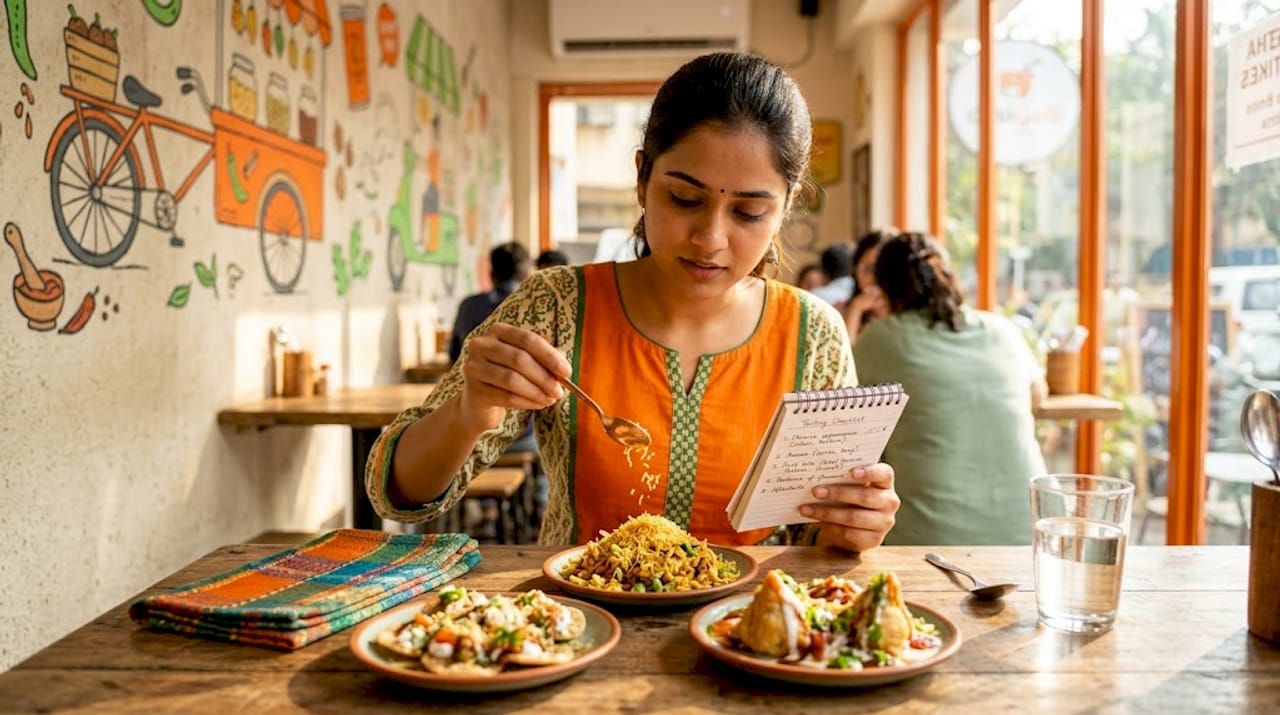
The biggest mistake most diners make is eating chaat the same way they eat a salad: picking at individual components. Chaat is not designed for that. It is meant to be eaten in composed bites that include multiple layers simultaneously.
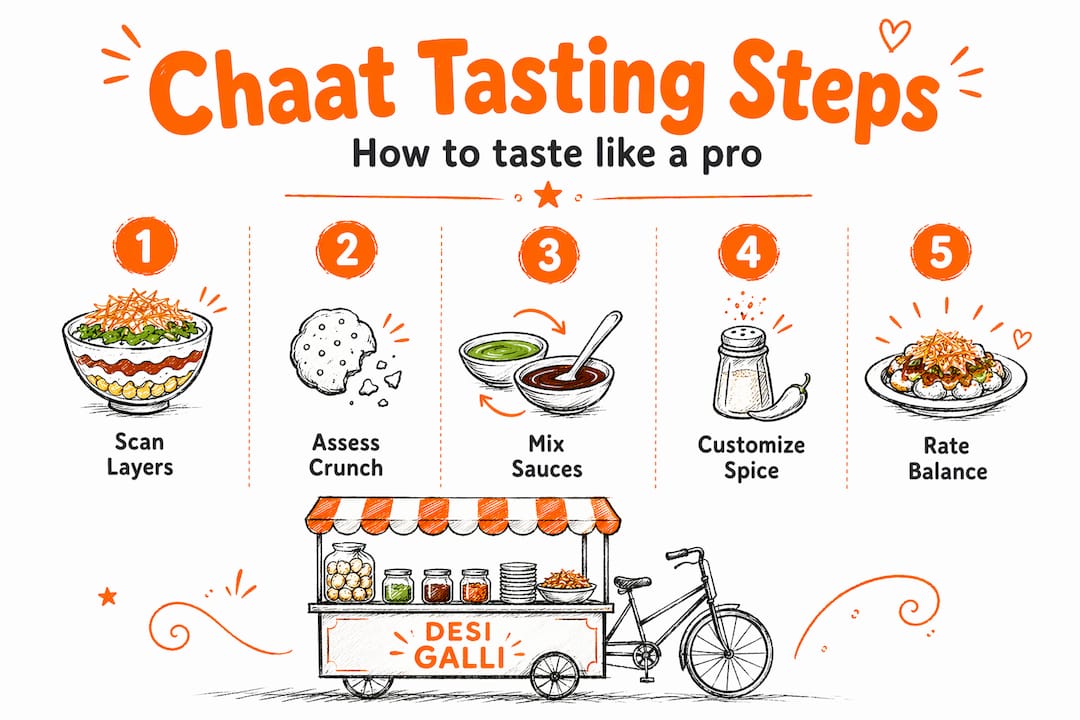
Follow this tasting sequence:
- Before touching it, observe. Note the layering. Can you see sev on top? Chutneys drizzled? Yogurt pooled? This tells you whether the kitchen assembled it thoughtfully.
- Take your first composed bite. Use a spoon to go through all layers, not just the top. You want crisp, soft, and liquid in one mouthful.
- Pause and let the flavours settle. Don’t immediately reach for water. Let the chaat masala and chutneys develop on your tongue.
- Adjust if needed. Ask for extra tamarind chutney if the dish feels flat. Request more chilli if the heat is absent. Vendors commonly allow customisation such as extra chilli or removing raw onion, and requesting small adjustments is part of how you test the dish’s balance.
When evaluating, look for these flavour signposts:
- Tang: Is there a sharp, bright note from tamarind or amchur?
- Spice: Does the heat build gradually or arrive all at once?
- Salt: Is the seasoning even throughout, or only on top?
- Sweetness: Does it appear at the finish, as it should in tamarind-based dishes?
- Freshness: Does the yogurt or mint chutney genuinely cool the palate between spicy bites?
“Don’t judge a chaat on the first bite. Let the flavours evolve as you mix elements and the chutneys mingle with the base. The experience builds as the components combine.”
If you’re spice-sensitive, don’t avoid chaat entirely. Mint chutney and cooling yogurt are built-in relief mechanisms, and adjusting chilli levels is entirely normal. Your goal is still to reach the sweet-sour-salty-spicy balance; you just approach it at a comfortable heat level.
For a deeper walkthrough, read about enjoying chaat step-by-step in Barcelona’s street food context.
Pro Tip: Always check the crunch of your toppings before committing to a full bite. Soggy sev is a sign the dish sat too long in the kitchen. Freshness and speed of service genuinely matter with chaat.
Troubleshooting your chaat experience: Common pitfalls and fixes
Even with the best preparation, issues can crop up. Here’s how to spot and solve them on the fly.
Chaat is unforgiving of slowness and carelessness. Because the textures depend so heavily on timing, a few avoidable mistakes can significantly reduce what you experience. The most common problems are:
- Mushy base or soggy crisps: The dish was assembled too early or sat under a heat lamp. The papri or sev has lost its crunch entirely.
- Blandness: Insufficient chaat masala or chutneys applied too sparingly. Everything tastes flat and one-dimensional.
- Uneven heat distribution: Chilli applied only on top, so the first bite burns and the rest tastes of nothing.
- Overcooked chickpeas: A telltale sign of poor preparation. Chickpeas that are overcooked or crunchy elements that lose crispness before eating will significantly drop the overall experience.
- Missing freshness: No visible fresh coriander, no cool yogurt layer. The dish feels heavy and one-note.
“Mushy chickpeas ruin the texture. Chaat lives or dies on the contrast between soft and firm elements. Once that’s gone, no chutney can rescue it.”
Here’s what you can actually fix at the table:
- Flat flavour: Ask the server to bring extra chaat masala and tamarind chutney on the side. Apply yourself and re-taste.
- Too much heat: Request a side of plain yogurt to spoon over the dish and cool it down.
- Soggy toppings: Unfortunately, this cannot be recovered. Politely flag it and ask whether a fresh portion is possible.
- Blandness from missing chutneys: Ask specifically for both tamarind and mint chutneys to be brought fresh. Most kitchens will oblige without hesitation.
Understanding the benefits of fresh street food made to order reinforces why timing matters so much. Chaat is a live-fire category. It needs to move from kitchen to table quickly.
A fresh perspective on the Barcelona chaat experience
Most food reviews of Indian restaurants in Barcelona fall into the same trap. They rate a single dish on a single visit and pronounce judgement. Chaat does not work that way.
Chaat is a category, not a recipe. The whole point is variety and balance across multiple dishes, not finding the one perfect version of papri chaat and declaring victory. When you focus only on a single plate, you miss the interplay that makes Indian street food genuinely exciting.
Many visitors also resist local adaptations. They arrive expecting the exact flavour profile of a Mumbai street stall and feel disappointed when the chaat in Barcelona tastes slightly different. Here’s the honest truth: the best restaurants in this city bring their own spin to the core recipes while still hitting every essential benchmark. The chutneys are still there. The masala is still present. The textural contrast still works. That’s authenticity where it counts.
Using the tasting framework from this guide changes your relationship with every chaat dish you try. Instead of asking “is this authentic?”, you ask “does this balance sweet, sour, salty, and spicy? Does it give me crunchy and creamy together?” Those questions have answers you can find in every single bite, regardless of which city you’re in.
You can apply the same thinking using this authenticity checklist for Indian food to evaluate any restaurant you visit. It shifts the power back to you as the diner.
The foodies who enjoy chaat most deeply are not the ones who’ve eaten it longest. They’re the ones who eat it most intentionally.
Where to try authentic chaat in Barcelona
If you’re eager to put these tips into action, here’s where to start your Barcelona chaat adventure.
At Desi Galli, every chaat dish on the menu has been crafted with the balance this guide describes in mind. The chutneys are made fresh, the chaat masala is applied with intention, and the toppings arrive crisp because the kitchen moves quickly. It’s the kind of environment where your tasting framework will actually work, because the kitchen is already working from the same principles.
Whether you’re building a tasting menu for two or introducing a friend to Indian street food for the first time, Desi Galli gives you the range to make it meaningful. From samosa chaat to dahi-based plates, the menu covers the full spectrum of textures and flavours discussed in this guide. Explore the best places for chaat in Barcelona and browse examples of Indian street dishes to plan your visit. Book a table, bring your appetite, and taste with intention.
Frequently asked questions
What is the essential ingredient in authentic chaat?
The chaat masala spice blend is the essential component that gives most chaats their salty, tangy, funky flavour identity across all varieties.
Can I adjust the spice level in chaat when ordering in Barcelona?
Yes. Vendors commonly allow customisation such as extra chilli or removing raw onion, so always ask to find the balance that works for your palate.
How do I ensure the chaat I order is freshly made?
Check for crisp sev and papri on top, and look for firm but tender chickpeas rather than mushy ones. Eat as soon as the dish arrives to preserve the texture.
What are the must-try chaat varieties for first-timers?
Start with papri chaat, bhel puri, and samosa chaat. Food & Wine recommends branching from classics across different base textures to get the full chaat experience in one visit.
Why does the flavour change as I eat through a chaat plate?
Chaat is intentionally designed this way. As the components mingle, the chutneys soak into the base and the flavours deepen. A composed bite always tastes more complete than picking at individual elements.
Recommended
- Indian food classics in Barcelona: Samosas, chaat and more – Desi Galli
- Steps to enjoy authentic Indian street food in Barcelona – Desi Galli
- Indian street food: Flavours, rituals and where to try in Barcelona – Desi Galli