
La salsa tikka masala lleva como base tomate, cebolla, ajo, jengibre, garam masala y un elemento cremoso (nata, yogur o anacardos). Para 4 personas necesitas entre 400 y 800 g de tomate, una cebolla grande, 3 o 4 dientes de ajo, unos 25 g de jengibre fresco, 1 o 2 cucharaditas de garam masala y 100 a 200 ml de nata (o su equivalente en yogur o anacardos). Si prefieres una versión sin lácteos, sustituye la nata por leche de coco o crema de anacardos; el paso a paso más abajo te explica cuándo y cómo integrarlas.
En resumen:
- La salsa tikka masala necesita 400 g de tomate triturado y una cebolla grande para una textura y sabor equilibrados en cuatro porciones.
- Es fundamental tostar las especias secas, como comino y cilantro molidos, durante 30 a 60 segundos antes de añadir ingredientes líquidos.
- La crema final puede hacerse con nata, yogur, anacardos triturados remojados o leche de coco, ajustando las cantidades según la opción elegida.
- Para obtener un aroma auténtico, hay que cocinar la cebolla, ajo y jengibre a fuego lento y triturar la mezcla si se busca una textura fina.
- En restaurantes especializados en comida india, como Desi Galli, se preparan curries auténticos con especias molidas a diario, evitando complicaciones en la casa.
Tabla de contenidos
- Ingredientes esenciales: la base de tomate, cebolla, ajo y jengibre
- ¿Qué especias necesita la salsa tikka masala?
- Componentes cremosos: nata, yogur, anacardos o leche de coco
- Cómo hacer tikka masala paso a paso
- Trucos de chef que marcan la diferencia
- Variaciones de picante y opciones para dietas especiales
- Con qué acompañar la salsa tikka masala
- Por qué esta receta refleja la cocina de restaurante
- Prueba la tikka masala hecha por profesionales en Desi Galli
- Fuentes
- Preguntas frecuentes
Ingredientes esenciales: la base de tomate, cebolla, ajo y jengibre
La base de una tikka masala tradicional se apoya en elementos que aportan estructura, dulzor y acidez a la salsa: tomate, cebolla, ajo y jengibre frescos. Sin ellos, cualquier mezcla de especias sabe plana.
El tomate marca el cuerpo de la salsa. Puedes usar 400 g de tomate triturado en lata, que da resultados constantes durante todo el año, o 4 tomates roma maduros cuando estén en temporada. Para 4 personas, las guías domésticas recomiendan esa misma cantidad de 400 g combinada con 200 ml de nata como punto de partida. Si buscas un color más intenso y un sabor más concentrado, puedes añadir pasta de tomate concentrada junto al tomate base.
La cebolla aporta el fondo dulce que equilibra la acidez del tomate. Una cebolla grande, blanca o roja, frita despacio hasta dorarse es lo que separa una salsa con cuerpo de una salsa aguada.
El ajo y el jengibre frescos son innegociables si quieres el aroma auténtico. Necesitas de 3 a 4 dientes de ajo y entre 20 y 30 g de jengibre, ambos rallados o picados finamente justo antes de cocinar. Los ingredientes frescos rallados dan una intensidad que los polvos secos no reproducen, porque los aceites volátiles del jengibre y del ajo se evaporan rápido una vez molidos y envasados.
Puntos clave para esta base:
- Tomate: 400 g triturado en lata o 4 tomates roma frescos
- Cebolla: 1 pieza grande, cocinada hasta dorar (8 a 12 minutos)
- Ajo fresco: 3 a 4 dientes
- Jengibre fresco: 20 a 30 g
- Líquido de ajuste: 100 ml de caldo o agua si la salsa espesa demasiado
- Una cucharadita de azúcar para equilibrar la acidez del tomate
¿Qué especias necesita la salsa tikka masala?
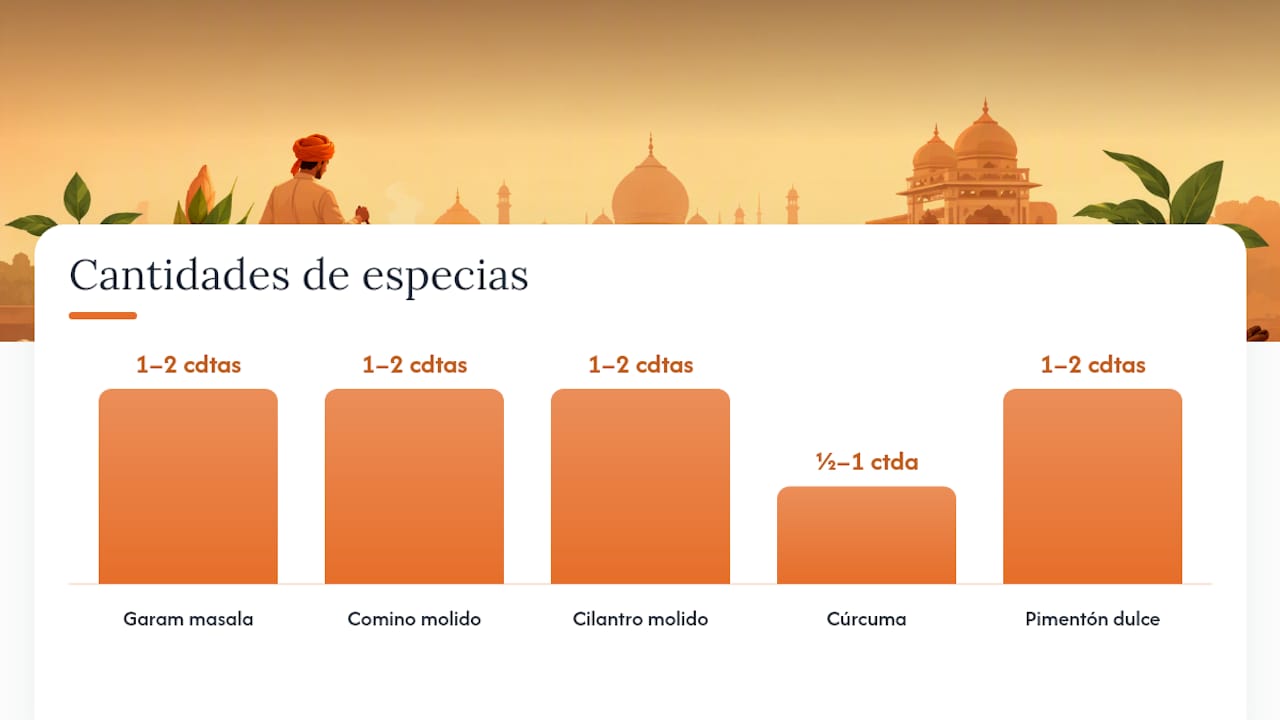
El garam masala es la mezcla central: entre 1 y 2 cucharaditas suelen bastar, aunque algunas recetas de estilo restaurante suben hasta una cucharada para un perfil más intenso.
Junto al garam masala, la salsa tikka masala pide comino molido y cilantro molido, una o dos cucharaditas de cada uno, más media a una cucharadita de cúrcuma y una o dos cucharaditas de pimentón dulce para el color rojizo característico. Si quieres un toque enteramente distinto, puedes incorporar especias enteras como canela, cardamomo o clavo al principio del sofrito, dejando que perfumen el aceite antes de retirarlas.
La técnica importa tanto como la lista. Tostar las especias en aceite caliente durante 30 a 60 segundos antes de añadir el tomate libera los aceites esenciales y evita ese sabor a especia cruda que arruina muchas versiones caseras.
- Garam masala: 1 a 2 cucharaditas
- Comino molido: 1 a 2 cucharaditas
- Cilantro molido: 1 a 2 cucharaditas
- Cúrcuma: media a una cucharadita
- Pimentón dulce: 1 a 2 cucharaditas
Consejo profesional: Muele las semillas de comino y cilantro justo antes de usarlas, tras tostarlas 30 segundos en seco. El perfume que ganas frente al polvo comprado hace más diferencia que cualquier otra especia de la lista.
Para profundizar en cada mezcla y sus proporciones, esta guía sobre especias indias populares detalla usos concretos, y si quieres entender mejor el garam masala en particular, conviene revisar qué es el garam masala y cómo usarlo.
Componentes cremosos: nata, yogur, anacardos o leche de coco
La cremosidad final depende de qué elemento lácteo (o vegetal) elijas, y cada opción cambia el resultado. Las proporciones habituales para el elemento cremoso se ajustan según la cantidad y el tipo elegido para 4 raciones.
La nata líquida para montar, entre 100 y 200 ml, da la riqueza más parecida a la de restaurante, aunque también aporta más grasa. El yogur natural sin azúcar, unos 150 a 200 g, suma un punto de acidez que combina bien con el picante, pero debe añadirse templado y fuera del fuego para que no se corte.
Para versiones veganas o sin lácteos, remojar un tercio de taza de anacardos crudos y triturarlos hasta obtener una crema fina sustituye a la nata sin perder untuosidad. La leche de coco es otra alternativa habitual: aporta dulzor natural y una textura sedosa, aunque desplaza el sabor hacia un registro más tropical que el de la receta clásica.
- Nata líquida: 100 a 200 ml, máxima riqueza
- Yogur natural: 150 a 200 g, más ácido y ligero
- Anacardos remojados: un tercio de taza, opción vegana
- Leche de coco: cantidad al gusto, sabor más dulce
Cómo hacer tikka masala paso a paso
Preparar la salsa sigue un orden fijo que determina si la textura y el aroma salen correctos. Este patrón de sofrito, reducción y triturado se repite en la mayoría de recetas domésticas y profesionales.
- Sofríe la cebolla picada en aceite o mantequilla clarificada durante 8 a 12 minutos, hasta que esté dorada y dulce.
- Añade el ajo y el jengibre rallados y cocina un minuto más, sin dejar que se quemen.
- Incorpora las especias molidas y tuéstalas 30 a 60 segundos removiendo constantemente.
- Agrega el tomate y cocina de 10 a 15 minutos, hasta que reduzca y pierda el sabor ácido crudo.
- Tritura la mezcla si buscas una textura fina, añade el elemento cremoso elegido, calienta 3 a 5 minutos más y ajusta sal y picante.
Si la salsa queda demasiado espesa, aclárala con un poco de caldo o agua caliente; si queda ligera, deja reducir unos minutos más sin tapar. El punto está cuando la salsa cubre el dorso de una cuchara sin caer de golpe.
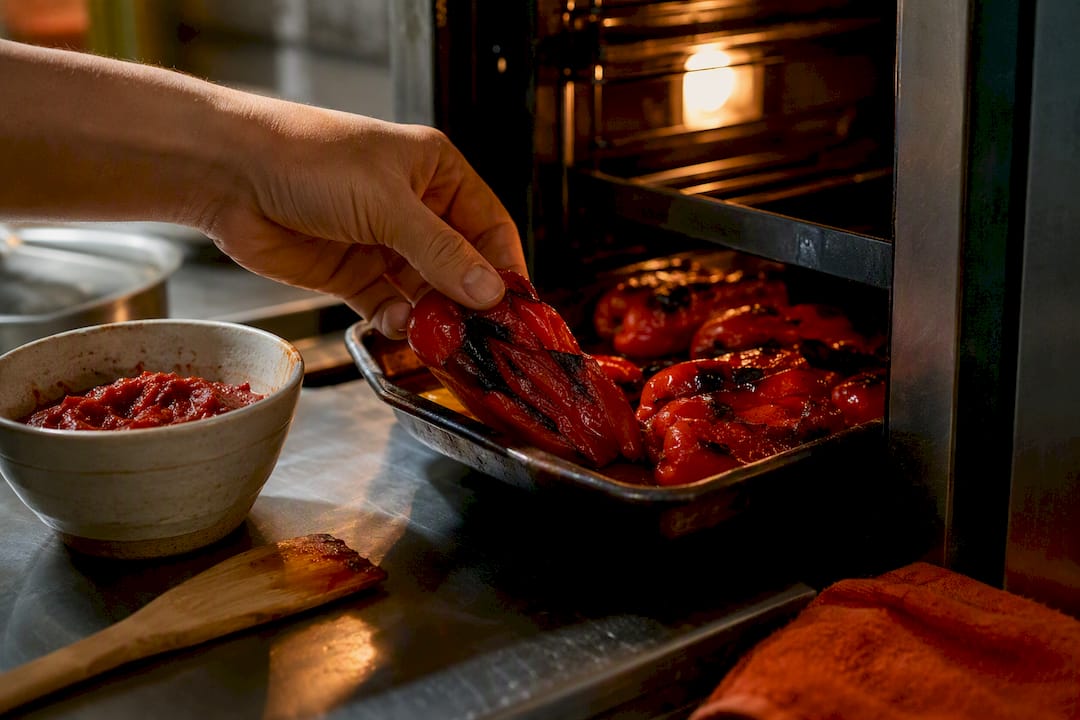
Como truco opcional, asar los pimientos en el horno antes de añadirlos, o sumar una cucharada extra de pasta de tomate, mejora el color y da más cuerpo sin alargar mucho el tiempo de cocción.
Trucos de chef que marcan la diferencia
Lo que separa una tikka masala casera de una de restaurante suele estar en detalles pequeños, no en ingredientes exóticos. El kasuri methi, hojas secas de fenogreco, se añade al final de la cocción en cantidades de media a una cucharadita: frótalo entre las manos antes de incorporarlo para liberar su aroma sin necesidad de cocinarlo mucho más.
Para la crema de anacardos, remójalos en agua caliente entre 30 y 60 minutos antes de triturarlos; ese tiempo es lo que produce una emulsión fina que imita la nata sin riesgo de cortarse. Si trabajas con yogur o nata, añádelos siempre templados y fuera del fuego directo, removiendo despacio para evitar que se separen.
- Kasuri methi: media a una cucharadita, añadido y frotado al final
- Anacardos: remojo de 30 a 60 minutos antes de triturar
- Lácteos: siempre templados y fuera del fuego para que no se corten
- Ingredientes poco comunes (kasuri methi, garam masala fresco) se encuentran en tiendas de alimentación india o secciones internacionales de grandes supermercados
Consejo profesional: Si no encuentras kasuri methi, un pellizco de tomillo seco no lo sustituye en sabor, pero al menos aporta ese matiz herbáceo que la receta necesita.
Variaciones de picante y opciones para dietas especiales
El nivel de picante se controla con pimentón, cayena o chile fresco picado: sube o baja la cantidad en pasos de media cucharadita hasta encontrar tu punto. Para un dulzor distinto al azúcar blanco, el jaggery (azúcar de caña sin refinar) o la miel aportan matices más redondos, en la misma proporción que usarías de azúcar.
La versión vegana sustituye la nata o el yogur por anacardos triturados combinados con leche de coco o yogur vegetal, ajustando la acidez con un poco de zumo de limón si la mezcla queda demasiado plana. Para reducir grasa sin perder cremosidad, usa yogur bajo en grasa en lugar de nata entera y compensa con un puñado extra de anacardos triturados.
- Más picante: cayena o chile fresco, en pasos de media cucharadita
- Menos picante: reduce el pimentón y el chile, mantén el garam masala
- Vegano: anacardos + leche de coco o yogur vegetal
- Menos grasa: yogur bajo en grasa más anacardos triturados
Con qué acompañar la salsa tikka masala
El pollo tikka marinado y asado es el acompañamiento clásico, aunque el cordero en dados o las verduras asadas (coliflor, pimiento, calabacín) funcionan igual de bien integrados en la salsa caliente durante los últimos minutos de cocción. El arroz basmati, lavado antes de cocer y cocinado con proporción de agua ajustada, queda suelto y absorbe bien el jugo de la salsa.
El pan naan o el roti al tandoor sirven para mojar y son casi obligatorios en una mesa completa. Para beber, un lassi natural refresca el paladar frente al picante, mientras que una cerveza tipo lager o un vino blanco aromático encajan si prefieres algo con más cuerpo.
- Proteína: pollo tikka, cordero en dados o verduras asadas
- Guarnición: arroz basmati suelto
- Pan: naan o roti recién hecho
- Bebida: lassi natural, lager o vino blanco aromático
Por qué esta receta refleja la cocina de restaurante
La experiencia editorial de YellowRock, junto con la práctica diaria de cocinas indias que muelen sus propias especias, confirma que el tostado previo y el uso de ingredientes frescos son lo que realmente distingue una salsa con carácter. Si te interesa el debate entre tikka masala y otras salsas similares, conviene leer tikka masala: mito y realidad en la cultura india. La cocina profesional no tiene secretos imposibles de replicar en casa: solo exige respetar los tiempos y la calidad de cada ingrediente.
— YellowRock
Prueba la tikka masala hecha por profesionales en Desi Galli
Preparar esta salsa en casa exige tiempo, especias frescas y varios intentos hasta dar con la textura exacta. Desi Galli te ahorra ese proceso: es la alternativa cuando quieres disfrutar de una tikka masala auténtica, con especias molidas a diario y sin encender el fuego en tu propia cocina. El restaurante ofrece curries y opciones vegetarianas y veganas, y un ambiente decorado al estilo street indio que acompaña cada plato.
Si prefieres organizar algo más grande, Desi Galli dispone de menús cerrados personalizados desde 25 € por persona para eventos y celebraciones privadas. Consulta la carta completa con curries y platos tandoori y reserva tu mesa para comprobar en persona cómo debería saber una tikka masala bien hecha.
Fuentes
Las proporciones y técnicas de este artículo se apoyan en recetas contrastadas como En mi cocina, Hogarmania, Spice Cravings para la versión con anacardos, y Madhu’s Everyday Indian para la técnica de tostado. Si buscas versiones más picantes o técnicas de especiado más detalladas, estas guías son un buen punto de partida.
- Salsa Tikka Masala | En mi cocina
- Salsa tikka masala: el secreto de la cocina hindú — Hogarmania
- Tikka Masala Sauce – Spice Cravings
- Authentic Homemade Tikka Masala Sauce – Madhu’s Everyday Indian
Preguntas frecuentes
¿Qué ingredientes lleva la salsa tikka masala?
Lleva tomate, cebolla, ajo, jengibre fresco, una mezcla de especias (garam masala, comino, cilantro, cúrcuma y pimentón) y un elemento cremoso como nata, yogur o anacardos. Para 4 personas, las cantidades orientativas son 400 g de tomate y 200 ml de nata como base.
¿Qué especias tiene el tikka masala?
Las especias principales son garam masala, comino molido, cilantro molido, cúrcuma y pimentón dulce, a veces con canela, cardamomo o clavo enteros para dar profundidad. El kasuri methi se añade al final, no durante la cocción, para aportar aroma sin amargor.
¿Cómo se hace la salsa tikka masala paso a paso?
Se sofríe la cebolla hasta dorar, se añade ajo y jengibre, luego se tuestan las especias 30 a 60 segundos y se incorpora el tomate para reducirlo de 10 a 15 minutos. Después se tritura si se desea, se añade el elemento cremoso y se calienta unos minutos más antes de ajustar sal y picante.
¿Puedo preparar una versión sin lácteos?
Sí, sustituyendo la nata o el yogur por un tercio de taza de anacardos remojados y triturados, o por leche de coco. Esta versión mantiene la cremosidad sin perder el equilibrio entre acidez y especias.
¿Dónde puedo probar una tikka masala auténtica sin cocinarla?
En algunos restaurantes especializados en comida india se preparan curries con especias molidas a diario, incluidas opciones vegetarianas, veganas y sin gluten. Puedes consultar la carta de curries y platos tandoori o reservar directamente para probarla.
Recomendaciones
- Diferencia entre curry y tikka: guía clara y práctica
- Chana masala: receta auténtica y práctica paso a paso
- Descubre la autenticidad de la cocina india: sabores reales
- Lista de especias indias populares: guía esencial